Clamp energy meters make it easier to measure current without disconnecting wires, whether you are troubleshooting a circuit, tracking household consumption, or building a smarter energy setup.
Our 2026 roundup includes dedicated home energy monitors, Wi-Fi and Zigbee devices, and versatile clamp multimeters for electrical testing.
Best 10 Clamp Energy Meters Picks for 2026
Smart Home Pick

- Includes a 50A clamp for single-phase monitoring
- Stores 10 days of one-minute local data
- Integrates with major smart-home platforms
Best For: Smart-home energy monitoring and automated control
Budget Testing Tool
AstroAI 2000-Count Clamp Meter

- Measures AC current plus several multimeter functions
- Includes non-contact voltage testing and alarms
- Cannot measure DC current
Best For: DIY electrical troubleshooting and AC testing
Whole-Home Monitoring

- Includes sixteen 50A branch sensors
- Monitors appliances, solar, and net metering
- Provides app-based real-time energy data
Best For: Circuit-level monitoring across a large household
Electrician-Ready Choice
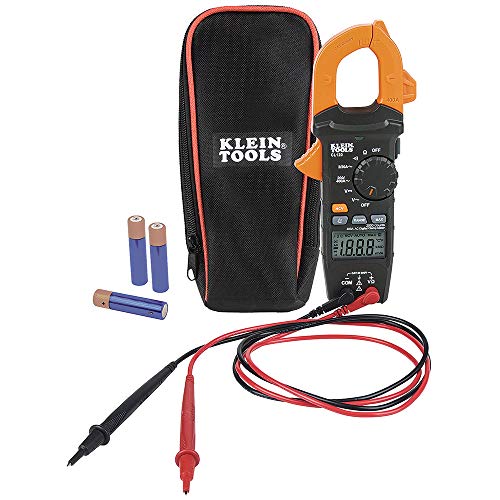
- Measures up to 400A AC current
- Tests voltage, resistance, and continuity
- Includes safety-capped leads and carrying case
Best For: Routine electrical service and AC current testing
Best Dual-Circuit Smart Monitor

- Two independent 80A clamp channels
- Tuya/Smart Life app with usage history
- Bi-directional monitoring for solar and backup power
Best For: Smart monitoring of two household circuits
Best Handheld Troubleshooting Meter
Fluke 302+ Digital Clamp Meter

- 400A AC current measurement
- 600V AC/DC voltage measurement
- CAT IV 300V/CAT III 600V rating
Best For: Portable electrical troubleshooting and maintenance
Best Versatile Pick
AstroAI 4000-Count Digital Clamp Meter
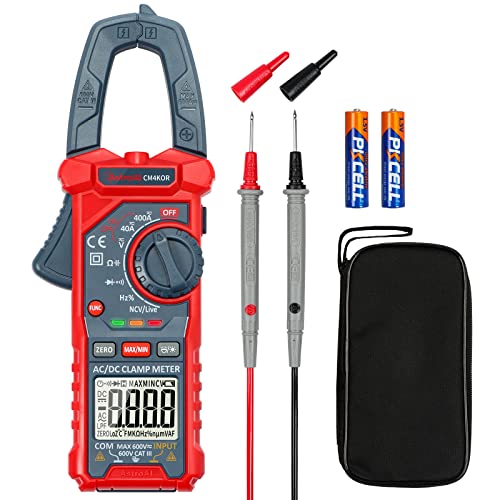
- Measures AC/DC current, voltage, and multiple electrical properties
- NCV detection includes audible and visual alerts
- Backlit display, flashlight, and compact jaw design
Best For: General household and electrical troubleshooting
Best Smart Monitoring Pick

- Monitors energy flow in both directions
- Tracks usage and solar generation in real time
- Works with a ZigBee gateway and app control
Best For: Smart-home and solar energy monitoring
Best Professional-Grade Pick
Klein Tools CL390 400A Clamp Meter
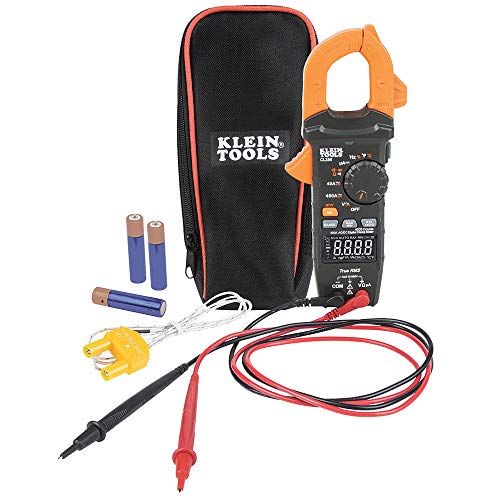
- 400A AC/DC clamp measurement with TRMS accuracy
- Adds NCVT, temperature, capacitance, and diode testing
- High-visibility display and CAT III/CAT IV 600V ratings
Best For: Technicians and advanced electrical troubleshooting
Smart Home Pick – Shelly EM Gen3 Energy Meter
The Shelly EM Gen3 is a compact option for homeowners seeking clamp energy meters with real-time monitoring and smart-home integration. Its included 50A clamp tracks single-phase consumption, while the device can also control a connected contactor.
Best For: Smart-home users who want breaker-level monitoring, appliance insights, and automated energy control.
Pros:
- Includes a 50A clamp and supports real-time power tracking.
- Stores up to 10 days of local data at one-minute intervals.
- Works with Alexa, Google Home, Home Assistant, and SmartThings.
- Compact design fits behind sockets, switches, or in tight spaces.
Cons:
- Designed for single-phase systems rather than broader multi-phase monitoring.
- Installation and contactor wiring may require electrical expertise.
Choose this model if app-based monitoring and automation matter as much as measurement. Its 3-year warranty and appliance health alerts add useful long-term value.
Budget Testing Tool – AstroAI 2000-Count Clamp Meter
The AstroAI CM2K0R is a battery-powered clamp meter for hands-on electrical troubleshooting. It measures AC current along with voltage, resistance, capacitance, continuity, and other common functions, making it a practical choice for household and light industrial testing.
Best For: DIY users and technicians who need a versatile AC clamp meter with basic multimeter functions.
Pros:
- Measures AC current, AC/DC voltage, resistance, capacitance, and continuity.
- Includes non-contact voltage detection with audible and visual alarms.
- Offers auto-ranging, data hold, max/min readings, backlight, and flashlight.
- Comes with test leads, storage bag, manual, and two AAA batteries.
Cons:
- Cannot measure DC current.
- The clamp must surround a single conductor, not the entire power cord.
This is a flexible testing instrument rather than a continuous home energy monitor. Its feature set suits troubleshooting, but users should follow the conductor-placement guidance carefully.
Whole-Home Monitoring – Emporia Vue 3 Energy Monitor
The Emporia Vue 3 is a whole-home option among clamp energy meters, using clamp-on sensors inside the circuit panel to track household consumption. It includes sixteen 50A branch sensors for monitoring major loads and supports solar and net-metering visibility through its app.
Best For: Homeowners who want detailed circuit-level monitoring across appliances, solar, and household usage.
Pros:
- Includes sixteen 50A sensors for monitoring critical circuits.
- Supports single-phase, split-phase, and certain two-wire systems.
- Tracks real-time usage and solar or net-metering data through the app.
- UL and CE listed, with sensor accuracy specified at ±2%.
Cons:
- Requires 2.4 GHz Wi-Fi and an internet connection for monitoring.
- Some three-phase configurations require an additional 200A sensor.
- One-second data is available only while the app is actively open and retained for three hours.
With sixteen included branch sensors, the Vue 3 is suited to detailed load analysis rather than simple whole-home totals. Plan the installation around your panel layout and supported electrical configuration.
Electrician-Ready Choice – Klein Tools CL120 Clamp Meter
The Klein Tools CL120 is a straightforward clamp meter for electrical work, combining auto-ranging 400A AC current measurement with test-lead functions. It also adds non-contact voltage detection, a backlit display, and safety-rated accessories for practical field use.
Best For: Electricians and serious DIY users who need a durable AC clamp meter for routine testing.
Pros:
- Measures up to 400A AC current through the clamp.
- Tests AC/DC voltage, resistance, and continuity with test leads.
- Includes non-contact voltage detection and a backlit display.
- Comes with CAT III/CAT IV-capped leads, case, instructions, and three AAA batteries.
Cons:
- Its clamp function is for AC current; it is not presented as a DC-current clamp meter.
- Magnetic hanger accessories are optional rather than included.
The CL120 favors dependable electrical testing over connected energy logging. Its auto-ranging operation, safety accessories, and hands-free mounting compatibility make it a practical workbench or service-kit choice.
Best Dual-Circuit Smart Monitor – Tuya 2×80A Energy Monitor
This dual-channel option stands out among clamp energy meters for homeowners who want app-based monitoring of two circuits at once. Its external clamp sensors track current without cutting or modifying wires, while the Tuya or Smart Life app provides real-time readings and historical usage data.
Best For: Monitoring major household circuits, high-power appliances, solar setups, or backup-power systems through a smart-home app.
Pros:
- Two independent 80A channels for monitoring separate circuits.
- Tracks power, voltage, current, power factor, and usage history.
- Supports bi-directional energy monitoring for solar and backup-power applications.
- Works with Tuya, Smart Life, Alexa, and Google Home Assistant.
Cons:
- Requires a 2.4GHz Wi-Fi connection for app setup and monitoring.
- Designed for installation in household electrical systems, so professional installation may be appropriate.
Choose this model if your priority is connected, whole-home insight across two circuits rather than handheld electrical troubleshooting.
Best Handheld Troubleshooting Meter – Fluke 302+ Digital Clamp Meter
The Fluke 302+ is a practical handheld choice among clamp energy meters for electrical troubleshooting. Its 30mm jaw measures AC current up to 400A, while the included test leads support AC/DC voltage measurements up to 600V.
Best For: Electricians, maintenance work, and general-purpose troubleshooting where a portable, safety-rated clamp meter is useful.
Pros:
- Measures AC current up to 400A through a 30mm jaw.
- Measures AC/DC voltage up to 600V.
- CAT IV 300V/CAT III 600V safety rating.
- Includes TL75 test leads, two AA batteries, and a two-year warranty.
Cons:
- Focuses on handheld measurements rather than app-based energy history.
- Its current measurement is for AC loads, according to the supplied specifications.
This is the better fit when you need a compact, familiar test instrument for on-site checks instead of a permanently installed smart monitor.
Best Smart Automation Option – eMylo 2-Channel 80A Power Monitor
The eMylo 2-channel unit combines clamp-based measurement with Tuya and Smart Life automation. As clamp energy meters go, it offers broad real-time data—including current, voltage, active power, frequency, and power factor—along with hourly, daily, monthly, and yearly consumption views.
Best For: Smart-home users who want two 80A sensors, energy-cost visibility, and automation with compatible Tuya devices.
Pros:
- Includes two 80A clamp sensors for dual-channel monitoring.
- Displays voltage, current, power factor, active power, frequency, and energy use.
- Supports Tuya/Smart Life app control and device-linked automation.
- Compatible with Alexa and Google Assistant.
Cons:
- Works with 2.4GHz Wi-Fi only.
- Installation requires connecting wires to the device terminals.
Consider this model if app-based automation is as important as measurement; it provides more connected-home functionality than a conventional handheld clamp meter.
Best Versatile Pick – AstroAI 4000-Count Digital Clamp Meter
For shoppers comparing clamp energy meters for household troubleshooting or general electrical work, the AstroAI combines clamp-based current measurement with a broad set of multimeter functions. It measures AC/DC current and voltage, resistance, capacitance, frequency, duty cycle, diode function, continuity, and live wire signals.
Best For: Home users and general-purpose electrical troubleshooting where compact size and multiple measurement modes are useful.
Pros:
- Measures AC/DC current and voltage plus resistance, capacitance, frequency, continuity, and more.
- Includes NCV detection with audible and visual alerts.
- Backlit LCD, flashlight, data hold, Max/Min, and auto power-off support convenient use.
- Large jaw and slim body help with measurements in narrow spaces without interrupting the circuit.
Cons:
- The jaw is intended for current measurement, while voltage testing requires the included test leads.
- Current measurements require clamping around one conductor rather than the entire power cord.
The AstroAI is a practical all-rounder for buyers who want a clamp meter that also handles common bench and household multimeter tasks. Its 600V CAT III rating and included storage bag add useful everyday practicality.
Best Smart Monitoring Pick – ZigBee 80A Energy Monitor
This ZigBee-enabled monitor takes a different approach to clamp energy meters by focusing on ongoing electricity usage rather than handheld testing. Its 80A CT clamp tracks voltage, current, power factor, active power, frequency, and energy in real time when paired with a compatible ZigBee gateway.
Best For: Smart-home users who want app-connected monitoring of household circuits or solar-related energy flow.
Pros:
- Supports bidirectional energy monitoring, including solar generation and grid consumption.
- 80A clamp sensor measures current without requiring direct conductor interruption.
- Tracks several electrical parameters in real time, including power factor and frequency.
- Includes overload functionality intended to help avoid issues from excessive energy use.
Cons:
- Requires a compatible ZigBee gateway for connected operation.
- Its 80A rating may not suit circuits with higher current demands.
- The 10mm CT clamp aperture may limit compatible conductor sizes.
Choose this model when remote visibility and automation matter more than portable, one-off diagnostics. It is especially relevant for connected energy monitoring and solar-versus-grid tracking, provided your installation fits the clamp and gateway requirements.
Best Professional-Grade Pick – Klein Tools CL390 400A Clamp Meter
For buyers seeking clamp energy meters for more demanding electrical testing, the Klein Tools CL390 offers a 400A AC/DC clamp range and True RMS auto-ranging measurements. It also adds test-lead functions for voltage, resistance, continuity, frequency, capacitance, diode testing, DC microamps, and temperature.
Best For: Technicians and serious DIY users who need broad testing capability, True RMS accuracy, and a durable feature set.
Pros:
- Measures AC/DC current up to 400A with auto-ranging and TRMS technology.
- Integrated non-contact voltage testing is built into the clamp jaw.
- Supports temperature testing with a thermocouple along with numerous test-lead functions.
- Reverse-contrast display improves visibility across different lighting conditions.
Cons:
- The magnetic hanger is optional rather than included.
- Many functions, including voltage and temperature testing, require test leads or a thermocouple.
The CL390 is the strongest fit here for users who value measurement breadth and professional-oriented features. Its CAT III 600V and CAT IV 600V specifications, side-mounted lead holder, and optional hands-free mounting support make it well suited to field work.
How We Picked the Best Clamp Energy Meters
We selected products across the main use cases: whole-home energy monitoring, circuit-level tracking, portable electrical testing, solar observation, and smart-home integration. We considered measurement range, AC and DC support, clamp capacity, display readability, connectivity, app features, installation requirements, and suitability for beginners or experienced users.
Because a clamp energy meter can be either a stationary monitor or a handheld test instrument, this list includes both categories. Compare the specifications carefully before buying; a device designed for real-time household usage may not provide the same voltage, resistance, or continuity functions as a clamp multimeter.
Quick Comparison of These Clamp Energy Meters
- Best for smart-home energy tracking: Shelly EM Gen3 or a compatible dual-channel Wi-Fi monitor.
- Best for whole-home and solar monitoring: Emporia Vue 3.
- Best for professional electrical testing: Fluke 302+ or Klein Tools CL390.
- Best for straightforward AC testing: Klein Tools CL120.
- Best budget-friendly multifunction options: AstroAI clamp multimeters.
- Best for Zigbee ecosystems: The Zigbee-compatible 80A energy monitor.
Key Buying Factors for Clamp Energy Meters
Measurement Type and Range
First decide whether you need energy consumption data over time or occasional current measurements. Home monitors often use current transformers and report watts, kilowatt-hours, and trends through an app. Handheld meters typically add voltage, resistance, capacitance, continuity, and other diagnostic functions. Check the maximum current rating and whether the meter supports AC, DC, or both.
Clamp Size and Installation
The jaw must fit around the conductor you need to measure. Larger clamps are useful in electrical panels, while compact jaws can be easier to position in crowded spaces. Fixed monitors may require access inside a panel and should be installed according to local electrical rules; hire a qualified electrician when necessary.
Connectivity and Software
Wi-Fi models are convenient for remote monitoring and automation, but they depend on network coverage and an app or cloud service. Zigbee devices require a compatible hub. A display-based handheld meter is less dependent on connectivity and can be better for field work.
Safety and Accuracy
Look for clear safety ratings, insulated construction, suitable test leads, overload protection, and a warranty. Accuracy matters most when comparing circuits or diagnosing faults, so follow the manufacturer’s operating instructions and never exceed the meter’s rated category or current limit.
Who Should Buy Which Clamp Energy Meters?
Choose the Emporia Vue 3 or Shelly EM Gen3 if you want ongoing household, solar, or circuit-level energy data. Select a dual-channel Wi-Fi monitor when you need to track two lines or separate loads from one installation. A Zigbee model makes sense for homes already using a Zigbee hub.
For maintenance, installation, and troubleshooting, choose a handheld option from Fluke, Klein Tools, or AstroAI. Fluke and Klein Tools are the stronger choices for demanding electrical work, while AstroAI models can suit occasional household diagnostics when their ratings meet the task. Always verify the specifications, installation method, and safety category before connecting any clamp energy meter to live equipment.