Measuring an appliance’s actual electricity use is often the fastest way to uncover standby drain, inefficient equipment, and unexpectedly expensive routines. The best energy meters for home appliances make those numbers easier to understand by showing watts, voltage, amps, kilowatt-hours, or estimated cost.
This roundup includes simple plug-in monitors, smart plugs with energy tracking, and whole-home or hardwired systems. Use the buying guide below to match the meter’s installation style, measurement range, and features to the appliances and electrical circuits you want to monitor.
Best 10 Energy Meters for Home Appliances Picks for 2026
Classic Plug-In Monitor

- Tracks daily to yearly usage and costs
- Shows volts, amps, wattage, and kWh
- Portable monitor for 115-volt appliances
Best For: Simple, individual-appliance energy checks
Connected Smart Plug Meter

- Combines power metering with smart control
- Matter-compatible across major platforms
- Local operation with no Eve cloud account
Best For: Smart-home users monitoring and controlling two appliances
Detailed Outlet Meter

- Measures watts, volts, amps, kWh, and power factor
- Calculates costs using user-set electricity prices
- Stores readings for up to 90 days
Best For: Detailed plug-in monitoring and cost tracking
Whole-Home Circuit Monitor

- Monitors whole-home and branch-circuit usage
- Includes 16 sensors for appliance-level tracking
- Supports solar, net metering, and app automation
Best For: Circuit-level energy management and solar monitoring
Panel Load Monitor
Hardwired Split-Core Energy Meter

- Tracks voltage, current, watts, kWh, frequency, and power factor
- 100A split-core CT simplifies current monitoring
- Designed for 80–260VAC panel and circuit applications
Best For: Generators, RVs, workshops, panels, and hardwired appliance circuits
Plug-In Appliance Tracker
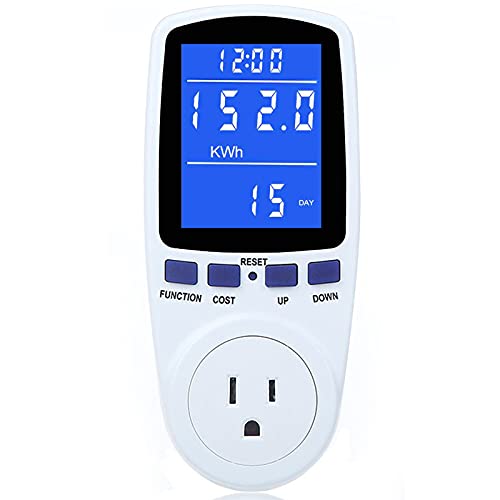
- Measures watts, kWh, volts, amps, frequency, and power factor
- Calculates cumulative usage cost and tracks elapsed time
- Backlit wide-angle display with adjustable illumination
Best For: Everyday 120V plug-in appliance monitoring and cost tracking
Dual-Outlet Analyzer
Two-Device Power Consumption Monitor
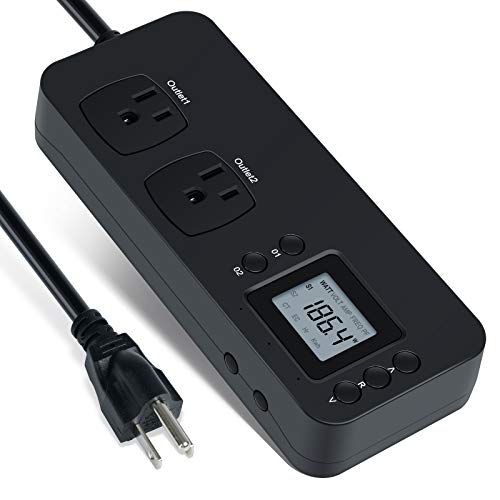
- Monitors two electronic devices independently
- Measures watts, volts, amps, hertz, kWh, time, and power factor
- Includes memory, flame-retardant housing, and a 14AWG cord
Best For: Comparing two compatible household appliances at once
Practical Power Tracking

- Tracks voltage, current, energy, cost, and power factor
- Stores readings through unplugging and power failures
- Includes overload warning with audible alert
Best For: Detailed monitoring of energy-hungry appliances
Easy-Read Energy Monitoring

- Backlit LCD offers a 160-degree viewing angle
- Shows nine electrical and usage measurements
- Stores data during sudden power outages
Best For: Readable everyday appliance monitoring
Alert-Focused Appliance Testing

- Offers quick access to five measurement groups
- Supports overload, energy, and cost alarms
- Stores data and retains settings after resets
Best For: Multi-appliance tracking with configurable alerts
Classic Plug-In Monitor – Kill A Watt P4400
The P3 P4400 Kill A Watt is a straightforward choice for comparing energy meters for home appliances. Plug it into a 115-volt appliance to view electricity use, voltage, amperage, wattage, and estimated costs on its large LCD screen.
Best For: Homeowners who want a portable, no-app monitor for individual AC appliances.
Pros:
- Tracks usage by day, week, month, or year.
- Displays kilowatt-hours, estimated costs, volts, amps, and wattage.
- Designed for 115-volt appliances and compatible with inverters.
Cons:
- Does not provide smart-home or remote app control.
- Intended for individual appliances rather than whole-home monitoring.
This is a practical, easy-to-read meter for basic appliance testing and energy-cost estimates, especially when you want a simple plug-in tool instead of a connected system.
Connected Smart Plug Meter – Eve Energy 2-Pack
The Eve Energy 2-Pack combines appliance control with power monitoring, making it a smart option among energy meters for home appliances. Use an app or voice assistant to switch compatible devices on or off, including remotely or based on presence.
Best For: Users who want two smart plugs with Matter compatibility, local control, and smart-home integration.
Pros:
- Works across major platforms through Matter, including Apple, Amazon, Google, and SmartThings setups.
- Supports app and voice control for connected appliances.
- Uses Thread technology and offers local communication without Eve cloud registration or tracking.
Cons:
- Requires a compatible hub and supported iOS, iPadOS, or Android software.
- Provides plug-level control rather than whole-home monitoring.
Eve Energy is a good fit when measurement is only part of the goal and you also want scheduled, presence-based, or voice-controlled appliance operation. Check hub compatibility before buying.
Detailed Outlet Meter – SURAIELEC Watt Meter
The SURAIELEC Outlet Watt Meter is a versatile choice for comparing energy meters for home appliances. It measures power, voltage, amperage, frequency, power factor, time, and cumulative kWh, while also calculating costs from user-set electricity prices.
Best For: People who want detailed plug-in readings, cost calculations, and stored data without installing a circuit-panel monitor.
Pros:
- Supports 90–250 Vac, up to 16 amps, and up to 3,680 watts.
- Offers a backlit LCD with multiple electrical measurements and adjustable overload indication.
- Retains data for up to 90 days with its rechargeable battery backup.
- Compact design keeps the lower wall outlet accessible when plugged into the upper outlet.
Cons:
- Monitors appliances through an outlet rather than providing whole-home data.
- Requires users to enter electricity prices for cost calculations.
With broad voltage support, detailed readings, and long-term memory, this meter suits users who want more diagnostic information than a basic energy monitor while retaining a simple plug-in setup.
Whole-Home Circuit Monitor – Emporia Vue 3
The Emporia Vue 3 takes a whole-home approach to energy meters for home appliances. Its clamp-on sensors install in the circuit panel, while the app provides real-time monitoring, solar and net-metering support, and appliance-level data for up to 16 branch circuits.
Best For: Homeowners seeking circuit-level energy visibility, solar monitoring, and app-based energy management.
Pros:
- Includes sixteen 50-amp branch sensors for monitoring critical loads such as HVAC equipment, water heaters, washers, dryers, and ranges.
- Supports solar and net-metering monitoring.
- Provides app-based reporting, notifications, automation settings, and exportable cloud data.
- UL Listed and supports several home electrical configurations with clamp-on sensors.
Cons:
- Requires installation in the circuit panel, 2.4 GHz Wi-Fi, and an internet connection for app monitoring.
- Some three-phase configurations require an additional 200-amp sensor.
- Not a simple plug-in meter for a single appliance.
The Vue 3 is the most comprehensive option here for understanding household circuits and managing energy over time, but its panel installation and connectivity requirements make it better suited to planned whole-home monitoring.
Panel Load Monitor – Hardwired Split-Core Energy Meter
For anyone comparing energy meters for home appliances and electrical circuits, this hardwired panel meter provides a broad view of AC load. It displays voltage, current, wattage, kilowatt-hours, frequency, and power factor on a compact LCD, with a split-core transformer for simpler current sensing.
Best For: Monitoring appliance circuits, generators, RV systems, workshops, and household panels where hardwired installation is appropriate.
Pros:
- Measures multiple AC power parameters, including voltage, amperage, watts, and cumulative energy.
- Split-core 100A CT clamps around one live conductor without cutting the monitored wire.
- Supports 80–260VAC circuits and includes power-off memory plus a visual overload warning.
Cons:
- Requires hardwired installation and appropriate electrical safety precautions.
- For 120/240V split-phase systems, one leg may require a separate meter or additional setup.
This is the strongest fit when you need continuous panel-level visibility rather than a plug-in appliance tester. Its wide voltage range and 100A capacity make it versatile, but installation is more involved than simply plugging in a monitor.
Plug-In Appliance Tracker – 7-Mode Home Watt Meter
This plug-in option is a practical choice among energy meters for home appliances when you want to measure one standard 120V device at a time. Its seven display modes cover watts, kilowatt-hours, voltage, amperage, frequency, power factor, cost, and additional usage details.
Best For: Tracking the electricity use and estimated cost of plug-in appliances such as household electronics and other standard socket-powered devices.
Pros:
- Displays consumption, cost, voltage, current, frequency, power factor, and minimum or maximum wattage.
- Large backlit LCD offers wide viewing angles and adjustable backlight duration.
- Includes adjustable overload protection and memory for usage data after unplugging or power loss.
Cons:
- Limited to standard plug-in appliances and a maximum operating voltage of 120V.
- The overload setting may need adjustment before use; the notes recommend setting it to 1800W in general.
Choose this model if convenience and readable appliance-level data matter most. It avoids hardwiring and adds cost tracking, while its overload alert provides an extra reminder when a connected load is too high.
Dual-Outlet Analyzer – Two-Device Power Consumption Monitor
For households comparing energy meters for home appliances, this Briidea monitor stands out by providing two outlets for independent device monitoring. It measures watts, volts, amps, frequency, kilowatt-hours, cumulative time, and power factor while retaining selected consumption data through a power failure.
Best For: Measuring two compatible household appliances, such as a TV, refrigerator, water purifier, or HIFI system, from one monitoring device.
Pros:
- Two-outlet design allows two electronic devices to be monitored independently.
- Tracks several useful readings, including real-time power, voltage, current, kWh, time, and power factor.
- Uses a flame-retardant ABS housing and 14AWG heavy-duty extension cord.
Cons:
- Its overload warning is specified at 1200W, so it is not suited to every high-load appliance.
- The supplied notes identify a 120V minimum operating voltage and do not specify a broader voltage range.
This model is convenient when two nearby appliances need comparison without using separate meters. Its safety-focused construction and memory function add practicality, but the 1200W warning threshold should be considered before connecting higher-powered equipment.
Practical Power Tracking – Upgraded Watt Meter
For shoppers comparing energy meters for home appliances, this plug-in watt meter provides a broad view of electrical use. It tracks voltage, amperage, frequency, power factor, energy, cost, and minimum and maximum power on a clear LCD screen.
Best For: Monitoring higher-cost appliances and checking their electricity use over time.
Pros:
- Measures multiple electrical parameters, including energy and estimated cost.
- Stores consumption data after unplugging or during a power failure.
- Offers overload protection with an LCD warning and audible alert.
- Large LCD display is designed for easy reading day or night.
Cons:
- This model does not include a backlight.
- The overload setting should be set to 1800W before use.
This is a straightforward choice when you want detailed appliance readings and retained data without a more complex system. Its overload warning adds a useful safety reminder during testing.
Easy-Read Energy Monitoring – HBN Backlit Watt Meter
This HBN plug-in meter is a convenient option among energy meters for home appliances, especially if you need readings from different angles or in low light. Its backlit display presents nine types of electrical and usage data, including wattage, kilowatt-hours, time, voltage, current, frequency, power factor, and cost.
Best For: Users who want a backlit, multi-reading meter for everyday appliance checks.
Pros:
- Backlit LCD has a 160-degree viewing angle and turns off after 15 seconds to conserve energy.
- Displays nine data categories through a simple push-button interface.
- Retains non-real-time data if power is interrupted.
- Rated for up to 15A and 1875W, with ETL certification noted in the details.
Cons:
- The backlight switches off automatically after 15 seconds.
- It is intended for standard 125VAC outlets and has a stated 15A maximum.
The backlit screen is the main differentiator here, making readings easier when the outlet is positioned awkwardly. It is a practical pick for routine measurements and cost tracking within its stated electrical limits.
Alert-Focused Appliance Testing – KETOTEK Watt Meter
The KETOTEK watt meter gives you quick button access to appliance power, voltage, current, frequency, power factor, energy, cost, and runtime readings. For shoppers seeking energy meters for home appliances with built-in warnings, it can alert you when load power, accumulated kilowatt-hours, or electricity cost reaches a set threshold.
Best For: Tracking several household appliances while using configurable overload, energy, and cost alerts.
Pros:
- Dedicated controls provide quick access to different measurement screens.
- Calculates electricity cost when the appliance operates above 2 watts.
- Provides overload, KWh, and cost alarms with an LCD message and flashing LED.
- Stores data during power failures and can reset readings while retaining settings.
Cons:
- The default overload value is 3680W, but the instructions generally recommend setting it to 1800W before use.
- Cost calculations depend on the appliance running above 2 watts.
- The display is LCD rather than backlit.
This model stands out for users who want more than basic readings, particularly threshold alerts and separate controls for measurement categories. Its wide-viewing-angle LCD also helps when the outlet is not directly at eye level.
How We Picked These Energy Meters for Home Appliances
We organized this selection around the most useful ways to measure residential electricity: plug-in testing for individual appliances, smart-home monitoring for connected outlets, and circuit-level or whole-home tracking. We also considered display clarity, measurement capabilities, installation requirements, automation support, portability, and suitability for common loads such as refrigerators, freezers, televisions, computers, dehumidifiers, and space heaters.
Because electrical systems and product specifications vary, always check voltage, amperage, outlet type, and installation instructions before connecting a meter. Hardwired models may require appropriate electrical knowledge or a qualified electrician.
Quick Comparison
| Meter type | Best for | Main advantage | What to check |
|---|---|---|---|
| Basic plug-in monitor | One appliance at a time | Simple, portable testing | Load rating and display modes |
| Smart plug with energy monitoring | Automated schedules and remote tracking | App control and usage history | Platform compatibility and network requirements |
| Outlet power meter | Detailed cost and consumption checks | More readings at the receptacle | Accuracy, reset functions, and outlet fit |
| Hardwired or whole-home monitor | Circuits, panels, or solar systems | Broader, real-time visibility | Installation, sensor capacity, and electrical compatibility |
Key Buying Factors for Energy Meters for Home Appliances
Measurement Range and Load Rating
Confirm that the meter supports the appliance’s voltage and maximum current. Small electronics and kitchen appliances are usually straightforward, but heating equipment, pumps, air conditioners, and other high-draw loads need a suitable rating and connection method.
Readings and Cost Calculations
Look for the measurements you will actually use, such as watts, volts, amps, kilowatt-hours, frequency, power factor, elapsed time, or estimated operating cost. Cost estimates are only as useful as the electricity rate entered into the device, so verify the rate settings and billing structure.
Display, App, and Data Access
A large backlit LCD is useful for quick checks at the outlet. Smart models are better when you want remote viewing, schedules, notifications, integrations, or longer-term usage history. Check whether the product requires Wi-Fi, a hub, an account, or a particular smart-home platform.
Installation and Safety
Plug-in meters are generally the simplest choice for portable appliance testing. Panel-mounted, split-core, and hardwired meters involve exposed electrical equipment and should be installed only according to the instructions and local requirements. Do not exceed the meter’s stated rating or use it with unsuitable environments or equipment.
Who Should Buy Which Energy Meters for Home Appliances?
Choose a basic plug-in monitor if you want an affordable way to test individual appliances and compare their consumption. Select a smart energy-monitoring plug if you want automation, remote control, or usage data integrated with a compatible smart-home system.
Choose a feature-rich outlet meter when you need detailed readings and cost estimates without installing equipment in the electrical panel. For homeowners who want circuit-level visibility, solar tracking, or a broader view of household demand, a whole-home or hardwired monitor is the better fit—provided the installation and electrical specifications are appropriate.