Tracking an appliance’s electricity use is easier when a meter shows both consumption and estimated cost. These energy meters with cost displays help identify power-hungry devices, compare standby usage, and make household energy decisions with real data.
The lineup includes simple plug-in monitors, backlit models, multi-mode displays, and higher-capacity options for compatible outlets. Use the guide below to match features, measurement range, and installation style to your needs.
Best 10 Energy Meters with Cost Displays Picks for 2026
Classic Plug-In Monitor

- Tracks daily-to-yearly usage and costs
- Shows kWh, volts, amps, and wattage
- Portable monitor for AC 115V appliances
Best For: Simple appliance-level energy and cost tracking
Wide-Range Cost Calculator

- Supports 90-250V and up to 3,680W
- Calculates costs and measures key electrical data
- Retains readings for up to 90 days
Best For: Detailed, flexible monitoring across voltage ranges
Split-Core System Monitor

- Monitors 80-260V AC systems up to 100A
- Displays energy, current, voltage, and frequency
- Includes alarms and automatic data storage
Best For: Higher-current household, commercial, or industrial monitoring
Backlit Plug-In Cost Meter
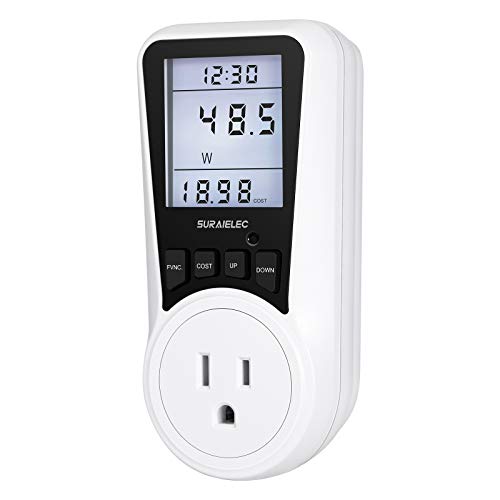
- Calculates costs with customizable utility rates
- Backlit display and detailed appliance readings
- Stores data for up to 90 days
Best For: Everyday appliance monitoring in dim or utility spaces
High-Capacity Choice

- Handles up to 50A and 9,000W
- Retains cumulative energy data
- Made for complete 14-50R circuits
Best For: EV charging, major appliances, and high-capacity circuit monitoring
Cost-Tracking Pick
7-Mode Electricity Usage Monitor
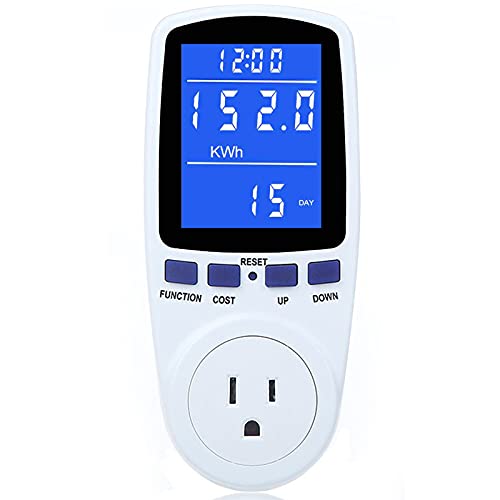
- Displays energy cost and kWh
- Large backlit LCD with wide viewing angles
- Offers overload protection and data memory
Best For: Home appliance cost and consumption tracking
Simple Home Monitor

- Tracks usage, cost, and key electrical readings
- Seven display modes for appliance testing
- Saves data after unplugging or power loss
Best For: Individual US-plug household appliance monitoring
Best Value Two-Pack
8-Mode Cost-Tracking Watt Meter

- Measures wattage, kWh, voltage, current, and cost
- Includes two backlit plug-in meters
- Stores data and warns of overloads
Best For: Monitoring two appliances on a budget
Best for Tight Spaces
Cable-Connected KETOTEK Watt Meter

- Places the display up to 2.9 meters from the plug
- Tracks usage, cost, runtime, and peak power
- Supports adjustable overload, kWh, and cost alarms
Best For: Appliances in cabinets or hard-to-read outlets
Best Simple Readout
HBN 9-Mode Energy Cost Monitor

- Shows nine electrical and cost measurements
- Uses a wide-angle backlit LCD
- Stores data after a power outage
Best For: Simple single-appliance energy and cost checks
Classic Plug-In Monitor – Kill A Watt P4400
The P3 P4400 is a straightforward choice for shoppers comparing energy meters with cost displays for standard 115-volt appliances. Its LCD shows consumption, estimated electricity expenses, volts, amps, and wattage, with tracking options ranging from daily to yearly use.
Best For: Monitoring individual household appliances and estimating their electricity costs over time.
Pros:
- Tracks usage and costs by day, week, month, or year.
- Displays kilowatt-hours, volts, amps, and wattage.
- Large, easy-to-read LCD screen and portable plug-in design.
- Works with AC 115-volt appliances and inverters.
Cons:
- Designed for AC 115-volt appliances rather than a broad 90-250V range.
- Its 15A capacity is intended for individual appliance monitoring, not whole-system measurement.
Choose this model if you want familiar, appliance-level monitoring with simple historical cost tracking rather than advanced electrical-system features.
Wide-Range Cost Calculator – SURAIELEC WMA02A Watt Meter
The SURAIELEC WMA02A stands out among energy meters with cost displays for its 90-250V range and detailed readouts. It measures power, voltage, current, frequency, power factor, energy, and cost while retaining data for up to 90 days with its rechargeable backup battery.
Best For: Users who need versatile plug-in monitoring across different household voltage ranges and long-term data retention.
Pros:
- Measures 90-250V, up to 16A, and up to 3,680W.
- Calculates costs using set electricity prices.
- Provides Class 1.0 accuracy with fine measurement resolution.
- Backlit LCD and 90-day data memory improve usability.
Cons:
- Offers more electrical data than needed for basic plug-in cost checks.
- Its stated maximum load is 3,680W, so higher-demand applications are outside its listed range.
This is a strong fit when voltage flexibility, detailed diagnostics, and preserved readings matter as much as cost calculation.
Split-Core System Monitor – 100A AC Power Monitor
This digital meter takes a different approach to energy meters with cost displays by monitoring an AC electrical system through a split-core current transformer. It displays voltage, current, energy, frequency, and power factor, with programmable power alarms and automatic data storage after an outage.
Best For: Household, commercial, or industrial AC system monitoring where a split current transformer and alarm function are useful.
Pros:
- Measures systems from 80-260V and supports current monitoring up to 100A.
- Displays voltage, current, active energy, frequency, and power factor together.
- Split-core transformer simplifies installation compared with a fixed sensor design.
- Includes preset power alarms and automatic data storage.
Cons:
- Does not list an integrated electricity-cost calculation feature.
- Installation and system monitoring are more involved than using a plug-in appliance meter.
- The supplied notes do not specify a warranty or detailed cost-display settings.
Consider this model when broad AC-system measurements, high-current monitoring, and overload alerts take priority over plug-in convenience or explicit bill estimates.
Backlit Plug-In Cost Meter – SURAIELEC UPWMA01A
The SURAIELEC UPWMA01A is a practical option among energy meters with cost displays for tracking everyday appliances. It calculates costs from customizable utility rates, measures key electrical values, and uses a large backlit LCD that remains readable in dim utility rooms, garages, and basements.
Best For: Household users comparing appliance energy costs in low-light spaces and retaining readings through power interruptions.
Pros:
- Calculates costs using customizable rates from 0-99.99 per kWh.
- Tracks voltage, current, wattage, frequency, kWh, peak power, and operating time.
- Backlit display offers a wide viewing angle for easier reading.
- 90-day battery backup, overload protection, and flame-retardant housing add practical convenience.
Cons:
- Measures devices up to 15A and 1,950W.
- Its listed operating range is more limited than the WMA02A’s 90-250V range.
This meter is a well-rounded choice for routine appliance comparisons, especially where readable night-time data and saved settings are important.
High-Capacity Choice – 50A AC Power Meter
For larger 14-50R circuits, this 50A AC power meter offers real-time readings for voltage, current, wattage, frequency, power factor, and cumulative energy. It is a specialized option among energy meters with cost displays, though the supplied features emphasize electrical measurements rather than an electricity-cost readout.
Best For: Monitoring compatible 14-50R circuits, EV charging, major appliances, industrial equipment, and electrical troubleshooting.
Pros:
- Measures up to 50A and 9,000W across 40-300VAC.
- Tracks voltage, current, power, frequency, power factor, and kWh.
- Retains historical energy data after a power outage.
- Flame-retardant PC housing adds durability and extra protection.
Cons:
- Designed specifically for complete 14-50R adapter socket circuits.
- The notes do not specify a cost-display function.
- Its high-capacity format is less suited to ordinary household outlets.
This is the strongest fit when circuit capacity and detailed electrical diagnostics matter more than a simple plug-in bill estimate. Check the outlet wiring carefully before buying, especially the X and Y lines.
Cost-Tracking Pick – 7-Mode Electricity Usage Monitor
This plug-in watt meter is a practical choice for shoppers comparing energy meters with cost displays. It shows power, energy, voltage, amperage, frequency, power factor, minimum and maximum wattage, cumulative time, and estimated electricity cost on a large backlit screen.
Best For: Tracking appliance consumption and estimated electricity costs at home, especially for energy-hungry devices.
Pros:
- Displays cumulative electricity cost along with kWh and electrical readings.
- Seven display modes make it easy to switch between measurements.
- Large 2.36-by-1.85-inch LCD offers wide viewing angles and adjustable backlight timing.
- Includes adjustable overload protection and memory after unplugging or power failure.
Cons:
- Overload protection is rated up to 3,680W and should be configured before use.
- It is intended for plug-in appliance monitoring rather than high-amperage circuits.
- The cost feature depends on the meter’s configured settings and tracked usage.
Among these options, this model is the most directly aligned with cost-conscious home monitoring. Its readable display, memory function, and overload warning make it useful for comparing everyday appliance expenses.
Simple Home Monitor – Plug-In Watt Meter
This plug-in power meter gives homeowners a straightforward way to inspect appliance usage, with readings for watts, voltage, amperage, frequency, power factor, energy, cost, and minimum or maximum power. It is a compact option for comparing energy meters with cost displays without moving to a higher-capacity circuit monitor.
Best For: Checking individual household appliances and identifying high-cost energy users.
Pros:
- Tracks both electricity consumption and estimated cost.
- Seven display modes cover key electrical and usage measurements.
- Stores readings after unplugging or a sudden power failure.
- Overload warning helps alert users when the rated load is exceeded.
Cons:
- The included unit uses a US plug and is intended for plug-in monitoring.
- The notes recommend setting the overload limit to 1,800W before use.
- The display is described as clear but does not include a backlight.
This is a sensible budget-style monitor for appliance-by-appliance checks. Choose it when cost tracking, basic electrical readings, and retained data are more important than a large display or high-power circuit capability.
Best Value Two-Pack – 8-Mode Cost-Tracking Watt Meter
For shoppers comparing energy meters with cost displays, this two-pack provides a practical way to monitor two appliances at once. It measures wattage, voltage, current, energy use, and cumulative electricity cost, with a backlit display and overload warning.
Best For: Households that want two plug-in monitors for tracking appliance consumption and estimated costs.
Pros:
- Displays power, kWh, voltage, current, frequency, power factor, unit price, and total cost.
- Includes two meters, each with a clear backlit LCD.
- Stores cumulative usage and cost data after unplugging or a power failure.
- Provides flashing overload alerts above the default 1800W threshold.
Cons:
- The default overload threshold is lower than the maximum rating of some comparable meters.
- Backlight operation is limited to AC-powered use and automatically turns off after 10 minutes.
This is a useful choice when value and multiple measurement options matter. Its two-pack format and cost tracking make it especially convenient for comparing appliances in different rooms.
Best for Tight Spaces – Cable-Connected KETOTEK Watt Meter
This KETOTEK model stands out among energy meters with cost displays because its display connects to the plug through a 2.9-meter cable. That split design makes it easier to read measurements when the outlet or appliance is tucked inside a cabinet, behind a refrigerator, or in another cramped location.
Best For: Monitoring appliances in hard-to-reach spaces, including washing machines, dryers, dishwashers, and refrigerators.
Pros:
- Measures wattage, kWh, voltage, current, frequency, power factor, cost, operating time, and minimum/maximum power.
- Separate display and plug allow flexible screen placement through the 2.9-meter cable.
- Offers adjustable overload protection up to 3680W, plus kWh and cost alarms.
- Saves data during power outages and supports resetting historical data separately from settings.
Cons:
- The cable-connected design may be less convenient for simple, compact outlet monitoring.
- It requires a CR2032 battery in addition to the connected electrical plug.
The flexible display is the main reason to choose this model. It offers unusually broad monitoring and alert features while keeping the readout accessible in locations where a conventional plug-in display would be difficult to see.
Best Simple Readout – HBN 9-Mode Energy Cost Monitor
The HBN watt meter is a straightforward option for shoppers seeking energy meters with cost displays and a simple plug-in setup. Its backlit LCD cycles through nine data types, including energy consumption, usage time, and electricity cost, so you can review an appliance’s operating profile from one screen.
Best For: Users who want broad electrical readings and cost tracking in a simple single-meter design.
Pros:
- Displays power, apparent power, kWh, usage time, frequency, power factor, voltage, current, and cost.
- Backlit LCD has a 160-degree viewing angle for easier reading from different positions.
- Stores non-real-time data through a sudden power outage.
- Rated for standard 125VAC outlets and up to 15A or 1875W for specified loads.
Cons:
- The backlight turns off after 15 seconds to conserve energy.
- It is limited to one meter per package.
- The listed maximum load is 1875W, so users should check appliance requirements before connecting.
With nine display modes and a wide viewing angle, this HBN meter is a good fit for routine appliance checks. Its short backlight duration favors quick readings rather than continuous illuminated monitoring.
How We Picked These Energy Meters with Cost Displays
We focused on meters that make electricity use understandable at a glance. Key considerations included cost calculation, display clarity, measurement functions, rated voltage and current capacity, overload protection, outlet compatibility, and ease of setup. We also included a range of designs, from compact plug-in monitors for individual appliances to higher-capacity meters intended for compatible 240V outlets or broader electrical monitoring.
Because estimated operating cost depends on the electricity rate entered into the device, these products are best used for comparison and tracking rather than utility-bill accounting. Always confirm that a meter’s electrical ratings match the appliance and outlet before use.
Quick Comparison
- Best for basic household checks: A standard plug-in watt meter with watts, voltage, amperage, kilowatt-hours, and cost readings.
- Best for multiple appliances: A two-pack lets you monitor more than one device at the same time.
- Best for easy nighttime reading: Choose a backlit display, especially for meters installed in dim utility areas.
- Best for specialized outlets: A 50A or 240V monitor may suit compatible high-load equipment, but it requires careful outlet and circuit matching.
- Best for broader electrical data: Multi-function models may add frequency, power factor, current, and voltage readings.
Key Buying Factors for Energy Meters with Cost Displays
Compatibility and Electrical Rating
Check voltage, maximum amperage, plug shape, and outlet type before buying. Most plug-in household monitors are designed for standard outlets, while NEMA 14-50 and 100A-style meters are intended for different applications. Never exceed the stated rating.
Cost Calculation and Rate Settings
A cost display is useful only when the meter can be configured with a rate close to your utility’s pricing. If your electricity plan has time-of-use rates or changing tiers, treat the result as an estimate and compare readings during consistent periods.
What the Screen Measures
For everyday appliance testing, watts, voltage, amperage, accumulated kilowatt-hours, and elapsed time are usually enough. Frequency and power-factor readings are more valuable for users troubleshooting equipment or analyzing less conventional loads.
Readability and Controls
Look for a large, clear LCD, intuitive buttons, memory retention, and a backlight if the meter will be hidden behind furniture or used in a dark space. Multiple display modes are helpful only when switching between them is straightforward.
Safety and Build Quality
Overload protection, secure plug contacts, a sensible enclosure, and clear operating instructions matter more than having the longest feature list. Use the meter indoors unless the manufacturer specifically approves another environment, and do not use it with damaged cords or outlets.
Who Should Buy Which Energy Meters with Cost Displays?
Choose a basic plug-in model if you want to check refrigerators, office equipment, entertainment systems, heaters, or standby loads without complicated setup. A backlit or multi-mode unit is a better fit when you frequently read measurements in low light or want more detailed electrical information.
Buy a two-pack if you are comparing appliances simultaneously or monitoring separate rooms. Select a higher-amperage or 240V model only when its connector, voltage, current rating, and intended application exactly match your equipment. For most households, the best value comes from a clearly readable plug-in meter that supports cost-rate programming and records cumulative energy use.