Choosing among three-phase energy meters gets easier when you match the meter’s current capacity, installation method, connectivity, and measurement features to your electrical system.
This roundup covers compact DIN-rail smart meters, high-current monitoring kits, solar-focused options, and professional power-quality analyzers for residential and commercial applications.
Best 10 Three Phase Energy Meters Picks for 2026
Best Connected Monitor

- Three 63A current transformers for non-contact measurement
- Wi-Fi and LAN monitoring with no hub required
- Stores 60 days of one-minute energy data
Best For: Connected home, business, and photovoltaic monitoring
Best for Power Quality Testing
Fluke 1775 Three-Phase Analyzer

- Industrial three-phase power quality analyzer
- Designed for electrical-circuit measurements
- Meets CE, NIST, RoHS, and UL specifications
Best For: Professional industrial power-quality testing
Best Smart Solar Monitor

- Three 120A clamps with 1% active-energy accuracy
- Measures produced and used energy per phase
- Matter, Wi-Fi, LAN, and Bluetooth connectivity
Best For: Solar systems and connected higher-current installations
Best Outdoor Submeter Kit

- Outdoor enclosure rated for loads up to 200A
- Supports 120V, 208V, and 240V supplies
- Compact design with clear labeling
Best For: Basic outdoor residential or commercial submetering
Smart Home Pick
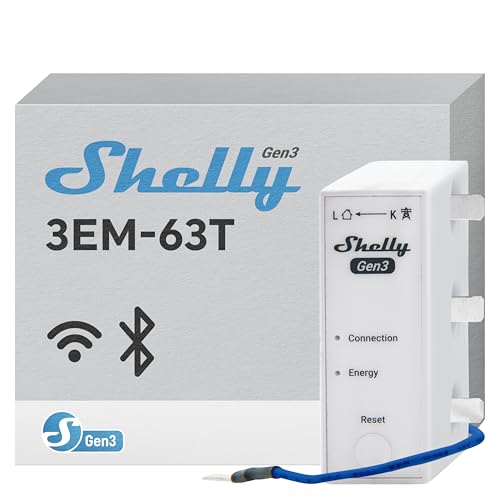
- Monitors three-phase or three single-phase circuits
- Wi-Fi app, Alexa, and Google Home compatibility
- Solar-ready with real-time data and logging
Best For: Connected home energy monitoring and automation
Victron Integration Pick

- Designed for Victron GX and VRM systems
- Includes current transformers for 75A measurement
- Offers VE.Can, Ethernet, and Modbus UDP
Best For: Victron solar and battery installations
Cloud Monitoring Pick
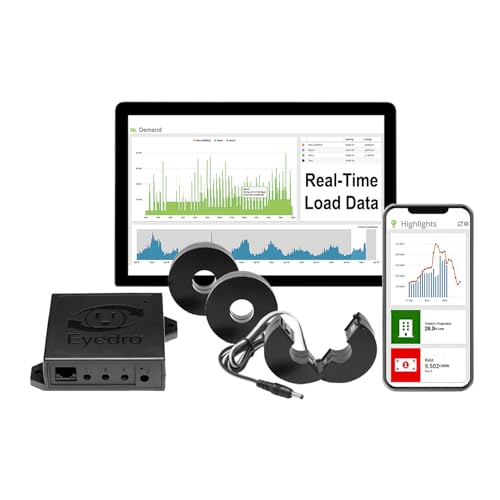
- Tracks energy, power, voltage, cost, and power factor
- Non-invasive 200A split-core sensors included
- Wi-Fi or Ethernet with no-fee 24/7 cloud history
Best For: Detailed usage, solar, and energy-cost reporting
Best with Extra Features
Tuya 120A Three-Phase Energy Monitor

- Three 120A clamp sensors with ±2% stated accuracy
- SmartLife app monitoring over 2.4 GHz WiFi
- Supports bidirectional readings and selected three-phase systems
Best For: Residential appliance and circuit monitoring
High-Capacity Choice
Eyedro 3000A Three-Phase Meter

- Three 3000A Flex Sensors with 4-inch openings
- WiFi or Ethernet with 24/7 cloud history
- Supports multiple voltage configurations and cost reporting
Best For: High-current commercial, industrial, and solar systems
Balanced Commercial Pick

- Three 400A steel split-core CTs
- WiFi or Ethernet with no-subscription cloud data
- Supports multiple Delta and Wye voltage configurations
Best For: Commercial panels needing detailed remote monitoring
Best Connected Monitor – Shelly Pro 3EM 3CT 63
The Shelly Pro 3EM 3CT 63 is a practical choice among three phase energy meters for homeowners, businesses, and photovoltaic installations. Its three 63A current transformers provide non-contact measurement, while Wi-Fi and LAN connectivity support remote monitoring without a hub.
Best For: Home automation, commercial energy allocation, machinery monitoring, and solar-ready installations.
Pros:
- Measures voltage, current, active power, apparent power, and accumulated energy for each phase.
- Stores up to 60 days of readings at one-minute intervals.
- Supports four-quadrant measurement and photovoltaic monitoring.
- Offers Wi-Fi, LAN, iOS, Android, Alexa, and Google Home compatibility.
Cons:
- Does not include a built-in relay.
- Contactor control requires a separate Shelly Pro Addon.
Choose this model if connected monitoring and detailed historical data matter more than integrated load switching. Its DIN-rail format and current transformers suit professional installations, but control applications require additional hardware.
Best for Power Quality Testing – Fluke 1775 Three-Phase Analyzer
The Fluke 1775 is a three phase energy meters alternative for professional troubleshooting and power-quality work. It is designed as an industrial three-phase power quality analyzer, making it better suited to diagnostic measurements than routine smart-home energy tracking.
Best For: Industrial technicians and professionals analyzing power quality on electrical circuits.
Pros:
- Purpose-built for three-phase power quality analysis.
- Industrial styling and broad compatibility with devices connected to an electrical circuit.
- Meets CE, NIST, RoHS, and UL specifications.
Cons:
- The supplied notes do not list smart-home connectivity or long-term data storage.
- It is a corded instrument rather than a DIN-rail monitoring device.
The Fluke 1775 makes the most sense when the priority is professional power-quality analysis. Buyers seeking app-based consumption tracking or permanent installation should consider a connected energy meter instead.
Best Smart Solar Monitor – Shelly Pro 3EM v2 120A
The Shelly Pro 3EM v2 is one of the more versatile three phase energy meters for connected homes, offices, factories, and solar systems. Its three 120A current transformers, 1% active-energy accuracy, and Wi-Fi, Matter, LAN, and Bluetooth connectivity support detailed real-time monitoring.
Best For: Solar-panel monitoring, smart-home automation, and higher-current three-phase circuits.
Pros:
- Includes three 120A current transformers for higher-capacity measurements.
- Tracks both produced and consumed energy on each phase.
- Supports Wi-Fi, Matter, LAN, and Bluetooth, including Bluetooth gateway functionality.
- Enables local scripts and webhooks for load management without relying on the cloud.
Cons:
- Its 120A clamps may be more capacity than smaller installations require.
- Advanced automation features may require additional configuration.
This is a strong fit when energy monitoring needs to connect with solar production or automated loads such as heating, cooling, or EV charging. The local-control options add flexibility for users who want to reduce cloud dependence.
Best Outdoor Submeter Kit – Series 2000 Outdoor SubMeter
AMERICAN DISGE Series 2000 Three Phase Outdoor Energy SubMeter Kit 110-277V MAX 200 Amp
Check Price On AmazonThe Series 2000 Outdoor SubMeter Kit is a straightforward option for three phase energy meters in residential or commercial submetering applications. Its outdoor enclosure supports up to 200A and accommodates 120V, 208V, and 240V supplies.
Best For: Outdoor residential or commercial submetering where a durable enclosure and broad voltage compatibility are important.
Pros:
- Designed for outdoor installations with a durable enclosure.
- Supports loads up to 200A.
- Works with 120V, 208V, and 240V power supplies.
- Compact 6-by-6-by-4-inch form factor with clear labeling.
Cons:
- The supplied description identifies it as a single-phase meter despite the product title mentioning three phase.
- The notes do not mention app connectivity, remote monitoring, or historical data storage.
Consider this kit for basic, weather-exposed submetering rather than connected energy management. Verify the required phase configuration carefully before purchase, since the supplied specifications describe single-phase measurement while also listing 1PH, 2W, or 3W configurations.
Smart Home Pick – Shelly 3EM-63T Gen3
The Shelly 3EM-63T Gen3 is a compact option for monitoring three-phase energy systems or three separate single-phase circuits. This three phase energy meter provides real-time readings, four-quadrant measurement, photovoltaic support, and app-based data logging without requiring a hub.
Best For: Homeowners and smart-home users who want connected monitoring, solar-readiness, and local automation insights.
Pros:
- Supports three-phase systems or three single-phase circuits.
- Offers real-time data, four-quadrant measurement, and optical pulse indication.
- Works with iOS and Android apps, Alexa, Google Home, and smart-home setups.
- Supports photovoltaic monitoring and data logging.
Cons:
- Monitoring device only; switching capability is not included.
- Installation and circuit integration may require qualified electrical expertise.
Choose this model if app access and home automation are priorities. Its 63A rating and solar support make it a flexible monitoring choice, but buyers looking for built-in load switching will need additional equipment.
Victron Integration Pick – Victron Energy VM-3P75CT
The Victron Energy VM-3P75CT is an industrial three phase energy meter designed to integrate with Victron GX devices, VictronConnect, and the VRM Portal. It uses included current transformers, provides a 100ms refresh rate, and supports both VE.Can and Ethernet connectivity.
Best For: Victron-based solar, battery, and energy-management installations requiring networked three-phase measurement.
Pros:
- Compatible with Cerbo GX, Ekrano GX, VictronConnect, and the VRM Portal.
- Includes current transformers with 75A rated current.
- Provides VE.Can and Ethernet connectivity, including Modbus UDP.
- Supports a broad 85–265VAC line-to-neutral voltage range.
Cons:
- Circuit breaker and 500mA neutral-conductor fuse are required but not included.
- Best suited to Victron-centered systems rather than general-purpose smart-home use.
This meter is a strong fit when reliable integration with Victron monitoring hardware matters more than consumer-oriented app features. Plan for the required protective devices and professional installation during setup.
Cloud Monitoring Pick – Eyedro 3-Phase Energy Meter
The Eyedro 3-Phase Energy Meter combines non-invasive split-core sensors with Wi-Fi or Ethernet connectivity for detailed usage monitoring. This three phase energy meter tracks kWh, watts, amps, volts, power factor, and cost, while its MyEyedro platform retains 24/7 history without a subscription fee.
Best For: Homes and businesses that need accessible energy-cost tracking, solar-generation monitoring, and flexible voltage support.
Pros:
- Supports multiple configurations, including 600V Delta and 480V/277V Wye.
- Uses non-invasive 200A split-core sensors with no wiring changes required.
- Provides Wi-Fi or wired Ethernet connectivity and detailed usage history.
- Supports solar, net metering, rate structures, alerts, reports, and bill projections without a subscription.
Cons:
- Requires a 2.4GHz Wi-Fi network for wireless operation.
- Separate hardware is required for the MyEyedro Net Meter plugin setup.
- European-style power adapters are sold separately.
Eyedro stands out for broad electrical compatibility and useful cost-focused reporting. Its clamp-based installation can simplify retrofits, while Ethernet provides an alternative when wireless coverage is unsuitable.
Best with Extra Features – Tuya 120A Three-Phase Energy Monitor
This clamp-based monitor is a practical choice for homeowners seeking three phase energy meters with app-based monitoring. Its three 120A sensors track power, voltage, current, and power factor in real time, while 2.4 GHz WiFi enables remote access through the SmartLife app.
Best For: Homeowners monitoring appliances, household circuits, solar use, or compatible Tuya smart-home devices.
Pros:
- Includes three 120A clamp sensors with stated accuracy of ±2%.
- Tracks real-time consumption, voltage, current, and power factor.
- Supports bidirectional measurements and several single- and three-phase configurations.
- Works with SmartLife and can integrate with other Tuya devices.
Cons:
- Requires 2.4 GHz WiFi and internet access for phone-based monitoring.
- Installation and servicing should be performed by qualified personnel.
- Three-phase support excludes Delta systems, and an additional sensor may be optional for some setups.
Choose this model when straightforward residential monitoring and smart-home integration matter more than extremely high current capacity. Confirm your panel configuration before ordering, especially if you have a Delta system.
High-Capacity Choice – Eyedro 3000A Three-Phase Meter
For larger electrical systems, this Eyedro model is one of the more capable three phase energy meters in the group. It combines three 3000A Rogowski sensors with WiFi or Ethernet connectivity, detailed electrical readings, and 24/7 history through the MyEyedro platform.
Best For: Commercial, industrial, solar, and high-current installations requiring flexible connectivity and long-term usage data.
Pros:
- Includes three 3000A Flex Sensors with 4-inch openings and compatibility from 5A to 6000A.
- Supports multiple voltage configurations, including 600V Delta and several Wye systems.
- Provides readings for kWh, watts, amps, volts, power factor, true power, and cost.
- Offers WiFi or wired Ethernet plus no-subscription MyEyedro cloud software.
Cons:
- Solar generation and grid consumption require two Eyedro systems to be broken out separately.
- European Type C power adapters are sold separately.
- The Rogowski sensors and high-current design may be more than a typical home needs.
This is the strongest fit for high-current panels and installations that benefit from broad voltage compatibility, Ethernet, and detailed cost reporting. Its non-invasive split-core installation avoids wiring changes, but professional setup is still appropriate for complex systems.
Balanced Commercial Pick – Eyedro 400A Three-Phase Meter
This 400A Eyedro meter offers a middle ground for buyers comparing three phase energy meters for commercial or larger residential applications. It uses three steel split-core CTs, supports WiFi or Ethernet, and records detailed energy data without a recurring MyEyedro software subscription.
Best For: Three-phase panels up to the supplied 400A sensor rating that need remote monitoring, historical data, and solar or net-metering support.
Pros:
- Includes three 400A steel current transformers for non-invasive installation.
- Supports 600V Delta, 480V/277V Wye, 208V/120V, high-leg Delta, and more.
- Displays energy, watts, amps, volts, power factor, and cost in real time.
- Provides WiFi or Ethernet connectivity and no-fee cloud history, alerts, and reports.
Cons:
- Separate solar generation and grid-consumption breakdown requires two monitors.
- European Type C adapters are sold separately.
- Its 400A CT rating is less suitable than the 3000A version for very high-current installations.
For systems that do not need the 3000A model’s capacity, this version delivers a useful blend of measurement detail, connectivity, and voltage flexibility. Verify conductor current and configuration before selecting it.
How We Picked the Best Three Phase Energy Meters
We compared these meters by the electrical systems they support, maximum measured current, sensing method, installation format, connectivity, and intended use. The selection includes compact current-transformer meters for home automation, higher-capacity devices for commercial panels, outdoor submetering kits, and professional analyzers designed to investigate power-quality problems.
We also considered practical features such as Wi-Fi, Ethernet, app access, Matter or smart-home compatibility, solar and net-metering support, data visibility, and whether a product is better suited to continuous monitoring or occasional diagnostic work. Always verify local electrical requirements and installation instructions before purchase; fixed-panel wiring may require a qualified electrician.
Quick Comparison
| Best For | Look For |
|---|---|
| Smart-home energy tracking | Wi-Fi, app support, automation integrations, and compact DIN-rail installation |
| Solar and net metering | Bidirectional energy measurement, flexible CT placement, and clear import/export data |
| Large commercial loads | High amp ratings, compatible Rogowski coils or CTs, and Ethernet connectivity |
| Outdoor or remote submetering | Appropriate enclosure, weather-conscious installation, and dependable network access |
| Electrical troubleshooting | Power-quality measurements, event recording, waveform analysis, and professional probes |
Key Buying Factors for Three-Phase Energy Meters
Current Rating and Sensing Method
Confirm the meter’s maximum current before focusing on software features. A 63A or 120A CT-based meter may suit a residential distribution board, while larger services need 200A, 400A, 3,000A, or appropriately sized Rogowski sensors. CTs and flexible coils must fit the conductor and installation space without exceeding their specified range.
Measurement Goals
Basic energy meters report consumption and often voltage, current, power, and power factor. For solar systems, choose a model that can distinguish grid import, export, and generation where required. If you need to diagnose nuisance trips, harmonics, voltage dips, transients, or phase imbalance, use a dedicated power-quality analyzer rather than a basic consumption monitor.
Connectivity and Data Access
Wi-Fi is convenient but depends on reliable coverage near the electrical panel. Ethernet is usually preferable for fixed commercial installations or areas with weak wireless signals. Check whether the app provides historical data, exports, alerts, local access, cloud access, or integrations with platforms such as Home Assistant, Alexa, Google Home, HomeKit, or Matter.
Installation and Safety
DIN-rail meters are neat choices for compatible distribution boards, while clamp-based systems can be easier to retrofit. Verify phase configuration, voltage range, neutral requirements, CT orientation, enclosure suitability, and sensor lead length. Do not work inside energized panels unless you are properly qualified and following applicable regulations.
Who Should Buy Which Three Phase Energy Meters?
Choose a compact Shelly-style smart meter if you want real-time household monitoring, automation, or app-based tracking in a standard panel. These are especially useful when small size and smart-home compatibility matter.
Choose an Eyedro or high-current monitoring system for larger services, commercial equipment, multiple panels, or long-term web-based energy visibility. Match the sensor type and capacity to the conductors rather than selecting by brand alone.
Choose a Victron-compatible meter when it must work within a Victron-centered energy-management or inverter system. Compatibility with the rest of the installation can be more important than a broader feature list.
Choose a professional analyzer such as the Fluke option when the goal is troubleshooting and documentation, not simply tracking kilowatt-hours. It is the better category for technicians investigating complex power-quality issues.