Energy meters make electricity use easier to understand, whether you want to measure one appliance, monitor a whole home, or track a dedicated circuit. The right option can reveal standby drain, confirm solar performance, or help reduce recurring power costs.
This roundup covers smart whole-home monitors, Wi-Fi-connected devices, plug-in meters, and standalone digital sub-meters. Use the buying guide below to match measurement style, installation needs, connectivity, and budget to your project.
Best 10 Energy Meters Picks for 2026
Best Whole-Home Energy Meter

- Whole-home and 16-circuit monitoring
- Solar and net-metering support
- UL Listed with app-based data
Best For: Detailed residential energy and appliance monitoring
Best 3-Phase Energy Meter
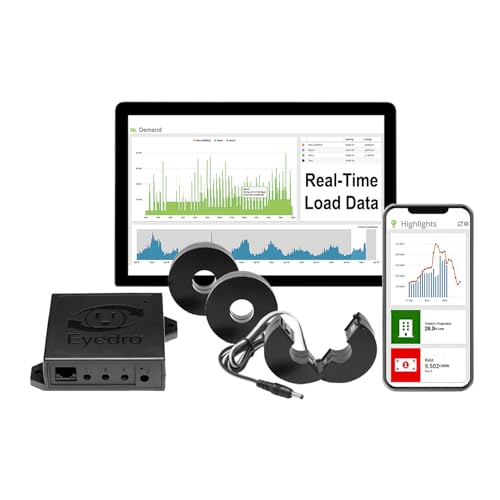
- Supports 600V Delta and multiple Wye systems
- Wi-Fi or Ethernet connectivity
- No-subscription history and reporting
Best For: Three-phase monitoring and solar analysis
Best Smart Plug Energy Meter

- Monitors four plug-in appliances
- Scheduling and bill-cost visualization
- Alexa, Google Assistant, and SmartThings support
Best For: Simple appliance-level monitoring and control
Best Display Energy Meter
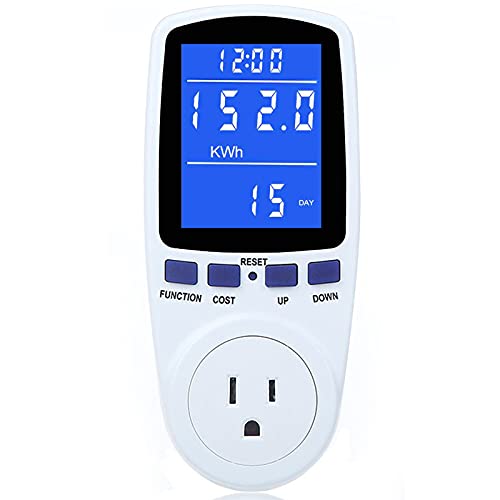
- Measures watts, volts, amps, kWh, and cost
- Large backlit LCD with wide viewing angles
- Memory and adjustable overload protection
Best For: Local plug-in appliance testing and monitoring
Best for Local Smart-Home Control

- Local web, API, and MQTT access without cloud reliance
- Native Home Assistant and OpenClaw support
- Tracks two mains and up to 16 branch circuits
Best For: Solar homes and privacy-focused Home Assistant users
Best for Sub-Metering
Digital 120/240V kWh Sub Meter

- Fits standard ANSI Form 2S four-jaw socket bases
- Measures usage for rentals, RVs, and sub-panels
- Includes LCD, pulse output, and Modbus communication
Best For: Landlords and property owners separating electricity usage
Best Plug-In Appliance Monitor

- Shows watts, kWh, volts, amps, frequency, and cost
- Works with standard US appliances and outlets
- Includes overload warning and data memory
Best For: Checking individual appliance consumption without installation
Whole-System Monitor

- Monitors voltage, current, energy, frequency, and power factor
- Split-core transformer simplifies circuit installation
- Includes overload alarms and power-loss data storage
Best For: Fixed AC circuit monitoring in home, commercial, or industrial settings
Two-Outlet Value Pick

- Measures appliance power, energy, cost, and electrical factors
- Two meters support monitoring multiple appliances
- Includes overload protection and cumulative-data memory
Best For: Tracking energy use and estimated cost on standard US appliances
Detailed Appliance Tracker

- Displays nine readings, including time, cost, and apparent power
- Backlit LCD offers a 160° viewing angle
- Stores cumulative data during power outages
Best For: Detailed monitoring of one standard plug-in appliance
Best Whole-Home Energy Meter – Emporia Vue 3
The Emporia Vue 3 is a whole-home energy meter for monitoring household electricity use, solar production, and selected circuits. Its clamp-on sensors install in the circuit panel, while the Emporia app provides real-time data, cost insights, alerts, and automation features.
Best For: Homeowners who want whole-home monitoring plus detailed appliance and circuit-level tracking.
Pros:
- Includes sixteen 50A branch sensors for monitoring individual circuits.
- Supports solar and net-metering monitoring.
- UL Listed and provides data through iPhone, Android, and web apps.
- Offers time-of-use, peak-demand, excess-solar, and rewards-program settings.
Cons:
- Requires 2.4 GHz Wi-Fi and an internet connection.
- Installation takes place inside the circuit panel and may require qualified assistance.
- Some three-phase configurations require an additional sensor sold separately.
Choose the Vue 3 if detailed circuit visibility matters as much as whole-home totals. It is a capable option for households managing solar, major appliances, and utility-rate changes, though panel installation and network requirements should be considered first.
Best 3-Phase Energy Meter – Eyedro 3-Phase
The Eyedro 3-Phase is a commercial-style energy meter for tracking three-phase consumption, solar generation, and electrical costs. It supports Wi-Fi or Ethernet, uses non-invasive split-core sensors, and records usage history in the MyEyedro platform.
Best For: Three-phase properties, workshops, and solar installations needing long-term usage and cost data.
Pros:
- Measures kWh, watts, amps, volts, power factor, and cost in real time.
- Supports multiple voltage configurations, including Delta and Wye systems.
- Uses non-invasive split-core current sensors with no wiring changes.
- Includes 24/7 history, reports, alerts, and bill projections without a subscription fee.
Cons:
- The included 200A sensors may not suit every installation; compatible 5A–6000A sensors are available separately.
- Separating grid consumption from solar generation through the Net Meter plugin requires two units.
- The included power adapter is North American; European adapters are sold separately.
For three-phase energy monitoring, the Eyedro stands out for its broad voltage compatibility and flexible connectivity. It is especially useful when historical reporting and solar-versus-consumption data are more important than a simple plug-in display.
Best Smart Plug Energy Meter – Tapo P115 4-Pack
The Tapo P115 four-pack combines smart plugs with individual energy monitoring for everyday appliances. The Tapo app shows usage statistics and charts, while scheduling, remote control, voice commands, and automatic shutoff help manage connected devices.
Best For: Renters and households that want simple appliance-level energy monitoring without opening an electrical panel.
Pros:
- Provides energy tracking for four plug-in devices.
- Supports scheduling during lower-rate periods and bill-cost visualization.
- Works with Alexa, Google Assistant, and SmartThings.
- Includes overload protection and smart charging features.
Cons:
- Limited to plug-in appliances rated within the 15A, 1800W capacity.
- Does not monitor hardwired circuits or whole-home electricity use.
- Requires Wi-Fi and app-based control for its smart features.
The Tapo P115 is a convenient entry point into energy meters because it requires no panel installation. It is best for identifying the cost of individual appliances and automating their operation rather than measuring total household demand.
Best Display Energy Meter – Watt Meter Power Monitor
This plug-in watt meter is a straightforward energy meter for checking the electricity use of individual appliances. Its LCD can display watts, kilowatt-hours, volts, amps, frequency, power factor, cost, and minimum or maximum power without requiring an app or cloud account.
Best For: Users who want an affordable, local readout for testing and comparing plug-in appliances.
Pros:
- Displays multiple electrical measurements across seven viewing modes.
- Large backlit screen offers wide viewing angles for easier reading.
- Stores consumption data during unplugging or power interruptions.
- Includes adjustable overload protection up to 3680W.
Cons:
- Designed for standard plug-in devices and does not provide whole-home monitoring.
- Its maximum operating voltage is 120V.
- Settings and readings are controlled from the device rather than an app.
Pick this meter when you need immediate, detailed readings at the outlet. It lacks connected smart-home features, but the built-in display, cost calculation, memory, and overload warning make it practical for appliance testing.
Best for Local Smart-Home Control – Refoss EM16P Energy Monitor
If you want energy meters that provide detailed circuit-level visibility without sending household data to the cloud, the Refoss EM16P is a strong fit. It offers local web, API, MQTT, and native Home Assistant access, along with support for solar-use automation and long-term historical data.
Best For: Solar-equipped homes, privacy-conscious users, and Home Assistant setups that need circuit-level monitoring.
Pros:
- Local control through the built-in web UI, open API, and MQTT, with no cloud dependency or subscription.
- Supports native Home Assistant integration and OpenClaw AI automation.
- Monitors two main circuits and up to 16 branch circuits with clamp-on sensors.
- Provides up to five years of stored, exportable data and claimed accuracy of ±1% in its supported ranges.
Cons:
- Designed for electrical-panel installation rather than simple appliance-level plug-in monitoring.
- Installation involves multiple current transformers and should be planned carefully around panel wiring.
The EM16P stands out among energy meters for open integration and privacy. Its broad circuit coverage and solar-focused automation make it more capable than a basic plug-in meter, especially for users already building a connected energy-management system.
Best for Sub-Metering – Digital 120/240V kWh Sub Meter
For landlords and property owners comparing energy meters for separate spaces, this digital 120/240V sub meter is built around clear kWh measurement and straightforward installation in a standard Form 2S socket base. Its LCD and communication features also make it useful for monitoring RV pads, workshops, cabins, and small rental units.
Best For: Rental-unit billing, RV electrical service, workshops, garages, and sub-panel monitoring.
Pros:
- Designed for 120/240V single-phase, three-wire systems with an ANSI 2S four-jaw fit.
- Bright LCD provides readily visible cumulative kWh readings.
- Pulse output and Modbus communication support system integration.
- Reverse-flow and pulse LEDs help confirm operation, wiring, and possible solar backfeed.
Cons:
- This is a wired sub-metering device, not a quick plug-in appliance monitor.
- Its installation requires an appropriate socket base, panel, or sub-panel and electrical setup.
This meter is a practical choice when the goal is separating and documenting electricity use rather than analyzing individual appliances. EEPROM memory, solid-state construction, and solar import/export monitoring add useful flexibility for residential and light-duty applications.
Best Plug-In Appliance Monitor – Upgraded Watt Meter
If you need energy meters for checking one appliance at a time, this plug-in watt meter keeps the setup simple: connect it to a standard US outlet, plug in the appliance, and cycle through eight display modes. It shows watts, volts, amps, frequency, power factor, kWh, unit price, and accumulated cost.
Best For: Renters, homeowners, and DIY users checking the electricity use and running cost of individual 120V appliances.
Pros:
- Displays eight useful measurements, including power, energy, voltage, current, and estimated cost.
- Backlit LCD improves readability, with automatic backlight shutoff after 10 minutes.
- Stores settings and cumulative consumption data through unplugging or a power failure.
- Flashes an overload warning when connected load exceeds the 1800W threshold.
Cons:
- Limited to appliances that use a standard US socket and a 120V supply.
- Its plug-in format is intended for individual appliances, not whole-home or circuit-panel monitoring.
This is the most accessible option of the three for quick appliance checks. It lacks panel-level coverage, but the readable display, cost tracking, memory function, and overload warning make it useful for identifying energy-hungry household devices without installation work.
Whole-System Monitor – Split-Core AC Energy Meter
This AC energy meter is designed for monitoring electrical systems rather than individual plug-in appliances. It tracks voltage, current, active energy, frequency, and power factor, while its split-core transformer can make installation more convenient in household, commercial, or industrial applications.
Best For: Fixed-installation monitoring of AC circuits where broad electrical readings and configurable alarms are useful.
Pros:
- Displays voltage, current, energy, frequency, and power factor together.
- Split-core current transformer supports more convenient installation.
- Offers overload alarms, customizable power limits, and automatic data storage after power loss.
- Large LCD provides a 180° viewing angle.
Cons:
- Requires an AC electrical-system installation rather than simply plugging into an outlet.
- Its 80–260V AC design is not intended for DC systems.
Choose this model when you need circuit-level visibility and configurable warnings. It is a more installation-oriented option than a plug-in watt meter, but its range of readings and stored data make it practical for ongoing power management.
Two-Outlet Value Pick – 2-Pack Plug-In Energy Meters
This two-pack of plug-in energy meters is a convenient way to measure standard US appliances. It displays watts, kilowatt-hours, voltage, frequency, current, power factor, unit price, and accumulated cost across eight display modes.
Best For: Households that want to monitor two plug-in appliances and compare energy use or estimated cost.
Pros:
- Includes two meters for monitoring separate appliances.
- Tracks both electrical readings and cumulative electricity cost.
- Provides overload protection with a flashing warning above the default 1800W threshold.
- Stores settings and cumulative data during removal or sudden power loss.
Cons:
- Designed for standard US appliances and a 120V AC operating environment.
- Real-time readings such as current and voltage are not retained in memory.
- The backlight automatically turns off after 10 minutes without button presses.
This is a practical choice for basic appliance-level energy tracking, especially when two meters are useful at once. Its cost calculation and overload warning add helpful household features without requiring permanent installation.
Detailed Appliance Tracker – 9-Mode Watt Meter Plug
This plug-in energy meter provides nine display modes for examining appliance performance and consumption. It measures wattage, apparent power, kilowatt-hours, usage time, frequency, power factor, voltage, current, and electricity cost through a backlit LCD.
Best For: Users who want detailed, single-appliance monitoring with usage-time and cost information.
Pros:
- Offers nine types of readings, including usage time and apparent power.
- Backlit display has a 160° viewing angle for easier reading.
- Stores non-real-time data through a power outage.
- Rated for 125VAC, 15A, and up to 1875W for compatible outlet appliances.
Cons:
- Only one meter is included.
- The backlight turns off after 15 seconds to conserve energy.
- Intended for standard plug-in devices rather than whole-circuit monitoring.
Among plug-in energy meters, this model stands out for the breadth of its display options. It suits users who want more context than wattage alone, while its compact plug-in format keeps appliance testing straightforward.
How We Picked These Energy Meters
We selected a range of Energy Meters for different monitoring jobs rather than treating every device as interchangeable. The lineup includes whole-home systems, three-phase equipment, circuit-level monitors, plug-in watt meters, smart plugs, and sub-meters for separate units or tenants.
Our comparison emphasizes measurement scope, installation requirements, display and app features, connectivity, automation support, and practical usability. We also considered whether a device is best suited to quick appliance checks, continuous tracking, or more permanent electrical monitoring.
Quick Comparison
- Whole-home monitoring: Emporia Vue 3 and Refoss are designed for broader household visibility, automation, and ongoing usage analysis.
- Commercial or three-phase use: Eyedro’s three-phase meter is the more suitable choice for compatible high-capacity installations.
- Individual appliances: Tapo smart plugs and plug-in watt meters are simple options for measuring devices directly from an outlet.
- Permanent sub-metering: Digital electric sub-meters fit applications such as accessory units, workshops, or rental properties when installed correctly.
- Panel or equipment monitoring: The AC multi-function monitor provides electrical readings such as voltage, current, frequency, power factor, and energy.
Key Buying Factors for Energy Meters
Measurement Scope and Installation
First decide whether you need an outlet-level reading, a single-circuit measurement, or whole-home data. Plug-in meters require little setup, while panel-mounted and sub-metering products may involve exposed wiring and should be installed by a qualified electrician.
Electrical Compatibility
Check voltage, current capacity, phase configuration, wire layout, and connector type before buying. A meter rated for single-phase household service may not work for a three-phase system, and a device’s maximum amperage should exceed the circuit being measured.
Data Access and Connectivity
Wi-Fi and Ethernet models can provide remote dashboards, alerts, historical charts, and smart-home integrations. Open API or local-control support is especially useful for Home Assistant users who prefer automation without depending entirely on a cloud service. Basic LCD meters remain useful when offline, immediate readings are the priority.
Readability and Accuracy
Look for clear displays, useful measurement modes, and readings that match your purpose. For estimating appliance costs, watt and kilowatt-hour data may be sufficient. For troubleshooting or electrical analysis, voltage, current, frequency, and power-factor readings add more context.
Who Should Buy Which Energy Meters?
Choose a smart whole-home monitor if you want to track household trends, solar production, or multiple circuits from a phone. Choose a smart plug for convenient monitoring and automation of lamps, appliances, office equipment, and other plug-in loads.
Choose a plug-in watt meter when you need an inexpensive, portable way to test standby power or compare appliance consumption. Models with backlit displays or multiple measurement modes are easier to use in different locations.
Choose a sub-meter for a fixed installation serving a separate room, unit, or building area. For commercial equipment or three-phase systems, select a meter specifically rated for that electrical configuration. When installation involves a breaker panel or permanent wiring, prioritize proper certification, compatibility, and professional installation over convenience.