Balanced isolation transformers can solve persistent hum, buzz, and ground-loop problems while helping protect sensitive audio equipment. The right choice depends on whether you need signal isolation, AC power isolation, or both.
We compare 10 options across audio interfaces, wattage ratings, connections, and practical installation needs so you can choose a transformer that fits your system without paying for capacity you do not need.
Best 10 Balanced Isolation Transformers Picks for 2026
Best Audio Signal Isolator
Dual-Channel Ground Loop Transformer

- Dual-channel audio signal isolation
- XLR, TRS, TS, and 6.35mm connections
- Ground lift with portable construction
Best For: Portable audio-system hum and ground-loop troubleshooting
Best High-Power Audio Conditioner
PT-500 Toroidal Isolation Transformer
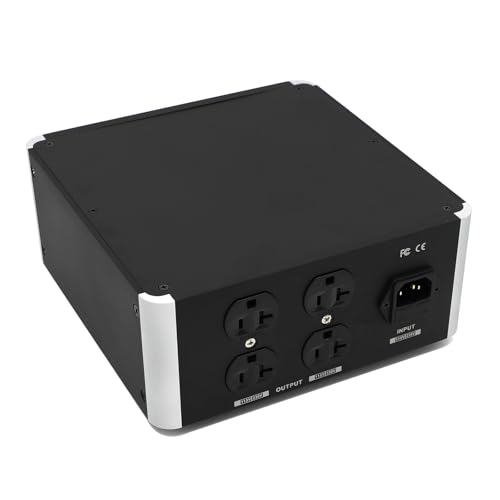
- 500W 115V-to-115V power isolation
- OFC copper toroidal transformer
- Four sockets with surge protection
Best For: HiFi systems needing isolated 115V AC power
Best Chassis-Mount Transformer
Hammond 171A Isolation Transformer

- Chassis-mount component design
- 1A current rating
- 50–60Hz operation and RoHS compliance
Best For: Custom equipment builds and repair projects
Best Protected 500W Converter
ZHENGXI 120V-to-120V Transformer

- 500W 120V-to-120V isolation
- LCD working-status display
- Six listed protection functions
Best For: Monitored power isolation with two output sockets
Compact Bench Isolation
Xytronic ITR300 300VA Transformer

- 120VAC, 60Hz input
- 300VA maximum power
- Internal electrostatic shield
Best For: Bench testing and lower-power 120VAC equipment
High-Capacity Protected Isolation
ZHENGXI 1000W 120V Transformer

- 1000W 120V-to-120V capacity
- HD operating-status display
- Six protection functions
Best For: Higher-power setups needing monitoring and protection
Audio Signal Isolation
600:600 Balanced Audio Converter

- Balanced and unbalanced conversion
- Two-channel transformer design
- 20Hz–20KHz response
Best For: Professional audio and preamp signal-path isolation
Compact Power Cleaner
300W Audio Isolation Transformer
- 120V-to-120V isolation for audio equipment
- LCD working-status display
- Six built-in protection functions
Best For: Smaller audio systems up to 300W
Portable Hum Control
Pyle Two-Channel Hum Eliminator

- Passive 1:1 isolation for two audio channels
- Helps remove 60Hz ground-loop hum
- TRS and XLR inputs and outputs
Best For: Audio signal-line hum reduction
High-Capacity Power Isolation
2000W Audio Isolation Transformer
- 120V-to-120V isolation with 2000W capacity
- LCD working-status display
- Six built-in protection functions
Best For: Higher-power audio systems up to 2000W
Best Audio Signal Isolator – Dual-Channel Ground Loop Transformer
For balanced isolation transformers in an audio setup, this dual-channel isolator focuses on separating audio signals and addressing ground-loop noise. Its XLR, 1/4-inch TRS, TS, and 6.35mm connections make it a flexible option for PA systems, mixers, HiFi equipment, and other sound applications.
Best For: Audio users who need portable signal isolation and ground-loop troubleshooting across multiple connection types.
Pros:
- Dual-channel design for audio signal isolation.
- Supports XLR, TRS, TS, and 6.35mm connections.
- Includes ground-lift functionality and a sturdy, portable form factor.
Cons:
- It is an audio signal isolator rather than an AC power isolation transformer.
- The supplied notes do not specify exact impedance ranges or frequency-response figures.
This is a practical choice when your main concern is hum, buzz, or ground-loop noise between audio devices. Choose a power-focused model instead if you need to isolate an AC supply.
Best High-Power Audio Conditioner – PT-500 Toroidal Isolation Transformer
This PT-500 is a power-oriented option among balanced isolation transformers, using a 500W OFC toroidal transformer with a 115V-to-115V configuration. It is designed for audio systems that need isolated AC power, stable current delivery, and a quieter operating background.
Best For: HiFi and audio systems requiring up to 500W of 115V isolated power with multiple outlets.
Pros:
- 500W full-load output rating.
- OFC pure-copper toroidal transformer with a Japan A-grade iron core.
- Four pure-copper power sockets, surge protection, and a full aluminum frame.
Cons:
- Its 115V input and output configuration may not suit other mains voltages.
- It is intended for AC power conditioning, not direct audio signal connections.
With its stated 500W capacity and toroidal construction, the PT-500 is the strongest fit here for a dedicated audio power setup. Confirm your system’s voltage and total wattage before buying.
Best Chassis-Mount Transformer – Hammond 171A Isolation Transformer
The Hammond 171A is a compactly specified component for projects that need balanced isolation transformers in a chassis-mounted format. Its 1A current rating and 50–60Hz frequency range make the electrical specifications important considerations when matching it to an application.
Best For: Builders and technicians integrating a 1A isolation transformer into a corded-electric, chassis-mounted project.
Pros:
- Chassis-mount design for equipment integration.
- 1A current rating.
- Specified for 50–60Hz operation and listed as RoHS compliant.
Cons:
- It is a component rather than a complete plug-and-play power conditioner.
- The supplied notes do not provide voltage, wattage, or terminal details.
- At 6.5 pounds, it may be less convenient for portable builds.
This model makes the most sense when you are designing or repairing equipment and already know the required voltage and mounting arrangement. Verify those missing application details before installation.
Best Protected 500W Converter – ZHENGXI 120V-to-120V Transformer
ZHENGXI Isolation Transformer 120V to 120V,500W Transformer Voltage Converter, 2 Output Sockets
Check Price On AmazonThe ZHENGXI 120V-to-120V unit is a straightforward power option among balanced isolation transformers, with a 500W rating and two output sockets. Its LCD status display and six listed protection functions add monitoring and safeguards for compatible equipment.
Best For: Users who want 500W of 120V-to-120V isolation with status monitoring and built-in protection.
Pros:
- 500W 120V-to-120V isolation design.
- LCD display shows working status.
- Six protections: over-voltage, under-voltage, overload, over-temperature, time-delay, and short-circuit.
Cons:
- Only two output sockets are specified.
- The supplied notes do not state the transformer’s frequency range or physical dimensions.
- It is an AC power unit, not an audio signal isolator.
This is a sensible choice for a compact, monitored isolation setup where the connected load stays within the 500W rating. Check outlet requirements and voltage compatibility before connecting equipment.
Compact Bench Isolation – Xytronic ITR300 300VA Transformer
For straightforward bench setups, the Xytronic ITR300 is a compact option among balanced isolation transformers. It accepts 120VAC at 60Hz and provides up to 300VA, with an internal electrostatic shield and a built-in power cord for convenient placement.
Best For: Bench testing and low-to-moderate-power 120VAC equipment.
Pros:
- Supports 120VAC, 60Hz input power.
- Provides a 300VA maximum capacity.
- Includes an internal electrostatic shield and 5.5-foot cord with two-prong plug.
- Compact 3.2 x 4.6 x 4.2-inch form factor.
Cons:
- 300VA capacity is lower than higher-powered isolation transformer options.
- Uses a two-prong plug.
Its compact dimensions and shielded design make the ITR300 a practical choice when you need basic 120VAC isolation without a large enclosure. Confirm that your equipment stays within the 300VA limit.
High-Capacity Protected Isolation – ZHENGXI 1000W 120V Transformer
The ZHENGXI 1000W model is a feature-rich choice among balanced isolation transformers for users who want 120V-to-120V conversion, status monitoring, and built-in protection. Its HD display shows operating status, while two output sockets support connected equipment.
Best For: Higher-power 120V setups that benefit from monitoring and multiple protection functions.
Pros:
- Provides 1000W of isolation capacity with 120V-to-120V conversion.
- HD display clearly shows working status.
- Includes over-voltage, under-voltage, overload, over-temperature, time-delay, and short-circuit protection.
- Designed to filter harmonics and isolate the output from earth.
Cons:
- Its larger 1000W capacity may be unnecessary for small loads.
- The supplied notes specify a 50Hz minimum frequency, so frequency compatibility should be checked for the intended setup.
Choose this transformer when protection and visibility matter as much as isolation. The display and six protection functions add convenience, while the two outlets make it more flexible for multi-device use.
Audio Signal Isolation – 600:600 Balanced Audio Converter
This two-channel audio isolator is a specialized pick among balanced isolation transformers for signal-level applications. Its 600:600 transformers support balanced and unbalanced conversion across a 20Hz–20KHz response range, while the design targets AC noise reduction and audio isolation.
Best For: Professional audio, hi-fi preamps, impedance matching, and audio DIY projects.
Pros:
- Supports balanced and unbalanced audio conversion.
- Uses two channels, each with a transformer.
- Offers a 20Hz–20KHz frequency response.
- Designed to filter AC noise interference and improve audio isolation.
Cons:
- Not intended for connection to a power amplifier output.
- PCB-mount design may require integration into a suitable circuit or enclosure.
- Specialized for audio signals rather than mains-power isolation.
The 600:600 configuration makes this isolator useful for audio signal paths where balanced conversion and noise reduction are priorities. Follow the stated restriction carefully: a power amplifier output can produce high voltage and burn out the unit.
Compact Power Cleaner – 300W Audio Isolation Transformer
ZHENGXI Isolation Transformer 120V to 120V, 300W Audio Voltage Converter, 2 Output Sockets
Check Price On AmazonFor lower-power audio setups, this 300W unit is a practical choice among balanced isolation transformers. Its 120V-to-120V design is intended to filter power-supply noise, while the LCD display and built-in protections make operating status easier to monitor.
Best For: Smaller audio systems that need 120V-to-120V isolation and up to 300W of capacity.
Pros:
- Designed to filter noise, reduce distortion, and purify the power supply.
- LCD display shows working status.
- Includes over-voltage, under-voltage, overload, over-temperature, time-delay, and short-circuit protection.
- Provides two output sockets.
Cons:
- 300W capacity may not suit higher-powered equipment.
- The supplied specifications list a minimum frequency of 50 hertz, so compatibility should be checked for the intended setup.
This model combines modest capacity with useful monitoring and protection features. It makes the most sense when your equipment stays comfortably within the 300W limit.
Portable Hum Control – Pyle Two-Channel Hum Eliminator
If your audio chain suffers from 60Hz ground-loop hum, this compact passive unit offers a focused alternative to larger balanced isolation transformers. It uses 1:1 isolation transformers across two channels and accepts both 1/4-inch TRS and XLR connections.
Best For: Portable or installed audio setups that need passive two-channel ground-loop hum reduction.
Pros:
- Designed to remove 60Hz AC hum caused by ground loops.
- Passive operation requires no power.
- Two channels with 1/4-inch TRS and XLR inputs and outputs.
- Automatically converts unbalanced to balanced signal without signal loss, according to the supplied product notes.
Cons:
- This is a signal-line hum eliminator, not a 120V power isolation transformer.
- Its supported connections are centered on TRS and XLR audio cabling.
- The product notes provide no wattage or power-output rating.
The PHE400 is best viewed as a compact audio-signal solution for breaking ground loops. Choose it when the problem is hum between connected audio devices rather than noisy mains power.
High-Capacity Power Isolation – 2000W Audio Isolation Transformer
For demanding audio systems, this 2000W 120V-to-120V model provides substantially more capacity than compact balanced isolation transformers. It is designed to filter power noise and reduce distortion, with an LCD display and multiple protection functions for easier monitoring.
Best For: Higher-power audio equipment requiring up to 2000W of 120V-to-120V isolation capacity.
Pros:
- 2000W capacity supports larger audio setups than the 300W model.
- Designed to filter noise, reduce distortion, and purify the power supply.
- LCD display clearly shows working status.
- Includes six protections: over-voltage, under-voltage, overload, over-temperature, time-delay, and short-circuit.
Cons:
- Its higher capacity may be unnecessary for low-power systems.
- The supplied specifications list a minimum frequency of 50 hertz, so verify suitability for your equipment.
- The notes specify two output sockets, which may limit how many devices can be connected directly.
This is the stronger fit when the system’s power demand exceeds what a compact 300W transformer can handle. Confirm total equipment wattage and connection needs before choosing it.
How We Picked These Balanced Isolation Transformers
We grouped the selected models by their intended role: passive audio isolation, dual-channel signal conversion, and AC power isolation. We then considered transformer capacity, voltage compatibility, connection types, physical size, noise-control features, and ease of use.
Because an audio hum eliminator and a high-wattage power transformer solve different problems, we do not treat their ratings as interchangeable. Always match the product to the point in your signal or power chain where isolation is required.
Quick Comparison
| Best For | What to Look For | Relevant Options |
|---|---|---|
| Balanced or unbalanced audio | Transformer ratio, frequency response, XLR or 1/4-inch connections | Audio isolators and dual-channel ground-loop eliminators |
| Small audio equipment | Approximately 300–500 VA capacity and 120V-to-120V operation | Compact 300W and 500W transformers |
| Higher-power equipment | At least 1,000W, with sufficient outlets and overload margin | 1,000W and 2,000W isolation transformers |
| Bench or service work | Reliable enclosure, compatible voltage, and manageable footprint | Hammond and Jameco Valuepro models |
Key Buying Factors for Balanced Isolation Transformers
Signal or Power Isolation
First identify whether you are isolating an audio signal or an AC supply. Passive audio transformers typically use XLR, TRS, TS, or similar connectors and are designed to interrupt ground loops between components. Power isolation transformers use outlets and VA or watt ratings instead.
Capacity and Headroom
Choose a transformer with more capacity than your equipment’s normal draw. A 300W or 500W model may suit a small audio setup, while amplifiers, powered speakers, test equipment, or multiple devices may require 1,000W or 2,000W. Do not exceed the continuous rating, and remember that some equipment has a higher startup draw.
Voltage and Outlet Compatibility
For standard North American equipment, confirm that the transformer accepts 120V input and provides the output voltage your devices require. Check plug style, outlet count, grounding arrangements, and whether the product is intended for continuous operation.
Noise and Frequency Response
Audio transformers should cover the frequency range you need without noticeably reducing bass or treble. For power transformers, look for low mechanical hum, suitable shielding, and a design that will not add unwanted noise near microphones or preamps.
Who Should Buy Which Balanced Isolation Transformers?
Choose an Audio Isolator for Recording and Live Sound
If the problem is buzz between a mixer, interface, computer, amplifier, or playback device, choose a passive audio isolation unit with the correct balanced or unbalanced connectors. Dual-channel designs are useful for stereo systems.
Choose a Compact Power Transformer for Smaller Systems
A 300W–500W unit is a practical fit for modest loads, bench equipment, or a small audio rig. Leave operating headroom rather than sizing exactly to the listed load.
Choose a High-Capacity Model for Demanding Equipment
For several devices, powered monitors, or equipment with significant startup demand, consider a 1,000W or 2,000W transformer. Verify the actual combined load and provide adequate ventilation.
Choose a Professional-Grade Unit for Service Work
Technicians and installers should prioritize documented electrical specifications, durable construction, appropriate protection, and easy access to compatible outlets. If the source of the noise is uncertain, diagnose the grounding and wiring first instead of relying on isolation alone.