Choosing among energy meters for solar systems can be confusing because panel testers, circuit monitors, and whole-home energy monitors serve very different purposes.
This roundup compares 10 options for checking PV output, tracking solar generation, measuring household consumption, and monitoring grid or inverter performance.
Best 10 Energy Meters for Solar Systems Picks for 2026
Best Solar & Split-Phase Monitor

- Monitors grid and inverter or split-phase circuits
- Bi-directional readings track imports and exports
- Works with IAMMETER, Home Assistant, MQTT, and Node-RED
Best For: Connected residential solar and 120/240V split-phase monitoring
Best Compact Panel Tester

- Tests Pmax, Voc, and Isc for solar panels
- Supports 3–90V, 0–40A, and up to 2000W
- Includes MC4 connections and a sunlight-readable LCD
Best For: Portable panel installation, maintenance, and fault diagnosis
Best Three-Phase Cloud Meter
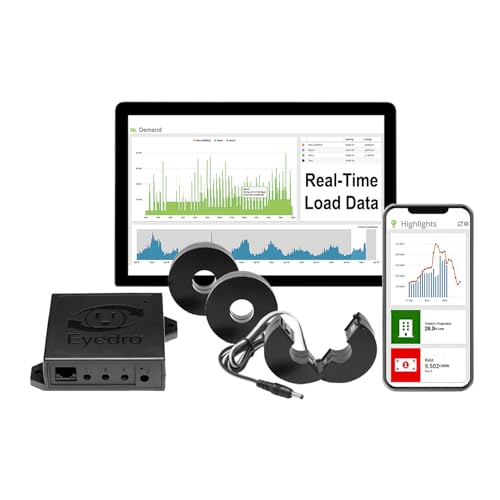
- Monitors three-phase systems up to 600V
- Offers Wi-Fi or Ethernet and 24/7 cloud history
- Tracks consumption, generation, costs, and power factor
Best For: Three-phase solar and commercial energy-cost monitoring
Best Professional PV Tester
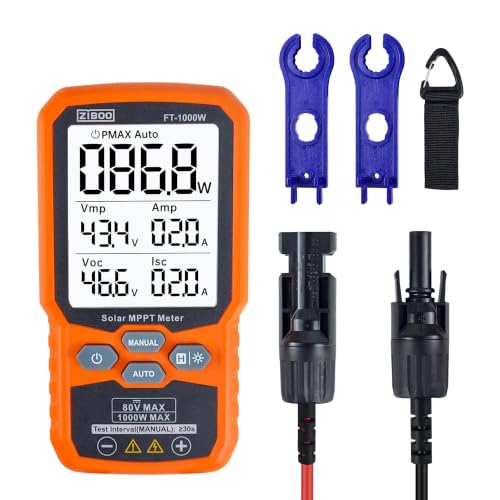
- Tests up to 1000W, 80V, and 35A
- Uses MPPT to assess real-time module performance
- Adds professional safety ratings and field-ready features
Best For: PV installation, maintenance, and module diagnostics
Flexible Sub-Metering Choice

- 120/240V single-phase Form 2S design
- Tracks kWh for sub-metering and solar monitoring
- Pulse, Modbus, reverse-flow LED, and EEPROM memory
Best For: RV pads, rental units, workshops, and solar sub-panels
Portable DC Testing Pick
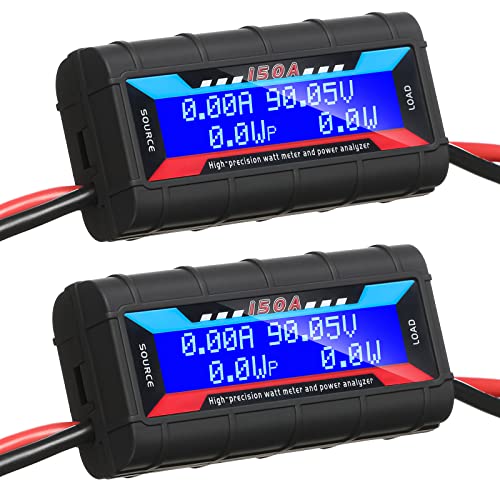
- Measures up to 100V and 150A
- Displays voltage, current, watts, and amp-hours
- Two backlit analyzers for battery and solar testing
Best For: Small DC solar systems, batteries, and diagnostic testing
Whole-Home Smart Monitoring Pick
Emporia Vue 3 Home Energy Monitor

- Monitors solar, net metering, and household usage
- Includes sixteen branch sensors for appliance tracking
- App-based data with UL-listed construction
Best For: Connected whole-home solar and circuit monitoring
Best DIN-Rail Pick

- Tracks voltage, current, wattage, energy, frequency, and power factor
- Supports inverter measurements and standard 35mm DIN-rail mounting
- Stores cumulative data through power outages
Best For: DIY solar panels and distribution boxes needing local AC monitoring
Best Certified Whole-Home Monitor

- UL- and CE-listed whole-home energy monitoring
- Uses clamp-on sensors for solar, net metering, and circuit data
- App supports alerts, cloud history, and energy-management settings
Best For: Connected homes wanting certified, app-based solar monitoring
Best for Expandable Circuit Tracking
Emporia Vue 3 with Branch Monitoring

- Monitors whole-home electricity, solar, and net metering
- Supports up to sixteen optional 50A branch sensors
- Includes updated terminals designed to reduce panel clutter
Best For: Homes planning appliance-level energy monitoring
Best Solar & Split-Phase Monitor – WEM2067 WiFi Energy Meter
For homeowners comparing energy meters for solar systems, the WEM2067 is designed to monitor utility-grid and inverter activity together or measure both legs of a 120/240V split-phase setup. Its bi-directional readings help track imported and exported energy, while Wi-Fi access provides real-time data through IAMMETER Basic Cloud.
Best For: Residential solar and split-phase energy monitoring with cloud or smart-home integration.
Pros:
- Tracks imported and exported energy for net-metering and self-consumption analysis.
- Includes two non-invasive 150A split-core CT sensors.
- Supports Home Assistant, MQTT, Node-RED, and cloud API integration.
- Provides voltage, current, power, and energy data over 2.4GHz Wi-Fi.
Cons:
- Its included CT sensors are rated for 150A applications.
- Cloud and smart-home features may require additional setup.
The WEM2067 is a practical choice when you want ongoing solar and grid visibility rather than occasional hands-on testing. Its split-core installation and integration options make it especially useful for connected home-energy projects.
Best Compact Panel Tester – 2000W MPPT Solar Meter
If you need energy meters for solar systems during installation or troubleshooting, this battery-powered tester provides a portable way to evaluate panel output. It measures Pmax, open-circuit voltage, and short-circuit current, with built-in MPPT tracking for performance checks.
Best For: Testing individual solar panels in RV, home, off-grid, installation, and maintenance work.
Pros:
- Measures 3–90V, up to 40A, and up to 2000W panel output.
- MPPT tracking supports performance testing and optimization.
- MC4 plug-and-play connections and auto/manual modes simplify operation.
- Sunlight-readable 3.2-inch LCD shows voltage, current, and power together.
Cons:
- It is intended for panel testing, not continuous household energy monitoring.
- Operation depends on its rechargeable battery power source.
This meter is better suited to diagnosing and validating panels than tracking a complete solar installation over time. Its broad voltage and current range, readable display, and built-in protections make it a convenient field tester.
Best Three-Phase Cloud Meter – Eyedro 3-Phase Energy Meter
For larger properties and three-phase applications, the Eyedro offers ongoing consumption and solar-generation visibility through Wi-Fi or wired Ethernet. It records power, energy, voltage, current, power factor, and cost, making it one of the more comprehensive energy meters for solar systems in this group.
Best For: Three-phase solar, commercial, and high-voltage monitoring with detailed cloud history and cost reporting.
Pros:
- Supports multiple three-phase voltage configurations up to 600V.
- Uses non-invasive split-core sensors, with 200A sensors included.
- Provides 24/7 history, graphs, rate calculations, alerts, reports, and bill projections without a subscription fee.
- Offers both 2.4GHz Wi-Fi and wired Ethernet connectivity.
Cons:
- Separating grid consumption from solar generation requires two EB6-EW-E3 units for the MyEyedro Net Meter plugin.
- Setup requires configuring voltage, amperage, rates, and a MyEyedro account.
- The included power adapter is North American; European adapters are sold separately.
The Eyedro is a strong fit when historical data and electricity-cost analysis matter as much as live readings. Verify the required number of units and your electrical configuration before choosing it for separate grid-versus-solar tracking.
Best Professional PV Tester – ZIBOO FT-1000W MPPT Meter
The ZIBOO FT-1000W is a field-oriented tester for checking solar-module output rather than measuring whole-home consumption. It combines MPPT tracking with Voc, Isc, and maximum-power measurements, helping technicians assess panel performance, shading, or degradation.
Best For: Professional solar installers and maintenance technicians testing PV modules and arrays in the field.
Pros:
- Measures up to 1000W, 80V Voc, and 35A Isc with stated ±0.8% accuracy.
- Tracks Vmp and current in real time through MPPT testing.
- Includes CAT III 1000V/CAT IV 600V ratings and double-insulated probes.
- Backlit LCD, data hold, IP54 resistance, auto-ranging, and auto-off support field use.
Cons:
- Its 1000W maximum is lower than the 2000W capacity of some panel testers.
- It is a PV diagnostic instrument, not a continuous Wi-Fi energy monitor.
- Its professional safety features may be more than casual users need.
Choose the ZIBOO when accurate, hands-on module testing and field durability are priorities. It is especially useful for verifying array performance at the panel level, but it will not replace a permanently installed consumption or generation meter.
Flexible Sub-Metering Choice – Digital Electric Sub Meter
This digital electric sub meter is a practical option for tracking energy meters for solar systems when you need 120/240V single-phase monitoring at a panel, sub-panel, RV connection, or similar installation. Its LCD displays kWh usage, while pulse and reverse-flow indicators help confirm operation and wiring direction.
Best For: Solar users, landlords, RV owners, and workshop operators who need sub-metering, import/export visibility, or circuit-level consumption data.
Pros:
- Designed for standard ANSI Form 2S socket bases and 120/240V single-phase systems.
- Measures kWh for rental units, RV pads, workshops, cabins, and sub-panels.
- Supports pulse output and Modbus communication for system integration.
- EEPROM memory helps retain data during power outages.
Cons:
- Limited to single-phase 120/240V applications rather than broader three-phase systems.
- Installation involves electrical-panel wiring and may require a qualified professional.
Choose this model when you want a dedicated, hardwired meter rather than an app-based monitor. It is especially useful for separating loads or checking solar-system power flow, provided its electrical configuration matches your installation.
Portable DC Testing Pick – 150A Solar Power Analyzer
This two-pack of watt meters is a compact choice for testing smaller DC energy meters for solar systems. The analyzers show voltage, current, power, amp-hours, and related readings on a backlit LCD, making them useful for checking batteries, solar setups, electric vehicles, and other low-voltage equipment.
Best For: DIY solar users, battery testers, RC enthusiasts, and anyone evaluating DC charging efficiency or power consumption below the stated limits.
Pros:
- Measures systems from 12V to 100V and current up to 150A.
- Displays voltage, current, watts, amp-hours, and discharge information.
- Backlit LCD is designed for visibility in dark or bright conditions.
- Low-resistance tin-copper construction and an exhaust port support stable operation.
Cons:
- Not suitable for systems exceeding 100V or 150A.
- Designed for DC testing, not whole-home AC or utility net-metering measurement.
- Battery-powered operation may be less convenient for permanent installations.
This analyzer is best viewed as a hands-on diagnostic tool rather than a permanent solar monitoring platform. Its measurement range and two-pack format make it convenient for comparing components, but verify your system stays within the voltage and current limits.
Whole-Home Smart Monitoring Pick – Emporia Vue 3 Home Energy Monitor
The Emporia Vue 3 is a whole-home option for tracking energy meters for solar systems alongside household electricity use. Clamp-on sensors install in the circuit panel, and the Emporia app provides real-time usage, solar, and net-metering information over 2.4 GHz Wi-Fi.
Best For: Homeowners who want app-based solar and net-metering visibility plus detailed monitoring of major household circuits.
Pros:
- UL Listed and CE Listed for supported safety standards.
- Supports single-phase, split-phase, and certain three-phase configurations with the required sensor.
- Includes sixteen 50A branch sensors for monitoring appliances and critical loads.
- App features include live reporting, spending insights, and automation settings for time-of-use and excess solar.
Cons:
- Requires 2.4 GHz Wi-Fi and an internet connection for app-based monitoring.
- Some three-phase systems require an additional 200A sensor sold separately.
- Installation in a circuit panel may require professional electrical assistance.
For homeowners who want more than a basic kWh display, the Vue 3 offers broad circuit-level visibility and solar/net-metering data in one connected system. Its cloud-retention details and Wi-Fi requirement are worth considering before purchase.
Best DIN-Rail Pick – QWORK 6-in-1 AC Power Meter
For a straightforward option among energy meters for solar systems, the QWORK Digital DIN Rail AC Power Meter provides at-a-glance readings without requiring an app or internet connection. It tracks voltage, current, active power, accumulated energy, frequency, and power factor on its color LCD, making it practical for a solar inverter, RV, or home distribution box.
Best For: DIY solar setups and distribution panels needing local, real-time AC readings.
Pros:
- Displays six useful electrical measurements on one screen.
- Supports non-standard sine wave measurements from inverters.
- Stores cumulative energy data during power outages.
- Fits standard 35mm DIN rails and includes a built-in CT.
Cons:
- Its 40–300V and 0–100A ranges may not suit every installation.
- It provides local display-based monitoring rather than app or cloud features.
The wide-view color display and simple reset function make this a convenient panel-mounted meter. Choose it when direct readings and easy DIN-rail installation matter more than remote monitoring or automated energy management.
Best Certified Whole-Home Monitor – Emporia Vue 3 Solar Monitor
The Emporia Vue 3 is a strong whole-home choice for energy meters for solar systems when remote access and detailed consumption data are priorities. Clamp-on sensors install in the circuit panel, while the Emporia app provides real-time usage, solar and net-metering information, alerts, and energy-management tools over 2.4 GHz Wi-Fi.
Best For: Homeowners who want UL-certified whole-home solar and electricity monitoring through an app.
Pros:
- UL and CE listed for a certified monitoring solution.
- Supports single-phase, split-phase, and 2-wire systems.
- Tracks solar and net metering with approximately ±2% sensor accuracy.
- App tools support time-of-use, peak-demand, and excess-solar management.
Cons:
- Requires 2.4 GHz Wi-Fi and an internet connection.
- Some three-phase configurations require an additional 200A sensor.
- One-second data is available only while the app is actively open and is retained for three hours.
With cloud history, live reporting, and a one-year warranty, the Vue 3 is better suited to ongoing household energy management than simple panel readings. Confirm your electrical-system configuration and Wi-Fi availability before installation.
Best for Expandable Circuit Tracking – Emporia Vue 3 with Branch Monitoring
This Emporia Vue 3 is another capable option among energy meters for solar systems, with whole-home monitoring plus an expandable approach to individual circuits. Its included current transformers connect to the panel, and optional branch sensors can help separate major appliance loads from overall household and solar activity in the Emporia app.
Best For: Households that want to monitor whole-home energy and add appliance-level tracking over time.
Pros:
- Supports solar and net-metering monitoring through the Emporia app.
- Can add up to sixteen optional 50A branch sensors.
- Provides approximately ±2% sensor accuracy and cloud data history.
- Improved screw terminals and ports help reduce panel clutter.
Cons:
- Branch sensors are sold separately.
- Requires 2.4 GHz Wi-Fi and an internet connection for remote data.
- Some three-phase systems require an additional 200A sensor.
The expandable sensor design makes this version especially useful when identifying appliance-level energy use is part of the plan. It offers more detailed tracking potential than a basic whole-home setup, but the extra sensors add cost and installation complexity.
How We Picked These Energy Meters for Solar Systems
We selected products across the main solar-monitoring categories rather than treating every meter as interchangeable. The list includes handheld PV testers for checking module voltage, current, and MPPT performance; clamp-based and wired monitors for home circuits; DIN-rail meters for electrical panels; and sub-meters for tracking individual properties or loads.
We also considered measurement range, phase compatibility, installation style, display or app access, bidirectional measurement, connectivity, and the type of information each device provides. Before buying, confirm the meter’s electrical ratings and installation requirements with your system documentation or a qualified electrician.
Quick Comparison
| Meter type | Best for | What it measures | Installation |
|---|---|---|---|
| PV panel tester | Testing individual modules | Voc, Isc, power, MPPT output | Portable, connects at the panel |
| Home energy monitor | Solar and household tracking | Consumption, production, circuit loads | Panel-mounted sensors or clamps |
| DIN-rail power meter | Fixed circuit monitoring | Voltage, current, wattage, kWh | Electrical-panel installation |
| Sub-meter | Tenant or dedicated-load billing | Accumulated electricity use | Wired into a branch circuit |
| Three-phase meter | Commercial or larger systems | Multi-phase electrical usage | Professional installation recommended |
Key Buying Factors for Energy Meters for Solar Systems
Match the Meter to the Measurement Point
A panel tester is appropriate for diagnosing a solar module or string, but it will not replace a whole-home monitor. For household solar, look for grid, inverter, and load monitoring. For a rental or workshop, a sub-meter may be the more practical choice.
Check Voltage, Current, Phase, and Power Limits
Verify maximum DC voltage and current for PV testers, and confirm AC voltage, amperage, wire configuration, and single- or three-phase compatibility for fixed meters. Exceeding a device’s rating can create inaccurate readings or a safety hazard.
Decide How You Want to Read the Data
LCD meters provide local readings without an account or network connection. Wi-Fi and Ethernet models can offer remote dashboards, historical trends, alerts, and energy-automation integrations, but they depend on reliable connectivity and compatible software.
Consider Bidirectional and Circuit-Level Measurement
Solar installations may export power to the grid while drawing power at other times. A bidirectional meter can distinguish import from export, while clamp sensors or multiple channels can help separate solar production, household demand, and major circuits.
Who Should Buy Which Energy Meters for Solar Systems?
- Solar installers and maintenance technicians: Choose a portable MPPT or PV tester for quick module and string checks.
- Homeowners with rooftop solar: Choose a connected home energy monitor when you want production, consumption, and historical data in one dashboard.
- Owners of larger or three-phase systems: Select a three-phase meter with suitable voltage and current capacity.
- Landlords and property managers: Use a properly rated sub-meter for tracking a tenant’s or separately metered space’s electricity use.
- DIY users needing a local readout: A DIN-rail or handheld meter with a clear display may be simpler than an app-based system.
Finally, treat panel-mounted AC meters and hardwired sub-meters as electrical installation projects. If the device requires access to live conductors or a service panel, use a qualified electrician and follow local code requirements.