A dependable battery disconnect switch can help prevent parasitic drain, add a basic layer of theft deterrence, and make electrical maintenance safer. The right choice depends on your vehicle’s battery-post style, electrical load, and how often you need to isolate power.
We’ve gathered 10 manual and remote options for cars, trucks, RVs, boats, and other 12V or 24V systems. Use the guide below to narrow the list by installation style, current capacity, convenience, and intended use.
Best 10 Battery Disconnect Switches for Cars Picks for 2026
Best Overall Manual Pick
Top Post Battery Master Disconnect Switch
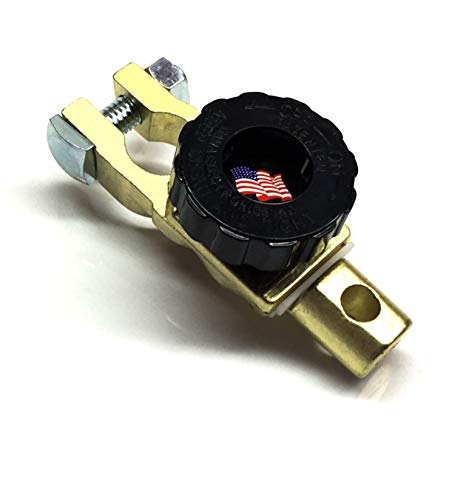
- Twist-knob manual operation
- 200A, 12V rating
- Brass construction for corrosion resistance
Best For: Standard top-post car, truck, boat, and RV batteries
Best Smart Protection
12V/24V 240A Remote Battery Disconnect Switch

- Remote control with two fobs
- 240A continuous, 500A instant rating
- Automatic low-voltage cutoff and LED voltmeter
Best For: Vehicles needing remote access and battery-drain protection
Best Budget Top-Post Option
Spurtar Top Post Battery Disconnect Switch

- Green hand-tightened knob
- Brass construction
- Designed for compatible 15–17 mm top posts
Best For: Basic manual battery isolation on compatible vehicle top posts
Best Multipack Value
2Pcs 12V/24V Manual Rotary Battery Cut Off Switch

- Two-switch set
- Copper contacts for conductivity
- Manual rotary control for 12V/24V applications
Best For: Multiple vehicles, equipment setups, or keeping a spare disconnect switch
Visibility-Focused Universal Pick
12/24V Battery Disconnect with LED

- LED voltage display for quick battery-system checks
- 180-degree rotating head for flexible placement
- 120A rated and 1,000A peak starting current
Best For: Standard SAE/JIS battery installations in cars, RVs, boats, and mowers
Remote-Controlled Anti-Theft Pick
12V Remote Battery Kill Switch
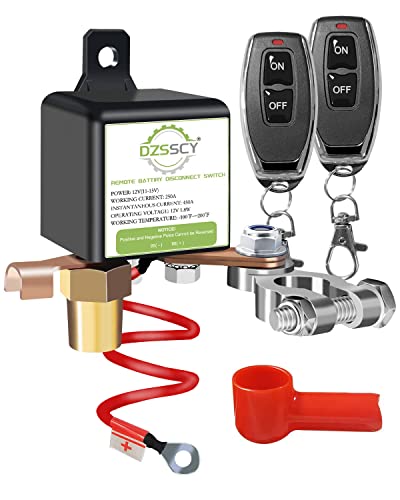
- Remote negative-side battery disconnection
- 250A rated and up to 450A instantaneous current
- Designed for 12V cars, trucks, RVs, and motorcycles
Best For: Parked vehicles needing convenient remote shutoff and battery-drain protection
Best Manual Pick
Heavy-Duty Top-Post Knife Blade

- Solid brass construction
- 12V/24V compatibility
- 250A continuous, 750A momentary rating at 12V
Best For: Manual battery isolation for cars, RVs, ATVs, and boats
Best Remote Protection

- Remote magnetic-latching operation
- LED voltage monitoring
- Automatic low-voltage cutoff
Best For: Remote battery protection for cars, trucks, RVs, and boats
Best Dual-Voltage Choice

- Supports 12V/24V vehicles
- Two included remotes
- 240A continuous, 500A peak rating
Best For: Remote battery protection across cars, RVs, boats, and utility vehicles
Best Overall Manual Pick – Top Post Battery Master Disconnect Switch
For shoppers comparing battery disconnect switches for cars, this top-post model offers straightforward manual control. Its rotary knob cuts power when loosened and restores it when tightened, while the brass construction is designed to resist rust and corrosion.
Best For: Car, truck, boat, and RV owners who want a simple surface-mounted battery isolator for standard SAE battery posts.
Pros:
- Simple twist-knob operation with no wiring controls or remote required
- Rated for 200A at 12V
- Solid brass construction helps resist rust and corrosion
- Designed to eliminate battery draw during storage or downtime
Cons:
- Manual operation requires access to the battery
- Designed for standard top-post batteries, limiting compatibility with other terminal layouts
This is a practical choice when you want a durable, uncomplicated disconnect switch rather than electronic features. Verify that your battery uses compatible SAE posts and that the 200A rating suits your application.
Best Smart Protection – 12V/24V 240A Remote Battery Disconnect Switch
Among battery disconnect switches for cars, this remote-controlled model stands out for its automatic voltage protection and wireless operation. It supports 12V and 24V systems, includes two remote fobs, and can help limit battery drain during long-term parking.
Best For: Drivers of cars, trucks, boats, RVs, and motorcycles who want remote control, voltage monitoring, and automatic low-voltage cutoff.
Pros:
- 240A continuous rating with up to 500A instantaneous current handling
- Includes two wireless remote fobs for convenient control
- LED voltmeter provides real-time voltage monitoring
- Low-voltage alarm and delayed automatic cutoff help prevent over-discharge
Cons:
- More complex than a basic manual disconnect switch
- Plastic casing and IP0 rating indicate limited stated environmental protection
- Remote operation is disabled above specified voltage thresholds, requiring manual operation
This option is best suited to users who value battery protection and remote access over the simplicity of a manual knob. Follow the installation instructions carefully, especially when connecting it to the negative battery terminal.
Best Budget Top-Post Option – Spurtar Top Post Battery Disconnect Switch
This Spurtar model is a compact choice for shoppers seeking battery disconnect switches for cars with top-post terminals. Tightening the green knob restores power, while loosening it disconnects the battery to help reduce drain and unauthorized use when the vehicle is parked.
Best For: Cars, trucks, RVs, and boats using compatible 15–17 mm cone-shaped top-post battery terminals.
Pros:
- Easy hand-operated knob design
- Supports 6V, 12V, and 24V applications according to the product title
- Handles up to 125A continuous and 500A momentary current in the product description
- Heavy-duty brass construction is designed to resist rust and corrosion
Cons:
- Compatibility depends on having the specified top-post terminal size
- Manual access to the battery is required
- Product details list varying current ratings, so confirm the rating for your application
Its clear mechanical operation and top-post installation make it appealing for basic battery isolation. Clean the battery post and clamp before installation, and confirm the terminal dimensions and electrical requirements first.
Best Multipack Value – 2Pcs 12V/24V Manual Rotary Battery Cut Off Switch
For buyers who need more than one unit, this two-piece set offers manual battery control for 12V and 24V setups. The rotary lever uses a direct mechanical action to cut or restore power, while the copper contact structure is intended to support conductivity and reduce resistance.
Best For: Owners of cars, trucks, RVs, boats, trailers, or campers who want multiple manual disconnect switches for storage or maintenance use.
Pros:
- Includes two battery disconnect switches
- Supports both 12V and 24V battery systems
- Pure copper contacts are designed for high conductivity
- IP67 rating and a two-year warranty are listed in the product details
Cons:
- Manual operation requires access to the switch
- Listed details show a 12V operating voltage despite the product title stating 12V/24V compatibility
- Installation may require basic tools and suitable space near the battery
This set makes sense when you need two compact shutoff switches or want a spare on hand. Before installation, confirm the system voltage, terminal arrangement, available mounting space, and the stated 250A current rating.
Heavy-Duty Top-Post Pick – 250A Top Post Battery Disconnect Switch
For drivers comparing battery disconnect switches for cars, this Joinfworld model offers a straightforward manual shutoff for 12–48V systems. Its negative-terminal installation, copper components, and 250A continuous rating make it suited to vehicles and other larger electrical setups.
Best For: Cars, trucks, RVs, boats, campers, and battery banks needing a manual top-post disconnect.
Pros:
- Supports 12–48V systems with a 250A continuous and 1,000A cranking rating.
- Includes a negative battery clamp and tapered post for simpler installation.
- Uses a copper clamp and contact material inside a durable ABS housing.
- IP65-rated design and a two-position on/off operation.
Cons:
- Manual operation does not offer remote control.
- Designed for top-post battery installation, which may not suit every battery layout.
This is a practical choice when you want high current capacity and a simple physical cutoff. Its broad voltage range also gives it more flexibility than a typical 12V-only switch.
Visibility-Focused Universal Pick – 12/24V Battery Disconnect with LED
This universal switch is a convenient option among battery disconnect switches for cars, especially if you want a built-in voltage display. It supports 12/24V vehicles, has a rotatable head for flexible positioning, and is rated for 120A continuous current with a 1,000A peak starting current.
Best For: Cars, RVs, boats, and mowers where compact installation and visible voltage information are useful.
Pros:
- Built-in LED voltage display helps monitor the battery system.
- 180-degree rotatable head supports installation in tight or awkward spaces.
- Thickened copper construction and flame-retardant ABS housing support durability.
- Fits most SAE/JIS batteries and can work with positive or negative terminals.
Cons:
- Not suitable for lithium or valve-regulated batteries.
- Its 120A rating is lower than the heavy-duty switch options in this roundup.
The LED display and adjustable head make this a convenient everyday option. Check your battery type before buying, since the supplied specifications specifically exclude lithium and valve-regulated batteries.
Remote-Controlled Anti-Theft Pick – 12V Remote Battery Kill Switch
For anyone seeking battery disconnect switches for cars with remote operation, this 12V kill switch can disconnect the negative side without reaching the battery. It combines a 250A rated current with up to 450A instantaneous current and is intended to help reduce battery drain while a vehicle is parked.
Best For: 12V cars, trucks, RVs, trailers, campers, and motorcycles needing remote shutoff and added parking security.
Pros:
- Remote operation helps disconnect the battery while the vehicle is parked.
- Rated for 250A, with instantaneous current up to 450A.
- Upgraded negative-terminal installation reduces wiring compared with the described earlier design.
- Uses pure copper wire and is compatible with several 12V engine applications.
Cons:
- Limited to 12V battery systems.
- Installation requires connecting the red wire to the positive pole while disconnecting the negative side.
- The notes caution that disconnecting the positive terminal may damage the vehicle or battery circuit.
This model stands out when convenient remote access matters more than a simple manual lever. Follow the negative-side installation guidance carefully and verify the vehicle’s wiring before use.
Best Manual Pick – Heavy-Duty Top-Post Knife Blade
For shoppers comparing battery disconnect switches for cars, this manual top-post isolator is a straightforward choice. Its solid brass construction, two-position operation, and support for 12V or 24V systems make it suitable for vehicles and equipment where a simple physical cutoff is preferred.
Best For: Cars, RVs, ATVs, boats, and other vehicles needing a manual negative-terminal disconnect.
Pros:
- Solid brass construction is designed to resist rust and corrosion.
- Supports 12V and 24V systems, with a listed 250A continuous and 750A momentary rating at 12V.
- Simple ON/OFF knife-blade design helps isolate the battery and reduce power draw during storage.
Cons:
- Installs on the battery’s negative post only.
- Manual operation does not offer remote control.
- Requires a compatible 15.5–17mm battery terminal.
This is a practical option when reliability and simplicity matter more than remote convenience. Confirm the negative-post size and available mounting space before ordering.
Best Remote Protection – 12V Remote Kill Switch
This remote model is one of the more feature-focused battery disconnect switches for cars, combining wireless control with automatic low-voltage protection. It connects to the negative terminal and uses a magnetic-latching design intended to limit standby consumption while helping prevent battery drain during extended parking.
Best For: 12V or 24V cars, trucks, RVs, and boats where remote cutoff and battery monitoring are priorities.
Pros:
- Remote operation provides convenient battery cutoff without accessing the battery directly.
- LED voltage display and automatic cutoff help address low-voltage drain.
- Listed 240A rating, up to 1000A instantaneous current, and IP68 protection rating.
- Uses only 3mA on standby according to the supplied specifications.
Cons:
- The remote function is disabled above 13.2V/25V to help prevent accidental shutoff while driving.
- Installation must be completed with power turned off and on the negative terminal.
- Some supplied detail fields conflict with the product’s stated 12V/24V automotive use, so verify specifications before installation.
Choose this switch if remote access and automatic voltage protection are more useful to you than a basic manual isolator. Check the vehicle’s electrical system and terminal layout carefully before fitting.
Best Dual-Voltage Choice – LED Remote Battery Disconnect
For drivers seeking battery disconnect switches for cars with broader vehicle compatibility, this remote unit supports 12V and 24V applications. It includes dual remotes, an LED display, automatic low-voltage cutoff, and a waterproof, flame-retardant housing for automotive, marine, and outdoor use.
Best For: Cars, trucks, RVs, trailers, boats, ATVs, UTVs, and motorcycles drawing below the stated 240A rating.
Pros:
- Includes two remotes for convenient battery disconnection and added anti-theft protection.
- 240A continuous and 500A peak ratings suit many 12V/24V vehicle systems.
- LED monitoring and automatic cutoff below 11.8V help reduce deep discharge.
- Waterproof, flame-retardant housing and a stated operating range of -4°F to 212°F.
Cons:
- Remote operation is disabled above 13.2V in the described 12V mode.
- It installs on the negative terminal, which may not suit every battery layout.
- The product measures approximately 4.3 × 4.1 × 2.5 inches, so compartment clearance should be checked.
This is a versatile choice for mixed 12V/24V fleets and vehicles stored for long periods. Its remote controls and voltage safeguards add convenience, but confirm clearance and current requirements before purchase.
How We Picked These Battery Disconnect Switches for Cars
We focused on the practical details that matter in everyday vehicle use: voltage compatibility, rated current, connection style, installation complexity, and operating convenience. The selection includes top-post and negative-terminal models, manual rotary and knife-blade isolators, as well as remote switches with anti-theft features, LED indicators, or voltage displays.
Because product ratings can vary by application and operating conditions, treat advertised amperage as a starting point rather than a guarantee for every vehicle. Always verify the switch’s specifications against your vehicle’s starting and accessory loads.
Quick Comparison
| Type | Best for | Main advantage | Watch for |
|---|---|---|---|
| Top-post manual | Simple cars and stored vehicles | Low cost and straightforward operation | Requires access to the battery |
| Rotary or knife-blade isolator | Cars, RVs, boats, and utility vehicles | Visible, positive shutoff | May need more installation space |
| Remote 12V switch | Convenient anti-theft and storage use | Operate without opening the hood | Requires correct wiring and remote setup |
| 12V/24V switch | Mixed vehicle or commercial applications | Broader system compatibility | Confirm voltage and current ratings carefully |
Key Buying Factors for Battery Disconnect Switches for Cars
Voltage and Current Capacity
Choose a switch rated for your battery system—usually 12V, but sometimes 24V—and capable of handling both starting current and continuous accessory loads. A switch intended for light-duty storage use may not suit a high-output truck, winch, or marine setup.
Terminal and Installation Style
Top-post switches attach directly to a battery terminal and are often the simplest option. Remote units usually require additional cable routing, mounting, and control wiring. Check polarity, terminal size, available clearance, and whether the switch is designed for the positive or negative side.
Manual Versus Remote Operation
Manual isolators are easy to inspect and generally have fewer components to fail. Remote models are more convenient and can improve access control, but they depend on a control module, receiver, or auxiliary wiring. An LED or voltage display can help confirm operating status, though it may draw a small amount of power.
Safety and Durability
Look for secure terminals, protected housings, corrosion-resistant materials, and a firm switching mechanism. Disconnect the battery before installation, follow the manufacturer’s wiring instructions, and avoid using a cutoff switch as a substitute for proper fusing or service procedures.
Who Should Buy Which Battery Disconnect Switches for Cars?
Choose a top-post manual switch if you want the simplest solution for a daily driver, seasonal vehicle, or car that sits unused. A rotary or knife-blade model makes sense when you want a clearly visible shutoff for an RV, boat, ATV, or utility vehicle. Select a remote switch when hood access is inconvenient or you specifically want remote anti-theft convenience. For trucks, commercial vehicles, or equipment with heavier electrical demands, prioritize verified high-current capacity and robust terminals over extra features. If you operate multiple vehicle types, a properly rated 12V/24V model may offer useful flexibility—but compatibility should always come before convenience.