The best WiFi energy meters make electricity use easier to understand by sending live consumption data to an app, dashboard, or smart-home platform. They can help reveal waste, estimate running costs, and monitor solar or individual circuits.
This roundup includes whole-home monitors, circuit-level systems, three-phase meters, and plug-in options. Use the buying guide below to match the meter’s installation requirements and measurement range to your home.
Best 10 Wifi Energy Meters Picks for 2026
Best Whole-Home Monitor

- 16 branch sensors for detailed circuit monitoring
- Supports solar and net metering
- UL Listed with ±2% stated accuracy
Best For: Whole-home energy tracking and solar monitoring
Best Protection Features

- Monitors energy and leakage current
- Adjustable overload and leakage protection
- Supports Alexa and Google Home
Best For: Single-phase circuit monitoring with protection controls
Best Plug-In Value
Tapo P115 Energy-Monitoring Plugs

- Four 15A smart plugs in one pack
- Tracks device usage with app charts
- Supports schedules and overload shutoff
Best For: Individual appliance monitoring and automation
Best 3-Phase Pick
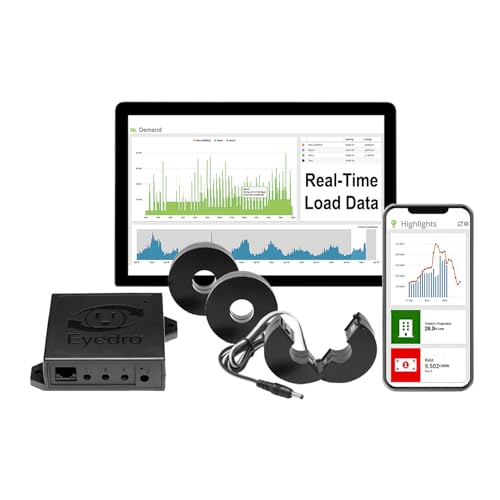
- Monitors three-phase usage, costs, and solar generation
- WiFi or Ethernet connectivity with no cloud subscription fee
- Non-invasive split-core sensors support up to 6000A-compatible sensors
Best For: Three-phase homes, solar systems, and detailed long-term monitoring
Best Circuit-Level Coverage
SEM-Meter 16-Sensor Energy Monitor

- Tracks up to 16 circuits or appliances with included clamp sensors
- Supports app-based usage, cost, and rate-template tracking
- Offers local MQTT operation with Home Assistant
Best For: Rental properties, shared homes, and detailed branch-circuit monitoring
Best Plug-In Option
Emporia Energy Monitoring Smart Plugs

- Four smart plugs monitor and control individual 120V devices
- Adds scheduling, remote control, and energy-use tracking
- Works with Alexa and Google Assistant over 2.4GHz WiFi
Best For: Renters and households monitoring selected plug-in appliances
Best Overall
Meross Smart Home Energy Monitor

- ±1% stated accuracy with power, voltage, current, and power-factor tracking
- Monitors two main circuits plus up to 16 branch circuits
- Local Home Assistant support with no subscriptions or cloud lock-in
Best For: Whole-home, circuit-level, and solar energy management
Best Certified Option
Emporia Vue 3 Home Energy Monitor

- UL and CE listed for documented safety certification
- Monitors household usage, solar, and net metering
- App and web controls support time-of-use and excess-solar management
Best For: Certified, app-based whole-home and solar monitoring
Best Simple Dual-Channel Pick
Smart Home Energy Monitor 2×80A

- Two independent 80A channels for circuits or major appliances
- Tuya and Smart Life apps provide real-time and historical readings
- Bi-directional monitoring supports solar and backup-power systems
Best For: Focused two-circuit monitoring with smart-home compatibility
Best Whole-Home Monitor – Emporia Vue 3
For homeowners comparing wifi energy meters, the Emporia Vue 3 is a whole-home option that installs in the circuit panel and tracks usage through clamp-on sensors. It supports solar and net-metering monitoring, while its app provides real-time reporting and energy-management tools over 2.4 GHz Wi-Fi.
Best For: Whole-home monitoring, solar users, and households that want detailed branch-circuit data.
Pros:
- Includes 16 branch sensors for monitoring appliances and critical circuits.
- Supports solar and net-metering monitoring plus time-of-use management.
- UL Listed and accurate to within ±2% according to the supplied specifications.
- Offers app-based alerts, automation, and downloadable cloud data.
Cons:
- Requires circuit-panel installation and may need professional assistance.
- Requires 2.4 GHz Wi-Fi and an internet connection.
- Some three-phase configurations require an additional sensor sold separately.
The Vue 3 is a feature-rich choice when you need more than plug-level readings. Its extensive circuit coverage and solar support are valuable, but the panel installation and configuration requirements make it less convenient than a plug-in meter.
Best Protection Features – eMylo 63A WiFi Energy Meter
Among wifi energy meters, the eMylo 63A stands out by combining electrical monitoring with adjustable leakage and overload protection. Its LCD and Smart Life/Tuya app show voltage, current, power, energy use, and leakage current for compatible single-phase circuits.
Best For: Single-phase circuits that need remote control, scheduling, and configurable protection thresholds.
Pros:
- Supports AC 80–400V and loads up to 63A.
- Measures energy use and leakage current on both the LCD and app.
- Allows adjustable current, voltage, leakage, and disconnection settings.
- Works with Alexa and Google Home over 2.4 GHz Wi-Fi.
Cons:
- Supports 2.4 GHz Wi-Fi only, not 5 GHz networks.
- Remote operation requires a stable internet connection.
- Annual usage data resets after one year.
This meter is a practical fit where protection controls matter as much as energy readings. Verify the circuit type, load, and installation requirements before buying, especially because it is designed for single-phase use.
Best Plug-In Value – Tapo P115 Energy-Monitoring Plugs
The Tapo P115 four-pack offers a simple plug-in approach to wifi energy meters. Each 15A smart plug tracks connected-device usage, supports schedules and remote control, and displays statistics through the Tapo app without requiring circuit-panel installation.
Best For: Monitoring and automating individual appliances such as office equipment, lamps, and other plug-in devices.
Pros:
- Four plug-in units provide coverage for multiple devices.
- Tracks energy use with statistics and intuitive charts.
- Supports bill estimates, schedules, remote control, and off-peak operation.
- Includes auto-shutoff for overload protection and smart charging.
Cons:
- Limited to plug-in devices and a 15A rating per unit.
- Does not provide whole-home or circuit-panel monitoring.
- Rated for 110V AC and 1,800W operation.
Choose the P115 when you want an easy way to measure selected appliances rather than the entire electrical system. The four-pack is convenient for distributed monitoring, but it cannot replace a panel-mounted energy monitor for whole-home data.
Best for Solar Export Tracking – Blindsmart Home Energy Monitor
For households evaluating wifi energy meters for solar or battery systems, this Blindsmart monitor uses two 120A split-core CTs to track household consumption and power flowing back to the grid. The Smart Life app adds configurable reporting, alerts, automation scenes, and energy-management features.
Best For: Single-phase three-wire homes using solar or battery storage that need bidirectional monitoring.
Pros:
- Measures both household consumption and grid export.
- Includes two 120A split-core current transformers.
- Supports Class 1 accuracy for bidirectional power monitoring.
- Offers Smart Life integration, alerts, and zero-grid-export mode.
Cons:
- Designed for single-phase three-wire systems.
- Requires 2.4 GHz Wi-Fi for app connectivity.
- Its energy-management features may require compatible system configuration.
This is a targeted choice for solar and battery monitoring rather than a general plug-in meter. Its bidirectional tracking and zero-export support make it especially relevant to energy-management setups, provided your electrical system matches the stated configuration.
Best 3-Phase Pick – Eyedro 3-Phase Energy Meter
For larger electrical systems, this Eyedro unit is a capable choice among wifi energy meters. It monitors three-phase power through non-invasive split-core sensors and reports real-time usage, costs, voltage, amperage, power factor, and solar generation through WiFi or Ethernet.
Best For: Three-phase homes, solar installations, and users who want detailed long-term energy and cost tracking without a subscription.
Pros:
- Supports multiple three-phase voltage configurations up to 600V.
- Includes 200A split-core sensors and supports compatible sensors from 5A to 6000A.
- Provides 24/7 history, bill projections, alerts, reports, and time-of-use rate support at no cloud subscription fee.
- Works over 2.4GHz WiFi or wired Ethernet.
Cons:
- Designed for three-phase monitoring rather than a simple plug-in setup.
- Separating grid consumption from solar generation with the Net Meter plugin requires two units.
- European-style power adapters are sold separately.
The Eyedro stands out when detailed three-phase measurement, solar awareness, and flexible connectivity matter more than a quick plug-in installation. Its split-core design avoids wiring changes, but setup still involves configuring the electrical system and rates in the MyEyedro platform.
Best Circuit-Level Coverage – SEM-Meter 16-Sensor Energy Monitor
This SEM-Meter is a strong option among wifi energy meters when whole-home and individual-circuit visibility are priorities. Its 16 clamp-on sensors can track appliances, rooms, common areas, or chargers while the app calculates usage and electricity costs in real time.
Best For: Rental homes, shared apartments, and households that need detailed circuit-by-circuit monitoring with optional Home Assistant and MQTT integration.
Pros:
- Includes 16 50A sensors for monitoring multiple appliances or branch circuits.
- Supports single-phase, split-phase 120/240V, and three-phase up to 415Y/240V configurations.
- Offers real-time data, cost tracking, rate templates, and usage history through Android and Apple apps.
- Can run locally through MQTT without the manufacturer’s cloud or app when used with Home Assistant.
Cons:
- Three-phase Delta systems are not supported.
- Panels accessible only through busbars may require separately available flexible sensors.
- Installation and configuration are more involved than with a plug-in monitor.
With 16 sensor inputs and customizable peak, off-peak, and holiday pricing, the SEM-Meter is particularly useful for allocating electricity costs across rooms or circuits. It offers broad panel compatibility, but buyers should confirm their electrical configuration before installation.
Best Plug-In Option – Emporia Energy Monitoring Smart Plugs
These four Emporia smart plugs offer a simple entry point for wifi energy meters. Plug them into standard 120V outlets to monitor connected devices, check real-time status, schedule operation, and control appliances remotely through the app, Alexa, or Google Home.
Best For: Renters and homeowners who want appliance-level monitoring and scheduling without opening an electrical panel.
Pros:
- Four plug-in units monitor and control individual 120V devices.
- Supports remote app control, scheduling, and real-time status checks.
- Works with Alexa and Google Assistant for voice control.
- Can help identify standby usage and automate appliances such as lights, fans, and humidifiers.
Cons:
- Limited to devices connected through standard 120V outlets.
- Supports 2.4GHz WiFi only; 5GHz networks are not supported.
- Rated for a 10A maximum continuous load, with a 15A peak limit for up to one hour per day.
The Emporia four-pack is best for targeted appliance monitoring rather than whole-home measurement. Its plug-in design avoids electrical-panel work and adds scheduling and remote control, but its load rating and outlet-based format limit which devices it can handle.
Best Overall – Meross Smart Home Energy Monitor
The Meross is a strong all-around choice among wifi energy meters for homeowners who want detailed whole-home and circuit-level tracking. Its clamp-on installation, broad system compatibility, long data retention, and local Home Assistant support make it particularly useful for advanced energy management.
Best For: Whole-home monitoring, circuit-level insights, solar automation, and privacy-conscious users.
Pros:
- ETL-certified and compliant with UL 61010 testing standards, with a 2-year warranty.
- Tracks power, voltage, current, and power factor with stated accuracy of ±1%.
- Supports two 200A main circuits and up to 16 branch circuits, with up to five years of stored data.
- Offers local data handling, Home Assistant integration, alerts, Open API access, and no subscription fees.
Cons:
- Installation and circuit-level setup may be more involved than a basic two-channel monitor.
- It is designed for specific residential electrical configurations and does not support Delta systems.
Choose the Meross if you want a feature-rich wifi energy meter that can grow into broader home automation. Its extensive sensor support and local-data approach are especially compelling for solar users and Home Assistant households.
Best Certified Option – Emporia Vue 3 Home Energy Monitor
The Emporia Vue 3 is a practical wifi energy meter for homeowners who prioritize recognized safety certification and app-based monitoring. It uses clamp-on sensors in the circuit panel and provides live usage, solar, and net-metering information through its mobile and web apps.
Best For: Users who want UL-certified monitoring with app-based energy management and solar tracking.
Pros:
- UL and CE listed, providing documented safety certification.
- Supports common single-phase, split-phase, and compatible three-phase residential systems.
- Tracks real-time usage, solar, and net metering through iPhone, Android, and web apps.
- Provides settings and notifications for time-of-use, peak-demand, excess-solar, and rewards programs.
Cons:
- Requires 2.4 GHz Wi-Fi and an internet connection for monitoring.
- Stated sensor accuracy is ±2%, lower than the Meross model in this roundup.
- Some data is cloud-retained for limited periods, and the warranty is one year.
The Vue 3 makes sense if certification and established app-based energy reporting matter more to you than local-only data. Check the included sensor configuration carefully, especially if you need three-phase monitoring or additional sensors.
Best Simple Dual-Channel Pick – Smart Home Energy Monitor 2×80A
This Tuya-compatible wifi energy meter offers a straightforward way to monitor two household circuits or high-power appliances. Its clamp-style sensors attach externally, while the Tuya or Smart Life app provides real-time readings, historical records, and control through compatible smart-home platforms.
Best For: Monitoring two major circuits, appliances, solar systems, or backup-power setups on a simpler budget-oriented configuration.
Pros:
- Two independent 80A channels can monitor major circuits and high-power appliances.
- Tracks power, voltage, current, and power factor with hourly, daily, monthly, and yearly records.
- Supports bi-directional monitoring for solar panels, backup power, and mixed-load scenarios.
- Works with Tuya or Smart Life and is compatible with Amazon Alexa and Google Home Assistant.
Cons:
- Its two-channel, 80A-per-channel design is less suitable for extensive circuit-level monitoring.
- Setup requires a 2.4 GHz Wi-Fi connection and app configuration.
- The supplied notes do not specify a safety certification, accuracy rating, or warranty.
Consider this model when you need focused monitoring rather than a full electrical-panel inventory. Its bidirectional readings and smart-home compatibility add useful flexibility for homes with solar or backup power.
How We Picked the Best Wifi Energy Meters
We focused on the features that matter most in everyday energy monitoring: measurement accuracy, connection reliability, supported electrical capacity, installation requirements, app quality, circuit visibility, and useful cost or consumption reporting. The selection covers several use cases, from simple plug-level monitoring to professional three-phase installations.
We also considered flexibility. A good meter should provide data in a way that suits your setup, whether that means a mobile app, cloud dashboard, smart-home automation, solar tracking, or local circuit measurements. Because electrical work can involve exposed live wiring, installation difficulty and the need for a qualified electrician are important practical considerations.
Quick Comparison
| Type | Best suited to | What to check |
|---|---|---|
| Smart plug meter | Individual appliances and small loads | Outlet rating, plug compatibility, and standby power limits |
| Whole-home CT monitor | Household consumption and solar systems | Number and rating of CT clamps, panel space, and installation |
| Circuit-level monitor | Tracking selected breakers or high-use circuits | Sensor count, clamp size, dashboard detail, and expansion options |
| Three-phase meter | Commercial, industrial, or three-phase properties | Voltage rating, phase compatibility, communications, and professional setup |
Key Buying Factors for Wifi Energy Meters
Installation and Electrical Compatibility
Confirm whether the device is designed for a standard outlet, a single-phase consumer unit, or a three-phase panel. Clamp-based monitors are often simpler than direct-wired meters, but they still require access to the electrical panel. Choose a professional installation whenever the product connects inside the breaker enclosure.
Monitoring Coverage
Decide whether you need one appliance, the entire property, or separate circuits. Smart plugs are convenient for portable loads, while CT-based systems provide a broader view. Multi-sensor models are useful when you want to isolate heating, water heating, solar generation, electric vehicles, or rental-unit consumption.
Ratings, Accuracy, and Data Access
Check the maximum current, voltage, frequency, and conductor size before buying. Look for clear real-time readings, historical graphs, cost estimates, export options, and alerts. If privacy or internet outages matter, verify whether the system supports local data access or continues recording when WiFi is unavailable.
Smart-Home and Solar Features
Alexa, Google Home, automation triggers, tariff settings, and solar monitoring can make energy data more actionable. These features vary widely, so confirm compatibility with your existing ecosystem rather than relying on a generic “smart” label.
Who Should Buy Which Wifi Energy Meters?
Choose a smart plug if you want the simplest way to measure a refrigerator, office setup, heater, or other individual appliance. Select a whole-home CT monitor for general household visibility, especially when tracking solar production or overall energy costs. A circuit-level system is better for identifying which fixed loads drive your bill. For workshops, larger properties, and business installations, choose a properly rated three-phase meter and plan for professional commissioning.