Plug-in energy meters make it easier to see how much electricity individual appliances use instead of relying on an estimated monthly bill. The best models show key readings such as watts, voltage, amperage, accumulated energy, and projected cost.
This roundup compares ten practical options, including compact display meters, multi-pack monitors, wide-range models, and smart plugs with Wi-Fi energy tracking. Use the guide below to choose the right features for your appliances and monitoring habits.
Best 10 Plug in Energy Meters Picks for 2026
Best Overall

- Nine readings include watts, kWh, cost, voltage, and current
- 160° backlit display improves visibility
- Stores data during power interruptions
Best For: Detailed appliance monitoring without an app
Best Smart Set
AiSeek Wi-Fi Energy-Monitoring Plugs

- Four-pack with real-time app-based energy tracking
- Schedules, timers, and group control reduce wasted use
- Supports Alexa and Google Assistant through SmartLife
Best For: Multi-device smart-home energy management
Best Display Controls
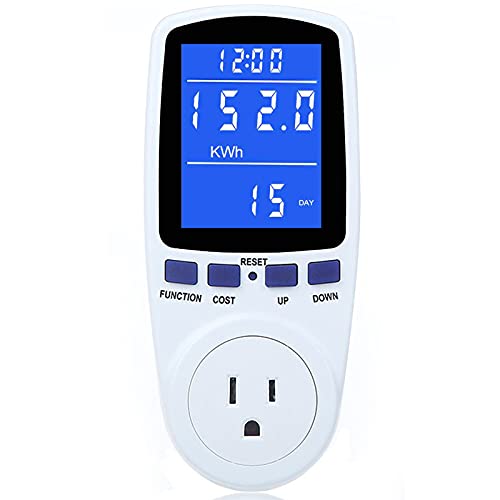
- Large 180° LCD shows multiple electrical measurements
- Backlight timing is adjustable, including always-on mode
- Adjustable overload warning and stored consumption data
Best For: Readable, customizable monitoring of 120V appliances
Best Wide-Voltage Option
SURAIELEC Cost Calculator Meter

- Measures 90–250V AC, up to 16A and 3680W
- Retains readings for up to 90 days with battery backup
- Compact design keeps the lower outlet accessible
Best For: Wide-voltage monitoring and long-term energy tracking
Feature-Rich Pick
Upgraded Watt Meter Power Monitor

- Eight display modes cover watts, kWh, voltage, amps, and cost.
- Backlit LCD and overload warning support convenient monitoring.
- Memory retains cumulative data and settings after disconnection.
Best For: Detailed appliance monitoring and cost tracking
Best for Cost Tracking
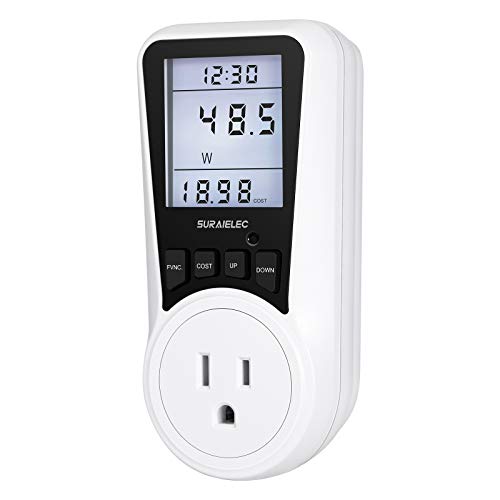
- Customizable rates turn measured usage into estimated electricity costs.
- Large backlit display is easy to read in low-light areas.
- Compact design leaves the adjacent receptacle available.
Best For: Comparing household appliance energy costs
Dual-Outlet Choice
Briidea Two-Outlet Power Monitor
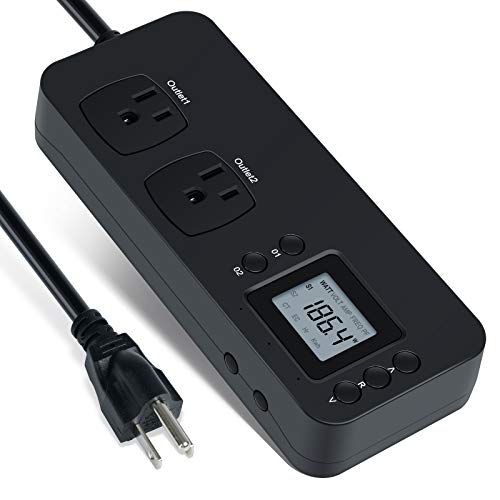
- Monitors two electronic devices independently at once.
- Measures watts, volts, amps, hertz, kWh, time, and power factor.
- 14AWG cord, ABS housing, and overload warning add practical safety features.
Best For: Simultaneous monitoring of two household devices
Best with Extra Features

- Monitors watts, kWh, cost, voltage, amps, and more
- Adjustable overload and kWh consumption alarms
- Backlit display with saved cumulative data
Best For: Detailed appliance tracking across two locations
Easy-Reading Choice
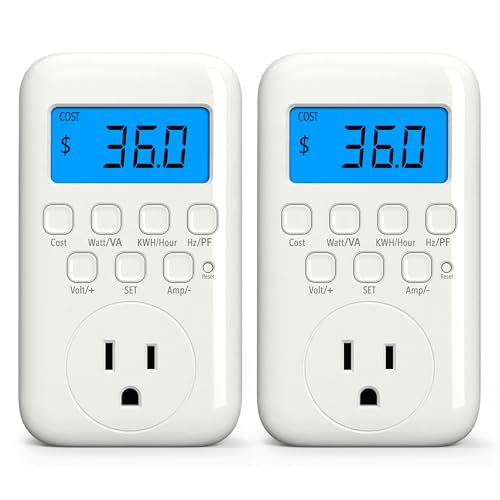
- Offers nine electrical and usage display modes
- Wide-angle backlit LCD improves readability
- Stores data and supports appliances up to 1875W
Best For: Simple household monitoring with clear on-screen readings
Budget Single-Unit Pick

- Monitors power, voltage, amps, energy, cost, and more
- Includes overload warning and data memory
- Single meter with a clear LCD readout
Best For: Checking one appliance on a budget
Best Overall – HBN Backlit Energy Monitor
If you want straightforward plug in energy meters for checking an appliance’s electricity use, the HBN Watt Meter offers nine clearly labeled data views. Its backlit display shows consumption, voltage, current, cost, and more, while stored data remains available after a power interruption.
Best For: Homeowners who want broad electrical readings and simple, button-based operation.
Pros:
- Displays nine measurements, including watts, kWh, voltage, amps, frequency, power factor, time, and cost.
- Backlit LCD has a 160° viewing angle for easier reading day or night.
- Stores non-real-time data through sudden power outages.
- Supports loads up to 15A, 1875W for resistive and tungsten loads, and 1/2 HP.
Cons:
- The backlight automatically turns off after 15 seconds.
- Its 125V rating is narrower than meters designed for wider voltage ranges.
This is a practical all-purpose choice when you want detailed readings without an app or hub. The nine display modes and data retention make it useful for diagnosing appliance consumption over time.
Best Smart Set – AiSeek Wi-Fi Energy-Monitoring Plugs
These plug in energy meters combine energy tracking with remote outlet control. The four-pack reports real-time power and energy in the SmartLife app, while schedules, timers, voice control, and group commands help reduce wasted standby use.
Best For: Smart-home users who need app-based monitoring and automated control across several devices.
Pros:
- Four plugs provide real-time power and energy tracking through the SmartLife app.
- Schedules and timers can switch devices off automatically.
- Works with Alexa and Google Assistant after SmartLife setup.
- Compact, FCC-certified design supports up to 15A and 1800W.
Cons:
- Requires a 2.4GHz Wi-Fi connection and the SmartLife app.
- Direct Alexa connection is not supported; linking through SmartLife is required.
Choose this set when automation matters as much as measurement. It is less suited to users seeking a standalone screen, but the four-pack makes coordinated control and energy tracking convenient.
Best Display Controls – Digital 7-Mode Watt Meter
This digital meter is one of the more adjustable plug in energy meters, with seven display modes, configurable backlight timing, overload protection, and data memory. Its large screen and wide viewing angle make readings easier to check while an appliance is running.
Best For: Users who prioritize a large readable display and customizable overload and backlight settings.
Pros:
- Tracks watts, kWh, volts, amps, hertz, power factor, cost, minimum and maximum power, and time.
- Large 2.36-by-1.85-inch LCD offers a 180° viewing angle.
- Backlight duration can be set from 10 minutes to always on.
- Overload protection is adjustable up to 3680W, with a warning display.
Cons:
- The listed maximum operating voltage is 120V.
- The manufacturer recommends setting overload protection to 1800W before use, so setup requires attention.
Its flexible display and protection settings make it a strong choice for hands-on monitoring. The controls are more involved than a basic meter, but they provide useful customization for regular appliance testing.
Best Wide-Voltage Option – SURAIELEC Cost Calculator Meter
For households needing broader compatibility, the SURAIELEC is a versatile choice among plug in energy meters. It measures 90–250V AC, calculates electricity cost, retains long-term data with battery backup, and uses a compact design that leaves the lower outlet accessible.
Best For: Users who want wide-voltage measurement, long-term memory, and a space-saving outlet design.
Pros:
- Measures 90–250V AC, up to 16A and 3680W.
- Provides readings for watts, volts, amps, frequency, power factor, kWh, cost, and cumulative time.
- Rechargeable battery backup preserves data for up to 90 days.
- Compact body leaves the lower wall outlet accessible when used in the upper outlet.
Cons:
- It is a single meter rather than a multi-pack.
- The wide voltage range may provide more capability than needed for basic household 120V checks.
This is the most flexible option for buyers who value voltage range and extended data retention. Its compact form and cost calculator add practical advantages for ongoing energy audits.
Feature-Rich Pick – Upgraded Watt Meter Power Monitor
If you want plug in energy meters that show more than basic wattage, this model tracks power, voltage, current, frequency, power factor, energy use, and estimated cost. Its eight display modes and backlit screen make it practical for checking household appliances day or night.
Best For: Users who want detailed appliance measurements, cumulative cost tracking, and simple manual resets.
Pros:
- Tracks multiple electrical measurements, including watts, kWh, voltage, amps, and estimated cost.
- Backlit LCD improves readability, with automatic shutoff after 10 minutes without button input.
- Stores cumulative energy, cost, and settings when unplugged or during a power failure.
- Flashing overload warning activates above the default 1,800W threshold.
Cons:
- The backlight operates only when the meter is connected to AC power.
- Stored data does not include current, voltage, power, or power factor readings.
- Its overload threshold is 1,800W, so higher-power appliances require particular care.
This is a versatile choice for detailed, ongoing monitoring. The eight readout options and memory function are especially useful when comparing appliance consumption over time.
Best for Cost Tracking – SURAIELEC Watt Meter
Among plug in energy meters, the SURAIELEC stands out for combining customizable electricity rates with a large backlit display. It measures household appliance consumption and helps translate energy use into estimated running costs.
Best For: Households comparing appliance costs in basements, garages, utility rooms, and other low-light spaces.
Pros:
- Calculates estimated electricity costs using customizable rates from 0 to 99.99 per kWh.
- Measures voltage, current, wattage, frequency, cumulative energy, peak power, and operating time.
- Large backlit LCD has a wide viewing angle for easier reading day or night.
- Compact design uses one outlet without blocking adjacent receptacles.
Cons:
- Its stated measurement range is up to 15A and 1,950W, which may not suit higher-load appliances.
- The listed minimum and maximum operating voltage specifications are 130 volts.
With Class 1.0 accuracy, 0.1W resolution, and battery-backed memory rated for up to 90 days, this meter is well suited to practical household energy audits and cost comparisons.
Dual-Outlet Choice – Briidea Two-Outlet Power Monitor
This Briidea is one of the more flexible plug in energy meters because its two-outlet design can monitor two electronic devices at the same time. It also uses a heavy-duty extension cord and provides real-time electrical readings for common household equipment.
Best For: Users who want to monitor two devices independently, such as a TV and audio system or a refrigerator and water purifier.
Pros:
- Two outlets allow independent monitoring of two connected devices.
- Measures watts, volts, amps, hertz, kWh, cumulative time, and power factor.
- Power-off memory retains cumulative time and energy-consumption readings.
- Flame-retardant ABS housing and a 14AWG extension cord support durability and heat resistance.
Cons:
- The overload warning is set at 1,200W, lower than some comparable meters.
- The product is an extension-cord design, so it may take more space than a compact plug-in unit.
- The supplied notes do not specify a backlit display or cost-calculation function.
The independent two-outlet layout is the main advantage here. Choose it when simultaneous monitoring matters more than a built-in electricity-cost calculator or compact form factor.
Best with Extra Features – Upgraded Watt Meter 2-Pack
If you want plug in energy meters for detailed household tracking, this two-pack monitors watts, kilowatt-hours, voltage, current, frequency, power factor, cost, and more. Its adjustable overload protection, consumption alarm, data memory, and backlit display make it a versatile option for checking appliance usage.
Best For: Households that want two feature-packed meters with adjustable alerts and extensive monitoring data.
Pros:
- Tracks numerous readings, including energy, cost, minimum and maximum power, and usage time.
- Includes adjustable overload protection with an audible warning.
- Saves cumulative usage and cost data during unplugging or power interruptions.
- Backlit LCD includes adjustable lighting duration.
Cons:
- Setup may take some time because it includes multiple settings and display modes.
- The default overload setting is 3680W, while the notes recommend setting it to 1800W before use.
This is the strongest choice for users who want extensive controls rather than a basic watt reading. The two-pack is also practical for monitoring appliances in separate rooms.
Easy-Reading Choice – HBN Backlit Watt Meter 2-Pack
For shoppers comparing plug in energy meters, the HBN two-pack offers nine display modes and a wide-view backlit LCD. It measures common electrical data such as watts, voltage, amps, kWh, usage time, power factor, frequency, and estimated cost, making everyday appliance monitoring straightforward.
Best For: Users who prioritize a clear display, simple controls, and two meters for standard household appliances.
Pros:
- Displays nine types of electrical and usage data.
- Backlit LCD has a 160-degree viewing angle for easier reading.
- Stores non-real-time data through a power outage.
- Rated for 125VAC, 60Hz, up to 15A and 1875W.
Cons:
- Its 1875W maximum capacity may not suit higher-power appliances.
- The backlight turns off after 15 seconds of inactivity, which may feel brief for some users.
The HBN is a practical middle ground: it provides broad monitoring coverage without emphasizing advanced alarm customization. Its two-pack and wide-angle screen are useful for routine energy checks around the home.
Budget Single-Unit Pick – Upgraded Watt Meter
This single plug in energy meter is designed for straightforward appliance testing and usage tracking. It monitors power, voltage, amperage, frequency, power factor, energy, cost, and minimum or maximum power, while its overload warning and data memory add useful safeguards.
Best For: Shoppers who need one affordable meter for checking energy-hungry appliances.
Pros:
- Tracks key electrical readings plus energy consumption and estimated cost.
- Provides seven display modes for reviewing appliance performance.
- Warns with an LCD message and audible alert when power exceeds the set limit.
- Saves readings after unplugging or during a sudden power failure.
Cons:
- This package includes only one meter.
- The listed style does not include a backlight.
- The notes recommend setting the overload power to 1800W before use.
Choose this model when you want the core functions of a plug-in watt tester without a two-pack or backlit screen. It is especially suited to checking appliances associated with higher energy costs.
How We Picked the Best Plug in Energy Meters
We focused on meters that provide useful, easy-to-read measurements for household appliances and electronics. The selection includes models with different display modes, cost-calculation functions, overload protection, outlet configurations, and monitoring methods. We also considered whether a meter is better suited to occasional spot checks, ongoing energy tracking, or remote monitoring through a smart-home app.
Because accuracy can vary by load type and product design, these devices are best used for comparison and awareness rather than certified electrical testing. Always check the meter’s rated voltage, current, and wattage before connecting a high-draw appliance.
Quick Comparison
| Type | Best for | Typical strengths |
|---|---|---|
| Basic plug-in meter | Simple appliance checks | Instant watt, voltage, and amp readings |
| Cost-calculating meter | Estimating operating expense | Tracks accumulated use and electricity cost |
| Multi-pack | Monitoring several devices | Good coverage for multiple rooms or appliances |
| Smart plug with energy monitoring | Remote tracking and automation | App access, schedules, and usage history |
| Dual-outlet analyzer | Comparing connected loads | Convenient monitoring of two devices |
Key Buying Factors for Plug-In Energy Meters
Measurements and Display
Look for the readings you actually need. Watts are useful for seeing current demand, while kilowatt-hours help estimate total consumption over time. Voltage and amperage can provide additional context when troubleshooting unusual loads. A backlit display or multiple viewing modes is helpful in dim spaces.
Load Capacity and Compatibility
Check the maximum current and wattage ratings before use. Resistive loads such as lamps and heaters are generally straightforward, but motors, compressors, and other inductive appliances may behave differently at startup. Do not exceed the stated rating, and avoid using a consumer meter as a substitute for professional electrical equipment.
Cost Tracking
If your goal is to understand your utility bill, choose a model that lets you enter an electricity rate and calculates estimated cost. Confirm whether it supports accumulated energy readings and whether the rate can be adjusted for your local tariff.
Smart Features
Wi-Fi smart plugs are useful when you want readings on a phone, schedules, alerts, or integration with a smart-home platform. They usually require a compatible 2.4 GHz network and an account or app, so a standalone meter may be preferable for quick, offline measurements.
Quantity and Placement
A single meter works well for testing one appliance at a time. A two-pack or four-pack is more convenient for comparing refrigerators, office equipment, entertainment systems, and other loads without constantly moving the device.
Who Should Buy Which Plug in Energy Meters?
- For basic home checks: Choose a straightforward plug-in watt meter with clear display modes.
- For estimating appliance costs: Select a model with accumulated kWh tracking and an adjustable cost rate.
- For several appliances: A two-pack or four-pack offers faster comparisons and broader coverage.
- For remote monitoring: Choose a Wi-Fi smart plug with energy reporting and app controls.
- For testing more detailed electrical behavior: Look for a meter that displays watts, voltage, amps, and overload status, while staying within its rated limits.
The best plug-in energy meters are the ones that match your monitoring goal. Prioritize clear readings and suitable load capacity first, then choose cost tracking, multiple units, or smart controls if those features will make the device more useful.