Choosing the right solar charge controller helps protect your battery, stabilize charging, and keep an off-grid system performing reliably in changing weather.
We compared 10 waterproof solar charge controllers across charging technology, current capacity, voltage compatibility, enclosure protection, monitoring, and installation practicality.
Best 10 Waterproof Solar Charge Controllers Picks for 2026
Marine-Ready Protection

- IP67 waterproof housing for outdoor use
- 12/24V operation with automatic detection
- LCD monitoring and four-stage charging
Best For: Marine and outdoor battery systems needing clear status monitoring
Compact All-Weather Value

- IP68 waterproof construction
- Handles up to 130W and 8A input
- Simple LED charging indicators
Best For: Small 12V outdoor systems with straightforward monitoring needs
Smart MPPT Performance

- 75V, 15A MPPT charging
- Bluetooth app with live data and history
- Supports synchronized multi-controller charging
Best For: Users prioritizing solar efficiency and connected system control
Simple 12V Weatherproof Choice

- IP67 sealing for rain, snow, and dust
- Six listed battery and wiring protections
- SAE connector with LED status lights
Best For: Compact 12V RV, boat, car, and outdoor charging setups
Best Versatile Pick
Renogy Wanderer 10A PWM Controller
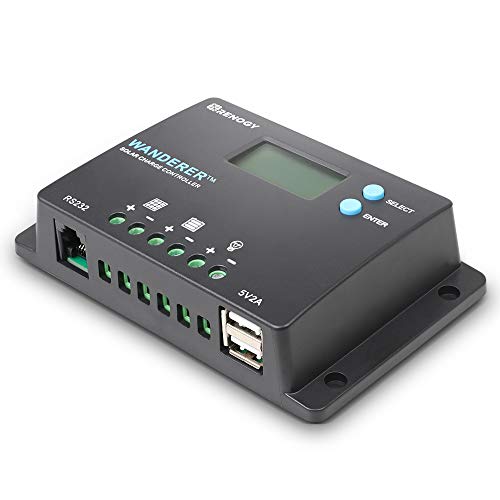
- 12V/24V operation with several battery chemistries
- LCD, USB ports, and optional Bluetooth monitoring
- Four-stage charging with multiple safety protections
Best For: RV and compact off-grid systems needing flexible controls
Best Compact MPPT Option

- MPPT design is rated up to 30% more efficient than PWM
- IP67 housing for demanding outdoor conditions
- Simple SAE connection and LED status indicators
Best For: Portable 12V systems requiring compact, water-resistant MPPT charging
Best Fully Waterproof Budget Pick
20A 12V/24V IP68 PWM Controller
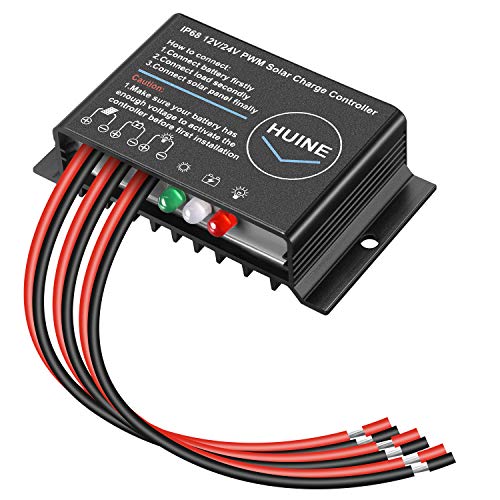
- IP68-rated housing for outdoor solar installations
- Auto-senses 12V and 24V battery systems
- 20A capacity with four-stage PWM charging
Best For: Outdoor lighting, boats, caravans, and other exposed solar systems
Best Slimline Pick
LNEX 10A Waterproof PWM Controller
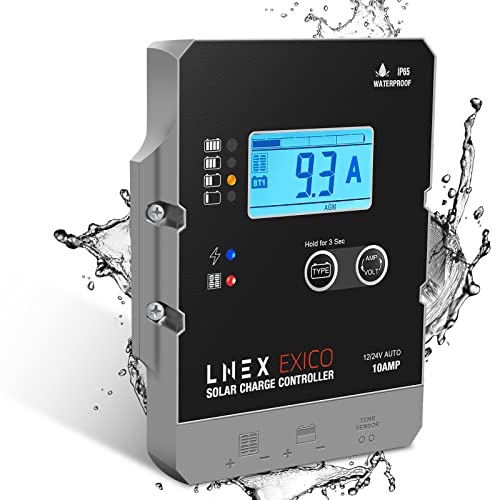
- IP65 waterproof, super-thin housing
- Five-stage PWM charging for multiple batteries
- Backlit LCD with built-in safety protections
Best For: Compact 12V/24V outdoor battery systems
Best Easy-Install Option
SOLPERK 10A Waterproof Controller

- IP67 waterproof housing
- SAE plug-and-play connection
- Three-stage PWM charging with LED indicators
Best For: Simple RV, boat, and car solar setups
Best Higher-Capacity Pick
LNEX 20A Waterproof PWM Controller

- 20A capacity for larger solar systems
- IP65 slim outdoor design
- LCD monitoring and five-stage PWM charging
Best For: Higher-demand 12V/24V RV and marine systems
Marine-Ready Protection – Renogy Voyager 20A PWM
For boat owners comparing waterproof solar charge controllers, the Renogy Voyager combines IP67 water resistance with 20A PWM charging for 12V or 24V systems. Its LCD also makes it easier to check charging current, battery voltage, energy generated, temperature, and error codes.
Best For: Marine, RV, and other outdoor setups using AGM, Gel, Flooded, or manually selected lithium batteries.
Pros:
- IP67-rated waterproof design for rain, spray, and condensation.
- Four-stage PWM charging helps protect the battery.
- Automatic 12V/24V detection for AGM, Gel, and Flooded batteries.
- Includes multiple protections and a backlit LCD.
Cons:
- PWM technology may be less efficient than MPPT in some solar setups.
- Lithium battery selection requires manual activation.
The Voyager is a practical choice when weather resistance, battery safeguards, and on-device monitoring matter more than advanced MPPT performance.
Compact All-Weather Value – POWOXI 12V 8A
The POWOXI is a compact option among waterproof solar charge controllers, supporting 12V rechargeable batteries and solar input up to 130W. Its LED indicators provide a simple way to see whether the system is charging or fully charged.
Best For: Small 12V solar installations using compatible LiFePO4, AGM, Gel, or lead-acid batteries.
Pros:
- IP68 waterproof rating for demanding outdoor conditions.
- Supports up to 8A and 130W of solar input.
- LED indicators show charging and full-charge status.
- Provides overcharge, over-discharge, and overload protection.
Cons:
- Designed for 12V systems only.
- 8A capacity limits its use with larger solar arrays.
- LED display provides less detail than an LCD or app.
Choose this controller for a straightforward, weather-resistant 12V installation where simple indicators and compact dimensions are sufficient.
Smart MPPT Performance – Victron SmartSolar 75/15
Although its supplied notes do not specify a waterproof rating, the Victron SmartSolar stands out for MPPT performance and connected monitoring. Its 75V, 15A controller is designed to maximize available solar power, including when panels are partly shaded.
Best For: 12V or 24V systems where energy optimization, configuration control, and performance history are priorities.
Pros:
- MPPT tracking is designed to maximize usable solar output.
- Bluetooth connectivity enables monitoring through the VictronConnect app.
- Supports synchronized operation with multiple SmartSolar controllers.
- Configurable load output can disconnect loads at low battery voltage.
Cons:
- The supplied notes do not list a waterproof or IP rating.
- App-based monitoring may be less convenient for users seeking a built-in display.
This is the strongest feature-rich option here for optimizing solar harvest, but buyers needing specifically waterproof solar charge controllers should verify installation protection before using it outdoors.
Simple 12V Weatherproof Choice – SOLPERK 8A 12V
The SOLPERK 8A is a straightforward pick among waterproof solar charge controllers for 12V panels and batteries. Its IP67 sealing, LED status lights, and SAE connector suit compact RV, boat, car, and other outdoor charging setups.
Best For: 12V LiFePO4, AGM, Gel, and other compatible rechargeable batteries in compact outdoor systems.
Pros:
- IP67 waterproof design helps protect against rain, snow, and dust.
- Six listed protections cover reverse current, overheating, short circuit, overcharging, over-voltage, and reverse polarity.
- LED indicators show charging or fully charged status.
- Uses no battery power when there is no sunlight, according to the supplied notes.
Cons:
- Limited to 12V systems and 8A maximum current.
- LEDs provide less detailed information than an LCD or app.
- Connection requires careful polarity matching.
The SOLPERK makes sense for buyers who want a compact, sealed 12V controller with basic status feedback and broad battery compatibility.
Best Versatile Pick – Renogy Wanderer 10A PWM Controller
For buyers comparing waterproof solar charge controllers for an RV, marine panel, or compact off-grid setup, the Renogy Wanderer offers broad battery compatibility and detailed system controls. Its 12V/24V design, four-stage PWM charging, LCD, and IP32 rating make it a practical choice for sheltered installations and normal outdoor conditions.
Best For: RV and DIY off-grid systems needing 12V/24V support, adjustable load control, and battery monitoring.
Pros:
- Supports 12V and 24V systems with AGM, Gel, Flooded, and manually configured lithium battery settings.
- Uses four-stage charging and includes protection against overcharge, over-discharge, overload, short circuits, and reverse polarity.
- Includes an LCD, USB charging ports, temperature compensation, and an RS232 port for optional Bluetooth monitoring.
- Compact housing and negative-ground design suit RV and marine electrical panels.
Cons:
- Its IP32 rating is more limited than controllers designed for direct exposure to water.
- As a 10A PWM controller, it is intended for smaller solar systems rather than high-power arrays.
- Bluetooth monitoring requires the separately sold BT-1 module.
The Wanderer stands out when flexibility and visibility matter more than maximum charging efficiency. Install it in a protected location, confirm the 10A capacity fits your panel and battery setup, and it can provide a well-equipped control point for a compact solar system.
Best Compact MPPT Option – SOLPERK 10A MPPT Controller
The SOLPERK 10A is a compact option for shoppers seeking waterproof solar charge controllers for a 12V battery system. Its MPPT charging design is presented as more efficient than PWM, while the IP67 housing, SAE connection, and simple status lights support portable and outdoor installations.
Best For: 12V battery setups that prioritize compact size, plug-and-play SAE connectivity, and stronger water resistance.
Pros:
- MPPT charging is specified as up to 30% more efficient than PWM controllers.
- IP67-rated construction provides a stronger level of water and dust resistance than basic protected housings.
- Compatible with AGM, lead-acid, Gel, deep-cycle, sealed, flooded, and LiFePO4 batteries.
- Three indicator lights show panel connection, battery connection, and full-battery status.
Cons:
- Designed for 12V batteries rather than automatically supporting 24V systems.
- Its 10A rating limits it to relatively small solar applications.
- LED indicators provide less detailed information than a full monitoring display.
Choose the SOLPERK when a small 12V system needs MPPT charging and a highly water-resistant enclosure without a complicated interface. Verify the controller’s 10A capacity and battery compatibility before installation.
Best Fully Waterproof Budget Pick – 20A 12V/24V IP68 PWM Controller
For outdoor projects where water resistance and automatic voltage detection are priorities, this 20A controller is one of the more rugged waterproof solar charge controllers in the group. Its IP68 rating, four-stage PWM charging, short connection cables, and 12V/24V auto-sensing make it suitable for several compact solar applications.
Best For: Solar lighting, fencing, monitoring systems, caravans, and boats needing an IP68-rated 20A controller.
Pros:
- IP68 waterproof construction is designed for outdoor use.
- Automatically detects 12V or 24V battery systems.
- 20A capacity supports more load than the two 10A controllers in this roundup.
- Includes four-stage charging, short-circuit, overcharge, over-discharge, and reverse-polarity protection.
Cons:
- Uses PWM charging rather than the higher-efficiency MPPT approach.
- LED indicators show basic status but do not provide detailed system readings.
- The specified 24-hour working mode may be less suitable for setups requiring custom load schedules.
This controller is a strong fit when a compact installation needs higher current capacity and maximum enclosure protection. Its PWM design keeps the system straightforward, while the IP68 rating makes it particularly appealing for exposed lighting, boat, and caravan applications.
Best Slimline Pick – LNEX 10A Waterproof PWM Controller
For compact outdoor systems, this LNEX unit is a practical option among waterproof solar charge controllers. Its IP65-rated housing, thin profile, automatic 12V/24V detection, and LCD monitoring make it suitable for installations where space and weather exposure matter.
Best For: Small RV, marine, car, powersport, and other 12V/24V battery systems needing a low-profile controller.
Pros:
- Thin IP65 waterproof design for outdoor use.
- Five-stage PWM charging supports several battery types, including LiFePO4, AGM, gel, flooded, and lithium batteries.
- Backlit LCD and LED indicators show charging and battery information.
- Built-in protections help guard against overvoltage, overcurrent, overload, short circuit, and temperature issues.
Cons:
- Limited to 10A of charging current.
- Manufacturer warranty is listed as 90 days.
The LNEX 10A stands out when a slim controller and clear status display are more important than higher capacity. Confirm your panel output and battery chemistry before installation.
Best Easy-Install Option – SOLPERK 10A Waterproof Controller
The SOLPERK 10A is a straightforward choice among waterproof solar charge controllers, with an IP67 rating, SAE connection, automatic 12V/24V identification, and simple LED status indicators. It is designed for outdoor installations where uncomplicated setup is useful.
Best For: RV, boat, and car owners using compatible 12V/24V AGM, gel, or flooded deep-cycle batteries.
Pros:
- IP67 waterproof construction for outdoor applications.
- SAE port and included manual support plug-and-play installation.
- Three-stage PWM charging and low standby power consumption.
- Includes protection against under-voltage, overvoltage, overload, short circuit, and reverse connection.
Cons:
- Maximum charging current is 10A.
- LED indicators provide less detailed information than an LCD display.
- Listed battery compatibility does not include lithium or LiFePO4 batteries.
Choose the SOLPERK when weather resistance and easy wiring take priority. Its stated maximum power is 150W at 12V and 300W at 24V, so size the solar array accordingly.
Best Higher-Capacity Pick – LNEX 20A Waterproof PWM Controller
For systems that need more charging capacity, the LNEX 20A is a strong candidate among waterproof solar charge controllers. It combines a thin IP65 housing with automatic 12V/24V detection, five-stage PWM charging, and an LCD that displays operating information.
Best For: Larger 12V/24V RV, marine, vehicle, and multi-battery installations that can benefit from a 20A controller.
Pros:
- 20A capacity provides more headroom than a 10A controller.
- IP65 waterproof, low-profile design suits outdoor installations.
- Five-stage PWM charging supports LiFePO4, LTO, AGM, gel, flooded, lead-acid, calcium, and EFB batteries.
- LCD monitoring, automatic voltage detection, memory function, and multiple safety protections are included.
Cons:
- IP65 protection is a lower rating than the IP67 rating offered by some waterproof controllers.
- It uses PWM rather than MPPT charging technology.
The LNEX 20A is the better fit when your array and battery system exceed the practical range of a 10A controller. Verify the system voltage, panel output, and battery settings before connecting it.
How We Picked the Best Waterproof Solar Charge Controllers
We focused on controllers suited to exposed installations such as RVs, boats, cabins, outdoor lighting systems, and small backup setups. The selection includes PWM and MPPT models, several current ratings, and both compact basic units and controllers with displays or app-based monitoring.
Our comparison emphasizes practical specifications: supported battery voltage, maximum charging current, waterproof or weather-resistant construction, protection features, wiring convenience, and suitability for common 12V and 24V systems. Product listings can vary by seller and region, so verify the current manual and rating before installation.
Quick Comparison
| What to Compare | Best For | What to Check |
|---|---|---|
| PWM controller | Simple, budget-conscious systems | Panel and battery voltage matching |
| MPPT controller | Higher efficiency and variable conditions | PV input limits and battery compatibility |
| 8A–10A model | Small panels and light loads | Array wattage and expected charging current |
| 15A–20A model | Larger 12V or 24V battery banks | Continuous current and cable size |
| LCD or smart monitoring | Users who want charging visibility | Display readability, connectivity, and controls |
Key Buying Factors for Waterproof Solar Charge Controllers
Waterproof Rating and Installation Location
Look for a clearly stated IP rating rather than relying only on the word “waterproof.” IP67 generally indicates protection against dust and temporary immersion, while IP68 may indicate a higher level of water resistance under specified conditions. Even a sealed controller should be mounted where it is not continuously exposed to spray, standing water, or condensation. Follow the manufacturer’s cable-sealing and mounting instructions.
PWM or MPPT Technology
PWM controllers are usually simpler and less expensive, making them suitable for small systems with closely matched panel and battery voltages. MPPT controllers can extract more usable energy when panel voltage differs from battery voltage, in colder weather, or when solar conditions change. They typically cost more, but the efficiency advantage can justify the price in larger or energy-sensitive systems.
Current, Voltage, and Battery Compatibility
Confirm that the controller supports your battery bank’s nominal voltage and chemistry. The controller’s amperage rating must exceed the array’s maximum expected charging current, with appropriate margin. Also check maximum PV voltage, maximum panel wattage, reverse-polarity protection, overcharge protection, short-circuit protection, and temperature compensation where relevant.
Monitoring and Wiring
An LCD, LED indicator, or app can make it easier to identify charging status and battery conditions. Inspect terminal size, cable access, fuse requirements, and whether the controller requires a particular connection sequence. Install a properly rated fuse or breaker close to the battery when recommended, and use cable sized for the system’s current and run length.
Who Should Buy Which Waterproof Solar Charge Controllers?
Choose a compact 8A or 10A PWM model for a small panel, modest battery, and straightforward RV, boat, lighting, or shed installation. These are generally the most economical option when efficiency demands are moderate.
Choose a 15A or 20A controller when your solar array produces more current or you plan to expand the system. Confirm the controller’s maximum panel wattage for both 12V and 24V operation.
Choose an MPPT model when available sunlight is limited, panel voltage is higher than battery voltage, or you want better energy harvest and more detailed system management. For marine and highly exposed installations, prioritize a verified IP rating, secure mounting, corrosion-resistant connections, and adequate ventilation around the enclosure.