Accurate battery data is essential when you rely on LiFePO4 power for an RV, boat, solar setup, or off-grid system. The right monitor can show state of charge, voltage, current draw, and charging performance more reliably than a basic voltage reading.
We’ve selected 10 battery monitors for LiFePO4 batteries with different strengths, from Bluetooth-connected smart shunts to wired displays with alarms and configurable battery settings. Use the guide below to match features, installation requirements, and budget to your power system.
Best 10 Battery Monitors for Lifepo4 Batteries Picks for 2026
Premium Smart Shunt
Victron Energy Smart Battery Shunt

- 500A capacity with 6.5V–70V operating range
- Bluetooth app provides detailed battery insights
- Works with Victron networking and auxiliary sensors
Best For: Connected RV, marine, renewable-energy, and off-grid systems
Display Monitor Pick
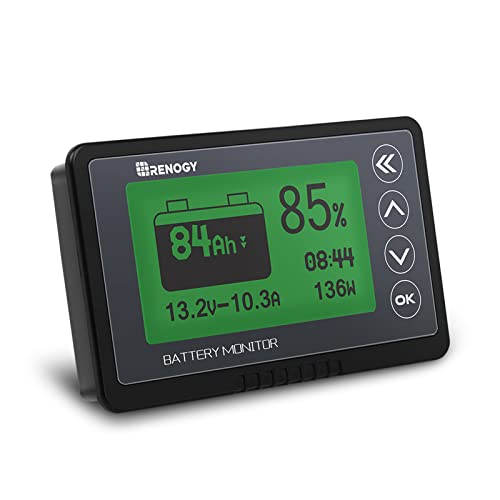
- Dedicated LCD shows key battery measurements
- Supports LiFePO4 and 12V, 24V, and 48V systems
- Includes high/low alarms and a 20-foot cable
Best For: Users who prefer a wired display for RV or solar systems
Compact LCD Choice
AILI Battery Monitor with Shunt

- 100A shunt for smaller battery systems
- LCD displays state of charge and key readings
- Includes cable, shunt, bracket, and manual
Best For: Compact RV, camper, portable solar, and small off-grid systems
Best Precision Readings

- Coulomb counting targets stable, high-precision SOC readings
- Shows capacity, voltage, current, power, temperature, and time
- Includes configurable voltage and low-capacity alarms
Best For: Detailed monitoring of LiFePO4 and other battery systems up to 300A
Best Long-Cable Setup

- Displays voltage, current, power, energy, capacity, and time
- Supports LiFePO4 and multiple battery chemistries
- Includes a 20-foot shielded wire and voltage/capacity alarms
Best For: RV, solar, and off-grid installations needing flexible display placement
Best All-Around Display
LiTime 500A Shunt Battery Monitor

- Backlit LCD shows voltage, current, power, and capacity
- Supports 8–120V systems and up to 9,999Ah
- Programmable voltage and capacity alarms
Best For: RV and off-grid users wanting detailed, app-free monitoring
Best for Long-Distance Viewing
LNEX 500A Color Screen Monitor

- 2.4-inch color screen is easy to read
- Includes a 16-foot shielded monitoring wire
- Supports programmable high- and low-voltage alarms
Best For: Remote display placement in RVs, carts, and mobile setups
Best Compact Design
BINTA 500A Shunt Battery Monitor

- Compact backlit display tracks charge, capacity, voltage, and current
- Supports 8–120V systems with 500A peak capacity
- Auto-sleep operation and shutdown data memory
Best For: Compact RV, vehicle, boat, and solar installations
Premium Smart Shunt – Victron Energy Smart Battery Shunt
For shoppers comparing battery monitors for LiFePO4 batteries, the Victron Energy SmartShunt is a high-capacity, Bluetooth-enabled option that delivers detailed battery data through the VictronConnect app. Its 500A rating and 6.5V–70V operating range suit many RV, marine, renewable-energy, and off-grid systems.
Best For: Users who want app-based monitoring, advanced Victron integration, and detailed state-of-charge information.
Pros:
- Tracks state of charge, voltage, current, amp hours, time remaining, and charge cycles.
- Shares data wirelessly with compatible Victron devices through VE.Smart Networking.
- Supports auxiliary connections for a second battery, midpoint monitoring, or an optional temperature sensor.
- Rated for up to 500A and backed by a five-year warranty.
Cons:
- Requires a smartphone or compatible Victron system for its primary display experience.
- Its broader integration features may be more than needed for a simple standalone setup.
The SmartShunt is a strong choice when accurate coulomb counting and connected-system functionality matter more than having a built-in screen. It is especially appealing for Victron-based LiFePO4 installations.
Display Monitor Pick – Renogy 500A Battery Monitor
The Renogy 500A Battery Monitor is a practical choice among battery monitors for LiFePO4 batteries when you prefer a dedicated LCD display. It measures voltage, current, consumed power, capacity, and battery degradation, while supporting 12V, 24V, and 48V systems.
Best For: RV, solar, and backup-power users who want an accessible wired display with programmable alarms.
Pros:
- Shunt-based design provides stated measurement accuracy of 1%.
- Compatible with LiFePO4, lithium-ion, AGM, GEL, and other listed battery types.
- High- and low-capacity alarms help warn against excessive discharge.
- Includes a 20-foot shielded cable for remote display placement.
Cons:
- Uses a wired LCD interface rather than Bluetooth phone monitoring.
- Installation requires routing the included cable between the shunt and display.
Choose the Renogy if visible, at-a-glance readings and alarm functions are priorities. Its wide voltage compatibility makes it flexible, while the included long cable can help with installations where the battery compartment and display are separated.
App History Option – ANCEL BM1000 Bluetooth Battery Monitor
The ANCEL BM1000 is a compact smart shunt for shoppers seeking battery monitors for LiFePO4 batteries with phone-based access and usage history. It supports 10V–120V battery banks and tracks state of charge, voltage, current, power, and remaining capacity for RV, marine, solar, and off-grid applications.
Best For: DIY users who want nearby Bluetooth monitoring and up to 30 days of energy-use trends.
Pros:
- Works with LiFePO4, lithium, AGM, and lead-acid systems across common 12V–48V setups.
- Displays real-time battery information through a mobile app.
- Stores up to 30 days of voltage, current, and temperature history.
- Includes reverse-polarity and overload protection plus wrong-proof ports.
Cons:
- Its 400A rating is lower than the 500A models in this roundup.
- Bluetooth range can be reduced by walls or metal battery compartments.
- It is not intended for starter-battery load testing or vehicle diagnostics.
The BM1000 is well suited to installations where a phone is more convenient than a permanent display. Its history feature adds useful context for spotting unusual drain, provided the system is within Bluetooth range.
Compact LCD Choice – AILI Battery Monitor with Shunt
The AILI Battery Monitor is a budget-conscious option among battery monitors for LiFePO4 batteries, particularly for smaller systems under 100A. Its LCD tracks state of charge, voltage, current, and remaining capacity up to 999Ah across 8V–120V systems.
Best For: Small RV, camper, caravan, portable solar, marine, and backup-battery systems needing a simple local display.
Pros:
- Supports LiFePO4, lithium-ion, AGM, GEL, and sealed lead-acid batteries.
- Works with 12V, 24V, 36V, and 48V systems within its stated voltage range.
- Very low standby consumption helps limit battery drain when idle.
- Includes the display, 2-meter cable, 100A shunt, bracket, and manual.
Cons:
- The included 100A shunt is intended for smaller systems rather than high-current installations.
- Monitoring is through the built-in LCD, with no Bluetooth or phone app listed.
- Its feature set is more basic than app-connected smart shunts.
AILI makes sense when you need straightforward readings without a wireless ecosystem. The low standby draw, programmable capacity, and included installation parts make it a practical fit for compact LiFePO4 setups.
Best Large-Screen Pick – 500A Color Battery Monitor
For shoppers comparing battery monitors for LiFePO4 batteries, the LNEX 500A model stands out with a large 3.5-inch color display and broad 8V–120V compatibility. It tracks voltage, percentage, current, remaining time, and historical data, making readings easy to check in an RV, boat, golf cart, or other mobile system.
Best For: RV and off-grid users who want a large, readable display, long-distance installation flexibility, and programmable battery alerts.
Pros:
- 3.5-inch backlit color screen shows several key readings at a glance.
- 500A shunt supports 8V–120V systems and LiFePO4, lithium-ion, lead-acid, and nickel-metal hydride batteries.
- Programmable alarms help warn against low capacity and over-discharge.
- 16-foot shielded cable allows the display to be installed away from the battery.
Cons:
- The larger display and included wiring may require more installation space than a compact monitor.
- The notes do not specify a stated accuracy percentage.
The LNEX is a practical choice when screen visibility and flexible mounting matter most. Its stored testing data, adjustable brightness, and broad voltage range add convenience, while the 500A shunt suits many RV and off-grid applications.
Best Precision Readings – CZ212 300A Battery Monitor
The CZ212 is a strong option among battery monitors for LiFePO4 batteries when accurate state-of-charge tracking is the priority. Its CZSOC system uses coulomb counting rather than relying only on voltage, while the 2.4-inch TFT display reports capacity, voltage, current, power, temperature, and estimated remaining time.
Best For: Users who want detailed battery information, high-precision capacity tracking, and configurable protection alerts in 8V–100V systems.
Pros:
- 16-bit ADC and CZSOC coulomb counting are designed for stable, linear SOC readings.
- Displays capacity in Ah and percentage, plus voltage, current, power, temperature, and remaining time.
- Programmable voltage alarms and a 20% low-capacity alarm help identify potentially harmful battery conditions.
- Low-power standby, adjustable brightness, auto screen-off, and settings memory support efficient everyday use.
Cons:
- The 300A shunt has less current capacity than the 500A models in this roundup.
- Its 2.4-inch display is smaller than the 3.5-inch LNEX screen.
- Initial setup requires syncing the monitor to a fully charged battery.
With broad support for LiFePO4, lithium, lead-acid, gel, and AGM batteries, the CZ212 offers a data-rich monitoring experience. It is especially appealing for users who value capacity and time estimates over a basic voltage-only display.
Best Long-Cable Setup – Redodo 500A Battery Monitor
The Redodo 500A is a versatile choice for battery monitors for LiFePO4 batteries, supporting 8V–120V batteries and displaying voltage, current, power, energy, charge status, remaining capacity, and estimated charge or discharge time. Its backlit LCD and included installation accessories make it well suited to RV, solar, and off-grid setups.
Best For: RV and off-grid owners who need a 500A monitor with a long cable, night-readable screen, and voltage or capacity alarms.
Pros:
- Reports voltage, current, power, energy, capacity percentage, and remaining time.
- Supports LiFePO4, lithium-ion, lead-acid, AGM, gel, and nickel-metal hydride batteries.
- Alarm function uses a flashing LCD and buzzer when voltage or capacity reaches a set limit.
- Includes a 20-foot shielded wire, shunt bracket, power wire, screwdriver, and mounting screws.
Cons:
- The supplied notes specify compatibility with 12V, 24V, and 48V systems, so other system voltages may require verification.
- The display is described as backlit LCD but does not include the larger color-screen format of some alternatives.
The Redodo combines broad battery chemistry support with a high stated measurement accuracy and a notably long shielded cable. It is a sensible fit when the display needs to be positioned well away from the battery bank.
Best All-Around Display – LiTime 500A Shunt Battery Monitor
For shoppers comparing battery monitors for LiFePO4 batteries, the LiTime 500A monitor offers a straightforward way to view voltage, current, power, capacity, percentage, and estimated charge or discharge time without relying on a phone app. Its 8–120V range suits many RV and off-grid battery banks.
Best For: RV owners and off-grid users who want detailed readings on a dedicated backlit LCD.
Pros:
- Displays multiple battery metrics, including capacity percentage and remaining time.
- Supports 8–120V systems and battery banks up to 9,999Ah.
- Includes adjustable voltage and capacity alarms with a flashing display and buzzer.
- Comes with a shunt holder and detailed installation instructions.
Cons:
- Not waterproof, so it is unsuitable for marine environments.
- Requires setup after correct wiring before readings are ready.
The LiTime is a practical choice when clear, information-rich monitoring matters more than marine protection. Its broad voltage range and alarms make it especially useful for stationary RV or solar setups.
Best for Long-Distance Viewing – LNEX 500A Color Screen Monitor
Among battery monitors for LiFePO4 batteries, the LNEX stands out for its 2.4-inch color screen and 16-foot shielded wire. It is designed for users who need to read battery information from a convenient location while monitoring voltage, current, and battery capacity.
Best For: RVs, golf carts, and other installations where the display needs to be positioned away from the battery bank.
Pros:
- Large backlit color screen provides easy-to-read information at a glance.
- 16-foot shielded cable supports flexible display placement.
- High- and low-capacity alarms can alert you to potentially problematic battery levels.
- Automatically stores the latest testing data after shutdowns.
Cons:
- Its stated monitoring range is 8–100V, narrower than some 120V alternatives.
- The display and wiring require a more involved installation than a simple plug-in meter.
The LNEX is a strong fit when screen visibility and installation distance are priorities. Its broad battery compatibility and data retention add convenience for mobile and recreational power systems.
Best Compact Design – BINTA 500A Shunt Battery Monitor
The BINTA is a compact option for shoppers seeking battery monitors for LiFePO4 batteries in RVs, vehicles, boats, or solar systems. It tracks state of charge, capacity, voltage, and current, while its circular backlit display and touch buttons keep the interface simple.
Best For: Users who want a small, low-consumption monitor with automatic data memory.
Pros:
- Monitors 8–120V batteries and supports up to 500A peak or 350A continuous.
- Two-way current detection helps track charging and discharging.
- Auto-sleep mode uses less than 50mA and wakes with a button press.
- Retains settings and the last recorded data during shutdowns.
Cons:
- Includes a 10-foot shielded cable, shorter than the LNEX’s 16-foot lead.
- The supplied notes list the display and monitor but provide fewer installation accessories.
The BINTA makes sense for compact installations where efficient operation and a clean display are important. Its wide voltage range and memory features provide useful everyday monitoring without adding a large control panel.
How We Picked the Best Battery Monitors for Lifepo4 Batteries
We focused on monitors that measure the information LiFePO4 users actually need: battery voltage, charge and discharge current, amp-hours, and estimated state of charge. We also considered shunt capacity, supported voltage ranges, display or app access, alarm functions, cable length, installation flexibility, and suitability for RV, marine, solar, and backup-power systems.
Because a shunt-based monitor measures current flowing into and out of the battery, it can provide a more useful charge estimate than voltage alone. However, accuracy still depends on correct installation and properly configured battery-capacity settings.
Quick Comparison
| Monitor type | Best for | Main advantage |
|---|---|---|
| Bluetooth smart shunt | Users who prefer phone-based monitoring | Clean installation and detailed app data |
| Wired LCD monitor | RV and marine dashboards | Easy viewing without a phone |
| High-capacity 500A shunt | Large inverters and high loads | More current-handling headroom |
| Compact 100A–300A monitor | Small battery banks and lighter loads | Lower cost and simpler installation |
Key Buying Factors
Shunt Rating and System Load
Choose a shunt rated above the maximum continuous and peak current your system can draw. A 500A model is a practical choice for many RV and off-grid systems using large inverters, while a lower-rated monitor may suit smaller battery banks. Never size the monitor only by battery capacity; inverter surge and accessory loads matter too.
Voltage Range and LiFePO4 Compatibility
Confirm that the monitor supports your battery-bank voltage, whether 12V, 24V, 36V, or 48V. For a 12V LiFePO4 battery, the monitor should also let you enter the correct amp-hour capacity and fully charged voltage or synchronization settings. “Lithium compatible” should mean configurable readings, not simply a wide voltage range.
Display, Bluetooth, and Alarms
A built-in LCD is convenient for a permanently mounted RV or boat panel. Bluetooth is better when the battery compartment is difficult to access or you want historical data on a phone. High- and low-voltage alarms can add protection, but check whether alerts are audible, visual, app-based, or programmable.
Installation and Wiring
The shunt must be installed in the negative cable so all system current passes through it; loads or chargers connected on the battery side can produce inaccurate readings. Check terminal size, cable length, connector style, enclosure clearance, and whether the product includes suitable mounting hardware.
Who Should Buy Which Battery Monitors for Lifepo4 Batteries?
- Choose a Bluetooth smart shunt if you want app-based monitoring, minimal dashboard wiring, and detailed status information.
- Choose a wired color or TFT display if you want an always-visible reading in an RV, boat, or utility cabinet.
- Choose a 500A monitor for larger LiFePO4 banks, inverter-heavy systems, or future expansion.
- Choose a 100A–300A model for compact setups with modest loads and a tighter budget.
- Choose programmable alarms if preventing deep discharge or catching charging problems is a priority.
Before buying, calculate your maximum current, verify the battery-bank voltage, and decide whether phone access or a dedicated screen fits your installation better. Correct shunt placement and calibration are just as important as the monitor’s advertised specifications.