Side sleepers need more than a compact pad: they need enough cushioning to reduce pressure on the hips and shoulders without letting the body sink onto the ground. The right sleeping pad balances thickness, support, insulation, and packability for the way you camp.
We’ve gathered 10 promising options, from extra-thick memory foam mattresses and self-inflating designs to lightweight pads with built-in pumps. Use the guide below to narrow the list by comfort, warmth, size, and setup convenience.
Best 10 Sleeping Pads for Side Sleepers Picks for 2026
Best Vehicle-Camping Comfort
Extra-Thick Memory Foam Mattress

- 4-inch dual-layer foam cushioning
- Washable cover with included pillow
- Best for cots and vehicle camping
Best For: Car campers and cot users wanting maximum cushioning
Best Two-Person Value
2-Pack Inflatable Sleeping Pads

- Two 4-inch inflatable pads
- Built-in foot pumps and pillows
- Pads connect for wider sleeping space
Best For: Couples, friends, and compact camp setups
Best Adjustable Support

- Foam-and-air hybrid construction
- Built-in foot pump for firmness tuning
- Non-slip base and insulated interior
Best For: Side sleepers wanting quieter, adjustable support
Best Plush Cot Pad
Uniqwamer Fleece Memory Foam Mat

- Soft lamb-fleece top for warmth
- Foam cushioning for cots and floors
- Foldable design weighs about 2 kg
Best For: Car campers and sleepers wanting a cozy fleece surface
Best Memory Foam Comfort

- 3-inch memory foam cushioning
- Washable cover and nonslip base
- Useful for camping, travel, and home
Best For: Car campers and side sleepers wanting foam comfort
Best Extra-Thick Air Support

- 6-inch inflated height
- Built-in pillow and foot pump
- Packs compactly for its thickness
Best For: Campers wanting thick inflatable support
Best Lightweight Side-Sleeper Pick

- Designed to ease side-sleeper pressure points
- Built-in pump and pillow
- About 1.8 pounds packed
Best For: Lightweight hiking and weekend camping
Four-Season Self-Inflating Value
Oxylus 4.3 R-Value Sleeping Pad
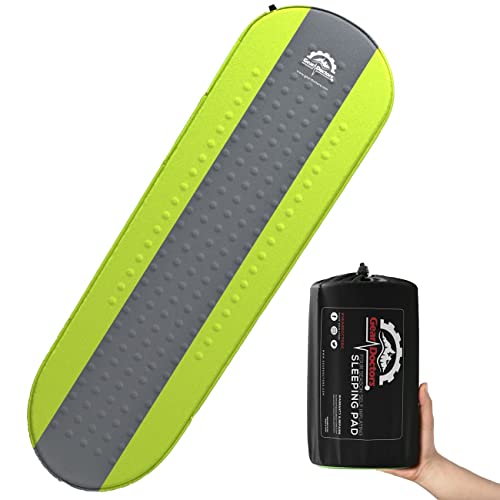
- Self-inflating foam-and-air design
- 4.3 R-value for added ground insulation
- 35.2-ounce packable construction
Best For: Campers seeking insulated cushioning and simple setup
Extra-Thick Ergonomic Comfort
Overmont 4.7-Inch Sleeping Pad

- 4.7-inch thickness with ergonomic air cells
- Built-in pillow and 30–60-second foot pump
- 1.98-pound packable design
Best For: Sleepers wanting high cushioning and easy inflation
Full-Air Side-Sleeper Support

- 4-inch full-air support helps prevent bottoming out
- Built-in foot pump and secure valve
- 400-pound stated weight capacity
Best For: Side sleepers wanting firm, even support
Best Vehicle-Camping Comfort – Extra-Thick Memory Foam Mattress
For shoppers seeking sleeping pads for side sleepers who prioritize cushioning over packability, this 4-inch dual-layer memory foam mattress offers a notably plush setup. Its memory foam comfort layer and supportive foam base suit cots, prepared ground, SUVs, vans, and other vehicle-based camping arrangements.
Best For: Car campers, cot users, guest stays, and anyone wanting a thick, non-inflatable sleeping surface.
Pros:
- Extra-thick 4-inch dual-layer foam provides substantial cushioning.
- Washable, soft cover is removable for easier cleaning.
- Includes a pillow, carrying bag, and securing straps.
- CertiPUR-US foam and OEKO-TEX STANDARD 100 cover materials.
Cons:
- At 11 pounds, it is heavier than backpacking-oriented pads.
- Larger packed size is better suited to vehicle-based camping.
- Requires time to expand before first use.
This is a comfort-first choice for side sleepers who have room to transport a bulky foam mattress. It is less appropriate for long-distance hiking but well matched to car camping, cots, and indoor guest use.
Best Two-Person Value – 2-Pack Inflatable Sleeping Pads
This two-pack is a practical option for shoppers comparing sleeping pads for side sleepers who want generous thickness without carrying two separate pumps. Each 4-inch inflatable pad has a built-in foot pump, and the pads can be connected to create a wider shared sleeping area.
Best For: Couples, friends, festival campers, and backpackers who need two compact sleeping systems.
Pros:
- Four-inch thickness is designed to cushion hips and shoulders.
- Built-in foot pumps inflate each pad in about 30–60 seconds.
- Connectable design allows separate or side-by-side use.
- Each pad weighs about 1.8–1.9 pounds and packs compactly.
Cons:
- The extra-firm design may not suit sleepers who prefer a softer surface.
- Inflatable construction can require firmness adjustment for personal comfort.
- The set is a single size rather than a larger individual mattress.
Choose this set when portability and flexibility matter more than foam-mattress bulk. Its built-in pumps simplify setup, while the connectable format makes it especially useful for shared camp sleeping.
Best Adjustable Support – OGERY Self-Inflating Foam Pad
For side sleepers who want pressure relief with more stability than a traditional air pad, this self-inflating model combines memory foam with an air chamber. The 3.15-inch profile, built-in foot pump, and adjustable firmness make it a versatile choice for tent camping, car camping, and selected backpacking trips.
Best For: Campers who want foam cushioning, quieter movement, insulation from cool ground, and customizable firmness.
Pros:
- Hybrid foam-and-air construction helps reduce pressure on hips and shoulders.
- Self-inflates after opening the valve, with a foot pump for fine-tuning.
- Textured non-slip base helps limit movement on tents, cots, and car floors.
- Foam interior is designed to reduce noise and heat loss.
Cons:
- At about 6 pounds, it is heavier than ultralight backpacking pads.
- Its 3.15-inch thickness is less cushioned than some 4-inch alternatives.
- Firmness still needs adjustment to match individual preferences.
This pad balances cushioned support and setup convenience better than a simple air-only design. It is a strong middle ground for side sleepers who value a quieter, more insulated feel and do not need the lightest possible load.
Best Plush Cot Pad – Uniqwamer Fleece Memory Foam Mat
This Uniqwamer mat is worth considering among sleeping pads for side sleepers who prefer a soft, warm surface rather than an inflatable design. Its high-density foam core and plush lamb-fleece top are intended to make cots and tent floors more comfortable, while the water-resistant patterned underside adds outdoor practicality.
Best For: Car campers, cot users, guest beds, and indoor or outdoor lounging where softness and warmth are priorities.
Pros:
- Plush lamb-fleece top creates a warm, soft sleeping surface.
- High-density foam helps cushion hard or uneven ground.
- Double-sided design includes a tougher, water-resistant underside.
- Foldable construction weighs about 2 kilograms for easier transport.
Cons:
- The product is not water resistant overall, according to the supplied details.
- It lacks the built-in pump and rapid inflation of air pads.
- Its foldable foam design may take more storage space than compact inflatable pads.
This is a comfort-oriented mat for travelers who want a cozy fleece finish and flexible indoor-outdoor use. It makes the most sense for car-accessible trips, cots, guest accommodations, and relaxed camping rather than minimalist backpacking.
Best Memory Foam Comfort – CYMULA Camping Mattress Pad
For shoppers comparing sleeping pads for side sleepers, the CYMULA Memory Foam Camping Mattress Pad emphasizes cushioned support rather than ultralight portability. Its 3-inch memory foam construction is designed for use on hard floors, while the washable cover and nonslip bottom add practical convenience for camping, travel, or home use.
Best For: Car camping, indoor floor sleeping, guest use, and side sleepers who prefer a foam surface.
Pros:
- Memory foam and high-density support foam provide a cushioned sleeping surface.
- Removable, machine-washable cover simplifies cleaning.
- Waterproof, nonslip bottom and securing straps help keep the pad in place.
- Works as a camping mattress, travel bed, sofa mat, or temporary guest bed.
Cons:
- At 6.4 pounds, it is less suited to lightweight backpacking.
- The 3-inch foam profile may pack less compactly than an inflatable pad.
- It may vary by up to 1.5 inches in finished dimensions and needs 48–72 hours to fully expand.
The CYMULA is a comfort-first choice for side sleepers who want foam cushioning and a stable surface. It makes the most sense for car camping or flexible indoor-outdoor use rather than long hikes where every ounce matters.
Best Extra-Thick Air Support – OGERY 6-Inch Sleeping Pad
The OGERY is a strong option among sleeping pads for side sleepers who want substantial separation from uneven ground. Its 6-inch inflated height, built-in pillow, and foot pump provide a raised sleeping platform, while the 2.4-pound packed weight keeps it more portable than a foam mattress.
Best For: Campers and backpackers seeking a thick inflatable pad with integrated inflation and head support.
Pros:
- Six-inch thickness offers generous elevation and cushioning on uneven ground.
- Built-in pillow supports the head and neck without separate gear.
- Integrated foot pump avoids the need for mouth inflation or an external pump.
- Packs to approximately 5.9 x 5.9 x 11 inches and can connect to another compatible pad.
Cons:
- Its larger inflated profile may be more than minimalist backpackers need.
- The supplied notes caution users to avoid sharp surfaces and use ground protection.
- The product details list conflicting weight information, so shoppers should verify the current specification.
With its extra-thick air chamber, the OGERY prioritizes side-sleeping comfort while retaining a packable design. It is particularly appealing when elevated support and a built-in pump matter more than the smallest possible packed size.
Best Lightweight Side-Sleeper Pick – 4-Inch Camping Sleeping Pad
Designed specifically with side sleepers in mind, this 4-inch inflatable pad combines pressure-point cushioning with a backpack-friendly packed size. The integrated foot pump, built-in pillow, and stated 400-pound weight capacity make it a practical option for hiking, backpacking, and tent camping.
Best For: Side sleepers who want a lightweight, quick-inflating pad for hiking and weekend camping.
Pros:
- Four-inch air thickness helps reduce pressure from rocky or gravel terrain.
- Integrated foot pump inflates the pad in approximately 30–60 seconds.
- Built-in pillow supports neck alignment and eliminates a separate pillow.
- Weighs about 1.8 pounds and packs to approximately 9.4 x 4.3 inches.
Cons:
- Inflatable construction still requires protection from sharp ground surfaces.
- The extra-firm feel may not suit sleepers who prefer a softer surface.
- Its water resistance is listed as water-resistant rather than fully waterproof.
This pad offers a balanced combination of side-sleeper cushioning, low weight, and fast setup. Choose it when backpack portability is important but you still want more elevation than a thin minimalist mat provides.
Four-Season Self-Inflating Value – Oxylus 4.3 R-Value Sleeping Pad
For shoppers comparing sleeping pads for side sleepers, the Gear Doctors Oxylus combines a foam-and-air design with 1.5 inches of cushioning and a 4.3 R-value. Its self-inflating setup and moderate packed size make it a practical choice for camping, backpacking, and changing conditions.
Best For: Campers who want insulation, foam cushioning, and relatively simple self-inflation for three- or four-season trips.
Pros:
- Self-inflates after unrolling and opening the valve, with pressure adjustable by adding a few breaths.
- 4.3 R-value offers insulation for colder ground, while the foam-and-air construction adds cushioning.
- Weighs 35.2 ounces and packs to approximately 8 by 12 inches.
- Includes a 75D coated polyester shell and a lifetime replacement guarantee.
Cons:
- At 1.5 inches thick, it is less lofty than the 4-inch-plus air pads in this roundup.
- The 20-inch width may feel narrow for sleepers who move around.
- Self-inflation can take up to five minutes and may still require adjustment breaths.
The Oxylus is a balanced option when insulation and dependable foam support matter more than maximum thickness. It is particularly appealing for campers who prefer an easier setup than a fully manual air mattress.
Extra-Thick Ergonomic Comfort – Overmont 4.7-Inch Sleeping Pad
The Overmont is one of the more supportive sleeping pads for side sleepers, pairing a 4.7-inch thickness with wave-shaped air cells and an integrated pillow. Its built-in foot pump avoids mouth inflation while keeping the 1.98-pound pad compact enough for backpacking.
Best For: Side, back, and stomach sleepers who prioritize thickness, hip and shoulder clearance, and convenient inflation.
Pros:
- 4.7-inch thickness and ergonomic wave-shaped cells help cushion uneven ground.
- Built-in pillow supports the neck, while the foot pump inflates the pad in about 30–60 seconds.
- Weighs 1.98 pounds and packs to roughly 9.8 by 4.7 inches.
- 75D fabric and multilayer TPU construction support up to 300 pounds.
Cons:
- The 27.5-inch width and integrated pillow may not suit sleepers who prefer a separate pillow or wider mattress.
- It is heavier than the lightest backpacking pads.
- The supplied details describe it as water resistant rather than fully waterproof.
Choose the Overmont when getting your hips and shoulders farther from the ground is the priority. It offers substantial thickness without requiring a separate pump, making it versatile for tents, cars, RVs, and travel.
Full-Air Side-Sleeper Support – ZOOOBELIVES Airlive2000
The ZOOOBELIVES Airlive2000 is purpose-built for shoppers seeking sleeping pads for side sleepers, using a 4-inch full-air structure to distribute pressure across the entire surface. Its built-in foot pump, secure valve, and 400-pound stated capacity make it suited to campers who want firm, even support.
Best For: Side sleepers who need full-surface air support, strong weight capacity, and a pad that can be inflated without blowing into it.
Pros:
- Full air chambers distribute weight across the pad and are designed to reduce bottoming out.
- 4-inch thickness helps keep hips and shoulders away from hard or uneven ground.
- Built-in foot pump allows inflation without batteries or mouth blowing.
- Supports up to 400 pounds and includes a dual valve, stuff sack, and waterproof construction.
Cons:
- At 24 inches wide, it offers less shoulder room than the Overmont.
- Its 2.1-pound weight is not the lightest option for minimalist backpacking.
- The PVC construction may feel less foam-like than a self-inflating pad.
The Airlive2000 stands out for even air support rather than a segmented or honeycomb feel. It is a strong fit for side sleepers who value firmness, durability, and weight capacity over the lowest possible packed weight.
How We Picked the Best Sleeping Pads for Side Sleepers
We focused on the features that matter most when sleeping on your side: cushioning depth, resistance to bottoming out, stable support, insulation, and practical setup. The selection includes thick four- to six-inch designs, memory foam and air-foam constructions, self-inflating pads, and lighter backpacking models. We also considered useful extras such as built-in foot pumps, pillows, non-slip surfaces, and portability.
Because comfort is personal, a thicker pad is not automatically better. Body weight, sleeping position, tent space, climate, and pack size all affect which option makes sense.
Quick Comparison
| Pad type | Best for | Main advantage | Potential trade-off |
|---|---|---|---|
| Thick memory foam | Car camping and guests | Soft, familiar mattress-like comfort | Bulkier and heavier |
| Self-inflating air-foam | Balanced comfort and insulation | More structure with easier setup | Usually less compact than basic air pads |
| Extra-thick air pad | Side sleepers wanting maximum clearance | Deep cushioning and adjustable firmness | Can feel less stable if overinflated |
| Ultralight inflatable pad | Backpacking | Small packed size and low weight | Often narrower and less plush |
Key Buying Factors for Sleeping Pads for Side Sleepers
Thickness and Pressure Relief
Look for at least about three inches of usable cushioning, with four inches or more preferable for many side sleepers. Greater thickness helps accommodate the hips and shoulders, but check the pad’s fully inflated height rather than relying only on marketing language.
Support and Firmness
A pad should cushion pressure points without allowing your hips to reach the ground. Air pads let you fine-tune firmness, while memory foam and air-foam models often provide a more stable feel. Slightly reducing air pressure can improve comfort, provided the pad still offers adequate support.
Warmth and Insulation
For cold-weather camping, check the stated R-value. Higher R-values generally provide better resistance to heat loss through the ground. In mild summer conditions, ventilation and low weight may matter more than maximum insulation.
Size, Weight, and Setup
Confirm the packed dimensions, inflated width, and length before buying. Built-in foot pumps can simplify inflation and avoid carrying a separate pump, while self-inflating pads may require only a few finishing breaths. Wider formats are more comfortable but take up more tent and storage space.
Durability and Surface Grip
Choose a tougher fabric and reinforced construction if you camp frequently or use the pad on rough ground. A textured or non-slip top can reduce sleeping-bag movement, especially on sloped tent floors. Always use a groundsheet and follow the manufacturer’s repair and inflation instructions.
Who Should Buy Which Sleeping Pads for Side Sleepers?
- Car campers and guest-room shoppers: Choose a thick memory foam or oversized four-inch mattress for the most bed-like comfort.
- Side sleepers who want balanced support: Consider a self-inflating air-foam design with meaningful insulation and a stable surface.
- Backpackers: Prioritize packed size and weight, but avoid sacrificing too much thickness if hip and shoulder pressure is a recurring problem.
- Cold-weather campers: Start with R-value and insulation, then compare thickness and weight within that range.
- Convenience-focused campers: A model with a built-in foot pump or pillow can reduce setup time and the amount of gear you need to carry.