The best self-inflating sleeping pads combine open-cell foam cushioning with air-filled support, giving campers a more comfortable night’s sleep without the bulk of a traditional mattress. The right model can also improve insulation, simplify setup, and reduce pressure on your hips and shoulders.
We selected 10 self-inflating sleeping pads covering compact backpacking designs, thick memory-foam mattresses, double pads, and feature-rich options with pillows or built-in pumps. Use the comparison and buying advice below to match a pad with your sleeping style, climate, tent space, and transport needs.
Best 10 Self Inflating Sleeping Pads Picks for 2026
Best All-Season Foam Hybrid
Gear Doctors Oxylus 4.3 R-Value
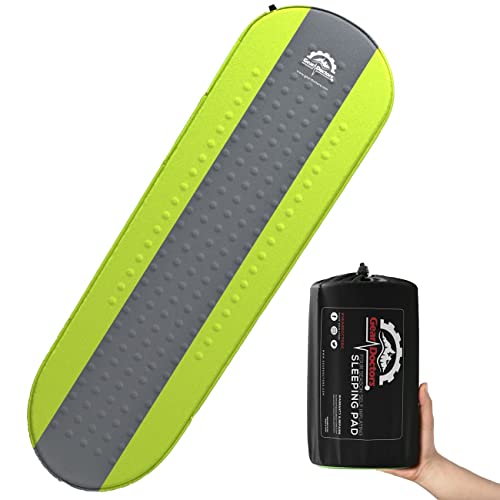
- 4.3 R-value foam-and-air insulation
- 72 x 20 inches; 35.2 ounces
- 75D water- and abrasion-resistant shell
Best For: Backpacking and cold-weather camping
Best Double Pad
Pretyw 4-Inch Double Camping Mat

- 78 x 54 inches for two sleepers
- Built-in foot pump inflates in 1–3 minutes
- 3 pounds with included carry bag
Best For: Couples and spacious car camping
Best Warmth Value
Coleman Silver Springs Self-Inflating Pad

- R-value 5+ insulated foam
- 72 x 20 x 3 inches
- PVC-coated, abrasion-resistant construction
Best For: Warm tent camping and casual outdoor use
Best Ultralight Comfort

- 1.8 pounds with a 4-inch profile
- Built-in pillow and 30–60-second pump
- Side buttons connect multiple pads
Best For: Lightweight backpacking with extra comfort
Best Connectable Option
Naturehike Connectable Self-Inflating Pad

- Connects with snap fasteners for larger sleeping surfaces
- 2.36-inch foam-and-air construction
- Includes storage bag, straps, and repair patch
Best For: Flexible tent, RV, and car camping setups
Best Year-Round Frontcountry Pad
Therm-a-Rest BaseCamp Self-Inflating Pad

- R-value of 6 for year-round insulation
- WingLock valve supports faster inflation and deflation
- Thick thermal foam with included stuff sack
Best For: Warm, comfortable car and frontcountry camping
Best Luxury Comfort
Elegear 3.15-Inch Self-Inflating Pad

- 3.15-inch profile with 26D memory foam
- Built-in pillow and quiet stretch-knit surface
- Claimed R-value of 9.5 for strong insulation
Best For: Comfort-focused car camping and guest use
Balanced Foam Comfort

- 3-inch hybrid foam-and-air support
- Built-in foot pump for firmness adjustment
- Quiet, insulated, and non-slip design
Best For: Side sleepers and comfort-focused car campers
Fast Electric Setup

- Inflates in about 40 seconds
- Built-in pillow and 800-pound capacity
- Rechargeable pump and stated R-value of 9.5
Best For: Car campers wanting quick setup and maximum cushioning
Lightweight All-Season Pick
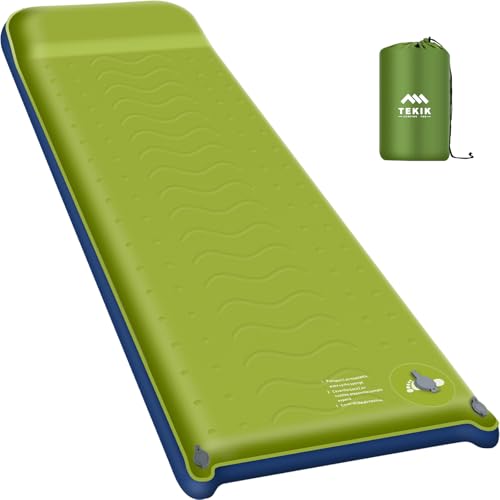
- Weighs about 3.96 pounds and folds compactly
- 50D foam supports up to 800 pounds
- Stated R-value of 9.5 for all-season insulation
Best For: Travelers seeking portability without sacrificing foam support
Best All-Season Foam Hybrid – Gear Doctors Oxylus 4.3 R-Value
The Gear Doctors Oxylus is a versatile choice among self inflating sleeping pads, combining foam cushioning with a 4.3 R-value for warmth on cold or uneven ground. It measures 72 by 20 inches, is 1.5 inches thick, and weighs about 35.2 ounces.
Best For: Backpackers, hikers, car campers, and anyone seeking an insulated pad with a compact packed size.
Pros:
- Foam-and-air construction provides cushioning and insulation.
- Self-inflates after opening the valve, with optional breath-based firmness adjustment.
- 75D micro-coated polyester shell is designed for water, abrasion, and moisture resistance.
- Includes an elastic band for easier rolling and packing.
Cons:
- At 1.5 inches thick, it offers less loft than 4-inch air mattresses.
- Its 20-inch width may feel narrow for some sleepers.
- Self-inflation still requires setup time and may need a few additional breaths.
With its balance of warmth, portability, and straightforward inflation, the Oxylus is a strong all-purpose option for three-season and colder camping trips where insulation matters.
Best Double Pad – Pretyw 4-Inch Double Camping Mat
The Pretyw Double Camping Sleeping Pad is a spacious alternative to typical self inflating sleeping pads, offering a 78-by-54-inch surface, 4-inch thickness, and built-in pillow for two sleepers. Its integrated foot pump avoids the need for an external pump or mouth inflation.
Best For: Couples, families, and campers who prioritize shared sleeping space and elevated cushioning.
Pros:
- Large two-person sleeping surface with a 660-pound maximum weight capacity.
- Built-in foot pump can inflate the pad in approximately 1–3 minutes.
- Four-inch thickness and ergonomic wave pattern support different sleeping positions.
- Folds into a compact 10-by-5.9-inch carry bag and weighs 3 pounds.
Cons:
- Its double-wide format is less suited to solo backpacking than a single pad.
- Users must correctly seal the two deflation valves before inflation.
- The supplied notes describe it as air-filled rather than foam self-inflating.
This model is best viewed as a portable double air mattress with self-inflating-style convenience. It makes sense for car camping, travel, or guest use when width and thickness matter more than ultralight weight.
Best Warmth Value – Coleman Silver Springs Self-Inflating Pad
The Coleman Silver Springs is a straightforward option among self inflating sleeping pads, using insulated foam and a 75D polyester outer layer for warmth and cushioning. It measures 72 by 20 by 3 inches, weighs under 4 pounds, and has an R-value of 5 or higher.
Best For: Campers wanting a warm, simple foam pad for tent camping without a complicated setup.
Pros:
- R-value 5+ insulated foam helps retain body warmth.
- Intuitive valve design allows inflation in seconds.
- PVC coating improves abrasion resistance.
- Three-inch thickness adds cushioning over uneven ground.
Cons:
- It weighs close to 4 pounds, making it less appealing for ultralight backpacking.
- The 20-inch width is relatively narrow.
- It has a limited-warranty description rather than a stated lifetime guarantee.
The Silver Springs favors dependable warmth and uncomplicated use over minimum pack weight. It is a practical pick for campground and tent users who want insulated foam comfort at a conventional rectangular-pad size.
Best Ultralight Comfort – Pretyw 4-Inch Single Pad
The Pretyw Ultralight Single Sleeping Pad stands out among self inflating sleeping pads for its 1.8-pound weight, 4-inch thickness, built-in pillow, and integrated pump. It measures 79 by 27.5 inches and can be connected to additional pads using its side buttons.
Best For: Backpackers and travelers who want a wide, thick single pad with fast inflation and a compact packed size.
Pros:
- Four-inch thickness and a built-in pillow provide elevated support.
- Integrated pump inflates the pad in about 30–60 seconds and deflates quickly.
- At 1.8 pounds, it is lighter than many thick camping mattresses.
- Side buttons allow multiple pads to be connected for a larger sleeping surface.
Cons:
- The supplied notes do not specify an R-value or foam insulation.
- Users must firmly seal the pillow’s deflation valve before inflating.
- The 27.5-inch width may require more tent space than a standard narrow pad.
This is a strong choice when comfort and low carry weight are higher priorities than traditional foam self-inflation. Its built-in pump, pillow, and connectable design make it especially adaptable for solo trips and group camping.
Best Connectable Option – Naturehike Connectable Self-Inflating Pad
The Naturehike Connectable Self Inflating Sleeping Pad is a practical choice for campers who want firm foam-and-air support with the flexibility to expand their setup. It reaches about 80% inflation in 1–2 minutes, and its snap fasteners let you join multiple pads for couples or groups.
Best For: Tent camping, RV trips, road trips, and campers who may want to connect pads into a larger mattress.
Pros:
- Snap fasteners allow two or more pads to be connected.
- 2.36-inch thickness provides firm support.
- Waterproof nylon fabric and one-way valves help with outdoor use and storage.
- Includes compression straps, a storage bag, and a repair patch.
Cons:
- At 3.75 pounds, it is heavier than many minimalist backpacking pads.
- Full inflation may require additional breath or pump assistance.
- Foam may take longer to regain elasticity after first use or extended storage.
Choose this Naturehike pad if connectability and a moderately thick sleeping surface matter more than minimizing packed weight. Its rectangular design and included storage accessories also make it convenient for car-based camping.
Best Year-Round Frontcountry Pad – Therm-a-Rest BaseCamp Self-Inflating Pad
Therm-a-Rest Basecamp Self-Inflating Foam Camping Sleeping Pad, Large - 25 x 77 inches
Check Price On AmazonThe Therm-a-Rest BaseCamp is a comfortable self inflating sleeping pad designed for campers who prioritize insulation and convenience. Its R-value of 6, thick thermal foam, and WingLock valve make it well suited to year-round frontcountry camping.
Best For: Car campers and frontcountry users who want a warm, cushioned pad with faster inflation and deflation.
Pros:
- R-value of 6 provides year-round insulation.
- WingLock valve inflates three times faster than a classic valve and supports quick deflation.
- Thick thermal foam offers a warm, comfortable sleeping surface.
- Includes a stuff sack and has a limited lifetime warranty.
Cons:
- At 3.4 pounds, it is not aimed at ultralight backpacking.
- The 2-inch thickness is less than some thicker luxury-style pads.
- Therm-a-Rest recommends leaving it fully inflated for 2–4 hours before first use for best performance.
The BaseCamp is a strong option when reliable insulation and established valve hardware are more important than the smallest packed size. Its 77-by-25-inch large format balances comfort with a manageable 26-by-7.5-inch packed profile.
Best Luxury Comfort – Elegear 3.15-Inch Self-Inflating Pad
The Elegear Self Inflating Sleeping Pad is built for campers who want a notably thick, cushioned sleep surface. Its 3.15-inch profile, 26D memory foam, built-in pillow, and claimed R-value of 9.5 make it especially appealing for car camping and other comfort-focused uses.
Best For: Family camping, car camping, road trips, and use as an extra guest mattress at home.
Pros:
- 3.15-inch thickness helps separate sleepers from hard ground.
- 26D memory foam is designed to distribute weight and relieve pressure.
- Built-in pillow and skin-friendly, quiet stretch-knit fabric add comfort.
- Dual-use valves support self-inflation and controlled deflation.
Cons:
- At 8.1 pounds, it is substantially heavier than the other listed pads.
- Its larger comfort-focused design is less suitable for backpacking.
- The first inflation can take up to 20 minutes because it arrives vacuum packed.
This Elegear pad favors bed-like comfort over portability. Consider it when thickness, insulation, and a built-in pillow are priorities, and when the 8.1-pound weight is acceptable for vehicle-based travel.
Balanced Foam Comfort – OGERY 3-Inch Memory Foam Pad
For campers who want the steadier feel of foam without giving up adjustable firmness, the OGERY is a practical self inflating sleeping pad. Its hybrid foam-and-air construction is sized for car camping, tent use, and other trips where comfort and insulation matter more than ultralight weight.
Best For: Side sleepers and car campers seeking a quiet, cushioned pad with built-in firmness adjustment.
Pros:
- 3-inch memory-foam-and-air design supports multiple sleeping positions.
- Self-inflates through the valve and includes a built-in foot pump for fine-tuning.
- Textured non-slip base, waterproof fabric, and internal foam insulation add practical camping comfort.
Cons:
- At about 6 pounds, it is less suitable for weight-conscious backpacking.
- The foot-pump finishing step still requires some setup after self-inflation.
The OGERY stands out as a stable, quiet option for campers who prioritize sleep quality and support. Its thicker construction and car-camping-oriented design make it better suited to comfort-focused trips than minimalist backcountry use.
Fast Electric Setup – Ultra-Thick Memory Foam Pad
This self inflating sleeping pad is designed for campers who want a fast, low-effort setup and substantial cushioning. The built-in rechargeable electric pump inflates it in about 40 seconds, while the thick memory-foam-and-air construction provides a supportive surface for tents, cars, and guest use.
Best For: Car campers and travelers who value quick inflation, a built-in pillow, and high insulation.
Pros:
- Built-in 7.4V pump inflates in roughly 40 seconds and deflates in about 90 seconds.
- 3.15-inch listed thickness, 4.8-inch pillow, and 800-pound capacity provide generous support.
- Rechargeable USB-C battery offers up to seven uses per charge, and the stated R-value is 9.5.
- Soft, breathable, quiet fabric has a waterproof TPU coating.
Cons:
- At 6.8 pounds including the pump, it is primarily suited to car-based travel.
- The electric pump depends on its rechargeable battery being charged before use.
Choose this model when convenience is a priority. Its integrated pump, pillow, high capacity, and strong insulation specifications create a comfortable setup for road trips and year-round camping, though the added equipment increases carry weight.
Lightweight All-Season Pick – TEKIK Memory Foam Pad
The TEKIK combines high-density memory foam with a self-inflating design for campers who want substantial support without the weight of many extra-thick mats. It uses a brief self-expansion period followed by a built-in foot-pump step, making it versatile for tent camping, road trips, RV travel, and occasional guest use.
Best For: Campers wanting a lighter self inflating sleeping pad with strong insulation and a compact folded size.
Pros:
- 50D high-density foam provides resilient support and is rated for up to 800 pounds.
- Weighs about 3.96 pounds and folds to approximately 13 by 9 inches.
- Dual-layer valve design helps control inflation, prevent leaks, and remove air for storage.
- 50D stretch-knit fabric, waterproof TPU coating, and stated R-value of 9.5 support all-season use.
Cons:
- Full inflation involves opening three valves and then using the foot pump.
- At 2.6 inches thick, it is thinner than some ultra-thick competing pads.
The TEKIK is a strong middle ground between portability and cushioned support. Its compact packed size and comparatively low weight make it the most travel-friendly choice here, while the high insulation rating adds flexibility for cooler conditions.
How We Picked the Best Self Inflating Sleeping Pads
We compared these self-inflating sleeping pads by looking at the features that most affect real-world camping comfort and convenience: insulation, thickness, packed size, sleeping surface, inflation method, durability, and intended use. We also considered whether each design suits solo campers, couples, car campers, or backpackers.
Because product specifications and included accessories can vary by size, check the selected configuration before buying. Weight, dimensions, R-value, pump style, and repair-kit contents are especially important when comparing similar-looking pads.
Quick Comparison
- For backpacking: Prioritize low weight, a compact packed size, and dependable insulation. Thinner pads are usually easier to carry.
- For car camping: A thicker, wider pad can provide noticeably better comfort, even if it weighs more.
- For couples: Double-width or connectable pads help create a larger sleeping surface and reduce gaps between mattresses.
- For cold weather: Choose a higher R-value and confirm that the pad is suitable for the temperatures you expect.
- For easy setup: Built-in pumps and self-inflating foam reduce manual effort, but some models may still need a few breaths or pump cycles for firmness.
Key Buying Factors for Self-Inflating Sleeping Pads
Insulation and R-Value
R-value measures resistance to heat transfer from your body into the ground. A higher rating generally provides better protection on cold surfaces. Warm-weather campers may need less insulation, while shoulder-season and winter users should look for substantially higher values. Remember that sleeping bags and ground conditions also affect overall warmth.
Thickness, Width, and Comfort
Thicker pads usually cushion hips and shoulders more effectively, particularly for side sleepers. Check the inflated dimensions rather than relying on thickness alone. A narrow pad may save weight but can make it easier to roll off during the night. Pillow zones or included pillows add convenience, though they may not replace a dedicated camping pillow.
Weight, Packed Size, and Construction
Backpackers should compare total carry weight and packed dimensions, including the pump and accessories. Car campers can often favor comfort over portability. Look for durable outer fabrics, reinforced seams, and a reliable valve. Memory foam can improve cushioning but typically increases weight and packed volume.
Inflation, Deflation, and Maintenance
Self-inflating designs work best when unrolled with the valve open and given time to expand. Built-in or electric pumps can speed setup, but electric models require a compatible power source. Allow the pad to dry fully before storage, avoid sharp ground debris, and store it according to the manufacturer’s recommendations to protect the foam and valve.
Who Should Buy Which Self Inflating Sleeping Pads?
Choose a lightweight single pad if you hike to camp or have limited tent space. Choose a thick memory-foam model if comfort is your priority and you mainly camp near a vehicle. Choose a double or connectable pad for couples or families who want a shared sleeping surface. Choose a high-R-value pad for cold-weather trips, but verify its rating and temperature suitability before relying on it in freezing conditions. Finally, look for a built-in pillow or pump only if that convenience outweighs added weight, bulk, or dependence on batteries.