A good sleeping pad does more than cushion your hips and shoulders—it helps insulate you from the cold ground. The best insulated sleeping pads balance warmth, packed size, weight, thickness, and ease of inflation for the way you camp.
We compared 10 options ranging from ultralight air pads and self-inflating mats to thick, high-R-value designs. Use the guide below to narrow your choice by weather, sleeping style, and budget.
Best 10 Insulated Sleeping Pads Picks for 2026
Best Hybrid Value
Gear Doctors Oxylus 4.3 R-Value Self-Inflating Pad
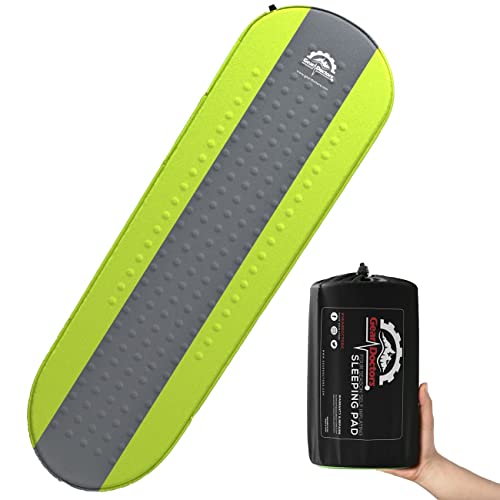
- 4.3 R-value hybrid foam-and-air construction
- Self-inflates and supports pressure adjustment
- Durable shell with lifetime replacement guarantee
Best For: Versatile camping and moderate backpacking
Best Ultralight Warmth
Naturehike 4.6 R-Value Insulated Air Pad

- 4.6 R-value with eight-layer aluminum insulation
- About 1.93 pounds with compact packed size
- 3.2-inch thickness and included pump sack
Best For: Cold-weather backpacking and lightweight camping
Best Plush Car-Camping Comfort

- 3-inch memory-foam and air hybrid
- Built-in foot pump for firmness adjustment
- Non-slip base and quieter foam-filled interior
Best For: Comfort-focused car and tent camping
Best Lightweight 3-Season Pad
Big Agnes Divide Insulated Wide Regular

- 4.0 R-value with THERMOLITE insulation
- 30-ounce weight and 25-inch-wide sleeping surface
- Includes inflation sack, repair kit, and lifetime warranty
Best For: Comfortable three-season backpacking
All-Season Value Pick

- 7.2 R-value with 4-inch thickness
- 2 pounds and packs to water-bottle size
- Supports up to 330 pounds
Best For: Campers wanting wide, well-insulated cushioning
Lightweight Warmth Pick

- ASTM-tested 6.2 R-value
- Weighs about 1.5 pounds
- Includes a 40L pump sack
Best For: Backpackers prioritizing low weight and quick setup
Cold-Weather Insulation Pick

- 9 R-value with nine-layer insulation
- 4-inch thickness for uneven terrain
- Includes pump sack and repair patch
Best For: Winter campers and mountaineers needing maximum insulation
Best Compact Comfort
FUN PAC 3-Inch Inflatable Sleeping Pad

- Built-in foot pump and pillow
- 1.5-pound compact design
- Connects to a second pad
Best For: Lightweight camping and backpacking
Best Heavy-Duty Pick
OGERY R-Value 9.0 Sleeping Pad

- R-value 9.0 for cold conditions
- 4.7-inch air-cell cushioning
- Pump bag included
Best For: Winter camping and snow trips
Best Ultralight Ground Barrier

- Only about 5.65 ounces
- Reflective aluminum and EPE foam
- Large waterproof foldable surface
Best For: Tent floors and supplemental insulation
Best Hybrid Value – Gear Doctors Oxylus 4.3 R-Value Self-Inflating Pad
The Gear Doctors Oxylus combines foam and air support in a practical insulated sleeping pad for campers who want warmth, cushioning, and relatively simple setup. Its 4.3 R-value, 1.5-inch thickness, and self-inflating design suit everything from backpacking trips to car camping.
Best For: Campers seeking a versatile self-inflating pad for three- to four-season use.
Pros:
- 4.3 R-value helps insulate against cold ground.
- Self-inflates after opening the valve and can be fine-tuned with a few breaths.
- Durable 75D polyester shell is designed to resist water, abrasion, and UV exposure.
- Includes a lifetime replacement guarantee according to the supplied notes.
Cons:
- At 35.2 ounces, it is heavier than many ultralight air pads.
- Its 1.5-inch thickness provides less cushioning than the thicker options in this roundup.
The Oxylus is a sensible middle ground: more supportive and insulated than a basic foam mat, while easier to use than a fully manual air mattress. Its weight makes it especially appealing for car camping, basecamps, and moderate backpacking rather than ultralight trips.
Best Ultralight Warmth – Naturehike 4.6 R-Value Insulated Air Pad
The Naturehike 4.6 R-Value pad is a strong choice for backpackers who want an insulated sleeping pad with substantial warmth without carrying much weight. Its eight-layer aluminum-molded structure, 3.2-inch thickness, and included pump sack balance insulation and comfort.
Best For: Lightweight hikers and campers who prioritize high insulation and compact packing.
Pros:
- 4.6 R-value is rated for temperatures above -4°F/-20°C in the supplied specifications.
- Weighs about 1.93 pounds and packs to approximately 5.1 by 8.66 inches.
- 3.2-inch thickness and a 25.2-inch-wide rectangular shape allow room to turn over.
- Dual-vent valve supports controlled inflation and quick deflation.
Cons:
- Requires inflation with the included pump sack rather than self-inflating.
- The supplied notes caution against over-inflation and recommend adjusting pressure for temperature changes.
With a high warmth-to-weight ratio, this Naturehike model is one of the more backpacking-oriented insulated sleeping pads here. The pump sack and dual valve make setup manageable, while the thicker air-filled design favors campers who want cushioning as well as cold-ground protection.
Best Plush Car-Camping Comfort – OGERY 3-Inch Memory Foam Pad
The OGERY is a thick insulated sleeping pad built around comfort rather than minimal pack weight. Its 3-inch memory-foam and air hybrid reduces the bouncy feel of air-only mattresses, while the built-in foot pump lets you adjust firmness without blowing it up by mouth.
Best For: Car campers, tent campers, and sleepers who prefer a thicker, more stable surface.
Pros:
- Three-inch foam support helps cushion shoulders and hips across different sleep positions.
- Self-inflates and includes a built-in foot pump for firmness adjustments.
- Textured non-slip base helps limit movement on tents, car trunks, and cots.
- Foam interior helps reduce movement noise and heat loss in cooler conditions.
Cons:
- At about 6 pounds, it is substantially heavier than backpacking-focused pads.
- Its larger comfort-oriented design is better suited to car-based trips than long carries.
The OGERY prioritizes a mattress-like feel, stable support, and easy adjustment. It makes the most sense when comfort outweighs pack weight, especially for vehicle-accessible campsites, guest use, or tent setups where a thicker pad is welcome.
Best Lightweight 3-Season Pad – Big Agnes Divide Insulated Wide Regular
The Big Agnes Divide is a lightweight insulated sleeping pad designed for three-season adventures. Its 4.0 R-value, THERMOLITE insulation, 3.25-inch thickness, and wide 25-inch sleeping surface deliver a comfortable balance of warmth, stability, and packability.
Best For: Three-season backpackers who want a wide, comfortable pad at a low carrying weight.
Pros:
- Weighs about 30 ounces while offering a 72-by-25-inch wide-regular sleeping area.
- 4.0 R-value and THERMOLITE insulation help limit heat loss.
- I-Beam construction and larger outer chambers provide stable, cradled support.
- Includes an inflation sack, repair patches, replacement valve seal, and lifetime warranty.
Cons:
- Its 4.0 R-value is positioned for three-season use rather than the coldest conditions.
- It requires inflation with the included sack instead of self-inflating.
The Divide stands out for combining a genuinely wide sleeping surface with a relatively low weight. It is a well-rounded choice for hikers and backpackers who want more room and thickness than minimalist pads provide, without moving to the bulk of a foam-heavy mattress.
All-Season Value Pick – Trekology UL R7
The Trekology UL R7 is a practical choice among insulated sleeping pads for campers who want substantial cushioning and strong cold-ground protection without carrying a bulky mattress. Its 7.2 R-value, 4-inch thickness, and 2-pound weight make it suitable for three-season and colder-weather trips.
Best For: Backpackers and campers who prioritize a wide, supportive pad, year-round insulation, and a 330-pound weight capacity.
Pros:
- 7.2 R-value and insulated air chambers help reduce heat loss from the ground.
- 4-inch thickness and a 24-inch width provide supportive cushioning for side and back sleepers.
- 40D ripstop nylon with TPU coating is water-resistant, and the pad supports up to 330 pounds.
- Packs down to about the size of a water bottle and includes a carry bag.
Cons:
- At 2 pounds, it is heavier than some ultralight backpacking pads.
- A pump bag is not included, so inflation requires mouth inflation or a separate pump bag.
- The 70.8-inch length is best suited to sleepers up to about 5 feet 11 inches.
Choose this model if comfort, insulation, and durability matter more than minimizing every ounce. Its generous dimensions and high weight capacity give it broad appeal for general camping and backpacking.
Lightweight Warmth Pick – Hikenture R6.2
The Hikenture R6.2 is one of the more packable insulated sleeping pads for backpackers who want tested cold-weather insulation without a heavy load. It combines a 6.2 ASTM-tested R-value with a 1.5-pound weight and an included pump sack.
Best For: Lightweight backpackers who want fast inflation, compact storage, and reliable insulation for four-season outings.
Pros:
- ASTM F3340-22-tested 6.2 R-value and aluminum film construction help reflect heat.
- Weighs about 1.5 pounds while providing 3.2 inches of cushioning.
- The included storage bag doubles as a 40-liter pump sack and can inflate the pad in about three pumps.
- Includes two repair patches and a 12-month warranty.
Cons:
- At 3.2 inches thick, it has less cushioning than the 4-inch models in this roundup.
- The supplied notes do not specify the pad’s inflated length or width.
- Its water resistance is listed as water resistant rather than waterproof.
This is a strong fit when pack weight and convenient inflation are top priorities. The included pump sack adds practical value, while the tested R-value gives it credible cold-ground protection.
Cold-Weather Insulation Pick – Elegear CumbreX
The Elegear CumbreX stands out among insulated sleeping pads for serious cold-weather camping. Its independently SGS-tested and ASTM-certified 9 R-value, 4-inch thickness, and multilayer insulation are designed for four-season use, including demanding low-temperature environments.
Best For: Backpackers, mountaineers, and winter campers who need maximum listed insulation and substantial support on uneven ground.
Pros:
- 9 R-value with a nine-layer insulation system provides exceptional protection from ground chill.
- 4-inch thickness and distributed support cells help reduce bottoming out on rocky or uneven terrain.
- Includes a pump sack, repair patch, storage bag, and user guide; inflation takes about four to six pumps.
- 20D tear-resistant nylon with a reinforced TPU layer is waterproof and abrasion resistant.
Cons:
- At 2.2 pounds, it is heavier than the Hikenture option.
- The mummy shape may offer less usable surface area than a rectangular pad.
- The supplied notes do not provide the inflated length and width.
If cold-weather insulation is the deciding factor, the CumbreX is the most specialized option here. It costs some pack weight in exchange for a very high R-value, thick cushioning, and equipment suited to demanding trips.
Best Compact Comfort – FUN PAC 3-Inch Inflatable Sleeping Pad
For campers who want insulated sleeping pads with convenient inflation, the FUN PAC combines a thick air-cell design, built-in pillow, and integrated foot pump in a compact package. Its 40D nylon and TPU construction is waterproof and designed for backpacking, hiking, travel, and tent use.
Best For: Backpackers and campers prioritizing low pack weight, fast setup, and built-in head support.
Pros:
- Inflates in roughly 30–60 seconds with the built-in pump and deflates quickly.
- Three-inch air-cell cushioning, an integrated pillow, and a 400-pound capacity support comfortable sleeping.
- Lightweight 1.5-pound design packs down approximately to water-bottle size.
- Side buttons allow two pads to connect into a wider sleeping surface.
Cons:
- The listed 3-inch thickness may provide less separation from uneven ground than thicker winter-focused pads.
- Its single-pad design may be narrow for sleepers wanting extra room.
This is a practical choice when portability and setup speed matter most. The built-in pillow and ability to join pads add convenience for regular camping trips, while the supplied specifications make it better suited to general outdoor use than extreme cold.
Best Heavy-Duty Pick – OGERY R-Value 9.0 Sleeping Pad
The OGERY is one of the more cold-weather-oriented insulated sleeping pads in this roundup, using an R-value of 9.0 and a multi-layer reflective structure to help limit heat loss. Its 4.7-inch air-cell construction adds cushioning and ground clearance for winter camping, snow camping, and alpine trips.
Best For: Winter campers and backpackers seeking substantial insulation with inflatable comfort.
Pros:
- R-value 9.0 and multi-layer reflective insulation are designed for four-season and cold-weather use.
- Four-point-seven-inch thickness supports side, back, and combination sleepers.
- Includes a lightweight pump bag for inflation while helping reduce moisture entering the pad.
- Durable 40D nylon with TPU coating is abrasion-resistant and waterproof.
Cons:
- At 2.5 pounds, it is heavier than the lightest backpacking pads.
- The 70.8-inch length may feel short for taller sleepers.
Choose this model when insulation is the deciding factor rather than minimum weight. The high stated R-value and thick air construction make it the strongest fit here for cold conditions, while the pump bag and compact design preserve useful backcountry convenience.
Best Ultralight Ground Barrier – Aluminum Foam Camping Mat
This aluminum-insulated foam mat takes a simpler approach than inflatable insulated sleeping pads. Its double-sided aluminum foil and EPE foam are intended to reflect heat and create a waterproof barrier from cold ground, while the large 78.7-by-59-inch surface can cover a tent floor or serve as a thermal blanket.
Best For: Campers wanting an ultralight supplemental ground layer, tent mat, or thermal blanket.
Pros:
- Very light at approximately 5.65 ounces and folds for easy carrying.
- Double-sided aluminum foil and EPE foam provide thermal insulation from the ground.
- Waterproof, easy to clean, and large enough for broad tent-floor coverage.
- Includes a carry pack and can also be used as a thermal blanket.
Cons:
- At roughly 0.07 inch thick, it offers limited cushioning compared with inflatable pads.
- Its large folded format may be less convenient inside a small backpack.
This mat works best as a lightweight insulating layer rather than a plush standalone sleeping pad. Pair it with a sleeping bag or another pad when you need more cushioning, or use it under bedding to add a waterproof thermal barrier without much weight.
How We Picked These Insulated Sleeping Pads
We focused on the features that matter most outdoors: insulation, sleeping comfort, portability, durability, inflation method, and versatility. R-value was a central consideration because it indicates how effectively a pad resists heat loss to the ground. Higher values are generally better for cold conditions, while moderate values can save weight for summer and three-season trips.
We also considered pad thickness, width, packed size, construction, and whether a model is self-inflating or requires a pump. Since comfort is personal, this selection includes compact backpacking-oriented pads as well as thicker options suited to car camping and sleepers who prefer more cushioning.
Quick Comparison
| Priority | Look for | Best suited to |
|---|---|---|
| Low pack weight | Compact air construction and moderate thickness | Backpacking and long-distance hikes |
| Cold-weather warmth | High R-value, ideally around 6 or higher | Winter and shoulder-season camping |
| Maximum cushioning | Three- to four-inch thickness or memory foam | Side sleepers and car campers |
| Simple setup | Self-inflating design or integrated pump | Campers who dislike manual inflation |
| Budget flexibility | Basic foam or straightforward inflatable construction | Occasional camping and tent-floor insulation |
Key Buying Factors for Insulated Sleeping Pads
R-Value and Seasonal Use
For warm-weather camping, an R-value around 2 to 4 is often sufficient. Three-season campers may prefer roughly 4 to 6, while cold-weather trips benefit from a higher rating. Remember that R-value is not the only factor: your sleeping bag, clothing, tent location, and the ground temperature all affect warmth.
Weight and Packed Size
Air pads usually offer the best comfort-to-weight ratio, making them practical for backpacking. Self-inflating pads and thick foam designs can be more comfortable but may take up more room. Check the packed dimensions before buying if your backpack or storage space is limited.
Thickness, Shape, and Sleeping Position
Side sleepers generally appreciate thicker pads because they provide more room for hips and shoulders to sink without reaching the ground. Wider or rectangular models improve comfort but add weight. Mummy shapes conserve space, while rectangular pads feel less restrictive.
Inflation, Durability, and Noise
Self-inflating models simplify setup, while built-in pumps can reduce breath fatigue. Look for dependable valves and reinforced materials, and carry a patch kit on longer trips. Air pads may also produce more movement noise than foam or self-inflating alternatives, which can matter in shared tents.
Who Should Buy Which Insulated Sleeping Pads?
For Ultralight Backpackers
Choose a compact air pad with enough insulation for your expected temperatures. Prioritize packed size and weight, but do not sacrifice the R-value required for your season.
For Cold-Weather Campers
Choose one of the higher-R-value Insulated Sleeping Pads, especially if camping on frozen or consistently cold ground. Greater thickness can add comfort, but warmth should come first.
For Side Sleepers and Comfort-Focused Campers
A three- or four-inch pad, particularly a self-inflating or memory-foam model, is usually the better fit. Wider dimensions can also reduce the chance of sliding off during the night.
For Occasional or Car Campers
Favor easy setup, cushioning, and durability over the lowest possible weight. A thicker inflatable or self-inflating pad is often worth the extra packed size when you do not have to carry it far.