The best panel mount battery monitors make it easier to see voltage, current, and overall power-system status without reaching for a handheld meter. The right choice depends on whether you need a simple voltage display or detailed battery tracking through a shunt.
Our roundup covers compact waterproof gauges, multifunction meters, and higher-capacity shunt-based monitors for vehicles, boats, RVs, solar setups, and other DC systems.
Best 10 Panel Mount Battery Monitors Picks for 2026
Best Compact Pick
Anina Waterproof Voltage Meter
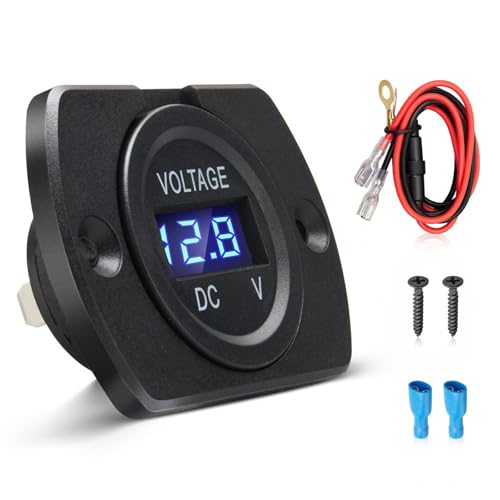
- 6–30V DC voltage monitoring
- Blue LED display with 0.1V resolution
- Waterproof 29mm panel-mount design
Best For: Compact 12V and 24V vehicle or marine installations
Best Long-Range Shunt Monitor

- 500A shunt-based current monitoring
- 2.4-inch color display with alarms
- 16ft shielded cable for remote viewing
Best For: RV and multi-voltage battery systems needing alarms
Best Data-Rich Display
DC Multifunction Battery Monitor

- Nine readings on one LCD interface
- 0–200V and 0–100A measurement ranges
- Backlit display with push-on terminals
Best For: Solar, RV, automotive, and industrial systems needing detailed data
Best Established Shunt Option
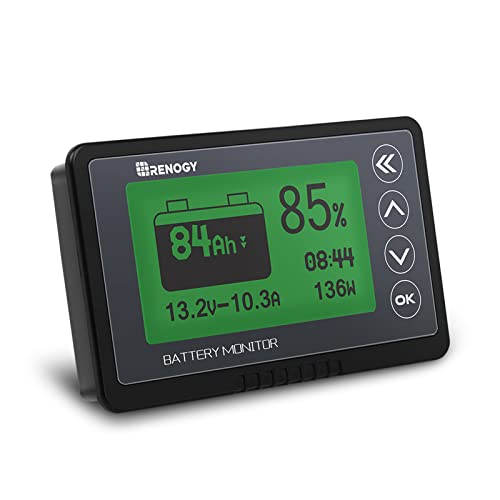
- 500A shunt with stated 1% accuracy
- Supports 10–120V systems
- 20ft cable and programmable alarms
Best For: RV and off-grid battery banks requiring current and capacity tracking
Best Compact Pair
Anina 12V/24V Panel Mount Battery Monitors

- Two-pack with mounting and wiring accessories
- 8V–48V range with 0.1–0.2V stated accuracy
- Blue LED display and waterproof vehicle-ready design
Best For: Multiple vehicles or dual-gauge installations
Best Full-Function Monitor

- Measures voltage, current, state of charge, and capacity
- Supports 8–120V and up to 500A peak
- Includes shunt, cables, backlight, and data memory
Best For: RV, boat, solar, and high-current battery systems
Best Simple Installation
DaierTek Waterproof Voltage Meter

- 8V–48V measurement with 0.1V stated accuracy
- Blue LED display for dark or low-light viewing
- Includes panel, nylon nut, wires, and screws
Best For: Basic voltage checks on vehicles and marine equipment
Versatile Waterproof Monitor

- 8-100V compatibility for varied battery systems
- Displays voltage, capacity, and percentage together
- Waterproof housing with polarity and low-voltage protection
Best For: RV, marine, golf cart, vehicle, and solar battery monitoring
Multifunction Shunt Meter

- Tracks nine electrical and battery parameters
- Supports up to 200V, 100A, and 60,000W
- Backlit full-view LCD with screw-free terminals
Best For: RV, car, and solar users needing detailed electrical data
High-Visibility Coulometer

- Measures voltage, current, power, capacity, and time
- Large 2.4-inch color screen for varied lighting
- Flashing backlight alerts for low capacity or voltage
Best For: RV, boat, solar, and automotive charge monitoring
Best Compact Pick – Anina Waterproof Voltage Meter
The Anina is a straightforward choice for shoppers seeking panel mount battery monitors for basic voltage checks in vehicles and marine setups. Its 6–30V range, 0.1V readout, blue LED display, and waterproof design suit 12V and 24V systems.
Best For: Cars, boats, RVs, trucks, motorcycles, UTVs, and other installations needing a compact voltage-only display.
Pros:
- Reads DC voltage from 6V to 30V with 0.1V resolution.
- Bright blue LED digits are designed for daytime and nighttime viewing.
- Waterproof construction supports vehicle, marine, and off-road use.
- Includes a 29mm panel-mount kit and connection accessories.
Cons:
- Measures battery voltage rather than current, capacity, or power consumption.
- The 6–30V range is not intended for higher-voltage battery banks.
This is the simplest option in the group: install it in a standard 29mm opening and monitor voltage at a glance. Choose it when compact size and weather resistance matter more than advanced battery data.
Best Long-Range Shunt Monitor – LNEX 500A Color Screen
The LNEX 500A is a versatile option among panel mount battery monitors, combining shunt-based current measurement with a 2.4-inch color screen. It supports 8–100V systems and includes programmable high- and low-capacity alarms for broader RV, boat, and battery-bank applications.
Best For: RVs, boats, golf carts, electric motorcycles, and battery systems using lead-acid, LiFePO4, lithium-ion, or nickel-metal hydride batteries.
Pros:
- Measures voltage and current through a 500A shunt.
- Supports 8–100V battery systems and multiple battery chemistries.
- Large backlit 2.4-inch color display has adjustable brightness.
- 16ft shielded cable enables monitoring from a distance.
Cons:
- Shunt installation and wiring are more involved than a voltage-only meter.
- The listed operating details and included components should be checked carefully before installation in a specific system.
For buyers who need more than voltage, the LNEX adds current monitoring, stored test data, and capacity alarms in one display. Its long cable is particularly useful when the battery bank and viewing panel are separated.
Best Data-Rich Display – DC Multifunction Battery Monitor
This multifunction meter stands out among panel mount battery monitors for displaying a broad set of electrical readings at once. It covers up to 200V and 100A, with voltage, current, power, impedance, capacity, state of charge, energy consumption, and running time shown on its LCD.
Best For: Cars, RVs, boats, solar systems, trailers, and industrial setups where several battery and power measurements are useful.
Pros:
- Displays nine measurement parameters, including voltage, current, power, capacity, and SOC.
- Supports up to 200V and 100A DC measurement ranges.
- Backlit LCD offers a 360-degree viewing design for day or night use.
- Push-on terminals allow screw-free wire installation and removal.
Cons:
- Its many readings may require more setup and interpretation than a basic voltmeter.
- The supplied notes emphasize following the wiring diagram carefully before installation.
This is the strongest fit for users who want a single display for detailed system data rather than voltage alone. Its wide measurement ranges also make it suitable for more varied DC and solar applications.
Best Established Shunt Option – Renogy 500A Battery Monitor
The Renogy 500A is a practical shunt-based choice for panel mount battery monitors when accurate current tracking and battery protection are priorities. It works with 12V, 24V, and 48V systems, supports several battery chemistries, and includes programmable high- and low-capacity alarms.
Best For: RV and off-grid power systems using lead-acid, AGM, GEL, lithium, or LiFePO4 batteries.
Pros:
- Shunt design provides real-time voltage and current measurements with stated 1% accuracy.
- Supports systems from 10V to 120V and current up to 500A.
- Displays voltage, current, consumed power, capacity, and battery degradation rate.
- Includes a transparent shunt holder and 20ft shielded cable.
Cons:
- Requires shunt installation rather than simple two-wire voltage-meter mounting.
- Includes a one-year material and workmanship warranty, which is shorter than some extended coverage options.
The Renogy is a well-rounded pick for battery banks where current draw, remaining capacity, and alarm functions matter. Its long cable makes remote display placement easier, while the broad voltage range accommodates common 12V, 24V, and 48V systems.
Best Compact Pair – Anina 12V/24V Panel Mount Battery Monitors
For a simple installation, this two-pack of panel mount battery monitors provides a continuous digital voltage reading for DC systems from 8V to 48V. Its blue LED display, included mounting hardware, and sealed design make it practical for vehicles, boats, RVs, and off-road equipment.
Best For: Monitoring voltage on multiple vehicles or installing separate gauges in a 12V/24V vehicle or marine system.
Pros:
- Includes two monitors with cables, terminals, screws, and surface-mount parts.
- Reads an 8V–48V range with stated accuracy of 0.1–0.2V.
- Bright blue digits are designed for daytime and nighttime viewing.
- Waterproof construction suits cars, trucks, boats, RVs, and motorcycles.
Cons:
- Displays voltage only, not current, capacity, or state of charge.
- Requires a standard 29mm mounting hole or use of the included panel.
This is a straightforward choice when you want an inexpensive, easy-to-read voltage gauge and the convenience of a spare or second installation. Buyers needing amp-hour or current tracking should choose a shunt-based monitor instead.
Best Full-Function Monitor – BINTA Shunt Battery Monitor
Among panel mount battery monitors, the BINTA stands out for measuring more than voltage. Its included shunt tracks voltage, current, state of charge, and remaining capacity, making it a better fit for RV, boat, solar, and other systems where understanding actual battery usage matters.
Best For: RV, marine, golf-cart, automotive, and solar setups that need voltage, amperage, capacity, and state-of-charge information.
Pros:
- Supports 8–120V systems and up to 500A peak or 350A continuous current.
- Tracks state of charge, capacity up to 999Ah, voltage, and current.
- Includes a shunt, 3m shielded cables, and a positive wire.
- Backlit display, two-way current detection, auto-sleep, and data memory add convenience.
Cons:
- Shunt-based installation is more involved than installing a basic voltage-only gauge.
- Its stated upper temperature rating is 50°C.
- The product is supplied as one monitor rather than a multi-pack.
The BINTA is the more informative option for users who want a fuel-gauge-style view of battery usage rather than a simple voltage check. It offers broad voltage compatibility, but installation requires correctly wiring the supplied shunt.
Best Simple Installation – DaierTek Waterproof Voltage Meter
The DaierTek is a compact panel mount battery monitor for users who want an uncomplicated, real-time voltage display. It supports DC 12V, 24V, and 36V equipment, includes both a matching panel and nylon nut, and is designed for damp vehicle and marine environments.
Best For: Cars, motorcycles, RVs, boats, trucks, and other 12V/24V/36V applications needing a basic waterproof voltage gauge.
Pros:
- Measures DC 8–48V with stated 0.1V accuracy.
- Blue three-digit LED display is easy to read, including in dark conditions.
- Can mount in a 29mm hole or on the included matching panel.
- Includes wires, mounting screws, panel, and nylon nut.
Cons:
- Provides voltage measurement only, without current or capacity data.
- Designed around DC systems rather than a broad range of battery-monitoring functions.
This model is a sensible pick for replacing guesswork with a visible voltage reading while keeping installation simple. Its broad 8V–48V measurement range covers the listed 12V, 24V, and 36V use cases, but advanced battery analytics require a more capable monitor.
Versatile Waterproof Monitor – DROK 8-100V Battery Meter
For buyers comparing panel mount battery monitors, this DROK model is a practical choice when broad voltage compatibility and a weather-resistant design matter. It displays voltage, battery capacity, and remaining percentage on one larger color screen, covering systems from 8V to 100V.
Best For: Cars, golf carts, RVs, boats, marine systems, motorcycles, and solar generators using compatible lithium or lead-acid batteries.
Pros:
- Supports 8-100V systems, including common 12V, 24V, 36V, 48V, and 72V setups.
- Shows voltage, capacity, and remaining percentage without switching interfaces.
- Waterproof construction, reverse-polarity protection, low-power consumption, and low-voltage alarm.
- Rear voltage calibration potentiometer allows adjustment for improved accuracy.
Cons:
- It is primarily a voltage and capacity monitor rather than a multifunction current meter.
- The supplied notes do not specify a current-measurement range or included shunt.
Choose this model if you want a straightforward, highly compatible panel display with added protection for mobile or exposed installations. Its main advantage is convenient battery-status viewing across a wide range of system voltages.
Multifunction Shunt Meter – DC 0-200V Battery Monitor
If you want panel mount battery monitors that track more than voltage, this shunt-based meter provides a broad set of electrical readings. Its single LCD interface displays voltage, current, power, impedance, internal resistance, capacity, state of charge, energy, and running time.
Best For: RV, car, solar, and other installations where monitoring current, power, capacity, and energy is more useful than a basic voltage readout.
Pros:
- Provides nine measurement functions on one interface.
- Measures up to 200V and 100A, with power readings up to 60,000W.
- Full-view LCD with backlight supports daytime and nighttime viewing.
- Pressing-terminal installation is designed for easy wire installation and removal without screws.
Cons:
- Requires the included shunt for current and broader system measurements.
- The supplied information lists a minimum operating voltage of 9.99V, which may limit very low-voltage setups.
This is the stronger fit for buyers who need a compact electrical dashboard rather than a simple battery percentage display. The combination of shunt-based measurement and nine data points gives it more diagnostic range for RV and solar systems.
High-Visibility Coulometer – DROK 8-100V 100A Monitor
Among panel mount battery monitors, this DROK coulometer stands out for its large color display and wide capacity range. It measures voltage, current, power, capacity, and time, while configurable backlight alarms can draw attention to low remaining capacity or charging conditions.
Best For: RVs, boats, solar-panel battery systems, and automotive battery setups that need readable charge and discharge information.
Pros:
- Measures 8-100V, up to 100A, power up to 50kW, and capacity up to 99,999Ah.
- 2.4-inch color LCD is designed for clear viewing in daylight, at night, indoors, or outdoors.
- Backlight can flash for low remaining capacity, low voltage, or high charging current.
- Includes a base for added mounting stability and a one-year warranty.
Cons:
- Its stated current range begins at 0.05A, so it may not be intended for ultra-low-current measurements.
- The supplied notes do not identify a shunt or provide installation details beyond the mounting base.
Consider this monitor when visibility and alerting are priorities. It combines a broad measurement range with a large screen and configurable flashing warnings, making battery status easier to check during charging or discharge.
How We Picked These Panel Mount Battery Monitors
We focused on the measurements that matter most in a permanently installed DC monitor: supported voltage range, current capacity, display readability, installation format, weather resistance, and the type of information provided. Simple voltage meters suit users who want a quick battery check, while shunt-based models can measure current flow and estimate capacity more effectively.
We also considered practical installation details, including panel cutout style, cable length, wiring complexity, alarm options, screen visibility, and compatibility with common 12V, 24V, 36V, 48V, 60V, and 72V systems. Always confirm the exact specifications and wiring diagram before connecting a monitor.
Quick Comparison
| Monitor type | Best for | Typical strengths | Main limitation |
|---|---|---|---|
| Basic voltage gauge | Cars, boats, and simple battery banks | Low cost, compact installation, easy readings | Does not show actual current draw or remaining capacity |
| Multifunction volt/amp meter | RV, solar, and general DC projects | Voltage, current, power, and sometimes energy data | May require a shunt and more involved wiring |
| Shunt battery monitor | Battery banks and off-grid systems | More useful current and capacity tracking | Higher installation complexity and cost |
| Color-screen monitor | Frequent system monitoring | Clearer data presentation and configurable alerts | Uses more panel space and may consume more power |
Key Buying Factors for Panel Mount Battery Monitors
Voltage and Current Range
Choose a monitor rated above your system’s normal voltage and maximum expected current. A 12V-only gauge is not automatically suitable for a 24V or 48V bank. For high-current systems, verify both the shunt rating and the meter’s specified measurement range.
Voltage-Only Versus Shunt Monitoring
A voltage-only meter is appropriate when you need a quick indication of battery condition while charging or resting. For accurate tracking of charge and discharge activity, select a shunt-based model installed in the battery’s negative path. Shunt monitors require correct calibration and wiring to produce useful capacity estimates.
Display and Installation
Check the panel cutout diameter or dimensions before buying. Blue LED displays are often sufficient for quick checks, while larger color screens are easier to read when showing multiple values. Waterproof construction is especially valuable for exposed marine, automotive, and outdoor installations, but it does not replace proper sealing around the panel opening.
Alarms and Extra Measurements
Programmable high- and low-voltage alarms can help protect batteries and connected equipment. If you need wattage, amp-hours, energy totals, or time estimates, confirm that the monitor supports those measurements rather than assuming every digital voltmeter does.
Who Should Buy Which Panel Mount Battery Monitors?
Choose a compact voltage gauge for a car, boat, trailer, or small battery installation where a fast voltage check is all you need. Pick a multifunction meter if you want voltage, amperage, and power readings for an RV, solar project, or custom DC system. A shunt-based monitor is the better fit for users managing a larger battery bank who need meaningful charge and discharge data. If the display will be viewed frequently or from a distance, prioritize a larger screen, backlight, and clearly labeled readings.