Choosing the right cable can make an RV solar installation safer, tidier, and easier to maintain. The best options combine an appropriate wire gauge with dependable connectors, durable insulation, and enough length to route power without unnecessary slack.
This roundup compares 10 solar extension cables and entry-gland kits for RV roofs, including compact runs, longer cable pairs, and weatherproof roof-entry solutions.
Best 10 Solar Extension Cables for Rv Roofs Picks for 2026
Best for Long Runs

- 20-foot 10AWG cable pair
- Tinned copper helps limit loss
- UV resistant with IP67 connector sealing
Best For: Longer RV roof-to-controller cable runs
Best Complete Entry Kit

- Includes cable, gland, screws, and spare connectors
- 10AWG copper supports stable transmission
- Sealing rings help protect roof openings
Best For: New RV solar installations needing a cable pass-through
Best for Abrasion Protection
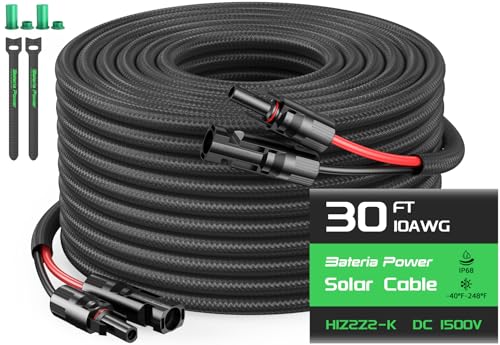
- 30-foot cable pair for flexible routing
- Flame-retardant sleeve resists abrasion
- IP68 connectors include dust caps
Best For: Long runs exposed to handling and wear
Best Low-Profile Entry

- Pre-wired 10AWG cables simplify installation
- Low-profile housing sheds rain
- Strain relief helps protect connections
Best For: Compact DIY RV roof-entry installations
Long-Reach Performance
VEVOR 50FT 10AWG Solar Extension Cable Set
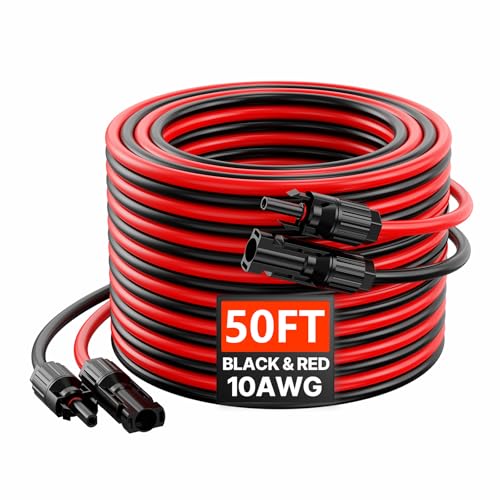
- 50 feet each of red and black 10AWG cable
- Tinned-copper conductors with preinstalled MC4 connectors
- IP67 protection and durable XLPE insulation
Best For: Long RV-roof cable runs and complex solar layouts
Roof-Entry Installation
Solar Cable Entry Gland with 10FT Cable

- Includes roof entry housing and 10 feet of 10AWG cable
- IP68 connector with UV-resistant ABS housing
- Mounts with included screws or separately purchased adhesive
Best For: Creating a sealed solar cable entry through an RV roof
High-Current Flexibility
Bateria Power 30FT 10AWG Solar Cable Set

- Includes matching 30-foot red and black cables
- 10AWG tinned copper with stated 54A rated current
- IP68 connectors, durable insulation, and zip ties
Best For: Moderate-length RV solar cable runs requiring flexible routing
Best Roof Entry Kit
Waterproof Solar Cable Gland Housing

- Includes a 10-foot 10AWG cable
- IP68 nylon cable-entry design
- Mounting screws included
Best For: RV roof installations needing both cable routing and a sealed entry housing
Best Heavy-Duty Extension Set

- Two 20-foot 10AWG cables
- IP68 connectors and protective sleeving
- Includes dust caps and zip ties
Best For: Longer paired cable runs on RV roof solar systems
Best Tool-Free Option
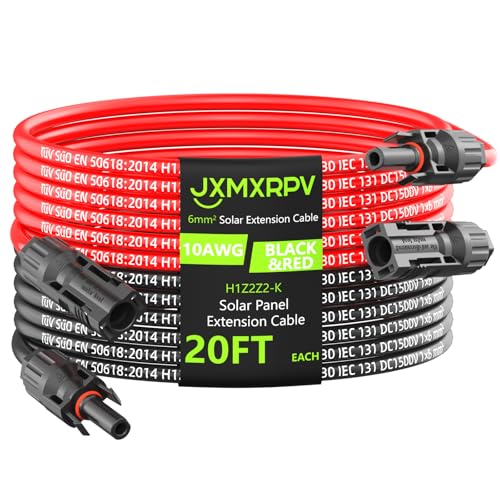
- 20-foot outdoor extension cable
- Tool-free connectors included
- Weather-resistant 10AWG construction
Best For: DIY RV solar installations needing simple extra reach
Best for Long Runs – 20-Foot 10AWG BougeRV Cable
For RV owners who need extra reach between roof-mounted panels and the rest of the system, this 20-foot 10AWG cable pair is a practical choice among solar extension cables for RV roofs. Tinned pure-copper conductors help limit power loss, while the outdoor-rated construction is designed for demanding conditions.
Best For: RV solar installations needing a longer cable run and flexible panel positioning.
Pros:
- 20-foot red-and-black 10AWG cable pair helps extend panel placement.
- Tinned pure copper improves conductivity and corrosion resistance.
- XLPE insulation is UV resistant and rated from -40°F to 194°F.
- Includes installed connectors, a spare connector, and a bare-wire end for controller connections.
Cons:
- Its 20-foot length may be excessive for compact RV layouts.
- The cable pair weighs 2.2 pounds, adding more bulk than shorter options.
Choose this BougeRV set when minimizing voltage loss and maximizing routing flexibility matter more than keeping the installation especially compact. TÜV and UL certification, IP67 sealing, and a locking connector add useful reassurance for exposed roof wiring.
Best Complete Entry Kit – 10-Foot Cable and Roof Gland
This kit combines a 10-foot 10AWG cable pair with a dual cable-entry housing, making it a convenient option when installing solar extension cables for RV roofs. The included screws, spare connector pair, and sealing hardware help simplify a clean pass-through from the roof into the vehicle.
Best For: RV, camper-van, boat, shed, or garage installations that need both extension wiring and a roof entry point.
Pros:
- Includes a dual cable gland, 10-foot red-and-black 10AWG cable pair, spare connectors, and five screws.
- Heavy-gauge copper conductors help support stable transmission and limit voltage drop.
- Sealing rings and locking nuts help protect the roof opening from moisture, dust, and debris.
- Low-profile housing keeps the cable entry neat when installed with suitable sealant.
Cons:
- At 10 feet, the cable may not suit widely separated components.
- Proper outdoor sealant is still required for the best weather protection.
This is a strong convenience-focused option because it addresses the cable run and roof penetration in one package. It is especially useful for a new RV solar installation where neat routing and a weather-resistant entry matter as much as cable length.
Best for Abrasion Protection – 30-Foot Sleeved 10AWG Cable
If your RV layout requires substantial reach or the cable will face rubbing during setup, this 30-foot 10AWG pair stands out among solar extension cables for RV roofs. Its flame-retardant protective sleeve is designed to improve abrasion resistance, reduce tangling, and make the cable easier to coil.
Best For: Longer RV solar runs and installations where added cable protection and handling convenience are priorities.
Pros:
- 30-foot twin-wire length provides significant routing flexibility.
- Protective sleeving helps resist abrasion, dragging, tangling, and everyday wear.
- TÜV-approved XLPO insulation and jacket provide UV and weather resistance from -40°F to 248°F.
- Includes IP68 male and female connectors with dust caps.
Cons:
- Its 30-foot length and 1.74 kg weight may be more cable than a small RV needs.
- System specifications should be verified for compatibility before installation.
This Bateria Power cable is the better fit when durability and reach outweigh minimal bulk. The sleeving is particularly useful for cable sections that may be moved, dragged, or exposed to repeated handling around an RV setup.
Best Low-Profile Entry – Pre-Wired 10-Foot Roof Gland
This pre-wired entry gland is designed to make routing solar extension cables for RV roofs quicker and cleaner. The 10AWG cables and male/female PV connectors are already installed in the housing, so you can focus on positioning, fastening, and sealing the entry point.
Best For: DIY RV or camper-van solar projects seeking a compact, pre-wired roof entry solution.
Pros:
- Pre-installed 10AWG cables and PV connectors reduce cable-routing work.
- Low-profile, rain-shedding housing includes a gasketed gland and locknut.
- UV-resistant ABS/nylon materials and sealing washer support outdoor use.
- Includes spare connectors and four stainless steel self-tapping screws.
Cons:
- The 10-foot cable length may not reach every RV component layout.
- Suitable adhesive or sealant is needed around the base for best weather protection.
For a straightforward roof penetration, this kit offers a useful balance of pre-wired convenience and weather-conscious design. Its strain-relief cable gland and fastening features are also helpful for vehicles that experience movement while traveling.
Long-Reach Performance – VEVOR 50FT 10AWG Solar Extension Cable Set
For RV roofs with longer or more complex cable runs, this VEVOR set provides 50 feet each of red and black 10AWG solar cable. Its tinned-copper conductors, preinstalled MC4 connectors, and weather-resistant insulation make it a practical choice among solar extension cables for RV roofs.
Best For: RV owners needing extended cable reach for outdoor solar installations.
Pros:
- Includes 50-foot red and black cables for flexible routing.
- 10AWG tinned copper is designed for efficient power transmission and low resistance.
- Preinstalled MC4 connectors support tool-free plug-and-play installation.
- IP67 protection and XLPE insulation resist water, dust, UV exposure, chemicals, and temperature extremes.
Cons:
- The 100-foot combined cable length may be more than needed for compact RV layouts.
- At 5.7 pounds, it is relatively substantial for a cable set.
- The listed amperage is 10A, so system compatibility should be checked before purchase.
This is the strongest fit when reach and rugged outdoor construction matter most. Confirm your system’s current requirements and plan the cable route before installing.
Roof-Entry Installation – Solar Cable Entry Gland with 10FT Cable
This kit combines a roof cable-entry gland with 10 feet of 10AWG solar wire, making it a convenient option when routing solar wiring through an RV roof. The UV-resistant ABS housing, waterproof connector design, screws, and sealant-ready installation support a more complete roof-entry setup.
Best For: RV, camper, boat, or van owners installing a dedicated waterproof solar cable entry point.
Pros:
- Combines a roof entry housing, 10 feet of 10AWG cable, connectors, and five screws.
- UV-resistant ABS construction is designed to resist fading and aging.
- IP68 connector protection helps limit water and dust entry.
- Supports adhesive or included screw mounting, with sealant recommended for added leak protection.
Cons:
- Glue is not included if adhesive mounting is preferred.
- The 10-foot cable length offers less reach than the other products in this roundup.
- Roof installation requires careful sealing around the entry housing.
Unlike a cable-only purchase, this product addresses the roof penetration itself. It is a sensible choice for a clean, purpose-built entry point, provided you use appropriate sealant and install it carefully.
High-Current Flexibility – Bateria Power 30FT 10AWG Solar Cable Set
For RV solar installations that need moderate extra reach, this Bateria Power set supplies one 30-foot black cable and one 30-foot red cable. The 10AWG tinned-copper wiring, waterproof connectors, zip ties, and stated 54A rating make it a versatile option among solar extension cables for RV roofs.
Best For: RV owners wanting matched red-and-black extension cables for flexible photovoltaic system routing.
Pros:
- Includes 30-foot red and black cables plus two cable zip ties.
- 10AWG tinned-copper conductors are designed to reduce power loss and resist oxidation.
- IP68 protection and XLPE/XLPO insulation support outdoor use in heat and cold.
- Self-locking male and female connectors are designed for stable connection and easier unlocking.
Cons:
- At 30 feet per cable, it provides less reach than the VEVOR set.
- It is a cable-extension kit rather than a roof-entry gland, so roof sealing hardware is not included.
- Connector and cable specifications should still be matched to the rest of the solar system.
This set balances useful reach with a stated high current rating and durable outdoor materials. Choose it when your RV layout needs more cable than a short run but does not require an integrated roof-entry housing.
Best Roof Entry Kit – Waterproof Solar Cable Gland Housing
For RV owners looking at solar extension cables for RV roofs, this kit combines a roof cable-entry housing with a pre-assembled 10-foot, 10AWG cable. Its IP68-rated nylon gland design is intended to help route and seal wiring where it passes through a roof or other outdoor surface.
Best For: RV, camper, boat, and van installations that need a cable-entry box and short extension cable in one package.
Pros:
- Includes a 10-foot, 10AWG solar cable and entry housing.
- IP68 waterproof construction with a lock nut and washer for sealing around wires.
- Built-in screw slot and bottom groove support installation with included screws or separately purchased glue.
- Supplied with stainless steel self-tapping screws.
Cons:
- The included cable is shorter than the 20-foot options in this roundup.
- Glue is not included if you prefer adhesive mounting.
- This is a roof-entry solution rather than a standalone long extension cable.
This is a practical choice when the roof pass-through is as important as the cable itself. Choose it for a clean, sealed routing point; consider a separate extension cable if you need more reach.
Best Heavy-Duty Extension Set – 10AWG 20-Foot Twin Wire
This 20-foot twin-wire set is a strong option for solar extension cables for RV roofs when you need separate red and black runs. The 10AWG PV wires arrive with male and female waterproof connectors, protective sleeving, dust caps, and zip ties for outdoor installation and cable organization.
Best For: RV roof systems requiring longer paired cable runs with pre-installed connectors and added abrasion protection.
Pros:
- Includes one 20-foot black cable and one 20-foot red cable.
- 10AWG construction is rated for up to 54A and 1500V according to the supplied specifications.
- IP68 connectors, UV-resistant insulation, and a stated -40°F to 194°F operating range support outdoor use.
- Protective flame-retardant sleeving, dust caps, zip ties, and TÜV certification are included.
Cons:
- The thicker 10AWG paired set may be more cable than shorter or smaller systems require.
- The protective sleeving can add bulk when routing through tight RV spaces.
- It is a cable set, not a roof-entry gland or junction housing.
Among these options, this set offers the most complete long-run package for an RV roof layout. It is especially useful when you want matched positive and negative cables with protection already fitted.
Best Tool-Free Option – 20-Foot 10AWG Solar Cable
For straightforward solar extension cables for RV roofs, this 20-foot 10AWG cable provides extra reach between panels, inverters, and other solar components. Its weather-resistant construction and tool-free connectors are designed for outdoor installation without requiring special assembly tools.
Best For: DIY RV, boat, and home solar setups that need a simple 20-foot extension with connectors already installed.
Pros:
- Provides a 20-foot cable length for flexible panel placement.
- 10AWG, 6mm² cable is specified for outdoor solar use.
- Tool-free connectors are designed for quick assembly and disassembly.
- Weather-resistant construction is intended to handle UV exposure, temperature changes, and moisture.
Cons:
- The stated maximum current is 30A, lower than the 54A rating listed for the Bateria Power set.
- Only one cable is included, so a paired positive-and-negative run may require another cable.
- No roof-entry gland, mounting hardware, or cable-management accessories are listed.
This cable is a straightforward pick when reach and easy installation matter most. Check your system’s current requirements and cable configuration before choosing it for a roof-mounted array.
How We Picked the Best Solar Extension Cables for Rv Roofs
We focused on the specifications that matter most in mobile solar installations: conductor size, cable length, connector compatibility, weather resistance, and installation flexibility. Every selected option uses 10 AWG cable or is an entry-gland kit designed around a 10 AWG extension pair, making these products suitable for many RV panel-to-controller layouts.
We also looked for useful differences between products, including MC4-style connectors, IP-rated waterproof connections, protective sleeving, flame-retardant construction, and integrated roof-entry housings. Because RV roofs vary considerably, the list includes both cable-only options and kits intended to seal the point where wiring passes through the roof.
Quick Comparison
- Short cable runs: 10- and 20-foot options are convenient when panels and the charge controller are relatively close together.
- Longer routing: 30- and 50-foot cables provide more flexibility for roof layouts, storage compartments, and interior controller locations.
- Roof penetrations: Entry-gland kits combine cable with a housing designed to help protect and seal the roof pass-through.
- Connector convenience: Preinstalled male and female PV connectors can reduce assembly time, but confirm polarity and compatibility before connecting.
Key Buying Factors for Solar Extension Cables for Rv Roofs
Gauge, Length, and Voltage Drop
Ten AWG is a common choice for RV solar wiring because its lower resistance helps limit voltage loss over moderate distances. Measure the complete one-way route, including bends and the path from the roof to the controller. Avoid buying substantially more cable than needed, since extra length adds cost, resistance, and routing clutter. For unusually long runs or higher-current arrays, calculate voltage drop and consider whether a larger conductor is appropriate.
Connectors and System Compatibility
Check whether the cable uses standard MC4-style male and female connectors and whether they match the connectors on your panels, branch connectors, and charge controller. Never rely on appearance alone: verify polarity, connector fit, and the system’s voltage and current ratings. Use proper mating connectors rather than forcing incompatible parts together.
Roof Sealing and Weather Protection
A roof-entry gland is valuable when wiring must pass through the RV roof. Choose a housing with enough room for the cable pair and install it with a compatible roof sealant according to the manufacturer’s instructions. Waterproof connectors and UV-resistant insulation are also important because cables face rain, sunlight, temperature swings, and road vibration.
Installation and Safety
Route cables away from sharp edges, hot exhaust components, standing water, and areas where they can be pinched. Secure them against wind movement and leave only enough slack for service. Disconnect or cover panels while making wiring changes, and follow the instructions for your solar controller and battery system.
Who Should Buy Which Solar Extension Cables for Rv Roofs?
Choose a 10- or 20-foot cable for compact roof layouts and straightforward panel-to-controller routes. A 30-foot option is a practical middle ground when the controller sits inside a cabinet or farther from the roof entry. A 50-foot cable suits large RVs or installations requiring a longer, more flexible route, provided you confirm voltage-drop requirements.
Select an entry-gland kit if you are creating a new roof penetration or replacing an exposed pass-through. Choose a cable-only pair when your RV already has a sealed entry housing. For demanding travel conditions, prioritize waterproof connectors, robust insulation, protective sleeving, and secure strain relief over the lowest upfront price.