Solar extension cables with Anderson connectors make it easier to position panels in better sunlight while keeping a portable power station safely out of the way. The right cable balances reach, electrical capacity, connector fit, and weather resistance.
This roundup compares 10- and 12-AWG options in lengths from 3 to 50 feet, including Anderson-style cables designed for solar panels, battery systems, and portable power stations.
Best 10 Solar Extension Cables with Anderson Connectors Picks for 2026
High-Current Pick

- 10AWG tinned copper cable
- 45A Anderson Powerpole connector
- Weatherproof, UL2468-certified design
Best For: Higher-current outdoor solar setups needing a 10-foot extension
Compact Reach Pick
- 6-foot length for nearby equipment
- 12AWG tinned copper construction
- 45A Anderson Power Pole connector
Best For: Compact solar setups needing a short extension
RV and Battery Pick

- 10AWG tinned copper conductor
- Anderson-style 30A connectors
- PVC jacket with UV and weather protection
Best For: Short solar, RV, and battery-system connections
Balanced Length Pick
- 10-foot reach for flexible placement
- 12AWG tinned copper construction
- 45A Anderson connector with UL specification
Best For: General-purpose portable solar systems needing 10 feet of reach
Best Compact Pick
3FT 10AWG Solar-to-Anderson Cable

- 10AWG tinned copper supports stable transmission
- Waterproof and dustproof connector design
- Adjustable polarity and connector orientation
Best For: Short connections to portable power stations, panels, or RV batteries
Best Long-Run Value
20FT 12AWG Anderson Extension Cable
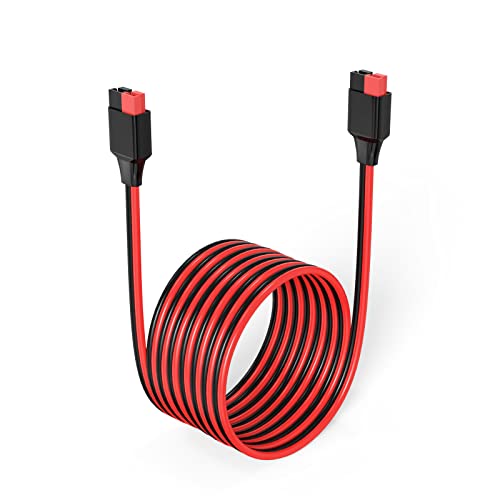
- 20-foot reach for flexible equipment placement
- Tinned copper cable with UL2468 certification
- Stated 45A Anderson connector rating
Best For: Longer solar-panel-to-power-station connections
Best Extended-Reach 10AWG Cable

- 25-foot length for flexible installation
- 10AWG tinned copper supports stable transmission
- 30A connector with adjustable orientation
Best For: Long-distance solar and portable power-station setups
Best with Extra Features
ELFCULB 10AWG 6FT Anderson Cable
- 10AWG tinned-copper cable
- 45A Anderson connector
- Weatherproof, plug-and-play design
Best For: Short solar connections needing a higher current-rated connector
Best Long-Run Flexibility
MOOKEERF 10AWG 25FT Solar Cable

- 25-foot extension length
- Waterproof and dustproof design
- Adjustable connector orientation and polarity
Best For: Longer outdoor runs and flexible solar system layouts
Best Extra-Long 30A Option

- Extra-long 30-foot cable
- 10AWG tinned-copper construction
- 30A adjustable Anderson-style connector
Best For: Long-distance solar layouts using compatible 30A equipment
High-Current Pick – ELFCULB 10AWG 10FT
For shoppers comparing solar extension cables with Anderson connectors, this ELFCULB model stands out with 10AWG tinned copper, a 45A Anderson Powerpole connector, and a 10-foot length. It is designed to connect solar panels with portable power stations or solar generators while allowing more flexible equipment placement.
Best For: Higher-current outdoor solar setups that need a durable 10-foot extension.
Pros:
- 10AWG tinned copper is oxidation resistant and designed for stable current delivery.
- 45A connector offers a higher stated rating than ordinary 30A connectors.
- UL2468 certification and a weatherproof design support outdoor use.
- Includes 24 months of customer service.
Cons:
- The 10AWG cable is heavier than the listed 12AWG alternatives.
- Only one 10-foot cable is included.
This is a practical choice when current capacity and a longer reach matter more than minimizing cable weight. Confirm that your power station and solar panel use compatible Anderson connections before ordering.
Compact Reach Pick – ELFCULB 12AWG 6FT
This 6-foot ELFCULB cable is a compact option for shoppers seeking solar extension cables with Anderson connectors. Its 12AWG tinned copper conductor, 45A Anderson Power Pole connector, and plug-and-play design suit short extensions between solar panels and charging stations.
Best For: Short indoor or outdoor connections where a 6-foot cable is sufficient.
Pros:
- Tinned copper construction is oxidation resistant and conductive.
- 45A connector is corrosion resistant and rated above ordinary 30A connectors.
- 6-foot length helps avoid excess cable in compact setups.
- Listed for indoor and outdoor use with a weatherproof feature.
Cons:
- Shorter than the 10-foot options in this roundup.
- Uses 12AWG cable rather than the heavier 10AWG construction.
Choose this model when you need a manageable extension rather than maximum reach. Its shorter length can be convenient for nearby equipment, while the 45A connector supports a range of compatible solar and battery applications.
RV and Battery Pick – XRDS-RF 10AWG 3FT
The XRDS-RF is a short 3-foot choice among solar extension cables with Anderson connectors, using 10AWG tinned copper and Anderson-style 30A connectors. Its PVC jacket is designed to protect against abrasion, UV rays, and harsh weather, making it suitable for solar panels, RVs, and battery systems.
Best For: Short solar, RV, or battery connections that require a 30A Anderson-style interface.
Pros:
- 10AWG tinned copper supports conductivity and corrosion resistance.
- Durable PVC jacket is intended to resist abrasion, UV exposure, and weather.
- 3-foot length is useful where only a small amount of extra reach is needed.
- Male-to-female Anderson-style connectors allow straightforward connection and disconnection.
Cons:
- 30A connector rating is lower than the 45A connectors on the ELFCULB options.
- At 3 feet, it provides limited extension distance.
This cable is best suited to compact installations and users who specifically need an Anderson-style 30A connection. Its short length helps keep nearby battery or RV wiring tidy, but it is not the choice for moving equipment far apart.
Balanced Length Pick – ELFCULB 12AWG 10FT
This ELFCULB 10-foot cable offers a balanced option for shoppers comparing solar extension cables with Anderson connectors. It combines 12AWG tinned copper, a 45A Anderson connector, UL certification, and a weatherproof nylon outer material for connecting solar panels to portable power stations or generators.
Best For: General-purpose 10-foot solar connections where flexibility and reach are priorities.
Pros:
- 10-foot length can help place a power station in a safer or more convenient location.
- 12AWG tinned copper is oxidation resistant and designed for stable current.
- 45A Anderson connector supports compatible solar and battery equipment.
- UL specification and weatherproof construction support indoor or outdoor use.
Cons:
- 12AWG construction is lighter than the 10AWG alternative.
- Compatibility depends on the equipment having suitable Anderson connections.
This model makes sense for everyday portable solar setups that need a longer cable without moving to the heavier 10AWG option. Check your system’s connector format and electrical requirements before purchase.
Best Compact Pick – 3FT 10AWG Solar-to-Anderson Cable
For short connections in solar setups, the MOOKEERF 3FT cable is a practical choice among solar extension cables with Anderson connectors. Its 10AWG tinned pure copper conductor is designed to reduce resistance and support stable power transmission, while the plug-and-play design simplifies setup.
Best For: Portable power stations, solar panels, RV batteries, and other systems needing a short 3-foot connection.
Pros:
- 10AWG tinned pure copper core supports stable current transfer.
- Waterproof and dustproof connectors help suit outdoor and harsh environments.
- Free-assembly Anderson connector can be adjusted for polarity and horizontal or vertical orientation.
- Includes 24 months of customer service.
Cons:
- At 3 feet, it may not provide enough reach for separated equipment.
- The notes do not specify a maximum amperage rating.
This cable makes the most sense when you want a compact, adaptable link rather than a long extension. Check your equipment’s connector orientation and polarity before ordering.
Best Long-Run Value – 20FT 12AWG Anderson Extension Cable
The ELFCULB 20FT cable is a useful option when solar extension cables with Anderson connectors need to span a larger distance. It combines 12AWG tinned copper wiring with a stated 45A Anderson connector and a plug-and-play design for portable power equipment and solar panels.
Best For: Extending the distance between solar panels and a portable power station or solar generator.
Pros:
- 20-foot length offers substantial placement flexibility.
- 12AWG tinned copper is oxidation resistant and designed for conductivity.
- 45A Anderson connector is corrosion resistant and rated higher than the ordinary 30A option described in the notes.
- UL2468 certification and weatherproof construction are listed.
Cons:
- 12AWG is smaller than the 10AWG conductors used by the other listed options.
- The listed maximum voltage is 12 volts, so system compatibility should be checked carefully.
- A 20-foot cable may be more length than needed for compact installations.
Choose this model when distance and a stated 45A connector rating matter most. Before connecting it, confirm your system’s voltage, connector fit, and current requirements.
Best Extended-Reach 10AWG Cable – 25FT 10AWG Anderson Extension
For installations requiring extra reach, the MOOKEERF 25FT cable offers a longer alternative in solar extension cables with Anderson connectors. Its 10AWG tinned pure copper core is intended to minimize power loss, and the Anderson-style connector is rated at 30A in the supplied specifications.
Best For: Solar panels, portable power stations, RV batteries, and solar systems where a 25-foot extension is useful.
Pros:
- 25-foot length supports flexible placement of equipment.
- 10AWG tinned copper construction is designed for stable power transmission.
- 30A Anderson-style connectors are described as corrosion and high-temperature resistant.
- Free-assembly design allows polarity and connector orientation adjustments.
Cons:
- The connector is rated at 30A, lower than the 45A rating listed for the ELFCULB cable.
- Its male-to-male connector configuration may not suit every setup.
- A 25-foot cable can be cumbersome where only a short connection is needed.
This is a strong fit when you want 10AWG wiring and maximum reach among these options. Verify that the male-to-male configuration, polarity, and 30A rating match your equipment before buying.
Best with Extra Features – ELFCULB 10AWG 6FT Anderson Cable
The ELFCULB is a compact option for shoppers comparing solar extension cables with Anderson connectors. Its 6-foot length, 10AWG tinned-copper construction, and 45A Anderson-style connector suit portable power stations, solar generators, and solar panels where you need a little more distance without a long cable run.
Best For: Short-distance solar connections that benefit from a higher-rated 45A connector and weatherproof construction.
Pros:
- 10AWG tinned copper is designed for stable, conductive power transmission.
- 45A connector offers a higher current rating than ordinary 30A options.
- Plug-and-play male-to-female design extends the distance between panels and a power station.
- Includes 24 months of customer service.
Cons:
- The 6-foot length may be limiting for installations requiring substantial separation.
- Its listed wattage is 156 watts, so buyers should verify compatibility with their equipment.
This is a practical choice when you want robust cable construction and a higher-rated connector in a manageable length. For larger layouts, however, a longer model may be more convenient.
Best Long-Run Flexibility – MOOKEERF 10AWG 25FT Solar Cable
The MOOKEERF 25-foot cable is a strong fit for shoppers seeking solar extension cables with Anderson connectors for more flexible equipment placement. Its 10AWG tinned-copper core is intended to reduce power loss, while the waterproof and dustproof construction supports use in demanding outdoor solar setups.
Best For: Longer connections between solar panels, portable power stations, RV batteries, and related solar systems.
Pros:
- 25-foot length provides substantial placement flexibility.
- Tinned pure-copper core is designed for low resistance and stable current transfer.
- Waterproof and dustproof construction helps protect against outdoor conditions.
- Connector orientation and polarity can be adjusted through its free-assembly design.
Cons:
- The longer cable may be more than needed for compact setups.
- Buyers should confirm the adjustable connector configuration matches their equipment.
Choose this model when distance and installation flexibility matter most. Its longer reach and adjustable Anderson-style connector make it versatile, though careful setup is important when changing polarity or orientation.
Best Extra-Long 30A Option – MOOKEERF 10AWG 30FT Cable
For installations that need maximum reach, the MOOKEERF 30-foot model is one of the longer solar extension cables with Anderson connectors in this roundup. It combines 10AWG tinned-copper wiring with a 30A Anderson-style connector for portable power stations, solar panels, solar generators, RV batteries, and other solar systems.
Best For: Extra-long solar connections where a 30A connector and flexible equipment placement are sufficient.
Pros:
- 30-foot length supports wide separation between connected equipment.
- 10AWG tinned copper is designed to minimize resistance and power loss.
- 30A connector is corrosion resistant and heat resistant according to the supplied specifications.
- Free-assembly design allows connector orientation and polarity adjustments.
Cons:
- The 30A rating is lower than the 45A connector on the ELFCULB cable.
- Its extra length may be unnecessary for small portable setups.
- Polarity should be checked carefully when using the adjustable connector design.
This model prioritizes reach over a higher current rating. It is a sensible pick for long-distance layouts, provided your power station and solar equipment are compatible with a 30A Anderson-style connection.
How We Picked the Best Solar Extension Cables with Anderson Connectors
We focused on cable specifications that matter in real solar setups: wire gauge, available lengths, connector type, stated amperage, conductor material, jacket construction, and intended compatibility. The selection includes compact cables for close panel-to-station connections and longer options for placing panels farther from shade, vehicles, or camp equipment.
Because connector dimensions and polarity can vary between manufacturers, product listings should be checked carefully before purchase. “Anderson-style” does not automatically mean universal compatibility.
Quick Comparison
| Best for | Typical gauge | Useful lengths | What to prioritize |
|---|---|---|---|
| Short, low-loss connection | 10 AWG | 3–6 ft | Correct connector and polarity |
| General portable solar use | 10 AWG | 10–25 ft | Balance of reach and voltage drop |
| Maximum placement flexibility | 10 AWG | 30–50 ft | System voltage, current, and cable loss |
| Lower-current setups | 12 AWG | 6–20 ft | Panel output and manufacturer limits |
Key Buying Factors for Solar Extension Cables with Anderson Connectors
Wire Gauge and Voltage Drop
A lower AWG number generally indicates thicker conductors. Ten-AWG cable is commonly the safer choice for longer runs or higher-current solar inputs, while 12 AWG may suit shorter, lower-current connections. As length increases, resistance and voltage drop also increase, so choose the thickest cable practical for your system.
Length and Installation Path
Measure the actual route, not just the straight-line distance. Add slack for repositioning panels, routing around obstacles, and securing the cable. A cable that is excessively long can create unnecessary voltage loss and tangles; one that is too short limits panel placement.
Connector Fit, Polarity, and Current Rating
Confirm the connector housing style, gender or keyed arrangement, polarity, and the power station’s accepted solar-input connector. Also compare the cable’s stated current rating with the panel array and charge controller. Never rely on appearance alone when connecting DC equipment.
Construction and Outdoor Use
Look for tinned copper when corrosion resistance is important, a flexible PVC or similarly durable jacket, secure strain relief, and clearly marked polarity. Even outdoor-rated cable should be kept away from standing water, sharp edges, heat sources, and vehicle traffic.
Who Should Buy Which Solar Extension Cables with Anderson Connectors?
Choose a 3- or 6-foot 10-AWG cable for a compact setup where the panels sit beside the power station. A 10- to 25-foot 10-AWG option is the best all-purpose choice for most campers and emergency backup users who need better panel positioning without an overly long run.
Choose a 30- to 50-foot 10-AWG cable when shade avoidance and flexible placement matter most, but verify your station’s maximum solar-input voltage and current first. A 12-AWG cable can be a practical budget or short-run option for compatible lower-output panels, especially when portability and easy storage are priorities.