Accurate drilling is easier when your machine offers stable support, controlled speed, minimal spindle play, and a table that stays aligned. The best drill presses for precision make repeatable holes far less demanding than handheld drilling.
This roundup compares 10 compact and benchtop models across different workshop needs, including micro drilling, adjustable speed, laser guidance, X-Y positioning, and heavier cast-iron construction.
Best 10 Drill Presses for Precision Picks for 2026
Best Mini Precision Model

- Adjustable speed up to 7,000 RPM
- 0.6-6mm chuck with 40mm stroke
- Includes mini vise and 10 HSS bits
Best For: Small crafts, jewelry, models, and repair work
Best Feature-Rich Benchtop Pick
SKIL 10-Inch 5-Speed Drill Press

- 6.2-amp motor with five speeds
- Laser alignment and adjustable depth stop
- Tilting table and integrated work light
Best For: Repeatable DIY drilling in wood, metal, and other materials
Best for Micro Holes
PROXXON TBM 115 Precision Drill Press

- Drills micro holes down to 1/64 inch
- Six precision collets included
- Depth gauge and adjustable parallel fence
Best For: Detailed hobby, model, and micro-drilling projects
Best for Micro Work
Precision X-Y-Z Mini Drill Press
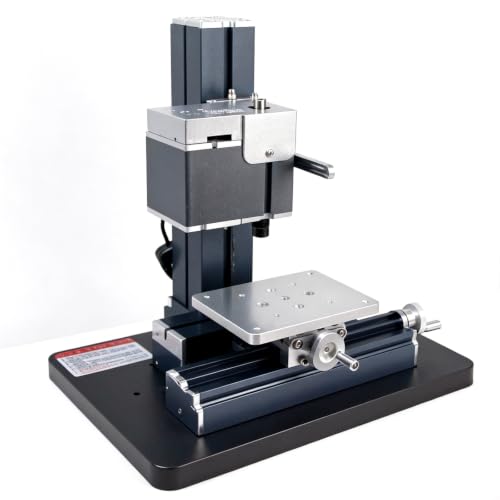
- 0.02 mm handwheel scale graduations
- 145 mm X travel with 40 mm Y and Z travel
- 20,000 RPM motor with 1–6 mm chuck
Best For: PCB, model, acrylic, plastic, and small-part drilling
Best Compact Power
710W Digital Benchtop Drill Press

- 710W motor with 800–3000 RPM adjustment
- Real-time digital RPM display
- 1–13 mm chuck and 60 mm spindle travel
Best For: Compact home workshops and mixed DIY drilling
Best with Extra Features

- 710W motor with six speeds
- 1.5–13mm chuck
- Stable cast-iron base
Best For: DIY and home workshop drilling
Fine Detail Specialist
Variable-Speed Mini Drill Press

- 400–4500 RPM control
- CNC-processed aluminum body
- Handles very small holes
Best For: Jewelry, crafts, and miniature drilling
Guided Benchtop Option
Hoteche Variable-Speed Drill Press

- Three speed ranges up to 5000 RPM
- 170mm square work table
- Laser-guided drilling and 23mm travel
Best For: Light-duty DIY and hobby projects
Best Budget Benchtop Option – WEN 8-Inch 5-Speed Drill Press
If you want drill presses for precision without taking up much shop space, the WEN 4206T offers a practical benchtop setup. Its five speeds, adjustable table, and keyed chuck provide useful control for small woodworking and metalworking tasks.
Best For: DIY users who need a compact, general-purpose drill press with adjustable speed and table positioning.
Pros:
- Five speeds from 750 to 3,200 RPM suit different materials and tasks.
- Height-adjustable table bevels up to 45 degrees in either direction.
- Cast-iron construction, 8-inch swing, and 2-inch spindle travel support benchtop work.
Cons:
- The 2.3-amp motor and 1/2-inch metal drilling capacity are oriented toward lighter-duty work.
- The keyed chuck requires the included chuck key for bit changes.
At 23 inches tall with a 7-by-11-inch base, this WEN is a straightforward choice when you want useful drilling control in a relatively compact format.
Best Mini Precision Model – Upgraded B10 Mini Drill Press
For miniature projects, this B10 benchtop driller is designed around compact, controlled work. Its adjustable 24V power supply, 40mm maximum stroke, small B10 chuck, and metal construction make it a specialized option among drill presses for precision.
Best For: Jewelry, model, toy, craft, and small repair projects involving wood, plastic, resin, aluminum, or other soft materials.
Pros:
- Adjustable speed reaches up to 7,000 RPM for small-diameter drilling.
- Solid metal structure with linear bearings is designed to reduce vibration.
- Includes a mini vise, 10 HSS twist bits, and base slots for expansion accessories.
Cons:
- The 0.6-6mm chuck range and 40mm stroke limit it to small work.
- Its stated drilling capacity is intended for softer materials rather than heavy-duty metalworking.
This compact machine is less versatile than a full-size drill press, but its small footprint, high speed, and included accessories fit detailed bench work well.
Best Feature-Rich Benchtop Pick – SKIL 10-Inch 5-Speed Drill Press
SKIL 6.2 Amp 10 In. 5-Speed Benchtop Drill Press with Laser Alignment & Work Light - DP9505-00
Check Price On AmazonThe SKIL DP9505-00 combines a 6.2-amp induction motor with features aimed at repeatable drilling. Its laser alignment system, adjustable depth stop, tilting table, and work light make it a strong consideration when comparing drill presses for precision.
Best For: DIY workshops that want alignment and depth-control features for wood, metal, and other general materials.
Pros:
- Five speed settings cover 610 to 2,800 RPM.
- Laser alignment and an adjustable depth stop support consistent hole placement and depth.
- The work surface tilts 45 degrees left and right and includes an LED work light.
Cons:
- Its listed drilling capacity for wood and metal is 0.5 inches.
- The feature set and larger 10-inch format may be more than needed for occasional light drilling.
With a powerful motor and several built-in guidance features, the SKIL is suited to users who value setup visibility and repeatability over the simplest possible benchtop design.
Best for Micro Holes – PROXXON TBM 115 Precision Drill Press
The PROXXON TBM 115 is built for detailed, small-scale drilling rather than broad shop work. Its precision collets, adjustable depth gauge, parallel fence, and ability to drill holes down to 1/64 inch make it especially compelling among drill presses for precision.
Best For: Hobbyists working on micro holes, intricate models, electronics-related projects, and other detailed tasks.
Pros:
- Supports micro drilling down to 1/64 inch, or 0.5mm.
- Includes six precision collets plus an adjustable fence and depth gauge.
- Ribbed die-cast aluminum table and hard-chromed steel column provide a stable work platform.
Cons:
- Its 85-watt motor and 0.5mm listed drilling capacity favor delicate work over heavy-duty drilling.
- Only three spindle speeds are available.
If your projects depend on very small holes and controlled positioning, the TBM 115 offers more specialized precision features than a conventional general-purpose benchtop press.
Best Overall – WEN 12-Inch Variable-Speed Drill Press
For shoppers comparing drill presses for precision, the WEN DP1263V offers a useful combination of capacity, speed control, and visibility. Its 12-inch swing, adjustable 580–3100 RPM range, digital speed readout, laser, and LED work light make it a versatile benchtop option for accurate drilling in wood and metal.
Best For: General workshop drilling where adjustable speed, a larger work area, and clear setup aids matter.
Pros:
- Mechanical variable speed adjusts from 580 to 3100 RPM.
- Digital readout shows current spindle speed for repeatable setup.
- Includes a laser, LED work light, depth stop, roller extension, and beveling table.
- Cast iron construction and a 12-inch swing provide a substantial benchtop platform.
Cons:
- At 85 pounds, it is less convenient to move than a compact mini press.
- The 5/8-inch keyed chuck and 3-1/8-inch spindle travel may limit some larger drilling tasks.
The WEN is a strong all-around choice when precision features and work capacity are more important than portability. Its speed display and included alignment aids are particularly practical for repeat drilling.
Best for Micro Work – Precision X-Y-Z Mini Drill Press
For highly detailed layouts, this compact micro drill press stands out among drill presses for precision with dedicated X-Y-Z positioning. Its 0.02 mm handwheel graduations, 1–6 mm chuck, and 20,000 RPM motor are suited to small holes in PCBs, models, acrylic, plastics, and soft metals.
Best For: PCB work, model making, and small-part drilling that benefits from controlled positioning without repeated re-clamping.
Pros:
- X-axis travel is 145 mm, while Y and Z each travel 40 mm.
- Handwheels use 0.02 mm scale graduations for fine incremental adjustments.
- Dual feed control provides a swing arm for quick strokes and a handwheel for finer depth control.
- All-metal construction and dovetail slides are designed to help reduce vibration-related play.
Cons:
- The 1–6 mm chuck range is intended for micro drilling rather than larger bits.
- Its 36W motor and stated capacity are better suited to soft materials and light aluminum or copper work.
- The compact table measures 120 × 100 mm, limiting larger workpieces.
This is the most specialized option in the group. Its positioning table and fine graduations make it appealing for miniature work, but buyers should choose a larger press for general-purpose drilling.
Best Compact Power – 710W Digital Benchtop Drill Press
This 710W benchtop model combines a digital RPM display with variable speed from 800 to 3000 RPM, making it a practical contender among drill presses for precision. Its 1–13 mm chuck, 60 mm spindle travel, and compact design support a broad range of home DIY, woodworking, metalworking, and plastic-drilling tasks.
Best For: Home workshops and STEM or craft projects needing a compact press with a wider chuck range and straightforward speed adjustment.
Pros:
- 710W pure copper motor provides substantial power for a compact benchtop unit.
- Digital display shows real-time RPM, with adjustable speeds from 800 to 3000 RPM.
- 1–13 mm clamping range accommodates a wider selection of common drill bits.
- Depth stop, 60 mm spindle travel, and a compact footprint support controlled bench work.
Cons:
- The stated metal drilling capacity is 0.5 inch, so it is not intended for heavy-duty metal drilling.
- Its 10.6-pound weight may provide less inherent stability than a heavier cast-iron press.
- The supplied dimensions and compact design may limit larger workpieces.
The 710W model is a balanced choice for users who want digital speed feedback and a versatile chuck without moving up to a heavier machine. Secure it to a stable bench for the most consistent results.
Best with Extra Features – 710W Mini Drill Press
For shoppers comparing drill presses for precision, this compact benchtop model combines a 710W motor, six speed settings, and a cast-iron base. Its 1.5–13mm chuck accommodates a broad selection of standard bits, while the 0–2800 RPM range supports drilling in wood, metal, plastic, and other materials.
Best For: DIYers and home workshops that need a portable drill press with useful power and a wider chuck range.
Pros:
- 710W motor provides strong, stable performance.
- Six adjustable speeds from 0 to 2800 RPM suit different materials and thicknesses.
- Heavy-duty metal base helps reduce deviation during drilling.
- 1.5–13mm chuck offers broad bit compatibility.
Cons:
- Its stated drilling capacity is limited to 8mm in metal and 30mm in wood.
- The compact design is intended for small workshops and home projects rather than large workpieces.
This is a versatile choice when precision, portability, and motor power matter more than industrial-scale capacity. The stable base and adjustable speeds make it a practical all-around option for hobby work.
Fine Detail Specialist – Variable-Speed Mini Drill Press
Among drill presses for precision, this ultra-compact model is aimed at fine work rather than heavy drilling. Its CNC-processed aluminum-alloy body, solid base, JT0 chuck, and continuously variable 400–4500 RPM control are suited to small holes in wood, plastic, resin, aluminum, composite panels, and other non-hard materials.
Best For: Jewelry making, model work, crafts, PCB projects, and other small-scale drilling tasks.
Pros:
- Continuously variable speed from 400 to 4500 RPM.
- Compact aluminum-alloy construction with a thickened, non-skid base.
- Designed for controlled holes as small as 0.3mm in wood and plastic.
- Small footprint suits limited bench space.
Cons:
- 30W motor and small chuck limit it to light-duty work.
- Wood and plastic clamping range is 0.3–4mm; soft-metal drilling is listed at 1–3mm.
- Requires a 3–12V power supply, with 12V/5A recommended.
This drill press prioritizes delicate, accurate work and compact storage. It is a better fit for crafts and miniature components than for larger bits, hard materials, or demanding workshop jobs.
Guided Benchtop Option – Hoteche Variable-Speed Drill Press
This Hoteche model is a practical contender among drill presses for precision, pairing three selectable speed ranges with a 170 × 170mm work table and 23mm spindle travel. Its 0.6–6.5mm keyed chuck, laser-guided accuracy, and 100W motor target controlled drilling in wood, steel, plastic, and PCB materials.
Best For: DIYers and hobbyists who want a compact table with guided alignment and moderate material capability.
Pros:
- Three speed settings cover 0–2200, 3300, and 5000 RPM.
- 170 × 170mm work table supports small to medium projects.
- 23mm spindle travel allows controlled deeper drilling.
- Keyed chuck provides a firm grip on compatible bits.
Cons:
- Chuck accepts bits from 0.6 to 6.5mm, limiting larger-bit use.
- Listed capacities are 10mm in wood and 5mm in steel.
- The 100W motor is intended for DIY and hobby projects rather than heavy-duty production.
With its work-table size, spindle travel, and laser-guided positioning, this model offers useful control for compact projects. Its chuck size and stated capacities make it best suited to light-duty precision drilling.
How We Picked These Drill Presses for Precision
We focused on features that directly affect hole accuracy and repeatability: spindle stability, depth control, speed adjustment, work-table design, chuck capacity, usable throat depth, and overall rigidity. We also considered the different jobs buyers may have, from electronics and model making to woodworking, metalworking, and general home-shop repairs.
Because no single machine suits every project, the selection includes compact micro drill presses, small variable-speed units, and larger benchtop presses with more working room. Features such as lasers and LED lights can improve setup, but they do not replace a rigid frame, accurate quill travel, or careful workholding.
Quick Comparison
| Best For | Look For | Models In This Roundup |
|---|---|---|
| Micro drilling and small parts | Low runout, small chuck, fine feed control | PROXXON, mini precision models |
| General benchtop work | Cast-iron base, adjustable speed, depth stop | WEN 4206T, SKIL DP9505-00 |
| Larger workpieces | More throat depth, larger table, stronger motor | WEN DP1263V |
| Positioning accuracy | X-Y table, handwheels, secure clamps | X-Y positioning model |
Key Buying Factors for Drill Presses for Precision
Rigidity and Runout
A heavy cast-iron base and column help prevent vibration. Low spindle runout matters just as much: excessive movement can enlarge holes, reduce bit life, and make small work difficult. Check that the chuck, quill, and spindle are securely supported.
Speed Control
Variable speed is valuable when switching between wood, plastic, aluminum, steel, and small-diameter bits. A wide usable range gives better control, while stepped pulley speeds can be dependable and simple to maintain.
Depth and Table Adjustment
A reliable depth stop helps produce consistent holes. Look for a table that tilts, locks firmly, and adjusts smoothly. For repeated layouts, an X-Y table or a separate vise can improve positioning substantially.
Chuck and Work Capacity
Match chuck size and spindle travel to your bits and materials. A larger chuck may accept more tooling, but a compact precision machine can be better for tiny bits and delicate work. Always clamp small or irregular parts instead of holding them by hand.
Who Should Buy Which Drill Presses for Precision?
Choose a compact micro press if you primarily drill circuit boards, jewelry, models, thin plastics, or other small parts. A PROXXON-style precision machine or an all-metal mini press is suited to controlled, fine work.
For a versatile home workshop, choose a cast-iron benchtop model with multiple speeds, a depth stop, and a stable table. These machines offer a practical balance of capacity and accuracy for wood, plastic, and light metalwork.
If you regularly drill larger stock or need more room around the bit, step up to a 10- or 12-inch benchtop press. Prioritize rigidity, table size, motor performance, and throat depth over convenience features such as lasers. Whichever model you choose, secure the machine to a solid bench and verify alignment before precision work.