The best deep cycle battery depends on more than amp-hour capacity. Battery chemistry, charging requirements, usable energy, size, weight, and intended application all affect real-world performance.
We selected 10 deep cycle batteries spanning AGM, sealed lead-acid, lithium iron phosphate, marine dual-purpose, and golf-cart configurations to help you match the battery to your RV, boat, solar setup, or off-grid system.
Best 10 Deep Cycle Batteries Picks for 2026
Reliable Solar Workhorse

- Sealed, maintenance-free AGM construction
- Supports RV and solar appliance loads
- Operates from -4°F to 140°F
Best For: RVs, cabins, and solar backup systems
Marine Dual-Purpose Pick
OPTIMA D34M BLUETOP AGM Battery

- 750 CCA for dependable starting power
- Sealed AGM design requires no maintenance
- Built for boat and RV vibration resistance
Best For: Marine and RV starting-plus-cycling applications
Lightweight Long-Life Upgrade

- 24-pound Group 31 drop-in form factor
- Smart BMS with low-temperature cutoff
- Designed for 4S4P system expansion
Best For: RV, solar, marine, and portable power upgrades
High-Capacity AGM Bank

- Large 200Ah C20 rated capacity
- Sealed, maintenance-free AGM construction
- Low self-discharge below 3% monthly
Best For: Larger RV, solar, and backup power banks
Best Lithium Upgrade
12V 100Ah LiFePO4 Group 24 Battery

- 100Ah LiFePO4 capacity with Grade A cells
- 100A BMS and cold-temperature protection
- Expandable up to 4S4P configurations
Best For: RV, marine, solar, and off-grid energy storage
Best Budget Two-Pack
12V 35Ah AGM Deep Cycle Batteries
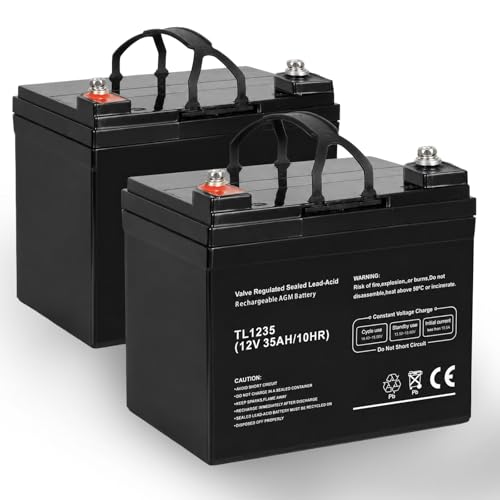
- Two rechargeable 12V 35Ah batteries
- Sealed, maintenance-free AGM construction
- Vibration-resistant ABS casing
Best For: Camping, RV, UPS, marine, and compact backup systems
Best High-Capacity Bank
US Battery US1800XC2 6V 208Ah Set

- Four 6V Group GC2 flooded batteries
- 208Ah rating at the 20-hour rate per battery
- Designed for golf carts, RVs, solar, and industrial use
Best For: Large 6V battery banks and heavy-duty deep-cycle applications
Best with Extra Features
12V 100Ah LiFePO4 Group 24 (2-Pack)

- LiFePO4 deep-cycle power for RV, marine, and off-grid systems
- 100A BMS with temperature and circuit protections
- Expandable up to 4S4P; includes a five-year warranty
Best For: Lithium energy storage and expandable 12V systems
Best Compact AGM Value
12V 40Ah AGM Deep Cycle Battery

- Maintenance-free AGM design for light electric vehicles
- 400A maximum five-second discharge current
- Compact format for scooters, wheelchairs, and e-bikes
Best For: Compact mobility and light-duty electric equipment
Best Dual-Purpose Marine Battery
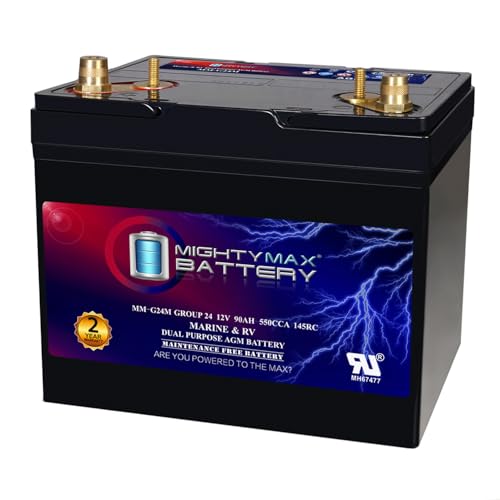
- Combines 90Ah deep-cycle capacity with starting power
- Provides 550 CCA and 700 MCA for marine engines
- Spill-proof, maintenance-free AGM construction
Best For: Boats needing starting and accessory power from one battery
Reliable Solar Workhorse – Renogy 12V 100Ah AGM Battery
For buyers comparing deep cycle batteries for an RV, cabin, or backup setup, this Renogy AGM model offers sealed, maintenance-free lead-acid construction and dependable 12-volt power. Its 100Ah capacity, low self-discharge, and broad discharge temperature range make it a practical choice for regular off-grid use.
Best For: RVs, cabins, solar systems, and users who prefer a low-maintenance AGM battery.
Pros:
- Sealed AGM design reduces leakage and troubleshooting.
- Supports series connections without a stated limit and parallel connections up to 4P.
- Designed for discharge performance from -4°F to 140°F.
- Low monthly self-discharge rate below 3% at 77°F.
Cons:
- At 63.9 pounds, it is substantially heavier than comparable lithium options.
- AGM batteries generally require more space and weight capacity than lithium replacements.
- The warranty is prorated for two years.
This is a sensible deep cycle battery for buyers prioritizing established AGM technology, simple installation, and stable appliance power over minimum weight. Verify your charger and mounting space before purchasing.
Marine Dual-Purpose Pick – OPTIMA D34M BLUETOP AGM Battery
Among deep cycle batteries designed for marine and recreational use, the OPTIMA D34M BLUETOP stands out as a dual-purpose option for both starting and cycling duties. Its 750 CCA rating, sealed AGM construction, and vibration resistance suit boat and RV owners who want one maintenance-free battery for multiple demands.
Best For: Boats and RVs that need both reliable engine starting and deep cycle capability.
Pros:
- Provides 750 cold cranking amps and a 120-minute reserve capacity.
- SpiralCell technology uses 99.99% pure lead for consistent performance.
- Up to 15 times more vibration-resistant than standard flooded batteries.
- Dual SAE and 5/16-inch stainless steel stud posts support flexible connections.
Cons:
- Its 55Ah C20 capacity is lower than many dedicated 100Ah deep cycle batteries.
- At 43.5 pounds, it is not the lightest option for portable applications.
- Its dual-purpose design may not provide the same storage capacity as a dedicated house battery.
The D34M BLUETOP is a strong fit when starting power matters as much as energy storage. For larger house banks or extended off-grid loads, compare its 55Ah capacity with your actual energy needs.
Lightweight Long-Life Upgrade – 12V 100Ah LiFePO4 Battery
For shoppers seeking modern deep cycle batteries, this 12V 100Ah LiFePO4 model combines a lightweight Group 31 form factor with long cycle-life claims and built-in battery management. It is designed for RVs, trolling motors, golf carts, solar storage, and other applications where weight, usable capacity, and repeated cycling matter.
Best For: RV house banks, trolling motors, off-grid solar systems, golf carts, and portable backup power.
Pros:
- Weighs 24 pounds, about 70% lighter than comparable lead-acid batteries.
- 100A Smart BMS protects against overcharge, over-discharge, over-current, and short circuits.
- Automatic low-temperature charging cutoff helps protect cells below 32°F.
- Supports up to 4S4P expansion for systems up to 51.2V and 400Ah.
Cons:
- Charging below 32°F is restricted by the low-temperature cutoff.
- Requires compatible LiFePO4 charging equipment and system settings.
- The supplied information does not specify a warranty length.
This battery is compelling for users ready to move beyond heavy lead-acid storage. Its low weight and expandable architecture are especially useful in mobile or solar systems, but charger compatibility and cold-weather charging requirements deserve attention.
High-Capacity AGM Bank – Renogy 12V 200Ah AGM Battery
When your deep cycle batteries need more stored energy without switching to lithium, this Renogy 12V 200Ah AGM battery offers a high-capacity lead-acid solution for solar and RV systems. Its sealed construction, low self-discharge, and reference capacities across different discharge rates make it suitable for larger stationary or semi-mobile power banks.
Best For: High-demand RV, solar, and backup systems with room for a large, heavy AGM battery.
Pros:
- 200Ah rated capacity at the C20 discharge rate.
- Sealed AGM construction helps prevent acid leakage and frequent maintenance.
- Low monthly self-discharge rate below 3% at 77°F.
- Designed for stable discharge performance at low temperatures.
Cons:
- At 127.9 pounds, it is difficult to move and install compared with lithium alternatives.
- Its 20.5-inch length and 9.4-inch width require substantial mounting space.
- The manufacturer recommends upright installation and warns against upside-down mounting.
This is a practical choice when capacity and familiar AGM technology take priority over portability. Because weight, orientation, recharge method, and depth of discharge affect real-world service life, plan the installation carefully before adding it to a power bank.
Best Lithium Upgrade – 12V 100Ah LiFePO4 Group 24 Battery
For shoppers comparing deep cycle batteries for RVs, boats, trolling motors, or off-grid systems, this 12.8V 100Ah LiFePO4 model offers a lightweight, maintenance-free alternative to traditional lead-acid designs. Its Group 24 format, integrated 100A BMS, and expandable configuration support make it suitable for dependable energy storage rather than engine starting.
Best For: RV house power, marine and trolling-motor setups, solar storage, and off-grid applications.
Pros:
- Grade A LiFePO4 cells provide high energy density and deep-cycle performance.
- Built-in 100A BMS helps protect against overcharge, over-discharge, overcurrent, short circuits, and temperature issues.
- Group 24 dimensions provide a drop-in replacement option for many lead-acid, AGM, or SLA systems.
- Supports up to 4 batteries in series and 4 in parallel for larger energy configurations.
Cons:
- Designed for energy storage and is not suitable for engine starting or cranking.
- Requires a compatible LiFePO4 charging profile; charging pauses below 32°F.
This battery is a strong fit when lower weight, long-term cycling, and expandable storage matter more than basic upfront cost. Verify charger settings, available space, and terminal compatibility before installation.
Best Budget Two-Pack – 12V 35Ah AGM Deep Cycle Batteries
This two-pack gives shoppers a practical way to add rechargeable deep cycle batteries to RV, camping, backup-power, marine, or off-grid equipment. The sealed AGM construction is maintenance-free and uses a rugged ABS case designed for vibration resistance and leak-proof operation.
Best For: Paired 12V backup systems, camping equipment, RVs, UPS applications, and compact solar setups.
Pros:
- Includes two rechargeable 12V 35Ah sealed lead-acid AGM batteries.
- Maintenance-free design with low self-discharge for easier storage.
- Heavy-duty ABS casing helps resist vibration and supports use in demanding environments.
- Suitable for solar, medical, marine, industrial, RV, and backup applications.
Cons:
- 35Ah capacity is smaller than many full-size RV or solar deep cycle batteries.
- Lead-acid construction is generally heavier than lithium alternatives.
- Warranty coverage is limited to one year.
Choose this pair when you need straightforward, sealed AGM power and the flexibility of two matching batteries. Check the required runtime, dimensions, and wiring arrangement for your equipment before ordering.
Best High-Capacity Bank – US Battery US1800XC2 6V 208Ah Set
This four-battery set is designed for larger deep cycle battery banks in golf carts, RVs, solar systems, marine equipment, and industrial machinery. Each flooded lead-acid GC2 battery provides 208Ah at the 20-hour rate, making the set a substantial option for applications that can accommodate larger batteries and routine flooded-battery care.
Best For: Golf carts, RV battery banks, renewable-energy systems, utility vehicles, and industrial equipment.
Pros:
- Four 6V Group GC2 batteries provide a substantial deep-cycle battery-bank foundation.
- Each battery is rated at 208Ah at the 20-hour rate and 157Ah at the 5-hour rate.
- Suitable for golf carts, marine systems, RVs, solar installations, and industrial equipment.
- Includes battery lifting straps for easier handling.
Cons:
- Flooded lead-acid batteries may require more care than sealed AGM or lithium models.
- Each battery weighs 58 pounds, so installation and transport can be demanding.
- Warranty coverage is listed as 12 months.
This set makes sense for buyers building a high-capacity 6V bank and who have the space, wiring, and maintenance routine required by flooded lead-acid batteries. Confirm your system voltage and series/parallel layout before purchase.
Best with Extra Features – 12V 100Ah LiFePO4 Group 24 (2-Pack)
For RVs, boats, solar setups, and off-grid systems, this two-pack of 12V 100Ah LiFePO4 deep cycle batteries offers a lightweight, expandable alternative to traditional lead-acid power. Each battery includes a 100A BMS and Group 24 dimensions for straightforward installation in many standard battery boxes.
Best For: RV, marine, auxiliary, and off-grid energy storage where long-lasting lithium power and expandable capacity matter.
Pros:
- Grade A LiFePO4 cells provide stable deep-cycle performance.
- Integrated 100A BMS helps protect against overcharge, over-discharge, overcurrent, short circuits, and temperature issues.
- Supports up to 4 batteries in series and 4 in parallel for larger energy systems.
- Includes low-temperature charging and discharge protections plus a five-year warranty.
Cons:
- Designed for energy storage, not engine starting or cranking.
- Requires a compatible LiFePO4 charging profile; non-lithium chargers are not recommended.
- Charging pauses below 32°F, which may affect winter use without suitable temperature management.
This is a strong fit when you want lithium efficiency, Group 24 compatibility, and room to expand. Confirm your charger, battery-box clearance, and system requirements before installation.
Best Compact AGM Value – 12V 40Ah AGM Deep Cycle Battery
This 12V 40Ah AGM battery is a practical choice for smaller electric vehicles and mobility equipment. Its sealed, maintenance-free design and 400A maximum five-second discharge current make it a versatile option among deep cycle batteries for light-duty applications.
Best For: Mobility scooters, electric wheelchairs, go-karts, e-bikes, bicycles, and other compact electric devices.
Pros:
- AGM construction requires no liquid top-ups or routine electrolyte maintenance.
- 400A maximum discharge current for up to five seconds supports strong device startup.
- Compact 7.8 x 6.5 x 6.7-inch dimensions suit many light electric vehicles.
- Rechargeable design offers low self-discharge and resistance to power loss.
Cons:
- Professional charging equipment is required for safe use.
- At 40Ah, it provides less stored capacity than larger batteries in this roundup.
- Its lead-acid construction weighs 24.7 pounds.
Choose this VEVOR model when you need a compact AGM battery for a light-duty electric application and value low maintenance. Verify the dimensions, terminal arrangement, and charger compatibility before ordering.
Best Dual-Purpose Marine Battery – 12V 90Ah Group 24M AGM
Boaters who need both engine-starting power and sustained accessory operation should consider this 12V 90Ah Group 24M AGM battery. It combines deep-cycle capacity with 550 CCA and 700 MCA, making it a flexible choice for marine electronics, gear, and starting duties.
Best For: Boats and other demanding setups that need one maintenance-free battery for starting and extended accessory power.
Pros:
- Dual-purpose design provides 90Ah deep-cycle capacity and engine-starting power.
- Delivers 550 CCA and 700 MCA for dependable starting performance.
- Spill-proof AGM construction is maintenance-free and designed to absorb vibration.
- Rated for up to 700 cycles at 50% depth of discharge and backed by a limited warranty.
Cons:
- At roughly 52 to 54 pounds, it is substantially heavier than the lithium option.
- Its 10.25 x 6.63 x approximately 9-inch size requires adequate installation space.
- Warranty details in the supplied information vary between one and two years, so verify coverage before purchase.
This Mighty Max battery stands out for marine users who do not want to choose between starting performance and accessory runtime. Check your boat’s battery tray, terminal layout, and required warranty terms before buying.
How We Picked These Deep Cycle Batteries
We focused on batteries suited to repeated discharge rather than occasional engine starting. The selection includes common 12-volt formats, Group 24 and Group 31 sizes, golf-cart batteries, and options for marine, RV, camping, mobility, and solar use.
We compared chemistry, rated capacity, starting capability where relevant, maintenance needs, portability, expected use case, and installation flexibility. Because published specifications can vary by seller and production batch, confirm dimensions, terminals, charging limits, and warranty terms before ordering.
Quick Comparison
| Battery type | Typical strengths | Best suited for |
|---|---|---|
| LiFePO4 lithium | Low weight, high usable capacity, long cycle life | Frequent RV, solar, and trolling-motor use |
| AGM lead-acid | Sealed, maintenance-free, broad compatibility | Budget-conscious RV, marine, and backup systems |
| Flooded lead-acid | Proven design and often lower upfront cost | Golf carts and installations that allow maintenance |
| Dual-purpose AGM | Combines starting power with moderate deep-discharge capability | Boats and vehicles with shared starting and accessory loads |
Key Buying Factors for Deep Cycle Batteries
Battery Chemistry
LiFePO4 batteries generally provide more usable energy at a lower weight, but they cost more and require a compatible charging profile. AGM batteries are sealed and simple to install, though they are heavier and typically should not be deeply discharged repeatedly.
Capacity and Usable Energy
A 100Ah rating does not mean every system can use all 100 amp-hours. Lead-acid batteries commonly deliver better service life when used to a partial depth of discharge, while lithium models often support a deeper usable range. Estimate your daily watt-hours, then account for inverter losses and reserve capacity.
Voltage, Size, and Connections
Match the battery voltage to the system and verify physical dimensions, terminal placement, cable clearance, and mounting requirements. Two smaller batteries may be easier to install than one large battery, but series or parallel connections must be properly configured and fused.
Charging and Operating Conditions
Check compatibility with your charger, solar controller, alternator, or trolling-motor system. Lithium batteries may include a battery management system, but that does not replace correct charging equipment. AGM batteries are more tolerant of varied installations but still require appropriate voltage limits.
Who Should Buy Which Deep Cycle Batteries?
Choose LiFePO4 if low weight, frequent cycling, and maximum usable capacity matter most. These are particularly attractive for RV boondocking, portable solar, and regular trolling-motor use.
Choose AGM if you want a sealed, maintenance-free battery with straightforward installation and a lower initial price. AGM models work well for moderate-use RVs, boats, backup power, and off-grid equipment.
Choose a dual-purpose marine battery when one battery must provide engine-starting power as well as accessory energy. It is a compromise, not a replacement for a dedicated deep-cycle bank in demanding continuous-use systems.
Choose golf-cart batteries for compatible 6-volt series banks where capacity and rugged repeated cycling are more important than compact size. Always verify the required series voltage and charging setup before installation.