The best vented battery boxes help contain batteries, protect terminals from accidental contact, and provide a more secure installation in RVs, boats, trailers, and utility vehicles.
Our roundup covers single- and dual-battery designs, Group 24 through 31 options, heavy-duty commercial boxes, and portable power-center styles so you can match capacity, ventilation, and mounting needs.
Best 10 Vented Battery Boxes Picks for 2026
Reliable Group 24 Protection
Attwood Group 24 Vented Battery Box

- Fits one Group 24 battery
- Integrated gas ventilation
- Includes heavy-duty hold-down strap
Best For: Single Group 24 batteries in boats and RVs
Dual-Battery Capacity
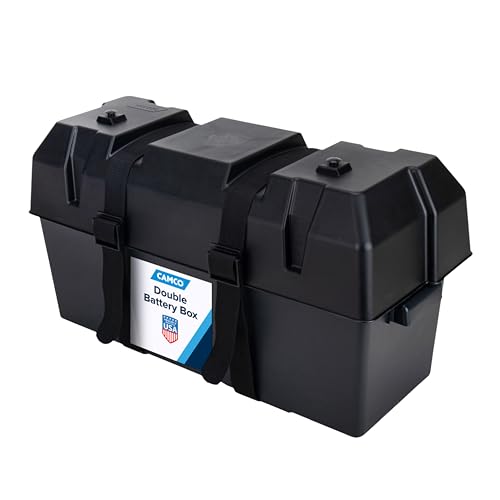
- Holds two compatible batteries
- Corrosion-resilient polymer body
- Includes straps and clamps
Best For: Two Group GC2 or Group 24/24M batteries
Commercial-Grade 8D Storage
NOCO HM485 Dual 8D Battery Box
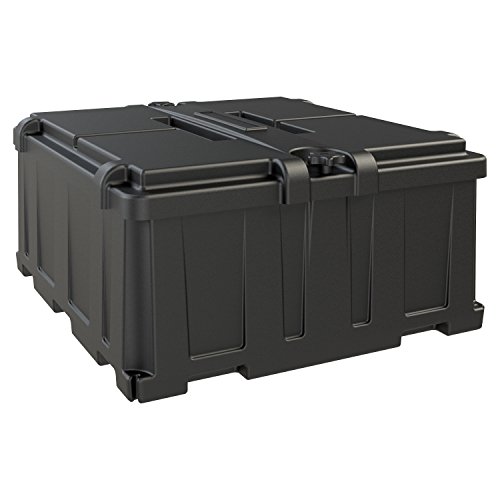
- Accommodates two Group 8D batteries
- Full-flow ventilation and acid reservoir
- Rugged fastening and captive lid
Best For: Large commercial, marine, and RV battery installations
Larger Group 27 Fit
Attwood 9067-1 Group 27 Battery Box

- Fits one Group 27 battery
- Vented protective cover design
- Includes 350-pound-rated strap
Best For: Single Group 27 batteries in marine and RV setups
Best Coast-Ready Protection
Camco 55371 Group 24 Vented Battery Box
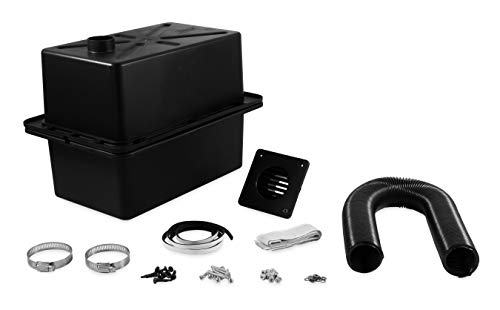
- Vented system helps expel hazardous gases
- Holds one Group 24 battery
- Includes mounting and venting accessories
Best For: RV and marine owners with a single Group 24 battery
Best Heavy-Duty Metal Design
Adjustable Steel Vented Battery Mounting Box

- Steel brackets and base support demanding installations
- Ventilation holes help dissipate heat and gases
- Fits batteries up to 10.63 x 7.06 x 7.5 inches
Best For: Vehicle, boat, camping, and cabin battery mounting
Best Marine Fit
Attwood 9084-1 Large Vented Battery Box
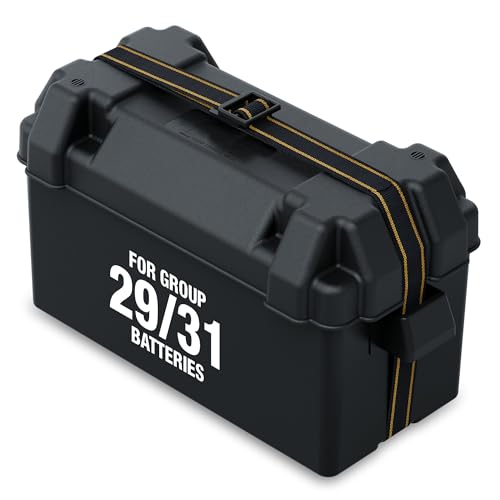
- Fits Group 29 and 31 batteries
- Includes a 350-lb-rated hold-down strap
- ABYC- and USCG-compliant design
Best For: Larger boat and RV batteries
Best for Dual RV Batteries
Camco 55385 Side-By-Side Battery Box

- Holds two Group 24 batteries
- Includes hose and louvered vent grill
- Designed for RV storage compartments
Best For: Dual-battery RV installations
Best Multi-Function Power Hub
Smart 12V/24V Battery Box with Charging Ports

- Fits Group 24, 27, and 31 batteries
- Adds USB, 12V, and Anderson outputs
- Includes voltmeter and 10A circuit protection
Best For: Portable boating, camping, and RV power
Reliable Group 24 Protection – Attwood Group 24 Vented Battery Box
If you need vented battery boxes for a standard marine or RV setup, the Attwood Group 24 model provides a secure fit with integrated ventilation. Its polypropylene construction, protective cover, and included hold-down hardware make it a practical choice for a single Group 24 battery.
Best For: Boat and RV owners storing one Group 24 battery.
Pros:
- Fits Group 24 batteries up to 10.125 inches tall.
- Integrated ventilation helps release hazardous battery gases.
- Includes a 40-inch, 350-pound-rated hold-down strap and mounting hardware.
- Meets USCG 183.420 requirements for OEM-installed battery hold-down systems.
Cons:
- Designed for Group 24 batteries rather than larger battery sizes.
- Single-battery capacity may not suit multi-battery installations.
Choose this Attwood box when a straightforward, compliant enclosure for one Group 24 marine or RV battery is the priority. Its acid-resistant material and strong strap add useful durability for outdoor environments.
Dual-Battery Capacity – Camco Double Battery Box
For installations that need more capacity than single-battery vented battery boxes provide, the Camco Double Battery Box holds two compatible batteries in one enclosure. Its corrosion-resilient polymer construction and included straps and clamps support organized RV and marine battery storage.
Best For: RV owners and other users installing two Group GC2 or Group 24/24M batteries.
Pros:
- Holds two 6V Group GC2 batteries or two 12V Group 24/24M batteries.
- Heavy-duty polymer construction resists corrosion.
- Includes two straps and four strap clamps with screws.
- Meets USCG CFR 183.420 and ABYC E-10.7 specifications when used with two 6V Group GC2 batteries.
Cons:
- Its double-battery design requires more installation space.
- Compliance is specifically noted for the two-6V-Group-GC2 configuration.
The Camco is a sensible option when one box must accommodate two batteries. Confirm the available compartment space and your battery group size before buying.
Commercial-Grade 8D Storage – NOCO HM485 Dual 8D Battery Box
The NOCO HM485 is built for demanding installations that require a large dual-battery enclosure. Among vented battery boxes, it stands out for accommodating two Group 8D batteries while combining full-flow ventilation, acid containment, cable access, and a rugged fastening system.
Best For: Commercial, marine, RV, and other rugged equipment using two Group 8D batteries.
Pros:
- Designed to accommodate two Group 8D batteries.
- Full-flow ventilation helps release battery gases.
- Includes an acid reservoir, captive lid, and four-corner fastening system.
- Meets USCG 183.420 and ABYC E-10.7 specifications.
Cons:
- Large 26.4-by-24.4-by-12.5-inch dimensions require substantial space.
- At 16.4 pounds, it is heavier than the smaller single-battery boxes.
- Assembly is required.
Choose the HM485 when battery size, cable access, and rugged protection matter more than compact installation. Its dual-8D capacity makes it specialized, so verify both the compartment dimensions and battery format first.
Larger Group 27 Fit – Attwood 9067-1 Group 27 Battery Box
For a larger single battery, the Attwood 9067-1 is one of the more practical vented battery boxes for Group 27 marine and RV applications. It combines a purpose-built interior, integrated ventilation, acid-resistant polypropylene, and a high-strength mounting strap.
Best For: Boat and RV owners securing one larger Group 27 battery.
Pros:
- Fits Group 27 batteries up to 10.5 inches high.
- Integrated ventilation helps release hazardous gases.
- Includes a 40-inch strap rated for 350 pounds of force.
- Complies with ABYC E-10 and USCG 183.420 requirements for OEM-installed hold-down systems.
Cons:
- Designed for a single Group 27 battery.
- Its larger footprint may not fit compartments sized for Group 24 boxes.
This Attwood model is a good fit when a Group 27 battery needs a dedicated, vented enclosure with secure restraint. Compare its 16.88-by-9.63-by-10.88-inch exterior dimensions with your available mounting area.
Best Coast-Ready Protection – Camco 55371 Group 24 Vented Battery Box
For RVs and boats that need vented battery boxes, the Camco 55371 combines a protective enclosure with a hose-and-vent system designed to expel hazardous gases. It holds one Group 24 battery and is built to meet specified U.S. Coast Guard and ABYC requirements.
Best For: RV and marine owners storing a single Group 24 battery in a compartment.
Pros:
- Vented design helps expel hazardous gases.
- Protects the battery from collisions and contaminants.
- Includes hose, hose mount plate, louvered vent grille, and foam tape.
- Meets U.S. Coast Guard CFR 183.420 and ABYC E-10.7 specifications.
Cons:
- Designed for one Group 24 battery only.
- Requires sufficient compartment space for the vent ports and included hardware.
The Camco 55371 is a practical choice when compliant venting and basic battery protection matter more than adjustable capacity. Confirm the battery group and available installation dimensions before buying.
Best Heavy-Duty Metal Design – Adjustable Steel Vented Battery Mounting Box
This steel option takes a different approach to vented battery boxes, using a ventilated metal tray with adjustable mounting points. Its reinforced construction and included hold-down hardware make it suited to installations where vibration resistance, corrosion protection, and space efficiency are priorities.
Best For: Vehicle, boat, camping, and cabin installations needing an adjustable metal battery tray.
Pros:
- Uses 12-gauge steel brackets and a 14-gauge steel base plate.
- Multiple ventilation holes help dissipate heat and prevent gas buildup.
- Adjustable mounting points accommodate batteries up to 10.63 x 7.06 x 7.5 inches.
- Includes hold-down bar, J-bolts, washers, and nylock nuts.
Cons:
- Battery compatibility depends on the stated maximum dimensions.
- The supplied product details do not specify a battery group size or enclosed vent hose system.
- Its metal mounting-box design may require more installation planning than a simple plastic box.
Choose this model if a sturdy, adjustable tray is more useful than a fully enclosed battery container. Measure the battery carefully and verify that the open ventilated design suits the intended location.
Best Rugged Group 27 Option – NOCO BG27 Snap-Top Battery Box
The NOCO BG27 is a rugged choice among vented battery boxes, with a reinforced snap-top enclosure, flexible cable-entry ports, and optional ventilation holes. It is designed for Group 27 12-volt batteries used in marine, automotive, RV, camper, and trailer applications.
Best For: Group 27 battery installations needing a rigid enclosure and flexible mounting options.
Pros:
- Reinforced honeycomb design resists impacts, acid, gas, UV, and oil.
- Offers front and side cable-entry routing plus optional ventilation holes.
- Supports direct mounting through pilot holes or the included strap system.
- Includes a 48-inch hold-down strap, mounting tray, and four screws.
Cons:
- Intended for Group 27 batteries, so size compatibility must be checked.
- Ventilation holes are optional rather than described as a permanently integrated vent system.
- Its added rugged construction may be more than needed for basic, low-demand installations.
The BG27 stands out for its rigid construction and installation flexibility. It is a strong fit for demanding vehicle or marine applications, provided the battery is Group 27 and the optional ventilation setup matches the installation requirements.
Best Marine Fit – Attwood 9084-1 Large Vented Battery Box
For larger boat or RV batteries, the Attwood 9084-1 is one of the more straightforward vented battery boxes to consider. It fits Group 29 and 31 batteries, uses acid-resistant polypropylene, and includes hardware plus a heavy-duty hold-down strap.
Best For: Boat and RV owners who need a vented box for a Group 29 or 31 battery.
Pros:
- Fits Group 29 and 31 batteries up to 9-3/4 inches high.
- Integrated ventilation helps release battery gases while limiting water intrusion.
- Includes a 40-inch strap rated for 350 pounds of force.
- Complies with ABYC and USCG requirements for OEM-installed battery hold-down systems.
Cons:
- Designed for larger Group 29 and 31 batteries, so it may not suit smaller battery sizes.
- Its outside dimensions require adequate installation space.
- The manufacturer warranty is limited to 90 days.
This is a practical choice when secure battery retention and marine-oriented construction matter more than extra charging features. Confirm the battery and mounting-space dimensions before ordering.
Best for Dual RV Batteries – Camco 55385 Side-By-Side Battery Box
The Camco 55385 is a dual-battery option for RV owners who want to place two Group 24 batteries in a storage compartment. Its vented design includes a hose and louvered vent grill to help expel hazardous gases.
Best For: Motorhomes, travel trailers, toy haulers, and fifth wheels using two Group 24 batteries.
Pros:
- Holds two Group 24 batteries side by side.
- Vented design is intended to expel hazardous gases from storage compartments.
- Includes the box, hose, hose mount plate, louvered vent grill, foam tape, and mounting hardware.
- Durable polymer construction provides a dedicated storage enclosure.
Cons:
- Only specified for two Group 24 batteries.
- The dual-battery design needs more installation space than a single-battery box.
- Port-inclusive height is 14 inches, which may limit compartment compatibility.
Choose this Camco model when your RV setup requires capacity for two Group 24 batteries and an included venting pathway. Measure the compartment carefully, especially if the hose ports must remain clear.
Best Multi-Function Power Hub – Smart 12V/24V Battery Box with Charging Ports
More than a basic enclosure, this smart battery box turns a compatible Group 24, 27, or 31 battery into a portable power hub. It adds USB charging, a 12V socket, Anderson connectors, voltage monitoring, and circuit protection for boating, camping, and RV use.
Best For: Outdoor users who want portable power outputs and monitoring from a 12V or 24V battery setup.
Pros:
- Compatible with Group 24, 27, and 31 batteries.
- Provides USB-A QC 3.0, USB-C PD, a 12V socket, and two 50A Anderson plugs.
- Built-in LED voltmeter displays real-time battery status.
- Resettable 10A circuit breaker helps protect connected devices from excessive current.
Cons:
- Battery is not included.
- Its supplied notes do not identify an integrated venting system, so ventilation requirements should be checked for the intended battery.
- Multiple ports and controls make it more complex than a basic battery enclosure.
This is the most versatile option of the three for users who need accessible power connections rather than simple battery storage. Verify battery fit, enclosure ventilation, and the available installation space before use.
How We Picked These Vented Battery Boxes
We focused on battery boxes designed for common RV, marine, automotive, and trolling-motor applications. The selection represents the battery sizes most often used in these settings, including Group 24, 27, 29, 31, and larger 8D batteries. We also considered ventilation, enclosure strength, mounting hardware, access to terminals, portability, and whether each design accommodates one or two batteries.
Because installation conditions vary, confirm the product’s dimensions, battery-group compatibility, and applicable marine or electrical requirements before ordering. A box that fits the battery but lacks sufficient clearance or a secure mounting method may not be suitable for your setup.
Quick Comparison
| Best For | What to Look For |
|---|---|
| Single RV or marine battery | Group-specific fit, venting, and a reliable hold-down strap |
| Two-battery installations | Separate compartments or adequate spacing, plus strong mounting points |
| Large commercial batteries | Heavy-duty construction and compatibility with 8D or comparable sizes |
| Portable trolling-motor power | Carry handles, terminal access, and support for the correct battery group |
| Permanent exposed installations | Durable enclosure materials, corrosion resistance, and secure hardware |
Key Buying Factors for Vented Battery Boxes
Battery Size and Interior Clearance
Start with the battery’s group number and measurements rather than relying on the product name alone. Check interior length, width, and height, including room for terminals, cables, and any protective covers. Group 27, 29, and 31 batteries are not interchangeable in every box.
Ventilation and Gas Management
Vented designs are intended to help direct hazardous battery gases away from enclosed spaces. Look for a practical vent location and make sure the finished installation can connect to an appropriate ventilation route when required. Venting does not replace correct charging, wiring, or safety practices.
Mounting and Retention
Marine and mobile installations need more than a lid. Straps, brackets, and mounting points should keep the battery from shifting during vibration or sudden movement. Verify that included hardware suits your mounting surface and that the box can be fastened without damaging the battery.
Construction and Access
Plastic boxes are often lightweight and corrosion-resistant, while steel trays or reinforced commercial enclosures may offer added rigidity. Consider exposure to water, salt, dirt, and impacts. The lid should remain secure while still allowing reasonable access for inspection and maintenance.
Who Should Buy Which Vented Battery Boxes?
Choose a standard single-battery box if you need a straightforward enclosure for one Group 24 or Group 27 RV or marine battery. A larger Group 29 or 31 model is better for higher-capacity batteries that need additional interior room. Dual-battery boxes suit RVs, boats, and auxiliary systems that use two compatible batteries, but confirm spacing and cable routing before purchase.
For large commercial batteries, prioritize a heavy-duty enclosure such as an 8D-compatible design. Anglers and boat owners who frequently remove their battery may prefer a portable power-center style with convenient terminal access. If maximum impact resistance and a permanent installation matter most, a metal tray or reinforced mounting box may be the better choice—provided it offers appropriate protection and does not create an accidental shorting hazard.