Whole-home surge protection helps shield sensitive electronics, appliances, HVAC systems, and electrical equipment from damaging voltage spikes. The right device can provide broader protection than plug-in strips, but compatibility and installation requirements matter.
We’ve selected 10 leading surge protection devices for 2026, including breaker-mounted, panel-mounted, and weather-resistant options. Use the guide below to compare ratings, installation types, and the features that matter most before buying.
Best 10 Type 2 Surge Protection Devices Picks for 2026
Panel-Friendly Whole-Home Defense

- 120/240VAC plug-on Type 2 design
- LED status indicator
- 10kA surge capacity; UL listed
Best For: Compatible Siemens, Eaton, and GE residential panels
Homeline Plug-On Protection
Square D HOM2175SB SurgeBreaker

- Designed for Homeline load centers
- Requires two panel spaces
- LED indicator and UL listing
Best For: Compatible Square D Homeline panels
High-Capacity Indoor/Outdoor Defense

- 60kA surge current capacity
- Indoor/outdoor weather-resistant housing
- Hardwired Type 2 design with LED indicators
Best For: Whole-home residential panel protection
Compact Two-Pole Panel Option
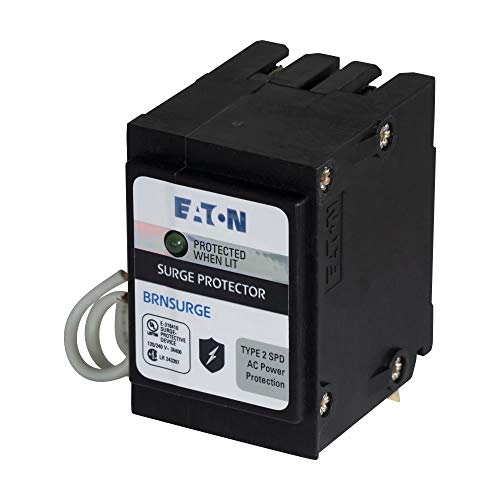
- Two-pole 240V design
- Panel-mount installation
- 18kA current rating
Best For: Compatible Type BR electrical panels
High-Capacity Whole-Home Protection

- 100,000-amp surge-current rating
- Visual and audible replacement alerts
- Indoor or Type 4 outdoor installation
Best For: Homeowners wanting high-capacity whole-house protection
Versatile Parallel Arrestor

- Supports 120/240VAC applications
- NEMA 4X enclosure
- UL 1449 listed parallel protector
Best For: Multi-purpose residential and commercial installations
Simple Panel-Mount Upgrade

- Two-pole 120/240VAC Type 2 design
- LED operational-status indicator
- Five-year device warranty
Best For: Compatible Eaton Type BR panel installations
Compact Panel Upgrade

- Three Type BR surge devices included
- 18 kA surge-current rating
- Uses two branch-circuit spaces
Best For: Equipping compatible BR panels in multiple locations
Residential Service Protection

- Type 1 residential surge protection
- 36 kA per phase
- For 120/240 VAC split-phase service
Best For: Residential service entrances needing compact protection
Versatile HVAC Defense
Long Term SP50 Whole-House SPD

- Supports Type 1 and Type 2 installation
- Works with split- and single-phase systems
- Green LED shows protection status
Best For: HVAC and whole-house protection across flexible installations
Panel-Friendly Whole-Home Defense – LIDER Type 2 SPD
The LIDER Type 2 surge protection device is designed for 120/240VAC residential panels, helping protect household wiring and connected electronics from lightning, utility fluctuations, and voltage spikes. Its plug-on format and LED status indicator make it a practical option when compatibility with a supported load center is confirmed.
Best For: Homeowners seeking a plug-on Type 2 SPD for compatible Siemens, Eaton, or GE load centers.
Pros:
- Plug-on installation for compatible electrical panels
- Green LED indicates active protection; OFF or RED signals replacement
- UL-listed 120/240VAC design with 10kA surge capacity
- Three-year manufacturer warranty
Cons:
- Compatibility is limited to specified panel and breaker families
- Installation requires access to the electrical panel
With clear status monitoring and broad panel compatibility, this LIDER model is a straightforward choice for a supported residential load center. Verify the panel series and installation requirements before purchasing.
Homeline Plug-On Protection – Square D HOM2175SB SurgeBreaker
The Square D HOM2175SB is a Homeline SurgeBreaker that provides Type 2 surge protection for circuits and receptacles throughout a home. It uses a plug-on installation and requires two panel spaces, making it suited to compatible Homeline load centers and service entrance applications.
Best For: Owners of compatible Square D Homeline panels who want an integrated plug-on surge protection device.
Pros:
- Plug-on installation in compatible Homeline load centers
- Protects circuits and receptacles throughout the home
- LED indicator provides status information
- UL 1449 3rd Edition listed with a three-year warranty
Cons:
- Requires two panel spaces
- Designed for Homeline load centers rather than universal panel use
This Square D option is a sensible match for Homeline systems where a dedicated, panel-integrated SPD is preferred. Confirm available space and panel compatibility before installation.
High-Capacity Indoor/Outdoor Defense – Eaton CHSPT2SURGE10
The Eaton CHSPT2SURGE10 is a hardwired Type 2 surge protection device rated for 60kA of surge current. Its weather-resistant housing supports indoor or outdoor installation, while pre-attached wiring leads simplify connection at a residential electrical panel.
Best For: Whole-home AC protection where high surge capacity and flexible indoor/outdoor mounting are priorities.
Pros:
- 60kA surge current capacity and 10kA nominal discharge rating
- Suitable for indoor or outdoor installation
- Built-in LED status indicators
- UL listed and NEC compliant with a 10-year/$50,000 protection warranty
Cons:
- Hardwired installation requires electrical-panel work
- Does not use a standard power plug
Among these type 2 surge protection devices, the Eaton stands out for its high listed surge capacity, durable enclosure, and installation flexibility. It is especially compelling for buyers who want one hardwired device for whole-home appliance and electronics protection.
Compact Two-Pole Panel Option – Type BR BRNSURGE SPD
Type BR Circuit Breaker Surge Protective Device, Two Pole, Surge Protective Device
Check Price On AmazonThe Type BR BRNSURGE is a two-pole surge protective device rated for 240V panel applications. Its panel-mount design and 18kA current rating make it a focused option for installations that use the Type BR format.
Best For: Electrical panels that require a two-pole Type BR surge protective device.
Pros:
- Two-pole design for 240V applications
- Panel-mount installation
- 18kA current rating
- Compact 5.6-ounce unit weight
Cons:
- Product notes provide limited details about indicators and warranty coverage
- Type BR format limits compatibility to suitable panels
This device may fit buyers who specifically need a two-pole Type BR solution and can verify panel compatibility. Its specifications are more limited than the other options, so confirm installation details before choosing it.
High-Capacity Whole-Home Protection – Siemens Boltshield FSPD100
For shoppers comparing type 2 surge protection devices, the Siemens Boltshield FSPD100 stands out with a 100,000-amp surge-current rating and flexible external-parallel installation. Its Type 4 outdoor-rated enclosure also supports indoor installation near the load center.
Best For: Homeowners seeking high-capacity whole-house protection with visible and audible replacement alerts.
Pros:
- Rated for 100,000 amps of surge-current protection.
- Visual red indicator and audible alarm signal replacement needs.
- Type 4 enclosure supports outdoor installation, while indoor load-center installation is also possible.
- Thermally protected MOVs add a safety-focused design feature.
Cons:
- External parallel mounting may require more installation planning than a plug-on design.
- The supplied details do not include a device warranty.
The FSPD100 is a strong fit when surge capacity and replacement awareness matter most. Confirm compatibility with your electrical equipment and installation requirements before purchasing.
Versatile Parallel Arrestor – DITEK DTK-120/240CM+
The DITEK DTK-120/240CM+ is a compact option among type 2 surge protection devices, designed for 120/240VAC applications. Its parallel-protector format, NEMA 4X enclosure, and UL 1449 listing suit a range of residential and commercial environments.
Best For: Apartments, offices, restaurants, hotels, and other locations needing multi-purpose 120/240VAC surge protection.
Pros:
- Supports 120/240VAC applications.
- NEMA 4X enclosure provides a durable enclosure specification.
- UL 1449 listed and designed as a parallel protector.
- Compact 4-by-3-inch form factor and lightweight 3.04-ounce construction.
Cons:
- Its listed 2,000-joule surge-protection rating is lower than some whole-home units.
- The supplied details do not specify a replacement indicator or alarm.
- Installation suitability should be verified for the intended electrical setup.
Choose the DITEK when a compact, multi-purpose parallel arrestor is more important than a higher stated surge-current rating. Its enclosure and listing provide useful selection points for varied installations.
Simple Panel-Mount Upgrade – Eaton BRPSURGE
The Eaton BRPSURGE offers a straightforward panel-mounted approach to type 2 surge protection devices. This two-pole, 120/240VAC unit installs on the load side of the service-entrance overcurrent protective device and includes an LED operational-status indicator.
Best For: Eaton BR panel installations needing downstream whole-system surge protection and status monitoring.
Pros:
- Type 2, two-pole protection for 120/240VAC systems.
- Designed to protect the entire downstream electrical system.
- LED indicator shows operational status.
- Includes a five-year device warranty.
Cons:
- Compatibility is tied to the Type BR panel-mount format.
- The listed surge-current rating is 18 kiloamps, lower than the Siemens unit’s 100,000-amp rating.
- Professional installation may be needed for load-side panel work.
The BRPSURGE is a practical choice for compatible Eaton Type BR panels, especially if an LED status indicator and five-year warranty are priorities. Verify panel compatibility before ordering.
Compact Panel Upgrade – BR Circuit Breaker SPD 3-Pack
This three-pack of Type 2 surge protection devices is designed for compatible BR load centers where you want panel-mounted protection without adding a separate enclosure. Each unit uses two branch-circuit spaces and carries an 18 kA surge-current rating, so verify panel compatibility and available space before installation.
Best For: Homeowners, electricians, or property managers outfitting multiple compatible BR panels with circuit-breaker-style surge protection.
Pros:
- Three devices are included for multi-panel projects or replacements.
- Uses a panel-mounted circuit-breaker format.
- Rated for 18 kA surge current.
- Designed to occupy two branch-circuit spaces.
Cons:
- Requires a compatible BR panel.
- Uses two branch-circuit spaces per device.
This is a practical multipack when compatibility with a BR load center is confirmed. Its main advantage is straightforward panel integration, while the two-space requirement should be checked before purchase.
Residential Service Protection – Leviton R2120-B Type 1 SPD
The Leviton R2120-B is a Type 1 surge protection device for residential 120/240 VAC split-phase service. It is rated at 36 kA per phase and is intended to divert damaging voltage transients away from connected electronics, making it a focused option for service-level home protection.
Best For: Residential applications needing a compact Type 1 surge protective panel for 120/240 VAC split-phase service.
Pros:
- Designed for residential applications.
- Supports 120/240 VAC split-phase systems.
- Rated at 36 kA per phase.
- Compact design intended for straightforward installation.
Cons:
- Only one device is included.
- Specified for residential service rather than a broad range of applications.
Choose this model when a residential Type 1 device matches your service configuration and installation requirements. Its per-phase rating and compact form make it a targeted alternative to larger panel equipment.
Versatile HVAC Defense – Long Term SP50 Whole-House SPD
The Long Term SP50 is a watertight surge protection device for HVAC equipment, compressors, electrical panels, and connected appliances. It supports 120/240 VAC split-phase and 120 VAC single-phase systems and can be installed on the load side as Type 2 protection or at the service entrance as Type 1 protection.
Best For: Residential, commercial, or industrial installations needing flexible whole-house or HVAC-focused surge protection across common single- and split-phase systems.
Pros:
- Supports both Type 1 and Type 2 installation configurations.
- Compatible with 120/240 VAC split-phase and 120 VAC single-phase systems.
- Watertight design is suited to HVAC-related applications.
- Green LED indicates protection status.
Cons:
- Installation still requires confirming panel and system compatibility.
- The LED indicates status but does not provide a detailed diagnostic readout.
The SP50 stands out for installation flexibility and HVAC compatibility. It is a strong fit when you want one device that can serve different system configurations, provided the intended mounting location and electrical setup are verified.
How We Picked the Best Type 2 Surge Protection Devices
We focused on devices designed for residential 120/240V split-phase systems and evaluated the specifications most relevant to whole-home protection. These include surge-current capacity, UL listing information, Type 1 or Type 2 classification, enclosure design, breaker or panel compatibility, installation flexibility, and status indicators.
Because electrical panels vary by manufacturer and series, we also considered whether each product is intended for a specific breaker family or offers more universal installation. A suitable device should match the panel, service voltage, available space, and local electrical-code requirements.
Quick Comparison
| What to Compare | Why It Matters |
|---|---|
| Protection type | Type 2 units typically install on the load side of the main service equipment; Type 1 and combination-rated models may offer different installation options. |
| Surge-current rating | A higher kiloamp rating indicates greater tested surge-handling capacity, though it is not the only measure of performance. |
| Panel compatibility | Breaker-mounted products must fit the specific load center and breaker system. |
| Installation location | Indoor, outdoor, and weather-resistant enclosures suit different mounting situations. |
| Status indication | LEDs or visual indicators make it easier to check whether protection remains active. |
Key Buying Factors for Type 2 Surge Protection Devices
Electrical Compatibility
Confirm the device is rated for your system’s voltage, phase configuration, and wiring arrangement. Most residential models in this roundup target 120/240V, single-phase service, but the neutral and grounding requirements still need to match your panel.
Breaker and Panel Fit
Some SPDs plug directly onto compatible breakers, while others connect through a dedicated two-pole breaker or install beside the panel. Check the manufacturer’s compatibility list and required panel space before ordering. Professional installation is strongly recommended because these devices connect to live service equipment.
Capacity, Clamping, and Certification
Compare surge-current ratings in kiloamps, nominal discharge current, voltage protection ratings, and published UL 1449 certification. A larger kA figure can be useful, but verified certification and correct installation are equally important.
Indoor, Outdoor, and Equipment Protection
Choose a weather-resistant or NEMA-rated enclosure for exterior or exposed installations. For HVAC equipment, pumps, or detached structures, a dedicated unit may complement—not replace—panel-level protection.
Who Should Buy Which Type 2 Surge Protection Devices?
- For a standard residential panel: Choose a compatible breaker-mounted Type 2 SPD with a clear status indicator.
- For maximum surge capacity: Prioritize a model with a high published surge-current rating and recognized safety certification.
- For outdoor or HVAC equipment: Select a watertight, weather-resistant device rated for the installation environment.
- For flexible panel installations: Consider a universal or separately wired SPD, but verify breaker, conductor, and enclosure requirements.
- For replacement or multi-panel projects: A multipack can be practical when several compatible panels or circuits require protection.
When comparing Type 2 Surge Protection Devices, prioritize correct electrical fit and certified installation over headline ratings alone. If your service equipment or wiring is unfamiliar, ask a licensed electrician to confirm the best device and mounting location.