A dependable sump pump can help keep groundwater, storm runoff, and plumbing leaks from turning your basement into an expensive cleanup project. The right model depends on your pit size, discharge layout, expected water volume, and whether you need primary or backup protection.
We compared 10 sump pumps for basements across horsepower, pumping capacity, construction, float-switch design, portability, and installation features. Use the guide below to narrow the list to the pump that best matches your basement and flood-risk needs.
Best 10 Sump Pumps for Basements Picks for 2026
Best High-Capacity Pick

- Pumps up to 5,490 GPH
- Vertical float switch for narrow pits
- Five-year warranty and durable metal construction
Best For: Heavy-duty indoor basement water removal
Best Proven Compact Choice
- Automatic float-activated operation
- Non-clogging vortex impeller
- Durable cast iron pump components
Best For: Standard indoor basement sump installations
Best Maximum-Flow Pick

- Removes up to 6,100 GPH
- Cast iron and stainless steel construction
- Top-suction design and five-year warranty
Best For: High-flow indoor basement applications
Best Lightweight Utility Pick

- 4,500 GPH at a five-foot lift
- 30-foot maximum lifting height
- Lightweight design with adapters and 10-foot cord
Best For: Portable basement and utility water removal
High-Flow Pick

- Up to 4,320 GPH
- Cast-iron housing with vortex impeller
- LED power plug and automatic float switch
Best For: Durable, high-flow basement sump installations
Quiet Reliability Pick

- Up to 4,600 GPH
- Top-suction design helps reduce clogging
- Three-year limited warranty
Best For: Quiet, dependable indoor basement water removal
Flexible Budget Option
- Up to 3,600 GPH and 31-foot head
- Lightweight 10-pound thermoplastic body
- Vertical float switch and two outlet sizes
Best For: Lightweight basement drainage with flexible installation options
Best Smart-Mode Pick
1/3 HP Auto-Sensor Utility Pump

- Automatic and manual pumping modes
- Up to 2,790 GPH and 30-foot lift
- Includes 10-foot cord and hose adapters
Best For: Flooded basements and versatile water-removal tasks
Best High-Flow Basement Pick
VEVOR 1/2 HP Automatic Sump Pump

- Moves up to 4,320 GPH
- Automatic tethered float switch
- Cast iron and stainless steel construction
Best For: Basement pits handling heavy rain or snowmelt
Best Compact Low-Suction Pick

- Up to 2,450 GPH and 31-foot lift
- Automatic shutoff near 1/5-inch water level
- Compact thermoplastic design with metal filter
Best For: Portable basement and multi-purpose water transfer
Best High-Capacity Pick – WAYNE CDU980E 3/4 HP
For homeowners comparing sump pumps for basements, the WAYNE CDU980E stands out with a 3/4 HP motor and a stated pumping capacity of up to 5,490 gallons per hour. Its cast iron and stainless steel construction, vertical float switch, and top-suction design are suited to demanding indoor basement water-removal jobs.
Best For: Heavy storm runoff, rainy seasons, snow melt, and narrow sump pits where dependable automatic operation matters.
Pros:
- High-capacity 3/4 HP motor pumps up to 5,490 GPH.
- Vertical float switch fits narrower sump pits.
- Top-suction design helps prevent air lock and clogging.
- Includes a five-year manufacturer warranty and is assembled in the USA.
Cons:
- Designed for indoor use only.
- At 12 pounds, it is heavier than the thermoplastic alternative in this roundup.
The CDU980E is a strong all-around choice when basement protection and durable construction are higher priorities than minimizing size or weight.
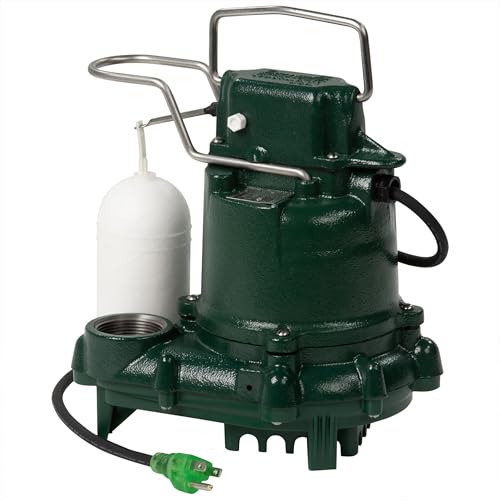
Best Proven Compact Choice – Zoeller M53 Mighty-mate
The Zoeller M53 Mighty-mate is a practical option for homeowners seeking sump pumps for basements with automatic float activation and a non-clogging vortex impeller. Its cast iron switch case, motor, and pump housing are built for routine indoor sump-pump service.
Best For: Standard basement sump installations that need automatic operation and a compact, established design.
Pros:
- Float-activated switch provides automatic operation.
- Vortex impeller is designed to resist clogging.
- Cast iron switch case, motor, and pump housing support durability.
- Includes a nine-foot cord, LED power plug, and stainless steel hardware.
Cons:
- The 1/3 HP motor has less power than the other pumps listed here.
- The supplied notes do not specify a gallon-per-hour flow rate.
- Its 21-pound weight is relatively substantial for its motor size.
The M53 is a sensible fit for a typical indoor sump pit when automatic float operation and clog resistance are more important than maximum pumping capacity.
Best Maximum-Flow Pick – WAYNE CDU1000ET 1 HP
Among sump pumps for basements, the WAYNE CDU1000ET is built for high water flow, with a 1 HP motor rated to remove up to 6,100 gallons per hour. Its cast iron volute, stainless steel components, top-suction design, and updated switch target demanding indoor basement applications.
Best For: Larger sump basins and homeowners who want maximum listed flow capacity for heavy rain or snow-melt conditions.
Pros:
- Highest stated capacity in this roundup at up to 6,100 GPH.
- Cast iron and corrosion-resistant stainless steel construction.
- Top-suction design helps eliminate air lock and reduce clogging.
- Includes a five-year limited warranty and a 1-1/2-inch NPT discharge.
Cons:
- Requires a sump basin at least 11 inches in diameter.
- For indoor use only.
- Its 1 HP capacity may be more than needed for smaller or lower-flow pits.
This is the performance-oriented choice for basement systems that can accommodate its basin requirements and benefit from higher pumping capacity.
Best Lightweight Utility Pick – AQUASTRONG 1 HP
The AQUASTRONG 1 HP is a versatile option among sump pumps for basements, offering a stated 4,500 GPH flow rate at a five-foot lift and a 30-foot maximum lifting height. Its lightweight thermoplastic housing, bottom-suction design, adapters, and 10-foot cord make it convenient for water removal beyond a fixed sump installation.
Best For: Basement window wells, flooded areas, hot tubs, ponds, and other jobs where portability and included connection adapters are useful.
Pros:
- 1 HP motor provides up to 4,500 GPH at a five-foot lift.
- Can lift water up to 30 feet vertically.
- Bottom suction removes water down to about 1/5 inch and handles solids up to 1/5 inch.
- Includes a 10-foot UL power cord, adapters, and thermal overload protection.
Cons:
- Thermoplastic housing is less heavy-duty than the cast iron designs listed here.
- It uses a plug-in design rather than the automatic float operation described for the Zoeller.
- Its 4,500 GPH rating is lower than the two Wayne pumps.
The AQUASTRONG is the most portable and flexible choice here, particularly for occasional basement water removal and multiple drainage tasks rather than a dedicated automatic sump system.
High-Flow Pick – Zoeller M98 Flow-Mate
For homeowners comparing sump pumps for basements, the Zoeller M98 Flow-Mate is a heavy-duty option with a cast-iron housing, automatic float operation, and a rated capacity of up to 4,320 gallons per hour. Its vortex impeller is designed to pass solids, while the LED power plug makes it easy to confirm that the pump is receiving power.
Best For: Basements that need a durable, high-flow primary sump pump with automatic operation.
Pros:
- Cast-iron housing helps dissipate motor heat and supports long-term durability.
- Automatic snap-action float switch enables hands-free operation.
- Vortex impeller helps pass solids, and the LED plug provides a quick power check.
- Stainless steel hardware, float guard, and switch arm resist corrosion.
Cons:
- At 14.1 kg, it is substantially heavier than the thermoplastic option in this roundup.
- The manufacturer warranty is limited to 12 months from installation or 18 months from manufacture, whichever comes first.
The M98 emphasizes robust construction and strong water-moving capacity. It is a sensible choice when durability and flow are higher priorities than low weight.
Quiet Reliability Pick – WAYNE CDU790 1/3 HP
The WAYNE CDU790 is a practical choice among sump pumps for basements, combining a 1/3 HP motor with a top-suction design intended to reduce air lock and bottom-debris clogging. It can pump up to 4,600 gallons per hour, operates automatically with a tested vertical float switch, and is backed by a three-year limited warranty.
Best For: Homeowners seeking a relatively quiet, easy-to-install basement pump with strong warranty coverage.
Pros:
- Top suction helps minimize air lock and clogging from debris at the bottom of the pit.
- Integrated vertical float switch is tested to one million cycles.
- Corrosion-resistant coated steel housing, stainless steel fasteners, and cast-iron volute support durability.
- Rated for up to 4,600 GPH and assembled in the USA.
Cons:
- The 20-foot maximum lifting height is lower than the Zoeller and Rainbro models listed here.
- Its 1/3 HP motor offers less rated power than the two 1/2 HP alternatives.
- It is specified for indoor use only.
With a strong warranty, automatic operation, and a design intended to reduce common clogging issues, the CDU790 is a well-rounded basement option. Its lower horsepower may matter for demanding lift requirements.
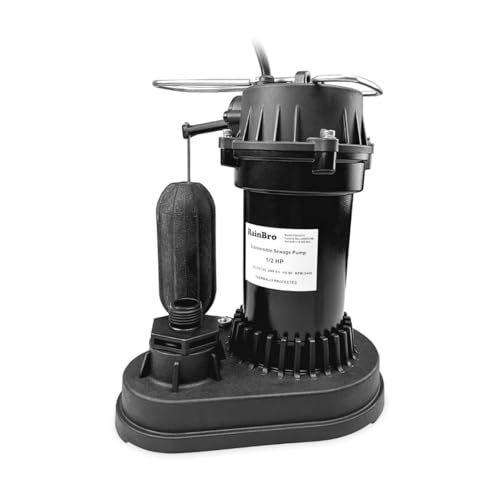
Flexible Budget Option – Rainbro PSU051V 1/2 HP
The Rainbro PSU051V offers a lightweight thermoplastic design for homeowners shopping for sump pumps for basements and other water-removal tasks. Its 1/2 HP motor pumps up to 3,600 gallons per hour, reaches a 31-foot maximum head, and uses a vertical float switch for automatic cycling.
Best For: Buyers who want a lighter pump with flexible outlet sizing and a higher stated maximum head.
Pros:
- Lightweight 10-pound design is easier to handle during installation or removal.
- 31-foot maximum head supports applications requiring substantial lift.
- Vertical snap-action float switch enables automatic operation.
- Includes 3/4-inch and 1-1/2-inch outlet options plus a 10-foot power cord.
Cons:
- Its 3,600 GPH rating is lower than the Zoeller and WAYNE models in this roundup.
- It requires a sump basin at least 14 inches in diameter.
- Thermal overload protection can automatically shut the motor down if it overheats.
The PSU051V stands out for portability, outlet flexibility, and maximum lift. Confirm that your basin meets the size requirement and that its lower flow rating matches your basement drainage needs.
Best Smart-Mode Pick – 1/3 HP Auto-Sensor Utility Pump
For homeowners comparing sump pumps for basements, this portable 1/3 HP model stands out for its automatic water sensor and flexible manual mode. It can move up to 2,790 gallons per hour and lift water up to 30 feet, making it useful for flooded basements and other draining jobs.
Best For: Flooded basements, window wells, pools, ponds, and occasional garden-watering tasks.
Pros:
- Automatic sensor starts around 1-1/5 inches and stops around 1/5 inch; manual mode supports on-demand pumping.
- 1/3 HP motor moves up to 2,790 GPH and lifts water up to 30 feet.
- Includes a 10-foot power cord, elbow fitting, and adapters for common hose connections.
- Dry-run, overheating, overload, and tip-over protections help support safer operation.
Cons:
- Its 1-1/4-inch discharge setup may require adapters depending on your hose or drainage configuration.
- It is a portable utility pump rather than a permanently installed sump-pit system.
This is a versatile choice when you want automatic water-level response without giving up manual control. Its lightweight design and included fittings also make it convenient for emergency or seasonal water removal.
Best High-Flow Basement Pick – VEVOR 1/2 HP Automatic Sump Pump
Among sump pumps for basements, this VEVOR model is suited to heavier water flow, with a 1/2 HP motor rated for up to 4,320 gallons per hour and a 28-foot vertical lift. Its tethered float switch provides automatic start-and-stop operation for indoor basement drainage.
Best For: Basement sump pits, heavy rain or snowmelt, and users who want hands-free pumping.
Pros:
- High-flow 1/2 HP motor moves up to 4,320 GPH and lifts water up to 28 feet.
- Tethered float switch automatically starts and stops the pump as the water level changes.
- Corrosion-proof cast iron construction with a rust-resistant stainless steel surface and IPX8 waterproof rating.
- Includes a 10-foot power cord, ergonomic handle, and 1-1/2-inch NPSC outlet.
Cons:
- It requires a sump pit larger than 22 inches high by 15 inches in diameter.
- The pump passes solids up to 0.1 inch, so heavily debris-filled water may require additional care.
Choose this model when flow capacity and automatic operation matter most. Its substantial construction is well suited to a dedicated basement basin, provided the pit dimensions and discharge connection match your setup.
Best Compact Low-Suction Pick – Lanchez 1/2 HP Utility Pump
This Lanchez model is a compact option for shoppers seeking sump pumps for basements that can also handle general water transfer. Its 1/2 HP oil-filled motor pumps up to 2,450 gallons per hour, lifts water up to 31 feet, and automatically runs until the water falls below about 1/5 inch.
Best For: Portable basement draining, hot tubs, pools, ponds, rain barrels, and other low-water-level jobs.
Pros:
- Oil-filled motor helps manage overload concerns while providing up to 2,450 GPH and a 31-foot lift.
- Automatic operation continues until the water drops below approximately 1/5 inch.
- Thermoplastic housing and a metal filter help resist corrosion and limit debris entry.
- Compact, portable design includes a 10-foot cord and multi-use hose adapter.
Cons:
- Its 2,450 GPH flow rate is lower than the higher-flow VEVOR option in this roundup.
- The supplied details identify it primarily for outside use, so verify that it suits your intended basement installation.
This pump makes sense when portability and low-level water removal are priorities. It is especially practical for homeowners who want one compact unit for basement emergencies and several outdoor draining applications.
How We Picked the Best Sump Pumps for Basements
We focused on practical features that affect basement reliability rather than horsepower alone. Our comparison considers rated flow, motor size, construction materials, float-switch design, discharge compatibility, cord length, portability, and included protection or warranty coverage. Cast iron and stainless-steel pumps generally offer greater durability for permanent installations, while thermoplastic and utility models can be useful for lighter-duty or temporary water removal.
Published gallon-per-hour ratings are typically measured under ideal conditions. Actual output decreases as discharge height, pipe length, elbows, and restrictions increase, so installation details matter when comparing models.
Quick Comparison
| Best For | What to Prioritize | Models to Consider |
|---|---|---|
| Primary basement protection | Durable housing, automatic float, strong real-world head performance | WAYNE CDU980E, Zoeller M98 |
| Standard residential sump pits | Balanced 1/3 HP performance and dependable switching | Zoeller M53, WAYNE CDU790 |
| High-volume water removal | Higher horsepower and adequate discharge plumbing | WAYNE 1 HP, AQUASTRONG 1 HP |
| Portable or occasional use | Compact design, sensor or float automation, easy handling | Rainbro, VEVOR, Lanchez, 1/3 HP utility pump |
Key Buying Factors for Sump Pumps for Basements
Pumping Capacity and Head Height
Check both the advertised gallons per hour and the pump’s performance at your required vertical lift. A pump that moves large volumes at ground level may deliver much less through a tall discharge line. Measure from the pump outlet to the discharge point and choose a model with useful capacity at that height.
Motor Size and Construction
A 1/3 HP pump can suit many average homes, while 1/2 HP and 3/4 HP models provide more margin for frequent inflow or longer discharge runs. One-horsepower pumps are better suited to demanding conditions but may require compatible plumbing and more electrical capacity. Cast iron and stainless-steel components are usually preferable for permanent installations; thermoplastic pumps are lighter and often less expensive.
Switch Design and Pit Compatibility
Vertical float switches work well in narrower pits, while tethered floats need more room to operate. Automatic water sensors can be convenient for portable pumps, but verify their activation depth and behavior before relying on them for primary protection. Make sure the pump fits without the float touching the basin or discharge pipe.
Installation and Backup Protection
Confirm the discharge connection, outlet requirements, cord length, and check-valve needs before buying. Use a dedicated grounded outlet and follow local electrical requirements. For finished basements or areas with frequent outages, consider a battery backup, water-powered backup where appropriate, or a second pump rather than relying on a single device.
Who Should Buy Which Sump Pumps for Basements?
Choose the WAYNE CDU980E or Zoeller M98 if you want a durable primary pump for a permanently installed residential system and have enough pit and discharge capacity. The Zoeller M53 or WAYNE CDU790 is a sensible fit for many standard basements where moderate flow and proven automatic operation are the priorities.
Choose a 1 HP WAYNE or AQUASTRONG model when your basement experiences heavy inflow, provided your discharge plumbing can handle the output. For temporary flooding, hot tubs, pools, or general utility work, the Rainbro, VEVOR, Lanchez, and compact 1/3 HP sensor-equipped pump are easier to move and store. Before purchasing, compare actual head height, switch clearance, and outlet requirements—not just the headline GPH rating.