The right sump pump can help protect a basement, crawl space, or utility area from costly water damage. This roundup compares 10 submersible sump pumps across power levels, pumping capacity, float-switch designs, portability, and intended use.
Whether you need a primary basement pump, an emergency backup, or a portable utility pump, the best choice depends on head height, discharge setup, runtime, and how often you expect to use it.
Best 10 Submersible Sump Pumps Picks for 2026
Heavy-Duty Pick
WAYNE CDU980E 3/4 HP Sump Pump

- Pumps up to 5,490 GPH
- Cast iron and stainless steel construction
- Vertical float switch and 5-year warranty
Best For: Heavy storms and demanding basement water removal
Utility Value Pick
Superior Pump 91250 1/4 HP Utility Pump

- Moves up to 1,800 GPH
- Includes a 10-foot cord and hose adapter
- Handles solids up to 1/8 inch
Best For: Light-duty utility and emergency water removal
Reliable Sump Pick
Zoeller M53 Mighty-mate 1/3 HP
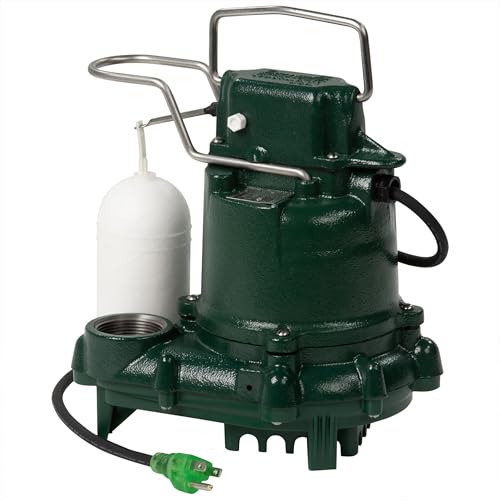
- Automatic float-activated operation
- Non-clogging vortex impeller design
- Durable cast iron pump housing
Best For: Indoor basement sump pits
Reliable Basement Protection
Rainbro 1/2 HP Vertical-Float Sump Pump
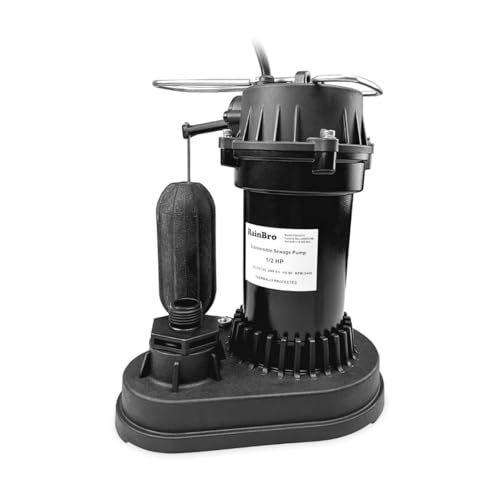
- 3,600 GPH flow with a 31-foot maximum head
- Automatic vertical float switch for hands-off operation
- Thermal protection and two outlet diameter options
Best For: Residential basement drainage, hot tubs, and irrigation
High-Flow Water Removal

- 4,500 GPH output and a 30-foot maximum lift
- Bottom suction reaches water down to about 1/5 inch
- Adapters support several hose and fitting sizes
Best For: Flooded basements, window wells, pools, ponds, and hot tubs
Extended-Reach Hose Kit
1.5 HP Submersible Pump With 25-Foot Hose

- Includes a 25-foot discharge hose and power cord
- 4,000 GPH flow with a 31-foot maximum lift
- Low-suction capability reaches about 1/5 inch
Best For: Portable pool, pond, and basement water removal
Best with Extra Features

- 5,100 GPH pumping capacity
- Durable cast iron and steel construction
- Tested automatic vertical float switch
Best For: Primary basement water removal during heavy rain and snowmelt
Best Quiet Basement Option

- 4,600 GPH pumping capacity
- Top-suction design helps reduce clogging
- Quiet automatic operation with a 3-year warranty
Best For: Routine indoor basement water removal
Best Portable Utility Pick
1/3 HP Auto-Sensor Submersible Pump

- Portable pump for indoor and outdoor draining
- 30-foot maximum lift with 2,790 GPH flow
- Automatic sensor plus manual operating mode
Best For: Pools, flooded basements, ponds, hot tubs, and garden draining
Heavy-Duty Pick – WAYNE CDU980E 3/4 HP Sump Pump
For demanding basement water removal, the WAYNE CDU980E is one of the more powerful submersible sump pumps in this roundup. Its 3/4 HP motor delivers up to 5,490 GPH, while the vertical float switch suits narrower sump pits.
Best For: Heavy storms, flood prevention, and homeowners who want a durable primary sump pump with a long warranty.
Pros:
- High-capacity motor pumps up to 5,490 GPH.
- Cast iron and stainless steel construction is built for demanding sump conditions.
- Vertical float switch supports automatic operation in narrow pits.
- Top-suction anti-airlock design helps reduce clogging concerns.
Cons:
- Its 3/4 HP design may be more capacity than lighter-duty applications require.
- Designed for indoor use, according to the supplied specifications.
The CDU980E stands out when pumping capacity, durable construction, and automatic operation matter most. A five-year warranty adds reassurance for long-term basement protection.
Utility Value Pick – Superior Pump 91250 1/4 HP Utility Pump
Superior Pump 91250 1800GPH Thermoplastic Submersible Utility Pump with 10-Foot Cord, 1/4 HP
Check Price On AmazonThe Superior Pump 91250 is a practical choice among submersible sump pumps for utility and emergency water removal. Its 1/4 HP motor moves up to 1,800 GPH, and the 10-foot cord provides useful reach around a basement, yard, or work area.
Best For: Light-duty water removal, emergency pumping, lawn irrigation, and construction-related cleanup.
Pros:
- Moves up to 1,800 GPH and lifts water up to 25 feet.
- Includes a 10-foot power cord and garden hose adapter.
- Removable suction screen handles solids up to 1/8 inch.
- Thermoplastic construction keeps the pump relatively light at 6.8 pounds.
Cons:
- Lower capacity than the heavy-duty sump pump options in this roundup.
- Backed by a one-year limited warranty.
With its modest size, hose compatibility, and solid utility features, the 91250 is well suited to occasional or lighter pumping tasks rather than the highest-volume basement emergencies.
Reliable Sump Pick – Zoeller M53 Mighty-mate 1/3 HP
The Zoeller M53 Mighty-mate is a straightforward automatic option for homeowners comparing submersible sump pumps for indoor use. Its float-activated switch starts the pump automatically, while the vortex impeller is designed for non-clogging operation.
Best For: Indoor basement sump pits where automatic float operation and a durable pump housing are priorities.
Pros:
- Float-activated switch provides automatic operation.
- Vortex impeller design is intended to resist clogging.
- Cast iron switch case, motor, and pump housing provide durable construction.
- Includes a 9-foot cord and stainless steel hardware.
Cons:
- Maximum lift is 19.25 feet, lower than some utility-pump alternatives.
- The 21-pound weight makes it relatively heavy for its 1/3 HP rating.
The M53 focuses on dependable automatic sump-pit operation rather than maximum flow. Its float switch and vortex impeller make it a sensible choice for routine indoor basement protection.
Versatile Cleanup Pick – WAYNE WaterBUG Submersible Pump
The WAYNE WaterBUG is a versatile water-removal pump for shallow standing water and tight spaces. Its Multi-Flo design offers top or side discharge, while the pump can remove water down to 1/16 inch at up to 1,350 GPH.
Best For: Window wells, flooded basements, buckets, flat surfaces, yards, hot tubs, and other shallow-water cleanup jobs.
Pros:
- Top and side discharge options adapt to different cleanup locations.
- Removes water down to 1/16 inch.
- Multi-ring suction strainer helps filter debris.
- Non-corrodible outlets fit a standard garden hose.
Cons:
- Must be unplugged when the water is gone to avoid running dry.
- Its 1,350 GPH capacity is intended for lighter cleanup than high-capacity sump pumps.
- Covered by a one-year limited warranty.
The WaterBUG is best viewed as a flexible utility and cleanup pump rather than a primary automatic sump-pit pump. Its shallow-water performance and selectable discharge positions are especially useful for spot water removal.
Reliable Basement Protection – Rainbro 1/2 HP Vertical-Float Sump Pump
For homeowners comparing submersible sump pumps for routine basement drainage, the Rainbro PSU051V combines a 1/2 HP motor with a vertical float switch and up to 3,600 GPH of pumping capacity. Its 31-foot maximum head and 10-foot cord provide practical reach for many residential water-removal jobs.
Best For: Basement sump basins at least 14 inches in diameter, hot tubs, and irrigation tasks requiring automatic water-level control.
Pros:
- Automatic vertical float switch starts and stops the pump as water levels change.
- Handles clean and dirty water with a maximum lift of 31 feet.
- Includes 3/4-inch and 1-1/2-inch outlet options for different hose sizes.
- Thermal overload protection helps guard the motor against overheating.
Cons:
- Requires a sump basin measuring at least 14 inches in diameter.
- The 10-foot power cord offers less reach than some longer-cord alternatives.
The Rainbro is a sensible choice when automatic operation matters more than maximum output. Its vertical float design and adaptable outlets make it well suited to standard residential drainage setups.
High-Flow Water Removal – AQUASTRONG 1 HP Sump Pump
The AQUASTRONG 1 HP is one of the higher-output submersible sump pumps in this lineup, delivering up to 4,500 GPH and lifting water as high as 30 feet. Its bottom-suction design can remove water down to about 1/5 inch while handling solids up to 1/5 inch.
Best For: Flooded basements, window wells, hot tubs, pools, ponds, and other water-removal jobs where strong flow and low-level suction are useful.
Pros:
- Powerful 1 HP motor provides up to 4,500 GPH of flow at a 5-foot lift.
- Bottom suction removes water down to approximately 1/5 inch from the surface.
- Includes multiple adapters for 3/4-, 1-, and 1-1/4-inch connections.
- Reinforced thermoplastic housing, mechanical sealing, and thermal overload protection support durability.
Cons:
- Operation is plug-in rather than automatic float-switch controlled.
- The maximum lift is 30 feet, slightly below some comparable models.
Choose the AQUASTRONG when fast water removal and broad connection compatibility are priorities. The bottom-suction design is particularly helpful when clearing standing water close to floor level.
Extended-Reach Hose Kit – 1.5 HP Submersible Pump With 25-Foot Hose
For portable water removal, this 1.5 HP model stands out among submersible sump pumps by including both a 25-foot power cord and a 25-foot discharge hose. It delivers up to 4,000 GPH at a 5-foot lift, reaches a 31-foot maximum lift, and can suction water down to about 1/5 inch.
Best For: Pools, garden ponds, basement flooding, and residential or light commercial jobs that benefit from long reach and a ready-to-use hose kit.
Pros:
- Includes a 25-foot hose and 25-foot power cord for flexible placement.
- 1.5 HP motor delivers up to 4,000 GPH and a 31-foot maximum lift.
- Low-suction design removes water down to approximately 1/5 inch.
- Thermal overload protection, thermoplastic construction, and a hardened stainless-steel shaft support dependable use.
Cons:
- At 10.8 pounds, it is heavier than the AQUASTRONG model listed here.
- Operation requires manual placement and does not list an automatic float switch.
This pump is a strong fit when outlet distance and setup convenience matter. The included hose, long cord, adapters, and 12-month manufacturer warranty make it a practical portable solution for recurring water-transfer tasks.
Best with Extra Features – WAYNE CDU800 1/2 HP Sump Pump
For homeowners who need dependable submersible sump pumps during heavy rain or snowmelt, the WAYNE CDU800 combines a 1/2 HP motor with durable metal construction. Its top-suction design helps reduce clogging and air lock, while the tested vertical float switch supports automatic operation.
Best For: Primary basement water removal in demanding sump environments.
Pros:
- Moves up to 5,100 gallons per hour with a 20-foot maximum lift.
- Cast iron and corrosion-resistant steel construction is designed for durability.
- Top suction minimizes clogging and eliminates the need for a weep hole.
- Vertical float switch tested to 1 million cycles and backed by a 3-year warranty.
Cons:
- Heavier and less portable than a utility-style pump.
- Designed primarily for basement water removal rather than general-purpose draining.
The CDU800 is a strong choice when durability, automatic operation, and higher pumping capacity matter more than portability. Its code-compliant 1-1/2-inch NPT discharge also suits standard sump installations.
Best Quiet Basement Option – WAYNE CDU790 1/3 HP Sump Pump
The WAYNE CDU790 is a practical choice for basement owners seeking submersible sump pumps with automatic operation and a compact installation footprint. Its top-suction design helps limit clogging and air lock, while the 1/3 HP motor handles up to 4,600 gallons per hour.
Best For: Routine basement water removal where quiet, automatic operation is a priority.
Pros:
- Pumps up to 4,600 gallons per hour with a 20-foot maximum lift.
- Top suction minimizes debris-related clogging and avoids drilling a weep hole.
- Corrosion-resistant coated steel housing, stainless steel fasteners, and cast-iron volute.
- Vertical float switch tested to 1 million cycles, with a 3-year limited warranty.
Cons:
- Lower capacity than the 1/2 HP WAYNE CDU800.
- Intended for indoor basement water removal rather than portable outdoor tasks.
With its quiet operation, durable housing, and automatic float switch, the CDU790 offers a balanced setup for typical residential sump pits. It is best suited to homeowners who do not need the highest available pumping capacity.
Best Portable Utility Pick – 1/3 HP Auto-Sensor Submersible Pump
This portable utility pump expands beyond fixed sump-pit duty, making it one of the more versatile submersible sump pumps for basements, pools, hot tubs, ponds, and garden draining. Its auto water sensor supports automatic on-demand pumping, while manual mode allows use at varying water levels.
Best For: Portable multi-purpose draining around the home and garden.
Pros:
- 1/3 HP motor moves up to 2,790 gallons per hour and lifts water up to 30 feet.
- Automatic sensor starts at approximately 1-1/5 inches and stops at approximately 1/5 inch.
- Dry-run, overheating, overload, tip-over, and air-lock protection features support safer operation.
- Includes a 10-foot cord, elbow fitting, and adapters for garden-hose connections.
Cons:
- Lower stated flow rate than the WAYNE basement sump pumps.
- Thermoplastic construction may be less substantial than cast-iron pump construction.
- Requires hose or fitting setup for different draining applications.
The EUTP33 is a flexible option when you want one lightweight pump for occasional flooding and outdoor water removal. Its sensor modes and built-in protections make it convenient, though a dedicated basement sump pump may be preferable for permanent primary protection.
How We Picked These Submersible Sump Pumps
We selected models that cover the most common residential and utility-pumping needs, from permanent basement installations to portable flood cleanup. Our comparison emphasizes motor horsepower, stated flow rate, construction materials, automatic activation, cord length, discharge compatibility, warranty coverage, and the difference between sump-specific and general-purpose utility pumps.
Because advertised gallons-per-hour figures are typically measured with little or no lift, they should be treated as a starting point rather than a guarantee of real-world performance. Installation height, hose or pipe diameter, bends, check valves, and outlet restrictions can substantially reduce flow.
Quick Comparison
| Best For | What to Look For |
|---|---|
| Primary basement protection | Cast-metal construction, automatic float switch, suitable head rating, and a strong warranty |
| Heavy water inflow | Higher horsepower and flow capacity, provided the discharge system can handle it |
| Portable emergency use | Thermoplastic housing, manageable weight, long cord, and simple hose connection |
| Shallow water removal | Low-level intake or water-sensing activation designed for utility pumping |
| Backup pumping | A separate power source or battery-backed system rather than relying on a second pump alone |
Key Buying Factors for Submersible Sump Pumps
Horsepower and Actual Lift
Horsepower alone does not determine performance. Check the pump’s flow at the vertical lift your installation requires, often called the head height. A pump rated at several thousand gallons per hour at zero lift may deliver considerably less through a long or narrow discharge line.
Float Switch and Automatic Operation
For a primary sump system, automatic activation is usually more useful than a manual utility pump. Vertical float switches work well in narrower pits, while tethered floats may need more clearance. Confirm that the switch can move freely and that the pit is large enough for the pump and discharge hardware.
Construction and Maintenance
Cast iron and stainless-steel components generally provide more durable support for frequent or permanent use, while thermoplastic models are often lighter and easier to transport. Look for a removable intake screen, accessible components, and a design that resists clogging from ordinary sump debris.
Discharge Setup, Power, and Safety
Match the outlet size to your existing pipe or hose and use a check valve where appropriate to prevent backflow. Keep electrical connections dry, use a properly grounded outlet with GFCI protection, and follow the manufacturer’s requirements for extension cords and continuous operation. Never run a pump dry unless the instructions specifically allow it.
Who Should Buy Which Submersible Sump Pumps?
Choose a heavy-duty, automatic cast-metal model for a finished basement or a sump pit that regularly handles groundwater. A midrange automatic pump is a practical choice for routine residential protection when inflow is moderate. Portable thermoplastic utility pumps make more sense for occasional flooding, pools, hot tubs, window wells, and other shallow-water jobs, but they may not replace a permanently installed sump pump.
If power outages are common, prioritize a complete backup strategy: a secondary pump, battery or generator support, a tested alarm, and a discharge route that will not freeze or clog. The best Submersible Sump Pumps are only as reliable as the installation, power supply, and maintenance plan supporting them.