The best smart lock for an office should make authorized entry easier without creating new management headaches. Keypad, fingerprint, app, and Wi-Fi features can simplify access while reducing the need for shared keys.
We compared 10 office-friendly smart locks across access methods, connectivity, battery performance, installation flexibility, and everyday security needs.
Best 10 Smart Lock for Office Picks for 2026
Best All-Around Pick

- Up to 200 customizable access codes
- Wi-Fi, Bluetooth, keypad, voice, and key entry
- BHMA Grade 3 with IP54 weather resistance
Best For: Flexible shared office access and remote monitoring
Best Fingerprint Entry
Philips 4200 Series Wi-Fi Lock
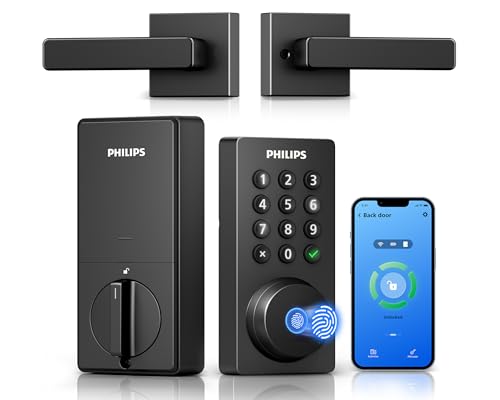
- 0.3-second fingerprint access
- Permanent, temporary, and recurring PIN options
- Built-in Wi-Fi with no hub required
Best For: Small offices needing biometric and scheduled access
Best for Interior Offices
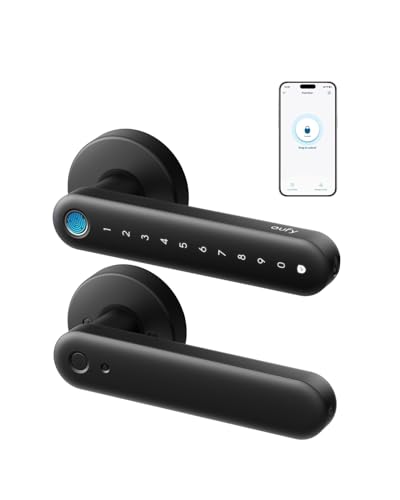
- 0.3-second fingerprint unlocking
- Built-in Wi-Fi for remote authorization
- Screwdriver installation with batteries included
Best For: Interior office doors and storerooms
Best Smart Knob

- Fingerprint, keypad, app, voice, and key entry
- Built-in Wi-Fi with temporary codes and activity logs
- Local fingerprint storage and 5–120-second auto-lock
Best For: Private offices and side-entry doors using knob hardware
Flexible Access

- Five entry methods, including fingerprint and IC card
- Supports up to 300 users
- Gateway required for remote and voice control
Best For: Small offices managing many user credentials
Built-In Connectivity

- Built-in Wi-Fi supports remote app control
- Fingerprint handle and backlit keypad
- Installs without drilling in about 15 minutes
Best For: Offices needing app monitoring without a separate gateway
Rental-Ready Entry
Fingerprint Smart Lock with Handle

- Five entry methods, including FOB and fingerprint
- Guest codes and access logs through the app or web
- Optional gateway enables remote and voice control
Best For: Shared offices and properties with rotating users
Best No-App Value

- Up to 20 personalized codes
- Auto-lock and passage modes
- No app, Wi-Fi, or Bluetooth required
Best For: Small offices needing simple shared-code entry
Best Connected Option
Philips Wi-Fi Fingerprint Lock

- Fingerprint, app, PIN, voice, and key entry
- Up to 100 passcodes and 50 fingerprints
- Built-in Wi-Fi with activity history
Best For: Offices needing remote access and scheduled credentials
Best Multi-Method Access

- Eight entry methods including fingerprint and IC card
- Optional app control with separate Wi-Fi gateway
- IP64-rated and quick screwdriver installation
Best For: Offices with varied users and credential preferences
Best All-Around Pick – Tapo DL100 Smart Deadbolt
The Tapo DL100 is a practical smart lock for office doors or other standard deadbolt applications where multiple access methods and remote management matter. It combines keypad entry, Bluetooth, Wi-Fi app control, voice commands with PIN verification, and backup keys.
Best For: Offices needing flexible user codes, activity monitoring, and remote lock control.
Pros:
- Supports up to 200 customizable codes with group access management.
- Offers Wi-Fi, Bluetooth, keypad, voice, and backup-key entry.
- Includes auto-lock, activity timestamps, anti-peeping passwords, and failed-attempt protection.
- BHMA Grade 3 and IP54 ratings support everyday durability and weather resistance.
Cons:
- Designed for standard deadbolt installations rather than lever or knob replacements.
- Remote and voice features depend on Wi-Fi and compatible smart-home services.
With long battery life, emergency USB-C power, and no-drill installation for compatible door sizes, the DL100 offers a well-rounded setup for shared office access.
Best Fingerprint Entry – Philips 4200 Series Wi-Fi Lock
The Philips 4200 Series is a smart lock for office use when fast biometric entry and detailed access scheduling are priorities. Its built-in Wi-Fi enables app control without a separate hub, while the included handle creates an all-in-one door hardware upgrade.
Best For: Small offices that want fingerprint access, recurring PINs, and remote activity checks.
Pros:
- Unlocks with a fingerprint in a claimed 0.3 seconds.
- Supports permanent, one-time, periodic, and recurring PIN codes.
- Built-in 2.4GHz Wi-Fi enables remote control, status checks, and access history.
- Includes a matching handle set and adjustable auto-lock timing from 0 to 180 seconds.
Cons:
- Requires proximity to a 2.4GHz Wi-Fi router for the specified connection setup.
- Batteries are not included, and only standard 1.5V alkaline batteries are recommended.
- Designed for right-opening doors by default and may require resetting for left-opening doors.
This model is especially useful where employees need quick entry without sharing physical keys, though installation compatibility and battery requirements should be checked first.
Best for Interior Offices – eufy FamiLock C32
The eufy FamiLock C32 is a smart lock for office interiors, storage rooms, and other standard interior doors. It pairs quick fingerprint entry with built-in Wi-Fi, app-based remote authorization, and a lever-style design intended for straightforward installation.
Best For: Interior office doors, private rooms, and storerooms where fingerprint access is convenient.
Pros:
- Large-area fingerprint sensor provides claimed 0.3-second unlocking.
- Built-in 2.4GHz Wi-Fi supports remote management and real-time authorization.
- Installs in about 15 minutes with a screwdriver on compatible doors.
- Includes four AA batteries, physical keys, auto-lock, and Alexa/Google Assistant integration.
Cons:
- Not recommended for front doors.
- Rekeying is not supported.
- Its battery life is specified at over five months, shorter than some listed alternatives.
For an office suite or restricted interior workspace, the C32 offers a clean lever format and convenient biometric access without requiring a separate Wi-Fi hub.
Best Smart Knob – DESLOC D212 Fingerprint Lock
The DESLOC D212 is a smart lock for office doors that use a standard knob-style setup and need fingerprint, keypad, or app access. Built-in Wi-Fi supports remote permissions and temporary codes, while the aluminum body and BHMA Grade 3 certification suit everyday use.
Best For: Private offices, home offices, apartments, and side-entry doors needing a knob replacement.
Pros:
- Offers fingerprint, passcode, app, voice, and mechanical-key entry.
- Built-in Wi-Fi enables remote locking, activity records, temporary codes, and permissions.
- Uses local fingerprint storage rather than uploading biometric data to the cloud.
- Includes auto-lock settings from 5 to 120 seconds, anti-peeping passwords, and a backlit keypad.
Cons:
- Its knob-style design may not suit doors configured for deadbolts or lever locks.
- Battery life is listed as up to eight months, but actual runtime depends on use.
- Compatibility with a specific office door should be confirmed before installation.
The D212 is a strong fit for smaller private workspaces where a traditional knob format, local biometric storage, and remote access management are more useful than a commercial access-control system.
Flexible Access – Heavy-Duty 5-in-1 Smart Lock
For an office needing several entry options, this smart lock for office use combines fingerprint, passcode, IC card, app, and physical-key access. It can also support remote management and voice control when paired with the separately sold Harfo Wi-Fi Gateway.
Best For: Small offices that need multiple user credentials and optional remote access.
Pros:
- Offers five unlocking methods, including fingerprints, passcodes, cards, app control, and keys.
- Supports up to 300 users across fingerprints, passcodes, and IC cards.
- Includes auto-lock, anti-peep, private mode, temporary codes, and access-record features.
- Installs with a Phillips screwdriver and fits 35–55 mm thick doors with a reversible handle.
Cons:
- Remote access and voice control require a separately sold gateway.
- Four AA alkaline batteries are required and are not included.
- The product is described for office use, but its listed dimensions and features should be checked against the specific door.
This is a versatile choice when an office has employees, guests, or service providers who need different credentials. Its gateway dependency for Wi-Fi functions is the main consideration.
Built-In Connectivity – eufy Security Smart Lock C33
The eufy Security C33 is a straightforward smart lock for office doors, with built-in Wi-Fi for app-based remote access. Its fingerprint handle, keypad, event history, and notifications provide practical ways to manage entry without carrying keys.
Best For: Offices wanting integrated Wi-Fi, fingerprint access, and app-based activity monitoring.
Pros:
- Built-in Wi-Fi enables remote control, access management, notifications, and event history without a separate gateway.
- Fingerprint recognition is integrated into the handle for quick entry.
- Includes passcode access, anti-peeping protection, auto-lock, and a backlit keypad.
- Designed for 15-minute installation without drilling and works with left- or right-hand doors.
Cons:
- Uses eight AA batteries, which are not specified as included in the supplied details.
- It is listed as a deadbolt, so compatibility with the office door should be confirmed before purchase.
- Its IP53 rating may be a consideration for doors exposed to weather or heavy moisture.
With Wi-Fi built into the lock, the C33 avoids the extra gateway required by some competing models. It is particularly appealing when remote management and access history matter as much as keyless entry.
Rental-Ready Entry – Fingerprint Smart Lock with Handle
This fingerprint smart lock is a practical smart lock for office use when administrators need to issue and manage temporary access. It supports fingerprint, keypad, app, FOB, and key entry, while optional gateway support adds remote unlocking and access-log management.
Best For: Small offices, shared workspaces, and rental-style properties that frequently manage guest access.
Pros:
- Provides five entry methods: fingerprint, keypad, app, FOB, and physical key.
- App or web tools can generate guest codes and review remote access logs.
- DIY installation requires no extra drilling, and the handle is reversible for left- or right-handed doors.
- Includes auto-lock, one-touch locking, anti-peep protection, and a backlit touchscreen keypad.
Cons:
- Remote access and voice control require the optional Sifely Wi-Fi Gateway.
- The supplied details do not specify battery type or battery life.
- Door compatibility should be verified because the lock is identified as a deadbolt with handle and keypad.
The Sifely S stands out for flexible credential management, especially where visitors or rotating users need access codes. Offices seeking gateway-free remote control may prefer a model with built-in Wi-Fi.
Best No-App Value – Keypad Lock with Handle
If you want a straightforward smart lock for office use without adding an app, Wi-Fi, or Bluetooth, this keypad model keeps access simple. It supports up to 20 personalized codes, temporary one-time codes, auto-lock timing, and passage mode for busy periods.
Best For: Small offices, rentals, and interior or exterior doors where code-based entry and simple installation matter more than remote control.
Pros:
- Creates up to 20 personalized 4–8 digit codes, including temporary codes.
- Offers adjustable auto-lock from 5–99 seconds and a passage mode.
- Installs with a screwdriver in about 15 minutes and has a reversible handle.
- Uses a backlit keypad, physical backup keys, and low-battery alerts.
Cons:
- No app, Wi-Fi, or Bluetooth connectivity for remote management or activity logs.
- Requires four AA batteries, which are not included.
For offices that mainly need shared PIN access and dependable day-to-day entry, this is a practical, low-complexity option. Choose another model if remote unlocking or biometric access is essential.
Best Connected Option – Philips Wi-Fi Fingerprint Lock
For an office that needs remote access and flexible credential management, this Philips model combines fingerprint entry, Wi-Fi app control, PINs, voice control, and a physical key. It connects directly to 2.4GHz Wi-Fi without requiring a separate hub.
Best For: Small businesses and offices that need remote unlocking, entry-history monitoring, scheduled access, and multiple ways for staff to enter.
Pros:
- Unlocks using fingerprints, app control, passwords, voice commands, or a key.
- Stores up to 50 fingerprints and up to 100 passcodes.
- Supports permanent, scheduled, one-time, and offline one-time passwords.
- Provides remote control and activity history through the app over built-in 2.4GHz Wi-Fi.
Cons:
- Requires a compatible 2-1/8-inch door hole, specified clearance, and a supported door thickness.
- Requires eight AA alkaline batteries, which are not included.
- Wi-Fi and advanced features may be more complexity than a small office needs.
This is the most feature-rich smart lock for office access in the group, especially when managers need to issue codes remotely or review entry activity. Confirm the door measurements before purchase.
Best Multi-Method Access – Fingerprint Smart Door Lock
This biometric smart lock for office doors offers several credential options, including fingerprints, keypad codes, IC cards, eKeys, auto-unlock, and physical keys. App control and remote management are available when paired with the separately sold G2 Wi-Fi Gateway.
Best For: Offices, rental properties, and teams that want flexible local entry methods with optional remote management and access-log features.
Pros:
- Provides eight access methods, including fingerprints, codes, IC cards, eKeys, and keys.
- Supports app-based access management and real-time logs when used with the G2 Wi-Fi Gateway.
- Offers IP64 water resistance and operation across temperatures from -35°F to 122°F.
- Designed for screwdriver installation in about 10 minutes with a reversible handle.
Cons:
- The G2 Wi-Fi Gateway is sold separately for remote control and Alexa features.
- Gateway-dependent functions are not available through the lock alone.
Its broad mix of local credentials makes this a flexible choice for offices with varied users or access preferences. Factor in the additional gateway cost if remote control, Alexa, or live access monitoring is required.
How We Picked the Best Smart Lock for Office
We focused on features that matter in shared workspaces rather than choosing based on appearance alone. The selected locks offer combinations of keypad entry, fingerprint recognition, app control, built-in Wi-Fi, auto-locking, and physical backup access. We also considered whether each design is better suited to a main exterior door, a private office, a rental workspace, or an interior door.
Because office doors vary, installation compatibility is equally important. Before buying, verify the lock type, door thickness, backset, handle configuration, and whether the door has a deadbolt or a knob-style mechanism. Product listings can use similar names for very different installation formats.
Quick Comparison
| Priority | Look for | Best fit |
|---|---|---|
| Simple shared access | Reliable keypad and multiple codes | Small offices and teams |
| Individual accountability | Fingerprint access or app user management | Staff-only rooms |
| Remote administration | Built-in Wi-Fi and mobile controls | Managers and rental workspaces |
| Emergency entry | Mechanical key backup or alternative power | Exterior office doors |
| Low maintenance | Long battery life and low-battery alerts | Busy commercial spaces |
Key Buying Factors for a Smart Lock for Office Doors
Access Control
Choose a keypad when several people need access without installing an app. Fingerprint entry can be faster for regular staff, while app-based controls are useful for temporary permissions, remote unlocking, and monitoring. If employees change frequently, look for easy code deletion and user management.
Connectivity and Remote Features
Bluetooth may be sufficient for local control, but Wi-Fi is more useful when you need to manage access away from the office. Confirm whether remote functions require a separate hub, subscription, or always-on wireless connection.
Power and Backup Entry
Battery life depends on traffic, connectivity, weather exposure, and lock design. Prioritize low-battery warnings and a dependable backup method, such as a physical key or emergency power input. An office lock should never leave staff without a practical way to enter.
Security and Installation
Check the construction, locking mechanism, encryption claims, tamper alerts, and auto-lock settings. Auto-lock can improve security, but adjustable timing is preferable so it does not lock people out unexpectedly. Measure the existing door before ordering and confirm that the handle orientation and interior clearance are compatible.
Who Should Buy Which Smart Lock for Office?
Small teams that want straightforward shared entry should prioritize a durable keypad lock with multiple codes and auto-locking. Offices with regular staff turnover may benefit more from fingerprint access or an app that allows individual credentials to be removed quickly. Managers who need to let in contractors, cleaners, or remote workers should choose a Wi-Fi model with temporary access controls.
For a private office or low-traffic interior room, a simpler keypad or fingerprint lock may provide the best value. For a busy exterior entrance, spend more attention on weather suitability, battery alerts, backup entry, and installation quality. Whichever model you choose, keep administrator credentials secure, update the companion app, and maintain a documented emergency access plan.