The best power inverters make it easier to use household electronics away from a wall outlet, whether you are driving, camping, working remotely, or preparing for short-term outages. This roundup covers compact car adapters, high-output truck inverters, and pure sine wave models for more sensitive equipment.
Compare output capacity, waveform, ports, safety features, and installation requirements before choosing. The right model depends less on peak wattage than on the equipment you plan to run and how long you need to run it.
Best 10 Power Inverters Picks for 2026
Best Pure Sine Wave Pick
500W BESTEK Pure Sine Wave Inverter
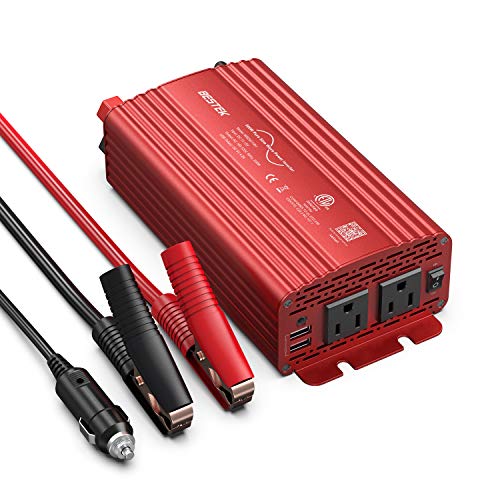
- Pure sine wave output for sensitive electronics
- Two AC outlets and dual USB charging
- Includes cigarette-lighter cable and battery clamps
Best For: Vehicle, off-grid, and sensitive-electronics use
Best High-Output Value
Cantonape 3000W 12V Power Inverter

- 3,000W continuous and 6,000W surge output
- LCD monitoring with fault-code display
- Four AC outlets, four USB ports, and remote control
Best For: High-demand RV, truck, camping, and backup setups
Best Premium Pure Sine Wave
BELTTT 2000W Pure Sine Wave Inverter

- 2,000W continuous and 4,000W surge output
- Pure sine wave power for sensitive equipment
- LCD, hardwire port, and 23-foot remote included
Best For: RV, truck, solar, and off-grid power systems
Best Compact Car Inverter
BESTEK 300W Vehicle Power Inverter

- Small 14.4-ounce design for vehicle use
- Two AC outlets and dual 4.8A USB ports
- 300W continuous and 700W peak output
Best For: Road trips and everyday phone, tablet, and laptop charging
Best Compact Car Pick
PiSFAU 200W Car Power Inverter

- 200W output from a 12V vehicle socket
- Two AC outlets and four USB ports
- Compact, lightweight design with multiple protections
Best For: Road trips, camping, and charging small electronics
Best High-Output Choice
BESTEK 2000W Vehicle Power Inverter

- 2000W continuous and 4600W peak output
- Three AC outlets with LCD display
- Aluminum housing and replaceable 50A fuses
Best For: Camping, remote job sites, and larger vehicle-powered equipment
Best with Extra Features

- 500W continuous, 1,000W peak output
- Three AC outlets plus USB-A and USB-C charging
- LCD status display and multiple safety protections
Best For: Multi-device vehicle charging, camping, and emergency use
Best Compact Pick
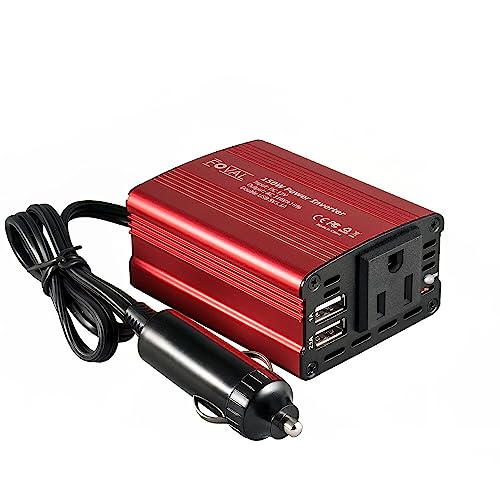
- Small, lightweight aluminum design
- 150W continuous and 300W peak output
- One AC outlet and dual 3.1A USB ports
Best For: Everyday car charging and lightweight road-trip use
Best Dual-Outlet Option

- 750W continuous and 1,000W peak output
- Two AC outlets with QC 3.0 and 30W USB-C PD
- Supports cigarette-lighter or direct 12V battery connection
Best For: Camping, trucks, outages, and higher-capacity vehicle power
Best Pure Sine Wave Pick – 500W BESTEK Pure Sine Wave Inverter
For buyers comparing power inverters for vehicle use, this BESTEK model stands out for its pure sine wave output, which is suited to sensitive electronics and inductive loads. It provides 500 watts through two AC outlets, plus dual USB charging, with either a cigarette-lighter cable or battery clamps for connection.
Best For: Road trips, off-grid use, and powering sensitive electronics from a 12V battery.
Pros:
- Pure sine wave output with lower interference for sensitive equipment.
- Includes two AC outlets and dual USB ports with up to 4.2A total USB output.
- Offers protection against over-voltage, under-voltage, overheating, overload, reverse polarity, and short circuits.
- Includes both battery clamps and a 12V cigarette-lighter cable.
Cons:
- The cigarette-lighter connection should generally stay under 150 watts because of typical vehicle fuse limits.
- Reaching the full 500-watt capacity requires connection to the battery with the included clamps.
This is a flexible choice when clean power matters more than maximum capacity. Its connection options and safety features make it practical, but users should match the load and connection method carefully.
Best High-Output Value – Cantonape 3000W 12V Power Inverter
This Cantonape is one of the higher-capacity power inverters in the lineup, delivering 3,000 watts of continuous modified sine wave power and up to 6,000 watts of surge power. Its LCD display, remote control, four AC outlets, and four USB ports make it suited to larger setups in vehicles, RVs, campsites, or emergency situations.
Best For: High-demand 12V installations that need multiple outlets and remote monitoring.
Pros:
- Provides 3,000 watts continuous output and 6,000 watts of surge capacity.
- LCD shows input and output voltage, battery capacity, load capacity, frequency, and fault codes.
- Includes four AC outlets, four USB ports, and a remote controller.
- Uses six protection systems covering overload, short circuit, overheating, polarity, and voltage conditions.
Cons:
- Modified sine wave output may be less suitable than pure sine wave power for some sensitive equipment.
- The remote controller requires a separate 12V 23A battery.
- Its high output is intended for a properly configured battery system rather than a standard cigarette-lighter socket.
With its high capacity and informative display, this model is aimed at users building a more substantial 12V power system. The modified sine wave design is the main consideration when choosing equipment to run.
Best Premium Pure Sine Wave – BELTTT 2000W Pure Sine Wave Inverter
The BELTTT combines 2,000 watts of continuous output with pure sine wave power, making it a strong option among power inverters for sensitive household and recreational equipment. It also includes a graphical LCD, a 20A outlet, hardwire connection, USB charging, and a wired remote with a 23-foot cable.
Best For: RVs, trucks, solar setups, and off-grid users who need clean 120V power and remote operation.
Pros:
- Pure sine wave output supports sensitive and inductive loads.
- Delivers 2,000 watts continuously and up to 4,000 watts of surge power.
- LCD provides real-time voltage, battery, load, and operating information.
- Includes a 20A outlet, hardwire port, USB port, long-cable remote, battery cables, and fuses.
Cons:
- At 7.7 pounds and nearly 15 inches long, it is less compact than small car inverters.
- The 12V, 2,000-watt capacity requires a suitable battery and wiring setup.
This is a well-equipped choice for buyers who prioritize clean power, higher capacity, and convenient monitoring. Its included installation accessories add flexibility for more permanent vehicle or off-grid applications.
Best Compact Car Inverter – BESTEK 300W Vehicle Power Inverter
For everyday vehicle charging, this compact BESTEK is a practical entry in the power inverters category. It supplies 300 watts continuously and 700 watts instantaneously through two AC outlets, while its dual USB ports provide up to 4.8A for phones, tablets, cameras, and similar devices.
Best For: Drivers who want a small, lightweight inverter for trips, commuting, and basic mobile-device charging.
Pros:
- Compact, iPhone-sized design weighs just 14.4 ounces.
- Provides two AC outlets and two 4.8A USB charging ports.
- Compatible with 11–17V vehicles, including the vehicle types listed by the manufacturer.
- Includes overheating, voltage, and short-circuit protection, plus a five-year replacement warranty noted in the product description.
Cons:
- Its modified sine wave output may not suit every sensitive or inductive device.
- At 300 watts continuous, it is intended for smaller loads rather than high-power appliances.
- The listed warranty information is inconsistent: the bullet notes five years, while the details list 18 months.
This model is best viewed as a convenient travel accessory rather than a heavy-duty power source. Its small size, multiple charging ports, and broad 11–17V input range make it useful for routine vehicle use.
Best Battery-Direct Option – 1000W Modified Sine Wave Power Inverter
This 1000W power inverter is designed for vehicles, RVs, work vans, and fleet use where you need substantial AC power from a 12V battery. Its 2000W peak rating helps handle startup surges, while the three AC outlets and two USB ports support several devices at once.
Best For: Users who need battery-direct power for electronics, chargers, TVs, speakers, and compatible tools in a truck, RV, or work vehicle.
Pros:
- Provides 1000W continuous and 2000W peak modified sine wave output.
- Offers three AC outlets plus two USB ports.
- Includes overload, temperature, voltage, and short-circuit protection.
- Comes with battery clamps, mounting brackets, replaceable fuses, and spare fuses.
Cons:
- Requires direct connection to a 12V negative-ground battery; no cigarette lighter plug is included.
- Modified sine wave output may not suit every device.
- USB ports share 2.4A total.
Choose this model when direct battery connection and practical vehicle installation matter more than a compact plug-in design. Check appliance wattage and modified sine wave compatibility before use.
Best Compact Car Pick – PiSFAU 200W Car Power Inverter
This compact 200W power inverter plugs into a vehicle’s 12V socket and provides two AC outlets plus four USB charging ports. Its small, lightweight design makes it convenient for road trips, camping, and everyday in-car charging.
Best For: Drivers who want a portable inverter for laptops, tablets, phones, lights, and other modest-power electronics.
Pros:
- Compact 5-by-2.7-by-1.4-inch design weighs about 8.8 ounces.
- Includes two AC outlets and four USB charging ports.
- Plugs into a standard 12V vehicle power socket.
- Offers protection against overheating, undervoltage, overvoltage, overload, and short circuits.
Cons:
- 200W output is intended for smaller electronics rather than high-demand appliances.
- Its modified sine wave output may not be compatible with every device.
- USB charging output is listed as 4.8A/24W total.
For simple vehicle charging, this PiSFAU model emphasizes portability and multiple charging connections. It is a better fit for electronics and accessories than for large appliances or power tools.
Best High-Output Choice – BESTEK 2000W Vehicle Power Inverter
This BESTEK power inverter delivers 2000W of continuous output from a 12V DC source, with surge capacity intended to help start demanding equipment. Three AC outlets, battery cables, replaceable fuses, and an aluminum housing make it suited to camping, remote work sites, and other off-grid vehicle applications.
Best For: Users who need high-output AC power for larger electrical devices, lighting, televisions, freezers, laptops, or job-site equipment.
Pros:
- Provides 2000W continuous output with up to 4600W peak surge power.
- Includes three 110V AC outlets and an LCD display.
- Aluminum housing is designed to withstand drops and bumps.
- Includes battery terminal cables, six external 50A fuses, and spare fuses.
Cons:
- Requires a suitable 12V DC connection rather than a standard cigarette lighter socket.
- At 9.6 pounds, it is less portable than compact plug-in models.
- High-output use requires careful attention to battery capacity and wiring.
This is the strongest option in the group for users prioritizing continuous wattage and surge capability. Its larger size and battery-terminal connection make it more appropriate for planned installations or demanding field use than casual in-car charging.
Best with Extra Features – 500W Vehicle Power Inverter
This 500W power inverter is a versatile option for vehicles, offering 500W of continuous output and 1,000W peak power from a 12V battery. Its three AC outlets, USB ports, USB-C fast charging, LCD monitoring, and included connection options make it useful for road trips, camping, and emergency charging.
Best For: Drivers who need several charging ports and enough capacity for laptops, game consoles, lights, and other moderate-power electronics.
Pros:
- Provides 500W continuous and 1,000W peak output.
- Offers three AC outlets, two USB-A ports, and USB-C PD charging.
- LCD displays input and output voltage, battery status, and load capacity.
- Includes protection against overload, overheating, short circuits, and voltage issues.
Cons:
- Modified sine wave output may not suit every sensitive electronic device.
- Higher-power loads may require the included battery clips rather than the cigarette-lighter plug.
- It should be used only in a dry, well-ventilated area.
With its broad port selection and useful LCD readout, this inverter is a strong all-around pick when convenience and monitoring matter. Check the connected equipment’s power requirements before use.
Best Compact Pick – FOVAL 150W Car Power Inverter
For simple in-car charging, this compact 150W power inverter converts 12V DC to 110V AC and fits easily in a vehicle’s storage area. It combines one AC outlet with dual USB charging and a lightweight aluminum housing, making it a practical road-trip accessory.
Best For: Commuters and travelers who need a small inverter for phones, tablets, laptops, lights, and other modest-power electronics.
Pros:
- Compact 3.2-by-2.5-by-1.5-inch design weighs about 8 ounces.
- Provides 150W continuous and 300W peak output.
- Dual USB ports deliver up to 3.1A total for charging phones and tablets.
- Includes fuse and protection against overheating, voltage problems, short circuits, overloads, and overcharging.
Cons:
- Its 150W continuous rating limits use with higher-power appliances.
- There is only one AC outlet.
- Modified sine wave output may not be ideal for every device.
This FOVAL model prioritizes portability over capacity. It is a sensible choice for everyday vehicle charging, provided your connected devices remain within its modest wattage limit.
Best Dual-Outlet Option – TWING 1000W Car Inverter
This TWING power inverter is designed for vehicle and outdoor use, with two AC outlets, USB charging, and a stated 750W continuous output with 1,000W peak capacity. Its digital display, cooling fan, and support for direct 12V battery connection add flexibility for camping, outages, and emergency charging.
Best For: Truck owners, campers, and emergency-preparedness users who need two AC outlets and more capacity than a compact cigarette-lighter inverter provides.
Pros:
- Offers two 110V AC outlets and up to 750W continuous output.
- Includes QC 3.0 USB and 30W PD 3.0 Type-C charging.
- Digital display and cooling fan support easier monitoring and heat management.
- Can connect through a cigarette lighter or directly to a 12V battery.
Cons:
- The product uses modified sine wave output.
- Users must follow the supplied battery-cable polarity instructions carefully.
- Total connected power must remain within the inverter’s stated limits.
Compared with smaller power inverters, the TWING offers more outlet capacity and connection flexibility. Its direct-battery option is useful for larger loads, but correct wiring and ventilation are essential.
How We Picked These Power Inverters
We selected models across several practical power ranges, from small plug-in adapters for phones and laptops to higher-output units designed for camping, work vehicles, and emergency use. We considered continuous wattage, surge capacity, outlet and USB selection, waveform type, display features, protection systems, portability, and the needs of different vehicle setups.
Because advertised wattage does not tell the whole story, buyers should verify the product’s continuous rating and installation requirements before connecting demanding equipment. A 2,000W or 3,000W inverter may require heavy-gauge wiring, an appropriate fuse, and a direct battery connection rather than a standard 12V accessory socket.
Quick Comparison
- Compact car use: Choose a 150W to 300W model for phones, tablets, small chargers, and light laptop use.
- General travel and camping: A 500W to 1,000W inverter offers more flexibility for chargers, small electronics, and selected low-demand appliances.
- High-demand equipment: Models rated from 2,000W to 3,000W are better suited to larger loads, but they need direct battery connections and careful electrical planning.
- Sensitive electronics: Pure sine wave output is the safer choice for medical devices, audio equipment, motor-driven appliances, and electronics with demanding power supplies.
Key Buying Factors for Power Inverters
Continuous and Surge Wattage
Match the inverter’s continuous output to the combined running wattage of your devices. Motors, compressors, and some power tools draw extra electricity when starting, so check surge capacity as well. Avoid operating continuously at the maximum rating; leaving headroom improves reliability.
Pure Sine Wave Vs. Modified Sine Wave
Modified sine wave units can be affordable for basic chargers and simple appliances, but they may produce extra noise, heat, or compatibility problems. Pure sine wave power more closely resembles household electricity and is preferable for sensitive or motor-driven equipment.
Connection, Ports, and Protection
Low-wattage units designed for vehicles can usually plug into a 12V accessory outlet, while higher-output models generally require direct battery cables. Look for clearly rated AC outlets, USB-A or USB-C charging, LCD monitoring, ventilation, overload protection, low-voltage shutdown, short-circuit protection, and thermal protection.
Who Should Buy Which Power Inverters?
Drivers and commuters should choose a compact 150W to 300W inverter for occasional charging. Campers and road-trippers will likely prefer a 500W to 1,000W model with multiple outlets and modern USB charging. Truck owners, van users, and emergency-preparedness buyers may benefit from a 2,000W or higher inverter, provided they can install it safely and have enough battery capacity. If your equipment is expensive, medically important, motorized, or sensitive to power quality, prioritize a pure sine wave model over maximum advertised wattage.