Portable solar panels can keep a boat’s batteries topped up while reducing reliance on shore power, generators, or engine charging. The right setup depends on your battery voltage, available deck space, expected sunlight, and whether you need maintenance charging or faster energy production.
We’ve gathered 10 options ranging from compact 20W and 50W maintainers to 200W foldable and flexible panels. Use the guide below to match panel output, portability, weather resistance, and charge-controller features to your boat and onboard devices.
Best 10 Portable Solar Panels for Boats Picks for 2026
Best Flexible Marine Panel
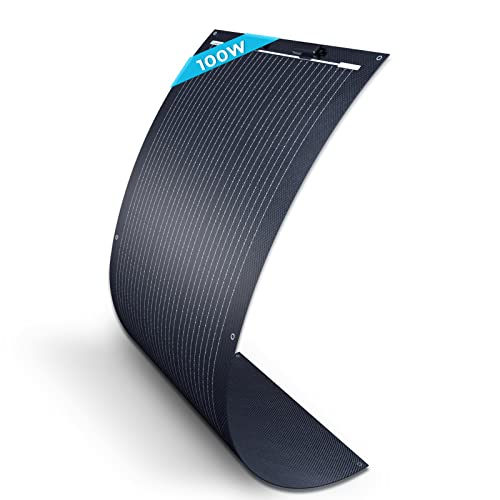
- Bends within 240 degrees for curved surfaces
- 5.3-pound, glare-free black design
- 22% efficiency with IP67 waterproof junction box
Best For: Lightweight 12V charging on curved boat surfaces
Best Battery Maintainer

- Built-in UltraSmart MPPT controller
- Three-stage automatic charging
- Supports 12V, AGM, and LiFePO4 modes
Best For: Hands-off maintenance of compatible 12V boat batteries
Best High-Output Flexible Panel

- 200W output with stated 1,000Wh daily average
- Bends within 240 degrees for curved surfaces
- IP67 junction box and included 12 AWG cables
Best For: Higher-capacity charging where curved mounting space is available
Best Foldable Power-Station Panel

- Up to 25% efficiency with 16BB N-Type cells
- Folds to 1.97 inches and weighs 11 pounds
- Includes 3-in-1 adapter and adjustable kickstands
Best For: Temporary boat charging with compatible power stations
Best Budget 12V Maintainer

- 20W panel for 12V battery maintenance
- 10A PWM controller with safety protections
- Includes clips and O-ring terminal cables
Best For: Maintaining compatible 12V boat batteries
Best Foldable High-Output Option
BougeRV 200W Portable Solar Panel

- 200W foldable panel with N-Type cells
- Fiberglass-reinforced and IP65 rated
- Includes XT60, DC7909, and extension cable
Best For: Portable power stations and higher-output off-grid charging
Best Complete Marine Kit
ECO-WORTHY 200W Solar Panel System

- Two 100W panels support 12V or 24V wiring
- Includes 30A PWM controller and mounting hardware
- Built with monocrystalline cells and aluminum frames
Best For: Configurable boat and off-grid solar installations
High-Capacity Boat Power
DOKIO 200W Foldable Solar Panel

- 200W-rated foldable monocrystalline panel
- Separate PWM controller and 9.84-foot cable
- Dual USB ports for essential small devices
Best For: 12V boat batteries and higher-capacity portable charging
Marine-Ready Connectivity
ZOUPW 100W Waterproof Solar Panel

- IP67 waterproof ETFE-coated construction
- Five-in-one cable for broad compatibility
- USB-C and dual USB-A direct charging
Best For: Power-station users needing weather resistance and connector flexibility
Lightweight 12V Charging
DOKIO 100W Foldable Solar Panel

- Lightweight 6-pound foldable design
- Separate PWM controller and long cable
- USB ports for phones and small devices
Best For: Small boats and portable 12V charging setups
Best Flexible Marine Panel – 100W Ultra-Flex Bendable
For boats with curved cabin tops, decks, or other irregular mounting surfaces, the Renogy 100W is a practical choice among portable solar panels for boats. Its flexible, lightweight design bends within 240 degrees, while half-cut PERC cells provide up to 22% efficiency and a stated average output of 500 watt-hours per day, depending on sunlight.
Best For: Boat owners who need a lightweight 100W panel for curved surfaces and 12V off-grid systems.
Pros:
- Flexible within 240 degrees for curved boat surfaces.
- Lightweight 5.3-pound design with a glare-free black finish.
- 22% efficiency and half-cut PERC cell technology.
- IP67-rated waterproof junction box, pre-drilled holes, and included connector cables.
Cons:
- Its 100W capacity may be limited for larger onboard power demands.
- Installation still requires a suitable mounting surface and compatible charge equipment.
This panel balances low weight, flexibility, and marine-friendly protection. It is a strong fit when available deck space is curved or when a rigid panel would be unnecessarily cumbersome.
Best Battery Maintainer – 50W MPPT Marine Charger
The SUNER POWER 50W charger is designed more for maintaining a boat battery than powering large loads directly. Its built-in UltraSmart MPPT controller, three-stage charging, and selectable 12V, AGM, and lithium modes make it a convenient option for boat owners comparing portable solar panels for boats.
Best For: Automatically maintaining compatible 12V boat, marine, AGM, flooded, gel, or LiFePO4 batteries.
Pros:
- Built-in MPPT technology with stated tracking efficiency up to 99%.
- Three-stage bulk, absorption, and float charging supports battery maintenance.
- Selectable charging modes for 12V, AGM, and lithium batteries.
- Includes SAE, alligator-clip, bare-end, and cigarette-lighter connections.
Cons:
- Its 50W output is intended for charging and maintenance rather than high-power loads.
- The 2.47 kg weight is heavier than some compact panels of similar output.
With automatic charging, visual charge indicators, and multiple safety protections, this is a purpose-built battery maintainer. It is particularly useful for keeping a stored or lightly used boat battery topped up with minimal supervision.
Best High-Output Flexible Panel – 200W Ultra-Flex
When a boat needs more generation capacity without a heavy rigid installation, the Renogy 200W offers a flexible solution. It bends within 240 degrees, uses half-cut PERC cells rated at up to 22% efficiency, and is specified to provide an average of 1,000 watt-hours per day with five hours of sunlight.
Best For: Boat owners seeking higher-output solar generation on curved surfaces for 12V off-grid systems.
Pros:
- 200W capacity and stated average daily output of 1,000 watt-hours in five hours of sunlight.
- Flexible construction fits many curved mounting surfaces.
- Half-cut PERC cell technology and 22% efficiency rating.
- IP67-rated waterproof junction box, pre-drilled holes, and included 12 AWG cables.
Cons:
- The 63.2-by-29.4-inch size needs substantial mounting space.
- At 10.8 pounds, it is less portable than the smaller 100W version.
This panel is a good middle ground between a permanent rigid array and a lower-output flexible panel. Its larger footprint and higher capacity make it better suited to boats with enough curved deck or cabin-roof space.
Best Foldable Power-Station Panel – HQST 200W N-Type
The HQST 200W is a freestanding, foldable option for boaters who want to deploy and store a panel rather than mount it permanently. Its N-Type 16BB cells are rated up to 25% efficiency, and adjustable 40–60-degree kickstands make positioning straightforward when using portable power stations.
Best For: Boaters who want a storable 200W panel for compatible power stations and temporary charging setups.
Pros:
- Up to 25% efficiency from next-generation 16BB N-Type cells.
- Folds to 1.97 inches thick and weighs 11 pounds for easier transport.
- Includes a 4.9-foot 3-in-1 adapter for XT60, DC7909, and DC5521 connections.
- IP67 waterproof construction with adjustable kickstands.
Cons:
- Designed for compatible power stations rather than direct permanent boat integration.
- Its rigid foldable format needs clear space for setup and positioning.
This is the most convenient choice for temporary deployment, especially when a boat uses a portable power station. It stores neatly and sets up quickly, but buyers should confirm connector and voltage compatibility before use.
Best Budget 12V Maintainer – Compact Marine Solar Charger
For boat owners seeking portable solar panels for boats, this 20W kit is a practical choice for maintaining compatible 12V batteries. It includes a PWM charge controller, battery connection options, and a compact aluminum-framed panel for straightforward installation.
Best For: Maintaining 12V AGM, flooded, GEL, deep-cycle, and sealed lead-acid batteries on boats, RVs, trailers, and other off-grid equipment.
Pros:
- Supports several common 12V lead-acid battery types.
- Includes a 10A controller with over-voltage, overload, short-circuit, and reverse-connection protections.
- Corrosion-resistant aluminum frame, tempered glass, protective corners, and pre-drilled mounting holes.
- Includes alligator-clip and O-ring-terminal cables.
Cons:
- At 20W, it is intended for charging and maintenance rather than high-demand power generation.
- The panel weighs 3.8 pounds and is a rigid design rather than a foldable portable panel.
This kit makes the most sense when your priority is keeping a boat’s 12V battery topped up with minimal setup. Its included controller and connection leads reduce the need to source separate basic accessories.
Best Foldable High-Output Option – BougeRV 200W Portable Solar Panel
This BougeRV panel suits boaters who want portable solar panels for boats with higher output and easy transport. Its 200W foldable design uses N-Type cells, includes an 8.2-foot extension cable, and offers XT60 and DC7909 connections for compatible power stations and devices.
Best For: Portable charging setups using compatible power stations, portable refrigerators, and backup equipment during boating, camping, or off-grid trips.
Pros:
- 200W output and claimed 25% conversion efficiency from N-Type solar cells.
- Folds for carrying and includes built-in side handles.
- Fiberglass reinforcement helps resist cracking and surface abrasion.
- IP65 water- and dust-resistance rating for outdoor exposure.
Cons:
- Compatibility depends on the connected device and its XT60 or DC7909 input.
- At 13.8 pounds, it is less convenient than a small maintenance panel for quick, lightweight storage.
- It is a power-station-style panel and does not include a dedicated 12V marine battery controller in the supplied details.
Choose this model when foldability and substantially greater output matter more than a dedicated boat-battery charging kit. Confirm connector and voltage compatibility before pairing it with onboard equipment.
Best Complete Marine Kit – ECO-WORTHY 200W Solar Panel System
For a more complete installation, this ECO-WORTHY system combines two 100W monocrystalline panels with a 30A PWM controller and connection hardware. It is a strong candidate among portable solar panels for boats when you need a 12V or 24V setup and have room for a more substantial, semi-permanent arrangement.
Best For: RVs, campers, marine systems, and other off-grid applications requiring a configurable 12V or 24V, 200W solar array.
Pros:
- Two 100W panels can be wired in parallel for 12V or series for 24V use.
- Includes a 30A PWM controller, mounting brackets, solar cables, connectors, and tray cable.
- Monocrystalline cells provide claimed efficiency up to 21.5% in suitable light.
- Aluminum frames, an IP65 junction box, and stated wind and snow-load ratings support outdoor use.
Cons:
- The 31.6-pound total weight and rigid panels make it less convenient for frequent carrying.
- Its 35.2-by-23.1-inch panel dimensions require considerable mounting space.
- The included controller is PWM rather than MPPT.
This is better suited to boaters planning a configured solar installation than to those wanting a grab-and-go panel. Its included wiring and mounting pieces simplify setup, while the series/parallel flexibility accommodates different system voltages.
High-Capacity Boat Power – DOKIO 200W Foldable Solar Panel
For boaters who need more charging capacity, the DOKIO 200W is a practical option among portable solar panels for boats. Its foldable monocrystalline design weighs 9.7 pounds, includes a separate controller, and provides a 9.84-foot cable for flexible placement in direct sunlight.
Best For: Boat owners charging 12V batteries, power stations, and essential USB devices when higher panel capacity is useful.
Pros:
- 200W-rated output with a portable foldable design.
- Separate PWM controller includes reverse-polarity, overcharge, overload, and short-circuit protection.
- 9.84-foot cable helps keep charging equipment shaded while positioning the panel in sunlight.
- Dual USB ports can power phones, lamps, and other small devices from a 12V battery.
Cons:
- Some power stations limit the amount of power they can accept, so the full panel output may not be used.
- At 9.7 pounds, it is heavier than the smaller DOKIO option.
The DOKIO 200W stands out when charging capacity matters more than minimum weight. Check your battery or power station’s voltage and input limits before buying, since those specifications determine how much of the panel’s rated output can be used.
Marine-Ready Connectivity – ZOUPW 100W Waterproof Solar Panel
The ZOUPW 100W combines marine-friendly weather protection with broad connector compatibility, making it a versatile choice among portable solar panels for boats. Its ETFE-coated panel is IP67 waterproof, while the included five-in-one cable supports several common power-station connections.
Best For: Boaters using a compatible power station who want waterproof construction, adjustable setup, and multiple connector options.
Pros:
- IP67 waterproof panel with durable ETFE coating for rain and splashes.
- 23.5% efficiency rating and two adjustable kickstands for angled positioning.
- Five-in-one connector cable supports XT60, Anderson, DC5521, DC7909/8mm, and DC8020 connections.
- Built-in USB-C and dual USB-A ports can charge small devices directly.
Cons:
- Its 100W rating may exceed the input limit of some power stations.
- The panel weighs about 9.5 pounds despite its foldable design.
Choose the ZOUPW when connector flexibility and water resistance are priorities. It is especially convenient for boaters moving between different power stations, but confirm the station’s input limit and connector requirements before purchase.
Lightweight 12V Charging – DOKIO 100W Foldable Solar Panel
The DOKIO 100W offers a lighter, simpler setup for boaters who need dependable 12V charging without carrying a larger panel. It folds to about 19 by 26 inches, weighs 6 pounds, and includes a separate PWM controller plus a 9.84-foot cable.
Best For: Small boats and portable 12V setups where low weight, compact storage, and basic device charging are more important than maximum wattage.
Pros:
- Lightweight 6-pound foldable monocrystalline panel.
- Separate controller provides reverse-polarity, overcharge, overload, and short-circuit protection.
- Long 9.84-foot cable allows flexible placement around a boat.
- USB ports support phones, lights, and other small devices when connected to a 12V battery.
Cons:
- Its 100W rating provides less charging capacity than the 200W DOKIO model.
- Some power stations may cap incoming power below the panel’s rated output.
For boaters who value easy handling and storage, this DOKIO is a sensible entry-level pick among portable solar panels for boats. Verify your battery or power station’s input requirements, particularly if the system has a 60W charging limit.
How We Picked the Best Portable Solar Panels for Boats
We compared these panels by usable wattage, portability, construction, water resistance, charging compatibility, and installation flexibility. We included flexible panels for curved surfaces, foldable models for temporary deployment, and compact maintainers for smaller batteries. We also considered whether a product includes a charge controller, supports 12V or 24V systems, and can connect conveniently to a battery or portable power station.
Actual output varies with sunlight, panel angle, shading, temperature, wiring, and controller efficiency. Treat the listed wattage as a maximum under ideal conditions rather than a guaranteed daily output.
Quick Comparison
- For battery maintenance: 20W and 50W panels are suited to keeping starter, trolling-motor, or auxiliary batteries topped up during storage or light use.
- For more usable daily power: 100W panels offer a practical balance of output, size, and portability.
- For higher energy demand: 200W panels can better support larger battery banks, refrigeration, electronics, and portable power stations when exposed to strong sunlight.
- For curved mounting areas: Flexible Renogy panels conform more easily to suitable boat surfaces than rigid folding designs.
- For temporary setup: Foldable panels from DOKIO, BougeRV, HQST, and ZOUPW are easier to store and position when anchored or docked.
Key Buying Factors for Portable Solar Panels for Boats
Wattage and Battery Size
Choose output based on what you need to replace each day. A small maintainer may be enough for a battery sitting unused, while a 100W or 200W system is more appropriate for regular electronics, lighting, pumps, or power-station charging. Confirm the panel’s voltage and the battery bank’s requirements before connecting it.
Waterproofing and Marine Exposure
Boats face spray, humidity, salt, and sudden weather changes. Look for waterproof or water-resistant construction and protect connectors from standing water. An IP rating is useful, but it does not eliminate the need for proper mounting, cable routing, and corrosion prevention.
Charge Controller and Connections
A charge controller helps prevent overcharging and should match your battery chemistry and system voltage. MPPT controllers generally harvest more energy than basic PWM controllers, particularly in variable conditions. If a panel lacks a controller, budget for a compatible external unit.
Portability and Mounting
Flexible panels can save space but require a compatible, well-prepared mounting surface. Folding panels are easier to angle toward the sun and store, though they need protection from wind and foot traffic. Measure your intended storage and deployment areas before buying.
Who Should Buy Which Portable Solar Panels for Boats?
Choose a 20W or 50W maintainer if your priority is keeping a 12V battery charged during storage. Choose a 100W panel for balanced everyday charging and easier handling on smaller boats. Choose a 200W panel or kit if you have higher consumption, a larger battery bank, or a portable power station to recharge. Select a flexible panel when permanent space is curved and clear, or a foldable panel when you want to move, angle, and store it frequently. Before installation, verify polarity, controller compatibility, fuse requirements, and the manufacturer’s marine-use guidance.