Accurate torque matters when assembling engines, from delicate fasteners and spark plugs to head bolts and larger automotive hardware. The right wrench helps you apply consistent clamping force without over-tightening.
This roundup compares 10 torque wrenches for engine building across drive sizes, torque ranges, readouts, and accuracy claims, so you can match a tool to your engine project and working style.
Best 10 Torque Wrenches for Engine Building Picks for 2026
Reliable Budget Pick
EPAuto 1/2-Inch Click Torque Wrench

- 10-150 ft-lb range with ±4% pre-calibration
- Readable dual SAE and metric scale
- Includes extension bar and storage case
Best For: DIY automotive and engine work using common 1/2-inch-drive fasteners
Digital Feedback Choice
SUERCUP 3/8-Inch Digital Torque Wrench

- 2-135 Nm range with stated ±1% accuracy
- Vibration, buzzer, and color LED alerts
- Nine presets and memory for up to 500 records
Best For: Lower- and medium-torque work requiring digital feedback
Calibrated Classic
LEXIVON LX-183 1/2-Inch Click Wrench

- 10-150 ft-lb range with ±4% calibration
- Includes a trackable calibration certificate
- High-contrast scale and corrosion-resistant finish
Best For: Documented, general-purpose 1/2-inch automotive torque work
Extended-Range Option
1/2-Inch 10-180 ft-lb Torque Wrench
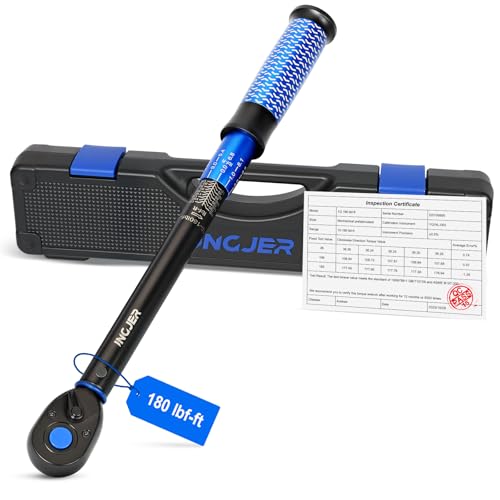
- 10-180 ft-lb range with stated ±3% accuracy
- 72-tooth reversible ratchet for tighter spaces
- Includes certificate, case, and three-year warranty
Best For: Higher-torque engine and suspension work within 180 ft-lb
Best Compact Engine-Building Pick
LEXIVON 3/8-Inch Click Torque Wrench
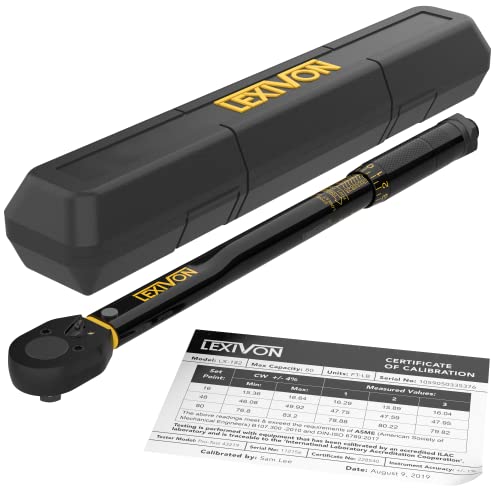
- 10–80 ft-lb torque range
- Pre-calibrated to ±4%
- Highlighted dual-range scale
Best For: DIY engine work within the 10–80 ft-lb range
Best All-in-One Set
KELIN 12-Piece Click Torque Wrench Set

- Three drive sizes included
- ±3% factory calibration
- 72-tooth ratchets with 5° swing arc
Best For: Engine work needing multiple drive sizes and ranges
Best for Low-Torque Fasteners
TEKTON 1/4-Inch Micrometer Torque Wrench

- 20–200 in-lb range
- ±3% accuracy in both directions
- 90-tooth, 4° swing ratchet
Best For: Small engine fasteners and precision low-torque work
Compact Engine-Bay Pick
SUERCUP 3/8-Inch Click Torque Wrench
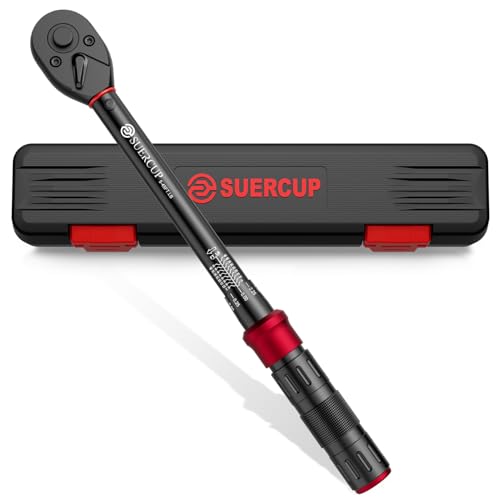
- 5–45 ft-lb range with ±3% stated accuracy
- 72-tooth reversible ratchet and dual scale
- Includes a protective storage case
Best For: Spark plugs, motorcycles, bikes, and lighter engine work
Fine-Adjustment Specialist
LEXIVON 1/4-Inch Inch-Pound Torque Wrench
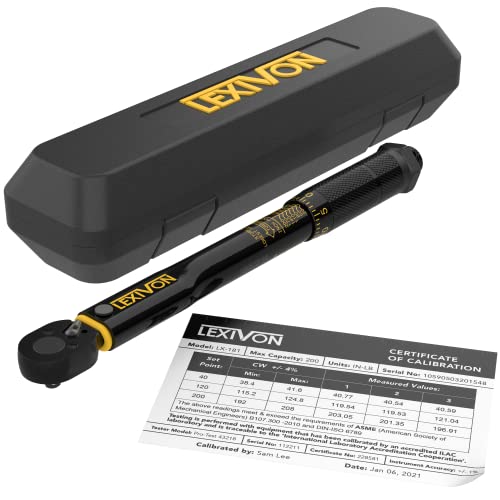
- 20–200 in-lb range for low-torque work
- Includes a traceable calibration certificate
- Readable dual scale and corrosion-resistant finish
Best For: Small engine fasteners and inch-pound applications
Wide-Range Mini Pick
HERONIX 3/8-Inch Click Torque Wrench

- 5–50 ft-lb range with ±3% stated accuracy
- Laser-etched dual scale and loud click feedback
- Compact 72-tooth reversible ratchet
Best For: Spark plugs and moderate-torque automotive or engine-bay work
Reliable Budget Pick – EPAuto 1/2-Inch Click Torque Wrench
For engine-building tasks that call for a familiar mechanical feel, the EPAuto 1/2-inch click wrench covers 10-150 ft-lb (13.6-203.5 Nm). Its dual-range scale, click feedback, and included extension make it a practical option for common automotive fasteners.
Best For: DIY engine, suspension, and general automotive work within its 10-150 ft-lb range.
Pros:
- Pre-calibrated to ±4% for repeatable settings.
- High-contrast dual SAE and metric scale is easy to read.
- Hardened Chrome Vanadium construction with a corrosion-retardant satin finish.
- Includes a 5-inch extension bar and plastic storage case.
Cons:
- Its 1/2-inch drive and 10 ft-lb minimum are not suited to smaller, low-torque fasteners.
- The mechanical click requires you to stop applying force when feedback is felt and heard.
This is a straightforward choice for builders who want a conventional click wrench, useful range, and simple storage without electronic controls.
Digital Feedback Choice – SUERCUP 3/8-Inch Digital Torque Wrench
When engine-building accuracy and visible feedback matter, the SUERCUP digital wrench offers a 2-135 Nm (1.5-99.6 ft-lb) range with stated ±1% accuracy. Vibration, a buzzer, and color LED alerts provide multiple signals as you approach the selected torque.
Best For: Lower- and medium-torque engine, spark-plug, motorcycle, and suspension work where digital readings and peak recording are useful.
Pros:
- Provides stated ±1% accuracy across its range.
- Uses vibration, buzzer, and 80/90/100% LED alerts.
- Offers nine presets, five measurement units, and track or peak modes.
- Stores up to 500 peak torque records and includes a quick-release head.
Cons:
- Requires two AA batteries.
- Its 99.6 ft-lb maximum may not cover higher-torque engine fasteners.
- The supplied guidance says not to exceed 120% of the maximum torque value.
For users comfortable with electronic tools, this wrench adds useful confirmation and recording features, particularly for smaller fasteners and jobs where peak values need to be checked.
Calibrated Classic – LEXIVON LX-183 1/2-Inch Click Wrench
LEXIVON Torque Wrench 1/2-Inch Drive Click 10~150 Ft-Lb/13.6~203.5 Nm (LX-183)
Check Price On AmazonThe LEXIVON LX-183 is a conventional 1/2-inch click torque wrench for engine-building applications from 10-150 ft-lb (13.6-203.5 Nm). It combines a stated ±4% pre-calibration with a certificate and serial number for buyers who want documented tool setup.
Best For: Engine and automotive work requiring a durable 1/2-inch mechanical wrench with clearly marked SAE and metric settings.
Pros:
- Ships pre-calibrated to ±4% and includes a trackable calibration certificate.
- Reinforced heat-treated Chrome Vanadium alloy steel ratchet head is built for durability.
- Electro-Black finish helps resist rust and corrosion.
- Yellow-on-black dual-range markings improve visibility in low light.
Cons:
- The listed range begins at 10 ft-lb, limiting suitability for very small fasteners.
- Torque measurement is specified in the clockwise direction.
Its documented calibration and high-contrast scale make the LX-183 a strong fit for builders who prefer a simple click mechanism but still want clear setup information and a durable finish.
Extended-Range Option – 1/2-Inch 10-180 ft-lb Torque Wrench
For torque wrenches for engine building that need a little more upper-range coverage, this 1/2-inch model reaches 180 ft-lb (244.1 Nm). It adds stated ±3% clockwise calibration, a 72-tooth reversible ratchet, and both audible and tactile click feedback.
Best For: Engine, suspension, and spark-plug maintenance where a 1/2-inch drive and up to 180 ft-lb are appropriate.
Pros:
- Stated ±3% clockwise accuracy with a precision report certificate.
- 10-180 ft-lb range extends beyond many 150 ft-lb models.
- 72-tooth reversible head offers a slim profile for tighter spaces.
- Includes dual Ft-Lb/Nm scales, storage case, manual, and three-year warranty.
Cons:
- Accuracy is specified for clockwise use, so users should note the stated direction.
- The 10 ft-lb minimum is not intended for very low-torque fasteners.
- It is a mechanical wrench rather than a digital model with recorded readings.
This model is appealing when your specifications reach above 150 ft-lb and you want a conventional wrench with a fine-tooth ratchet, strong tactile feedback, and documented accessories.
Best Compact Engine-Building Pick – LEXIVON 3/8-Inch Click Torque Wrench
For engine builders who need a focused 3/8-inch tool, the LEXIVON LX-182 covers 10–80 ft-lb and arrives pre-calibrated to ±4%. Its dual SAE/metric scale and highlighted markings make it practical for routine fastener work, including projects where visibility and straightforward operation matter.
Best For: DIY engine work and general automotive fastening within the 10–80 ft-lb range.
Pros:
- Pre-calibrated to ±4% with a traceable calibration certificate.
- Reversible ratchet head drives in both directions.
- Highlighted dual-range scale is easier to read in low light.
- Hardened heat-treated alloy-steel ratchet head with electro-black corrosion protection.
Cons:
- Its 3/8-inch drive and 10–80 ft-lb range may not cover every engine fastener.
- It measures torque clockwise only.
The LX-182 is a sensible single-wrench option when its range matches your engine-building needs. Choose a different drive size or a broader set if your project requires substantially lower or higher torque values.
Best All-in-One Set – KELIN 12-Piece Click Torque Wrench Set
For engine builders assembling a varied toolkit, the KELIN set combines 1/4-, 3/8-, and 1/2-inch click torque wrenches with adapters, extensions, a universal joint, and three sockets. Its three torque ranges provide broader coverage than a single wrench, while the included case keeps the components organized.
Best For: Engine work and automotive repairs requiring multiple drive sizes and torque ranges.
Pros:
- Includes three drive sizes with ranges from 10 in-lb to 170 ft-lb.
- Factory-calibrated to ±3% with a certificate included.
- 72-tooth ratchets use a 5-degree swing arc for tight spaces.
- Includes adapters, extensions, universal joint, sockets, and a portable case.
Cons:
- The kit includes only three listed sockets: 17 mm, 19 mm, and 21 mm.
- A multi-piece set requires more storage and organization than a single wrench.
The KELIN is the most versatile choice here for buyers who want one organized kit covering light, medium, and higher-torque tasks. Its range and accessories make it adaptable, though you may still need additional sockets for a specific engine.
Best for Low-Torque Fasteners – TEKTON 1/4-Inch Micrometer Torque Wrench
Low-torque engine-building fasteners call for a wrench with a suitably narrow range, and the TEKTON TRQ50402 is designed for 20–200 in-lb work. It offers dual-direction accuracy within ±3%, a 90-tooth ratchet, and a high-contrast micrometer scale for controlled adjustments.
Best For: Small engine fasteners and other precision applications in the 20–200 in-lb range.
Pros:
- Calibrated within ±3% in both directions.
- Includes a serialized certificate with test results and conditions.
- 90-tooth ratchet provides a 4-degree swing arc.
- High-contrast laser micrometer markings help reduce glare.
Cons:
- The 1/4-inch drive and 20–200 in-lb range are not suited to higher-torque fasteners.
- It uses a single-unit SAE scale rather than a dual-range scale.
The TEKTON is a targeted choice rather than an all-purpose engine wrench. It is particularly useful when your build includes small fasteners and you want documented calibration with fine, low-torque coverage.
Compact Engine-Bay Pick – SUERCUP 3/8-Inch Click Torque Wrench
For shoppers comparing torque wrenches for engine building, the SUERCUP offers a compact 3/8-inch format with a 5–45 ft-lb range, dual SAE/metric markings, and stated ±3% calibration accuracy. Its range suits lighter automotive work, including spark plugs and selected engine repairs.
Best For: DIY mechanics handling spark plugs, motorcycles, bikes, and lower-torque engine-bay fasteners.
Pros:
- 5–45 ft-lb (6.8–61 Nm) range with dual-scale markings.
- Stated ±3% accuracy and a click alert when the preset torque is reached.
- 72-tooth reversible ratchet, knurled grip, and included storage case.
Cons:
- The 45 ft-lb maximum may not cover higher-torque engine fasteners.
- Its 3/8-inch drive is less suited to large sockets and heavy-duty assemblies.
This is a practical small-drive option when your engine-building tasks fall within its relatively modest torque range. Confirm the required specifications before using it on higher-torque components.
Fine-Adjustment Specialist – LEXIVON 1/4-Inch Inch-Pound Torque Wrench
LEXIVON Inch Pound Torque Wrench 1/4-Inch Drive | 20~200 in-lb/2.26~22.6 Nm (LX-181)
Check Price On AmazonAmong torque wrenches for engine building, the LEXIVON LX-181 stands out for low-torque work. Its 1/4-inch drive measures 20–200 in-lb (2.26–22.6 Nm), making it a better match for smaller fasteners than for high-torque engine assembly tasks.
Best For: Low-torque engine components, small fasteners, and applications requiring inch-pound measurements.
Pros:
- 20–200 in-lb range provides fine control for lower-torque jobs.
- Pre-calibrated to stated ±4% accuracy and supplied with a traceable calibration certificate.
- High-contrast dual-range scale, reversible ratchet head, and corrosion-resistant electro-black finish.
Cons:
- Its 22.6 Nm maximum is too low for many larger engine fasteners.
- The 1/4-inch drive limits compatibility with larger sockets.
- Torque measurement is specified clockwise, despite the reversible ratchet head.
The LX-181 is a focused tool for precision, low-torque work rather than a general engine-building wrench. Pair it with a higher-range wrench if your project includes larger fasteners.
Wide-Range Mini Pick – HERONIX 3/8-Inch Click Torque Wrench
For torque wrenches for engine building, the HERONIX combines a 3/8-inch drive with a slightly broader 5–50 ft-lb range. The stated ±3% accuracy, laser-etched dual scale, and loud click feedback make it a useful candidate for spark plugs and other moderate-torque automotive work.
Best For: Compact engine-bay repairs, spark plugs, motorcycles, bikes, and automotive fasteners within the 5–50 ft-lb range.
Pros:
- 5–50 ft-lb (6.8–67.8 Nm) range with stated ±3% accuracy.
- Laser-etched SAE/metric scale and approximately 45 dB audible click.
- Compact 72-tooth reversible head with quick release and anti-slip handle.
Cons:
- The 50 ft-lb maximum still excludes many higher-torque engine fasteners.
- Its compact 3/8-inch format may require an additional wrench for complete engine assembly coverage.
The HERONIX is a sensible middle ground for moderate-torque jobs, offering five additional foot-pounds of range over many similar compact wrenches. For full engine builds, verify that its maximum output matches the manufacturer’s torque specifications.
How We Picked the Best Torque Wrenches for Engine Building
We focused on the specifications that matter during real engine assembly: usable torque range, drive size, adjustment style, accuracy claims, scale readability, and versatility. The selection includes click-style, digital, and multi-piece sets, with options covering inch-pound, foot-pound, and metric measurements.
Because no single wrench covers every engine fastener, we also considered how well each option complements a broader tool collection. A narrow-range 1/4-inch or 3/8-inch wrench can be more useful for small fasteners than a large wrench used near the bottom of its range.
Quick Comparison
| Best For | Recommended Type | Typical Coverage |
|---|---|---|
| Small engine fasteners | 1/4-inch drive inch-pound wrench | Low torque, precise adjustments |
| General automotive assembly | 3/8-inch drive click or digital wrench | Low-to-mid torque |
| Head bolts and larger hardware | 1/2-inch drive click wrench | Mid-to-high torque |
| Multiple projects | Multi-drive set | Several ranges and socket sizes |
Key Buying Factors for Torque Wrenches for Engine Building
Torque Range and Units
Check your service manual before choosing a wrench. Engine specifications may be listed in foot-pounds, inch-pounds, or Newton-meters. Select a tool whose required torque falls comfortably within its working range rather than at the extreme low or high end.
Drive Size
1/4-inch drives suit small fasteners and inch-pound work, while 3/8-inch models are versatile for many engine components. A 1/2-inch drive is better suited to larger fasteners and higher torque, but it can be bulky around confined areas.
Accuracy, Mechanism, and Readability
Look for a clearly marked scale, a secure locking adjustment, and a click that is easy to feel or hear. Digital models add display and alert features, while click wrenches are simpler and do not require batteries. Treat advertised accuracy as a specification to verify against the manufacturer’s instructions.
Calibration and Use
Store a click wrench at its recommended minimum setting, keep threads clean, and avoid using a torque wrench as a breaker bar. For critical engine work, periodic calibration and a controlled, steady pull are more important than maximum feature count.
Who Should Buy Which Torque Wrenches for Engine Building?
Choose a 1/4-inch inch-pound model for valve-train components, small fasteners, and applications with low torque specifications. A 3/8-inch wrench is the best starting point for many DIY engine builders because it balances access, range, and compatibility with common sockets.
Choose a 1/2-inch model when your work includes higher-torque fasteners such as larger automotive hardware. If you build engines regularly or work across several torque ranges, a set with multiple drive sizes offers better coverage than relying on one oversized wrench. A digital wrench is worth considering when audible alerts, precise display readings, or easier unit conversion are priorities.