Unstable voltage can shorten appliance life, trigger nuisance shutdowns, or damage sensitive electronics. The best relay voltage stabilizers monitor electrical conditions and disconnect loads when voltage moves outside a safe range.
This roundup covers adjustable relays, smart circuit breakers, wall-mount protectors, DC modules, and three-phase options. Use the buying guide below to match protection features, installation style, and electrical rating to your setup.
Best 10 Relay Voltage Stabilizers Picks for 2026
Adjustable Home Protection
SVP912 120V Voltage Protector Relay

- Voltage display with over/undervoltage protection
- Adjustable thresholds, delays, and recovery settings
- 40A plastic device with reset and fault-query functions
Best For: Customizable protection for home electrical systems
DIN-Rail Control
Walfront 63A Adjustable Voltage Relay

- DIN-rail design for panel installation
- Dual LED display shows voltage and current
- Adjustable 1–63A protection with configurable thresholds
Best For: 230VAC electrical panels requiring adjustable monitoring
Appliance Plug Protection
Treybair Dual Voltage Stabilizer Set

- Two plug-in protectors with real-time voltage displays
- Adjustable 80V–140V thresholds and reboot timing
- 180-second refrigerator delay and 1,800-joule surge rating
Best For: Plug-in protection for refrigerators, TVs, and household appliances
Compact Panel Monitoring
GEYA Single-Phase Voltage Relay

- 18mm-wide rail-mounted design
- True RMS measurement with accuracy below 1%
- Adjustable over/undervoltage operation with LED status indicator
Best For: Space-limited single-phase electrical panels
Best Whole-Home Solar Protection
Adjustable 63A Voltage Protector

- 63A DIN-rail protection for panels and solar systems
- LED display shows voltage and current in real time
- Auto-reconnects after voltage or current normalizes
Best For: Whole-house, RV, and off-grid solar protection
Best Compact DC Monitoring Module

- Adjustable DC detection from 0 to 99.9V
- LED readout with two-button controls
- Protective cover included for compact projects
Best For: Battery and low-voltage DC monitoring
Best Smart DIN-Rail Option

- 2-pole, 63A DIN-rail circuit protection
- Auto-resets when supply conditions normalize
- Adjustable voltage and 1–63A current limits
Best For: Residential panels and electrical control cabinets
Three-Phase Protection

- Protects against over/undervoltage and phase faults
- LCD display with adjustable settings
- Integrates timer and counter functions
Best For: Three-phase systems needing combined voltage and phase protection
Smart DIN-Rail Protection
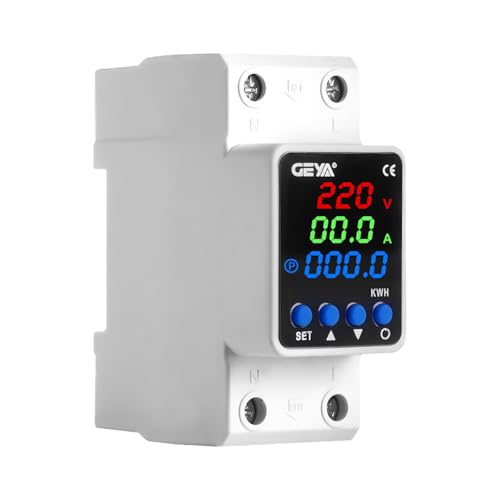
- Adjustable voltage and current thresholds
- Automatic recovery after stable power returns
- Mounts on standard 35mm DIN rail
Best For: Panels and circuits needing self-resetting protection
Compact 12V Monitoring
NOYITO 12V Voltage Relay Module
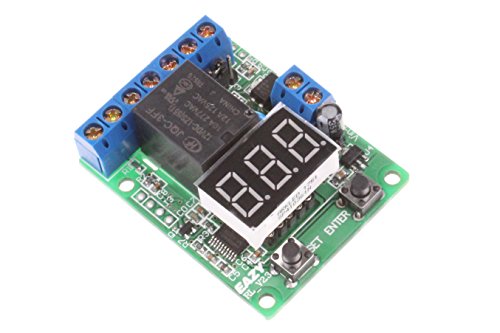
- Displays detected voltage from 0–99.9V
- Designed for DC 10–16V operation
- Supports upper/lower limit and timing control
Best For: 12V battery charging and low-voltage control projects
Adjustable Home Protection – SVP912 120V Voltage Protector Relay
For shoppers comparing relay voltage stabilizers, the SVP912 is a compact 120V protective device designed to monitor and respond to overvoltage, undervoltage, and overcurrent conditions. Its display and adjustable settings provide more control over electrical protection.
Best For: Users who want adjustable voltage and recovery settings in a compact plastic protector for home electrical equipment.
Pros:
- Displays voltage for at-a-glance monitoring.
- Supports overvoltage, undervoltage, and surge protection.
- Offers adjustable protection thresholds, action time, and recovery delays.
- Includes reset-mode selection, fault query, and factory-reset functions.
Cons:
- Its 40A rating and Type A plug specification may not suit every installation.
- Plastic construction may be less suitable for demanding industrial environments.
The SVP912 stands out when adjustability and on-device monitoring matter more than a basic plug-in design. Confirm the electrical requirements and installation method before choosing it.
DIN-Rail Control – Walfront 63A Adjustable Voltage Relay
The Walfront is a DIN-rail option for shoppers seeking relay voltage stabilizers with adjustable monitoring. It uses dual LED displays and supports configurable overvoltage, undervoltage, overcurrent, and fault-recovery settings.
Best For: DIN-rail installations that need adjustable protection and visible voltage or current readings.
Pros:
- DIN-rail mounting supports organized electrical-panel installation.
- Dual LED displays show voltage and current information.
- Adjustable 1–63A rated current, with 63A as the default.
- Overvoltage, undervoltage, overcurrent, and recovery delay settings are adjustable.
Cons:
- Designed for 230VAC, 50/60Hz systems rather than general 120V use.
- Installation requires a compatible DIN rail and appropriate electrical knowledge.
Choose this model when panel mounting and higher adjustable current capacity are priorities. Its stated 230VAC specification should be checked carefully against the intended circuit.
Appliance Plug Protection – Treybair Dual Voltage Stabilizer Set
This two-pack takes a plug-in approach to relay voltage stabilizers, combining adjustable voltage protection with surge defense for appliances. Real-time display, appliance-specific response modes, and a compressor delay make it especially relevant to refrigerators and other household electronics.
Best For: Refrigerators, TVs, freezers, and other household appliances needing plug-in voltage and surge protection.
Pros:
- Two units provide protection for multiple appliances.
- Supports custom voltage thresholds and reboot timing from 80V to 140V.
- Offers a delay of more than 180 seconds for refrigerators and 30–60 seconds for non-compressor appliances.
- Includes an LED voltage display and 1,800-joule surge protection rating.
Cons:
- The 15A rating limits suitability for some higher-current equipment.
- Its Type A/Type B North American plug configuration may not fit every region.
- The recommended 80V–140V range may not suit applications requiring different thresholds.
For convenient appliance-level protection, this set is easier to deploy than a panel-mounted relay. Verify the appliance load, outlet style, and desired voltage range before purchase.
Compact Panel Monitoring – GEYA Single-Phase Voltage Relay
The GEYA GRV8-01 is a compact single-phase monitor for relay voltage stabilizer applications requiring adjustable over- or undervoltage protection. It measures its own supply voltage using True RMS technology and mounts on a rail in a narrow 18mm housing.
Best For: Space-constrained single-phase panels needing adjustable voltage monitoring and relay switching.
Pros:
- Ultra-small 18mm-wide body helps conserve rail space.
- Supports 35mm rail mounting.
- True RMS measurement and stated measurement accuracy below 1%.
- LED indication shows relay working status, with knob-selected operation mode.
Cons:
- Its 10A contact rating may not handle high-load equipment directly.
- It is a rail-mounted component rather than a ready-to-use plug-in protector.
- Installation requires compatible wiring and electrical-panel expertise.
The GRV8-01 is a strong fit where compact dimensions and measurement accuracy are important. Pair it with an appropriate installation and confirm that the 10A contact rating matches the controlled load.
Best Whole-Home Solar Protection – Adjustable 63A Voltage Protector
This adjustable 63A protector is a practical choice among relay voltage stabilizers for homeowners, RV users, and off-grid solar setups. It monitors voltage and current on an LED display while disconnecting power during overvoltage, undervoltage, or overcurrent conditions, then reconnecting automatically when readings return to normal.
Best For: Whole-house panels, RVs, and solar systems that need adjustable protection and real-time electrical monitoring.
Pros:
- Supports adjustable overvoltage, undervoltage, and overcurrent thresholds.
- Displays voltage and current in real time on a triple LED display.
- Automatically reconnects after conditions return to a safe range.
- Installs on a standard DIN rail and includes side-panel setup instructions.
Cons:
- Its 110V coil rating and specified voltage ranges may not suit every electrical system.
- Installation requires configuring electrical protection thresholds correctly.
Choose this model when you need a higher-current, adjustable relay protector with broad solar and RV applications. Its 63A rating and monitoring display make it more suitable for panel-level protection than for small standalone battery projects.
Best Compact DC Monitoring Module – 0–99.9V Relay Controller
This compact DC module offers a simple way to add relay voltage stabilizers-style overvoltage and undervoltage control to a battery or low-voltage project. Its adjustable 0–99.9V detection range, two-button controls, and clear LED display make it useful for monitoring and switching based on measured DC voltage.
Best For: Battery protection, DC voltage detection, and small low-voltage control projects.
Pros:
- Adjustable detection range covers DC 0–99.9V.
- LED display makes the measured voltage easy to check.
- Two buttons provide straightforward limit adjustment.
- Includes a protective cover.
Cons:
- Its listed contact current rating is only 58 milliamps, limiting direct high-load switching.
- It is a surface-mount module rather than a DIN-rail panel device.
- Operation is listed as manual, so it lacks the broader automatic features of larger protectors.
This module is best for compact DC applications where adjustable voltage thresholds are more important than high current capacity. Verify the relay and load requirements before using it to control equipment directly.
Best Smart DIN-Rail Option – GEYA 2P 63A Protector
The GEYA 2P 63A protector is a strong panel-mounted option for shoppers comparing relay voltage stabilizers with automatic recovery and energy monitoring. It supports adjustable overvoltage, undervoltage, and overcurrent settings, then restores power automatically after the supply returns to a safe level.
Best For: Residential electrical panels and control cabinets requiring 2-pole DIN-rail protection with auto-reset.
Pros:
- Supports adjustable overvoltage from 130–150V and undervoltage from 80–100V.
- Overcurrent protection is adjustable from 1–63A.
- Automatically restores power after voltage stabilizes.
- Quick-attaches to standard 35mm DIN rails.
Cons:
- The listed adjustable voltage ranges are narrower than those of some broader-range protectors.
- It is designed for panel installation rather than portable use.
This GEYA model makes sense when automatic recovery, two-pole switching, and organized DIN-rail installation are priorities. Its adjustable current range adds flexibility, while the specified voltage windows should be checked against the intended supply.
Three-Phase Protection – JVR800-2 Voltage Stabilizer
For three-phase systems that need more than basic voltage monitoring, the JVR800-2 combines relay voltage stabilizers functions with protection for overvoltage, undervoltage, phase loss, phase sequence, and unbalanced voltage. Its LCD display and adjustable settings make status checks easier during installation and operation.
Best For: Three-phase electrical systems requiring adjustable voltage and phase protection in one relay.
Pros:
- Monitors overvoltage, undervoltage, phase loss, phase sequence, and unbalanced voltage.
- LCD screen displays operating data for easier reading.
- Combines a three-phase protector, timer, and counter.
- Includes power-delay and output-test functions without needing an external power supply.
Cons:
- Designed for three-phase applications rather than standard single-phase household circuits.
- The supplied notes do not specify the supported voltage and current ranges.
The JVR800-2 is a feature-rich choice when phase-related faults matter as much as voltage variation. Confirm its electrical ratings and wiring requirements before installation.
Smart DIN-Rail Protection – GEYA 2P 63A Voltage Protector
The GEYA 2P 63A is a DIN-rail option for buyers comparing relay voltage stabilizers with automatic circuit protection. It supports adjustable overvoltage, undervoltage, and overcurrent settings, then restores power automatically when conditions return to a safe range.
Best For: Household circuits and control panels needing adjustable protection with automatic recovery and energy monitoring.
Pros:
- Adjustable overvoltage range of 130–300V and undervoltage range of 80–210V.
- Supports adjustable overcurrent protection from 1–63A.
- Automatically restores power after voltage conditions stabilize.
- Quick-attaches to standard 35mm DIN rails.
Cons:
- Its 2-pole, 63A design may not suit every circuit or panel configuration.
- Installation requires a compatible DIN-rail electrical panel.
With broad adjustable thresholds and automatic reset, the GEYA is a practical panel-mounted choice for installations where minimizing manual resets is important. Verify circuit compatibility and local installation requirements.
Compact 12V Monitoring – NOYITO 12V Voltage Relay Module
The NOYITO 12V module is a compact choice for low-voltage projects that need relay voltage stabilizers-style upper and lower limit detection. It displays detected voltage from 0–99.9V and can control a relay for battery charging, discharging, timing, or other 12V applications.
Best For: 12V battery and control projects requiring adjustable voltage-limit switching.
Pros:
- Works with DC 10–16V supplies and provides a 0–99.9V detection display range.
- Specified detection accuracy is ±0.1V.
- Provides normally open and normally closed relay contacts.
- Supports timing and upper/lower voltage-limit control functions.
Cons:
- The supplied version is intended for 12V systems, not general household voltage stabilization.
- It cannot use a 24V pulse charger supplying more than 30V as its power source.
- DC loads above 30V have more limited stated capacity, including 1A at 50V DC.
This module is best viewed as a low-voltage monitoring and switching controller rather than a mains stabilizer. Its display accuracy and changeover contacts suit small battery or automation projects when the stated load limits are respected.
How We Picked These Relay Voltage Stabilizers
We selected products across the main use cases: household appliances, single-phase distribution boards, DIN-rail installations, low-voltage battery systems, and three-phase equipment. We compared adjustable voltage thresholds, rated current, automatic recovery, display and monitoring features, installation format, and the type of protection provided.
Because these devices are not interchangeable, the list includes both dedicated voltage relays and smart breakers that combine voltage protection with overcurrent functions. Always verify the product’s wiring diagram, operating voltage, current rating, and local electrical requirements before installation.
Quick Comparison
| Best For | Look For | Product Type |
|---|---|---|
| Refrigerators and TVs | Simple setup, automatic reset, suitable load rating | Wall-mount surge or voltage protector |
| Home distribution panels | DIN-rail mounting, adjustable limits, clear display | Smart breaker or voltage relay |
| Control panels | SPDT contacts, precise thresholds, control-voltage compatibility | Monitoring relay |
| Battery and DC projects | Correct DC range, upper/lower limits, relay output | Voltage monitor module |
| Three-phase equipment | Phase monitoring and phase-loss protection | Three-phase voltage protector |
Key Buying Factors for Relay Voltage Stabilizers
Voltage and Current Compatibility
Match the stabilizer to the system voltage, whether it is 12V DC, 120V AC, 220V AC, or a wider 110–240V range. The current rating must also meet the connected load. For motors, compressors, and other inductive equipment, allow extra margin for startup current rather than sizing only from the running wattage.
Adjustable Limits and Recovery Behavior
Adjustable overvoltage and undervoltage limits are useful when local power quality varies, but incorrect settings can cause unnecessary cutoffs or leave equipment underprotected. Check the delay time, automatic-reset behavior, and whether the device requires manual restoration after a fault.
Installation and Switching Design
DIN-rail products suit electrical panels, while wall-mount units are more convenient for individual appliances. Confirm terminal capacity, contact arrangement, enclosure design, and whether the relay is intended to switch the full load or control a separate contactor. A qualified electrician should handle fixed-wiring installations.
Monitoring and Extra Protection
LED displays make threshold settings and fault conditions easier to verify. Smart breakers may add overcurrent protection, energy information, or remote-style controls, but these features do not automatically replace surge protection, grounding, or a properly rated circuit breaker.
Who Should Buy Which Relay Voltage Stabilizers?
Choose a wall-mount protector for a refrigerator, television, or single appliance where simple automatic voltage cutoff is the priority. Choose a DIN-rail smart breaker when you want adjustable voltage protection alongside overcurrent protection in a panel. A compact DC module is better for battery chargers, hobby electronics, and low-voltage control circuits.
For industrial panels or equipment supplied by three phases, use a dedicated three-phase relay with phase-loss and phase-sequence functions when required. Buyers needing a general-purpose control relay should prioritize compatible coil voltage, contact configuration, and switching capacity over display features. If the load is high, sensitive, or motor-driven, have an electrician confirm coordination with the main breaker, contactor, grounding, and surge protection before installation.