The best self-priming utility pumps make it easier to move water, drain pools, boost pressure, or handle transfer jobs without submerging the pump. This roundup compares 10 options across portable electric, drill-powered, engine-driven, booster, and fuel-transfer designs.
Use the specifications below to match pump type, flow rate, lift, power source, port size, and included accessories to your project. The right choice depends less on maximum horsepower alone than on the work you need the pump to perform.
Best 10 Self Priming Utility Pumps Picks for 2026
Heavy-Duty Water Transfer Pick

- 1,500 GPH maximum flow
- Cast-iron portable housing
- Includes strainer and adapters
Best For: Clear-water transfer and drainage jobs
Fuel Transfer Specialist
- 5.25-15.75 GPM stated range
- 550W, 110V AC motor
- Cast-iron body with 1-inch ports
Best For: Diesel and kerosene transfer
Garden Pressure Choice
KITLUCK 1.6 HP Shallow Well Pump
- 1.6 HP motor and 150-foot lift
- Stainless-steel and aluminum construction
- Includes filter with non-return valve
Best For: Irrigation and shallow-well water transfer
Commercial Transfer Option

- Self-primes up to 15 feet
- 1/2 HP, 115V motor
- Aluminum construction
Best For: Portable liquid transfer and recirculation
Best Drill-Powered Pick
Compact Jabsco Self-Priming Drill Pump
- Drill-powered and compact
- 3.5 GPM flow rate
- Includes GHT adaptors
Best For: Light-duty water transfer with a compatible electric drill
Best Electric Utility Kit
115V Self-Priming Transfer Pump

- 5.5 GPM flow rate
- 42-foot maximum lift
- Includes hoses and strainer
Best For: Clean-water draining around the home and outdoors
Best High-Volume Pick
Pacer 200 GPM Self-Priming Pump

- 200 GPM maximum flow
- 2-inch inlet and outlet
- 208cc gasoline engine
Best For: Construction, agriculture, emergency, and industrial water transfer
Compact Electric Pick
Portable 330 GPH Transfer Pump
- 330 GPH flow with approximately 39-foot lift
- 6-foot hose and low-water strainer included
- Compact, corded, non-submersible design
Best For: Light-duty clear-water drainage and household water transfer
Heavy-Duty Water Transfer Pick – KITLUCK 1/2 HP Utility Pump
For shoppers comparing self priming utility pumps, the KITLUCK offers a portable electric option for clear-water transfer and drainage. Its cast-iron housing, 1/2 HP motor, 1,500 GPH maximum flow, and 20-foot suction lift suit common household and outdoor jobs, but it must be manually primed before use.
Best For: Transferring clear water from pools, ponds, rain barrels, flooded areas, and water heaters.
Pros:
- Moves up to 1,500 gallons per hour and lifts water up to 120 feet.
- Durable cast-iron construction with a portable top handle.
- Includes a suction strainer, brass hose adapters, sealing tape, and replacement carbon brushes.
Cons:
- Requires filling through the prime plug before use.
- Not submersible and intended for clear water only.
- Connections need careful sealing, and the pump should not run dry.
This is a practical choice when durability and included accessories matter more than automatic priming. Follow the setup instructions closely to protect the motor and maintain reliable transfer performance.
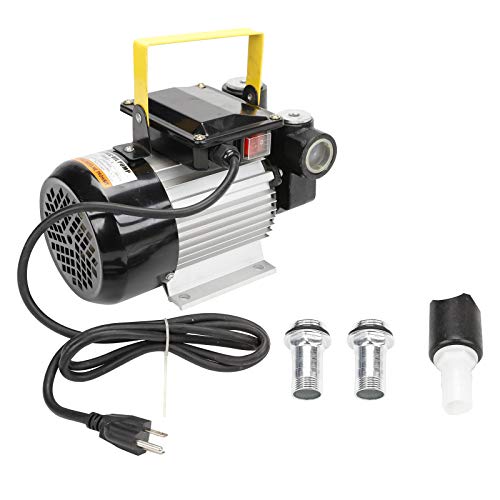
Fuel Transfer Specialist – 110V Self-Priming Oil Pump
This 110V electric pump is a specialized choice among self priming utility pumps, designed for moving light oils rather than household water. Its 550-watt motor delivers a stated 5.25-15.75 GPM range and supports vehicle, farm, construction-site, and outdoor fueling applications.
Best For: Transferring diesel, kerosene, and biodiesel for vehicles and fuel-powered equipment.
Pros:
- Self-priming 110V AC design for convenient fuel transfer.
- Adjustable stated flow range of 5.25-15.75 GPM.
- Cast-iron body with 1-inch inlet and outlet hose-barb connections.
Cons:
- Not suitable for gasoline, LPG, alcohol, or other low-flammability fuels.
- Its fuel-specific design is not appropriate for general water-transfer tasks.
- Requires compatible 1-inch hose connections.
Choose this model for a dedicated diesel or kerosene setup, not as an all-purpose utility pump. Confirm the fuel type and hose fittings before installation, and use it only in the applications specified by the manufacturer.
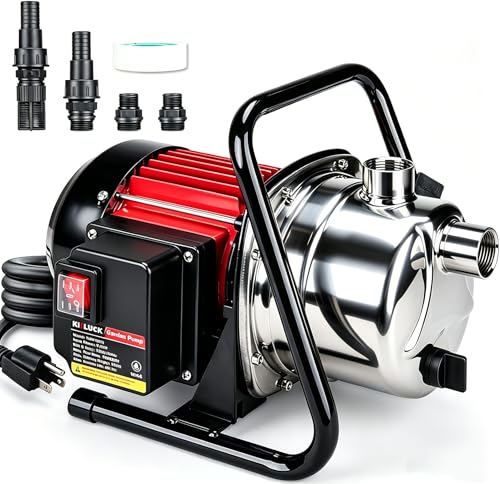
Garden Pressure Choice – KITLUCK 1.6 HP Shallow Well Pump
The KITLUCK shallow-well model combines high power with portable garden utility, making it a strong option for buyers comparing self priming utility pumps for irrigation and water removal. It is rated for up to 1,000 GPH, a 150-foot lift, and a 26-foot suction lift, though the pump head and inlet line should be filled with water before operation.
Best For: Garden irrigation, sprinkler systems, shallow wells, ponds, pools, and rain-barrel transfer.
Pros:
- Powerful 1.6 HP motor with a stated 150-foot maximum lift.
- Stainless-steel pump head and aluminum-alloy body resist wear and rust.
- Includes a filter with non-return valve, adapters, and sealing tape.
Cons:
- Requires priming the pump head and preferably the inlet pipe before use.
- Water must be drained after use.
- Its 15-pound, 13-inch-long design is less compact than a small transfer pump.
This model makes sense when irrigation reach and pressure support are priorities. Its included inlet filtration and check-valve fitting add convenience, but proper priming and sealed connections remain essential for dependable operation.
Commercial Transfer Option – AMT 4292-96 Self-Priming Pump
For portable liquid transfer and recirculation, the AMT 4292-96 is a purpose-built option in the self priming utility pumps category. Its 1/2 HP, 115V motor and aluminum construction support applications such as construction, emergency work, and cold-weather liquid handling, with self-priming capability up to 15 feet.
Best For: Portable liquid transfer and recirculation where a compact, self-priming commercial pump is needed.
Pros:
- Self-primes from suction lifts up to 15 feet.
- Aluminum construction helps keep the pump suited to portable use.
- Supports liquid transfer, recirculation, construction, emergency, and cold-weather applications.
Cons:
- Limited to a 1/2 HP motor.
- Connections and seal configuration should be verified for the intended installation.
- At 21 pounds, it is not an especially lightweight portable pump.
The AMT is a better fit for buyers who value a self-priming commercial design over a bundled accessory package. Check the required port size and seal compatibility before purchase, especially when handling liquids near its 180-degree-F operating limit.
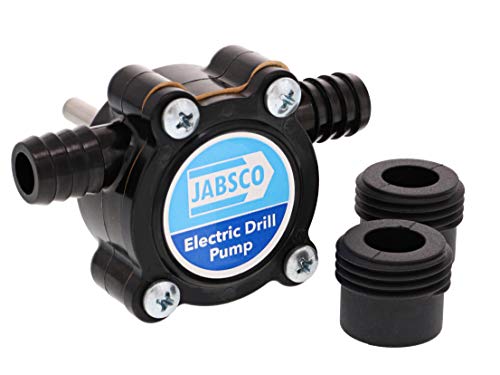
Best Drill-Powered Pick – Compact Jabsco Self-Priming Drill Pump
For light-duty jobs where portability matters, the Jabsco 17250-0003 is a compact choice among self priming utility pumps. It connects to 1/2-inch ID hoses, runs from a corded electric drill, and includes 3/4-inch garden hose thread adaptors.
Best For: Quick water-transfer tasks when you already have a compatible electric drill.
Pros:
- Self-priming design for convenient setup
- Moves water at up to 3.5 GPM
- Compact, lightweight 0.16 kg construction
- Includes GHT adaptors for flexible connections
Cons:
- Requires a separate corded electric drill
- Maximum lifting height is only 1 meter
- No manufacturer warranty is listed
This pump is best suited to occasional, low-lift transfer work rather than demanding applications. Its small size and drill-powered format make storage and transport easy, but performance depends on the drill and the modest lifting specification.
Best Electric Utility Kit – 115V Self-Priming Transfer Pump
This 115V FIDISP pump is a practical kit for household and outdoor water removal. Among self priming utility pumps, it stands out for its 5.5 GPM flow rate, 42-foot maximum lift, on/off switch, hoses, and strainer for low-level water pickup.
Best For: Draining pools, hot tubs, aquariums, rain barrels, and other clean-water sources.
Pros:
- Transfers up to 330 gallons per hour
- Maximum lift exceeds 42 feet
- Includes two 6-foot hoses and a suction strainer
- Built-in waterproof on/off switch
Cons:
- Requires a 115V electrical outlet
- Must be primed with water before use
- Instructions caution against running it dry
The included accessories make this a convenient ready-to-use option for clean-water jobs. Follow the inlet and outlet directions carefully, use the supplied inlet hose, and add water before starting to help maintain smooth operation.
Best High-Volume Pick – Pacer 200 GPM Self-Priming Pump
For construction, agriculture, emergency response, and other high-volume work, the Pacer Pumps SE2UL CX208 brings substantially more capacity than small utility models. This self priming utility pump has 2-inch suction and discharge ports, a gasoline engine, and a rated flow of up to 200 GPM.
Best For: Heavy-duty water transfer where high flow and gasoline-powered operation are priorities.
Pros:
- Up to 200 GPM flow rate
- 2-inch suction and discharge ports
- 25-foot suction lift and 120-foot maximum TDH
- Built-in check valve and low-oil shut-off protection
Cons:
- Gasoline-powered rather than electric
- Heavier and less compact at 15 pounds
- More capability than needed for small household draining tasks
This is the strongest choice of the three for demanding transfer applications. Its 208cc engine, large ports, and protective features support serious field use, while the one-year limited parts-and-labor warranty adds some ownership reassurance.
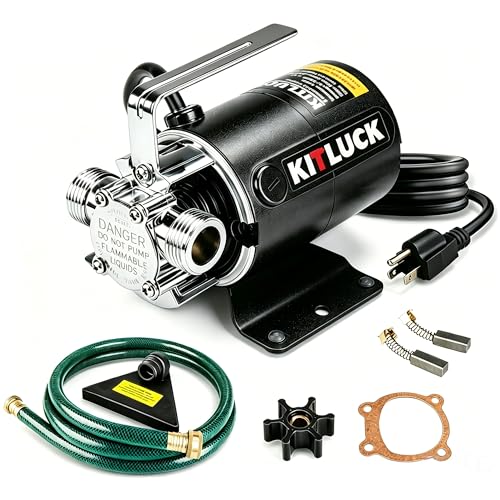
Compact Electric Pick – Portable 330 GPH Transfer Pump
If you need self priming utility pumps for light-duty water removal, this compact 115V KITLUCK model offers a practical setup for pools, rain barrels, aquariums, and small flooded areas. It includes a 6-foot suction hose and strainer, but you must wet the impeller before use and keep the motor dry.
Best For: Homeowners handling clear-water drainage, aquarium maintenance, rain-barrel transfer, and occasional basement or pool water removal.
Pros:
- Portable aluminum body with a carrying handle and 6-foot power cord.
- Moves up to 330 gallons per hour with a maximum lift of about 39 feet.
- Included suction hose and weighted strainer can remove water down to approximately 1/8 inch.
- Replacement impeller, gasket, and carbon brushes are included.
Cons:
- Non-submersible design requires the motor to stay dry.
- Requires manual priming by adding water to the impeller.
- Intended for clear water only and should not run dry.
This is a convenient choice when portability and included accessories matter more than high-volume performance. Its compact size suits routine household jobs, while the operating precautions make proper setup important.
High-Power Automatic Pick – 1.5HP Self-Priming Booster Pump
Among self priming utility pumps, this 1.5HP model is designed for higher-demand pressure boosting and water transfer. Its mechanical pressure switch starts and stops the pump automatically, while overheat and dry-run protection add useful safeguards for household, garden, and emergency applications.
Best For: Shower and faucet pressure boosting, irrigation, rainwater or basement drainage, and longer-distance water transfer.
Pros:
- Strong 1.5HP motor with up to 1600 GPH flow.
- Self-priming operation simplifies startup and setup.
- Mechanical pressure switch provides automatic start and stop control.
- Built-in overheat and dry-run protection support extended operation.
Cons:
- The mechanical pressure switch does not support custom pressure adjustment.
- It is substantially larger and heavier than compact transfer pumps.
- The supplied notes do not specify a hose kit or additional accessories.
This pump is the better fit when pressure boosting and high lift are priorities. Its automatic control is convenient, though buyers wanting finely adjustable pressure or a complete hose kit may need to plan around those limitations.
Low-Water Removal Pick – Self-Priming 330 GPH Pump
This self priming utility pump combines a compact 115V design with a complete hose kit for quick water removal. It can transfer up to 330 gallons per hour, lift water through a 6-foot suction line, and remove water down to about 1/8 inch when used with the included strainer.
Best For: Pool, basement, aquarium, rain-barrel, garden, and other clear-water transfer tasks where low-water pickup is useful.
Pros:
- Self-priming design starts after adding water to the pump.
- Includes a suction hose, strainer attachment, and extra impeller.
- Heavy-duty metal pump head and reinforced connectors support durability.
- Provides up to 40 feet of lift and approximately 5.5 GPM flow.
Cons:
- Non-submersible, so the motor must remain out of the water.
- Manual priming is still required before operation.
- Its 330 GPH capacity is intended for smaller water-transfer jobs rather than high-volume pumping.
For buyers who want a ready-to-use portable pump, this model offers a strong balance of accessories, low-water removal, and straightforward operation. It is best reserved for clear-water applications and occasional household drainage.
How We Picked the Best Self Priming Utility Pumps
We compared these Self Priming Utility Pumps by the specifications that matter most in real use: flow rate, horsepower, maximum head or lift, inlet and outlet size, power source, portability, priming design, construction, and included hoses or fittings. We also considered intended use, since a compact pool-draining pump is not interchangeable with a high-volume engine-driven transfer pump or a fuel-rated model.
Because advertised performance can vary with hose length, elevation, fluid type, and restrictions, treat maximum gallons per hour as a best-case reference rather than a guaranteed operating rate. Verify the manufacturer’s requirements before handling fuel, chemicals, hot liquids, or contaminated water.
Quick Comparison
| Pump type | Best suited to | What to prioritize |
|---|---|---|
| Small electric utility pump | Pool, garden, and light drainage | Easy setup, hose kit, on/off switch |
| Portable 1/2 HP electric pump | General water transfer | Durable housing, pressure, port compatibility |
| Booster pump | Showers, sprinklers, and pressure support | Maximum head, pressure switch, automatic operation |
| Engine-driven pump | Large-volume outdoor transfer | Flow rate, 2-inch ports, fuel capacity, noise |
| Fuel-transfer pump | Diesel, kerosene, or biodiesel | Fluid compatibility, duty cycle, grounding, safety |
| Drill pump | Occasional emergency or light-duty use | Drill compatibility, low cost, compact storage |
Key Buying Factors for Self Priming Utility Pumps
Flow Rate and Lift
GPH or GPM indicates how quickly a pump can move fluid, while maximum head describes how high it can push. Long hoses, narrow fittings, bends, and uphill runs reduce actual flow. Choose extra capacity when the discharge route is long or elevated.
Power Source and Operating Location
Electric models are convenient where a properly rated outlet is available, but they require attention to weather protection, extension-cord sizing, and ground-fault protection. Gas-powered pumps suit remote locations and high-volume jobs, although they produce exhaust and more noise. Drill pumps are compact but depend on a compatible drill and are generally intended for short, occasional tasks.
Fluid Compatibility and Construction
Cast iron and aluminum housings can provide useful durability, while stainless steel may suit certain outdoor environments. Confirm whether the pump is designed for clean water, dirty water, fuel, or another liquid. Never assume a water pump is safe for gasoline or other flammable fluids.
Connections, Priming, and Maintenance
Match the pump’s inlet and outlet sizes to your hoses and adapters. A self-priming design can simplify startup, but many pumps still require an initial fill or specific setup. Check for strainers, replacement impellers, oil requirements, hose kits, and accessible drain or service points.
Who Should Buy Which Self Priming Utility Pumps?
Choose a compact 1/10 HP electric model for occasional pool, garden, or shallow-water drainage where portability matters most. A 1/2 HP transfer pump is a better all-purpose option for users who need stronger performance and a more substantial housing. Select a booster pump when pressure and automatic cycling are more important than simple draining.
For large outdoor jobs, the 200 GPM engine-driven pump is the practical category to consider, particularly when electrical power is unavailable. Choose the dedicated fuel-transfer model only for approved fuels and follow all ventilation, grounding, and fire-safety instructions. A drill pump makes sense when storage space and purchase price matter more than speed or continuous-duty performance.