The best screen houses for camping create a comfortable outdoor room where you can eat, relax, and escape mosquitoes without giving up fresh air. The right model can also provide welcome shade during sunny campground afternoons.
We compared 10 popular options across setup, size, screening, sun protection, portability, and everyday usability so you can choose a shelter that fits your campsite and camping style.
Best 10 Screen Houses for Camping Picks for 2026
Lightweight Pick
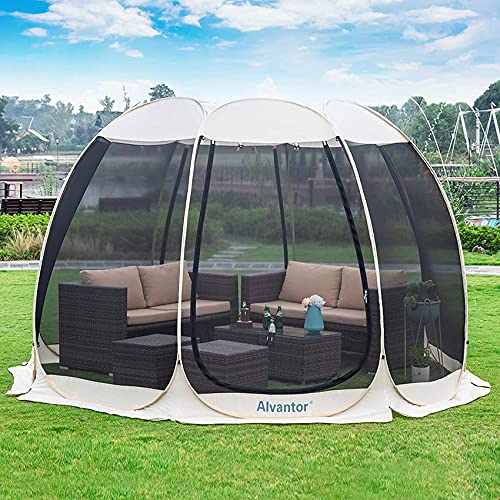
- Lightweight fiberglass pop-up frame
- 10-by-10-foot space for 4–6 adults
- UPF 50+ roof with 360-degree mesh ventilation
Best For: Campers wanting an easy-to-carry shelter for fair-weather outings
Fast-Setup Pick
Coleman Skylodge Portable Screenhouse

- One-minute hub-and-pole setup
- Two entryways for easier gear access
- 10-by-10-foot shelter with UPF 50+ protection
Best For: Campers who want a quick, accessible screened lounge
Roomiest Option

- Generous 13-by-13-foot footprint
- 134 square feet of shaded space
- Includes stakes, tie-downs, and carry bag
Best For: Families needing ample room for camping and outdoor activities
Stability Pick

- One-person setup in under one minute
- UPF 50+ roof and fine-mesh bug protection
- Reinforced structure with extensive tie-down gear
Best For: Campers seeking a sturdy, fast-opening shelter for fair weather
Spacious Bug-Free Shelter
Amazon Basics 12 x 12 Screened Canopy

- 12 x 12-foot shelter with 92-inch center height
- Four zippered mesh walls for airflow and bug protection
- UPF50+ canopy with no-tool setup and carrying bag
Best For: Group camping, parties, and patio shade
Family Movie-Night Pick
DMH Outdoors 13 x 9 Screen House

- Nearly 120 square feet with a 7.5-foot center height
- Two self-closing magnetic doors
- Includes a hanging outdoor projection screen
Best For: Families, group camping, and outdoor movie nights
Privacy-Ready Pop-Up

- Full mesh netting with six removable wind cloths
- Pop-up design with steel frame, stakes, and guy ropes
- 12 x 12-foot area with a 7.5-foot ceiling
Best For: Flexible camping, picnics, and privacy-focused gatherings
Best Overall Space
Spacious 8–10-Person Screen House
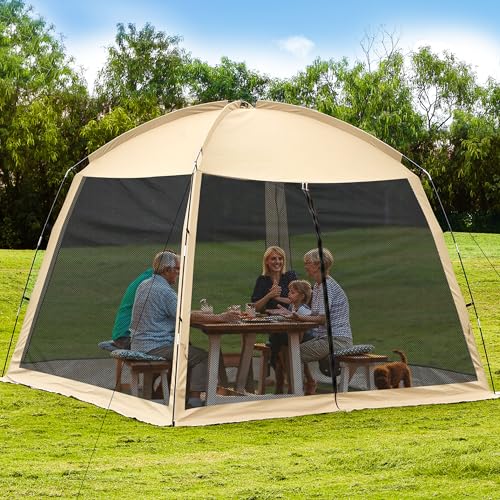
- Large 125.98-by-125.98-inch interior
- Mesh walls provide airflow and insect protection
- Sets up in about 15 minutes
Best For: Families and groups needing a roomy camping shelter
Best for Large Gatherings
11.5-Foot Pop-Up Screen Gazebo

- Roomy design accommodates up to 12 people
- 300D fabric provides waterproof and UPF50+ coverage
- Six detachable privacy panels add flexibility
Best For: Large groups, parties, and spacious campsite setups
Best Quick-Setup Pick
Compact 4–8-Person Pop-Up Screen House

- Pops up in seconds without tools
- 360-degree mesh supports airflow and bug protection
- Includes stakes, poles, and carrying bags
Best For: Quick campsite, picnic, patio, and backyard shelter
Lightweight Pick – Alvantor Pop-Up Screen House
For campers who prioritize portability, the Alvantor is a notably lightweight option among screen houses for camping. Its fiberglass pop-up frame needs no assembly, while the 10-by-10-foot interior provides room for 4–6 adults, patio furniture, or a grill.
Best For: Campers seeking a lightweight, quick-opening shelter with strong ventilation and sun protection.
Pros:
- Weighs about 12–15 pounds, making it easier to transport than many comparable shelters.
- Automatic pop-up design and compact 39.3-inch carry bag simplify setup and storage.
- Six mesh panels provide 360-degree airflow, bug protection, and outdoor visibility.
- Fabric roof offers UPF 50+ protection and includes stakes, guylines, and sandbags.
Cons:
- It is not waterproof or rainproof.
- The fiberglass frame and shelter are not recommended for winds reaching 24–30.8 mph.
- The floor is an optional purchase rather than an included component.
The Alvantor stands out when carrying weight and ventilation matter most. Plan to use it in fair weather, and fully secure it with the included tie-down equipment.
Fast-Setup Pick – Coleman Skylodge Portable Screenhouse
The Coleman Skylodge is designed for campers who want a screen house for camping that goes up quickly. Its lightweight hub, attached telescoping poles, and pinch-free buttons support a one-minute setup, while mesh walls and two entryways create a practical bug-protected lounge.
Best For: Campers, tailgaters, and festival attendees who value fast setup and easy access.
Pros:
- One-minute setup uses an integrated hub and attached telescoping poles.
- Two entryways make it easier to move people and gear in and out.
- 10-by-10-foot footprint and 7-foot center height provide generous standing space.
- UPF 50+ protection and a carry bag support sunny-day portability.
Cons:
- At approximately 14.9–16 pounds, it is heavier than the lightest pop-up alternatives.
- The listed shade area is 30.2 square feet, so coverage may be more limited than the footprint suggests.
- Its metal frame may be less convenient to carry than a fiberglass-frame model.
Choose the Skylodge when setup speed and entry access are higher priorities than minimum packed weight. Its water-resistant fabric and included rainfly add versatility, but it remains primarily a screened lounging shelter.
Roomiest Option – CAMPROS CP Screen House
The CAMPROS CP offers a larger footprint for families comparing screen houses for camping. Measuring 13 by 13 feet, it provides 134 square feet of shade and an 86-inch center height, though setup takes about 10 minutes and is easiest with three people.
Best For: Families and groups that need maximum shaded floor space for outdoor activities.
Pros:
- Large 13-by-13-foot design provides substantial space for group camping activities.
- 190T polyester top offers UV resistance and water-resistant coverage.
- Includes a carry bag, ground stakes, and tie-downs.
- Fiberglass frame keeps the shelter relatively manageable at about 6.2 kilograms.
Cons:
- Setup generally requires three people and takes about 10 minutes.
- The product does not include an attached floor.
- Only four guylines are listed, so careful staking and tie-down placement are important.
The CAMPROS is a sensible choice when usable group space outweighs the convenience of instant setup. Its larger dimensions suit family gatherings, but confirm that your campsite can accommodate the 13-foot footprint.
Stability Pick – EAST OAK Pop-Up Screen House
The EAST OAK combines pop-up convenience with a reinforced steel main structure, making it an appealing option for shoppers comparing durable screen houses for camping. The 10-by-10-foot shelter fits 4–6 people, opens in under a minute, and uses fine mesh for airflow and mosquito protection.
Best For: Campers wanting quick solo setup, UPF 50+ protection, and a more reinforced support structure.
Pros:
- Pop-up design can be installed by one person in under a minute.
- D33 fine mesh provides 360-degree ventilation and bug protection.
- UPF 50+ silver-coated Oxford fabric helps block sun exposure.
- Includes six sandbags, 12 stakes, six guylines, and a three-year warranty.
Cons:
- At 23.4 pounds, it is considerably heavier than lightweight fiberglass alternatives.
- The shelter is not water resistant.
- It is not recommended for wind above 24 mph.
The EAST OAK makes sense for campers who prefer reinforced support and extensive tie-down equipment over the lightest packed weight. Its top hook can also support a separately purchased pendant light for evening use.
Spacious Bug-Free Shelter – Amazon Basics 12 x 12 Screened Canopy
If you need roomy screen houses for camping, this Amazon Basics canopy provides a 12 x 12-foot covered area with four zippered mesh walls. Its UPF50+ canopy, ventilation, and no-tool setup make it practical for group outings, parties, and patio use.
Best For: Campers and hosts who want a large, screened shelter with strong sun protection and straightforward setup.
Pros:
- 12 x 12-foot floor area with a 92-inch center height
- Four-sided zippered mesh enclosure helps keep bugs out while maintaining airflow
- UPF50+ polyester canopy with a movable shade panel
- Includes stakes, guylines, and a carrying bag
Cons:
- No floor is included
- Water-resistant fabric is not presented as fully waterproof
- Fiberglass-and-metal construction may offer less rigidity than heavier framed shelters
This is a useful all-purpose screen canopy when shade, ventilation, and generous room matter more than a built-in floor or storm-focused design.
Family Movie-Night Pick – DMH Outdoors 13 x 9 Screen House
Among screen houses for camping, this DMH Outdoors model stands out for its family-friendly layout and included projection screen. The 13 x 9-foot interior offers nearly 120 square feet of shaded space, while mesh walls and two magnetic doors support ventilation and easy access.
Best For: Families and groups who want a tall screen house for camping, gatherings, or outdoor movie nights.
Pros:
- Large 13 x 9-foot interior with a 7.5-foot center height
- Two magnetic doors close automatically for convenient entry and exit
- Included hanging projection screen supports outdoor entertainment
- Step mats and reflective wind ropes add practical safety features
Cons:
- At 27.8 pounds, it is heavier than some portable canopy options
- Dry-clean-only care instructions may be less convenient
- Despite water-resistant and rainproof listings, the notes also state it is not waterproof
Choose this shelter when usable family space and entertainment features are priorities. Its magnetic doors are especially convenient around children or pets.
Privacy-Ready Pop-Up – VEVOR 12 x 12 Screen Gazebo
This VEVOR gazebo is one of the more adaptable screen houses for camping, combining full mesh mosquito netting with six removable wind cloths. Its 12 x 12-foot pop-up design creates a spacious shelter, while the privacy panels can help adjust airflow and enclosure for changing outdoor conditions.
Best For: Campers and hosts who want a versatile screened gazebo with removable privacy panels and a pop-up assembly design.
Pros:
- 12 x 12-foot shelter with full mesh netting and a 7.5-foot ceiling
- Six removable wind cloths add privacy; two include windows for airflow
- Steel frame, stakes, and guy ropes support stability
- Includes a carrying bag and reinforced corners for added rain resistance
Cons:
- At 32 pounds, it is relatively heavy to transport
- IPX3 water resistance is not intended for heavy rain or storms
- Listed UV protection is UPF 25, lower than some competing canopies
This is a strong choice for flexible outdoor use: keep the mesh open for ventilation, or add the wind cloths when you want more privacy and shelter from breezes.
Best Overall Space – Spacious 8–10-Person Screen House
If you need screen houses for camping with room for a larger group, this spacious model offers nearly 126-by-126 inches of floor space and an 82.67-inch peak height. Its mesh walls provide airflow and insect protection while the Oxford-cloth canopy adds coverage from light weather.
Best For: Families and groups that want a roomy, full-height shelter for camping, picnics, backyard use, or outdoor gatherings.
Pros:
- Large interior accommodates approximately 8–10 adults.
- Four-sided B4 mesh helps block mosquitoes and other small insects while maintaining ventilation and views.
- 210D Oxford cloth, fiberglass roof poles, and steel side poles provide a sturdy structure.
- Reportedly sets up in about 15 minutes and packs into a 10-pound carrying package.
Cons:
- The larger footprint may require a generous campsite or backyard area.
- Setup takes longer than a true instant pop-up design.
- Included ropes and stakes should be used for stability, especially in exposed areas.
This is a practical choice when interior space matters most. It balances a tall, comfortable design with portability, though campers seeking the fastest setup may prefer a pop-up shelter.
Best for Large Gatherings – 11.5-Foot Pop-Up Screen Gazebo
For shoppers comparing screen houses for camping and backyard entertaining, this VEVOR pop-up gazebo emphasizes coverage and flexible privacy. The 11.5-by-11.5-foot shelter uses 300D Oxford fabric, mesh panels, and six detachable windproof cloths for adaptable outdoor comfort.
Best For: Large family gatherings, campsite entertaining, barbecues, and backyard use where sun protection and adjustable privacy are priorities.
Pros:
- Large floor area is designed to accommodate up to 12 people.
- 300D Oxford fabric offers waterproof coverage and UPF50+ protection, with the product claiming to block 99% of harmful UV rays.
- Six removable privacy panels, including two with windows, allow ventilation and enclosure to be adjusted.
- Pop-up setup requires no tools and includes a carrying bag.
Cons:
- At 15 kg, it is heavier than the smaller screen house options.
- The larger size can be more demanding to transport and position at compact campsites.
- Wind ropes and luminous stakes are needed for securing the gazebo outdoors.
Choose this model when you want a sizable, configurable shelter rather than the lightest camping setup. Its removable panels make it useful across changing weather and privacy needs.
Best Quick-Setup Pick – Compact 4–8-Person Pop-Up Screen House
This VEVOR model is a convenient option among screen houses for camping when fast setup and broad everyday use matter. Its 10-by-9.2-foot footprint shelters 4–8 people, while 360-degree mesh, a 300D Oxford canopy, and a pop-up design support comfortable use at campsites, patios, decks, and picnics.
Best For: Campers and families wanting a portable, quick-deploy bug shelter for casual trips, backyard seating, picnics, or beach days.
Pros:
- Pop-up design sets up in seconds without tools.
- 360-degree high-density mesh helps provide ventilation and mosquito protection.
- 300D Oxford canopy is described as waterproof and protective against sun and rain.
- Includes metal stakes, fiberglass poles, carrying bags, and a strap for transport and storage.
Cons:
- Its 4–8-person capacity is smaller than the largest option in this roundup.
- Lighting accessories shown or used with the shelter are not included.
- Although the structure is wind-ready, it still needs proper staking outdoors.
This is a strong fit for shoppers who value speed and versatility over maximum capacity. The moderate footprint makes it easier to use in everyday outdoor spaces while retaining useful weather and insect protection.
How We Picked the Best Screen Houses for Camping
We focused on the features that matter most at a real campsite: usable floor area, setup and takedown convenience, mesh coverage, entry design, sun protection, portability, and stability. We also considered how each size works for meals, camp chairs, coolers, and small groups.
Because screen shelters vary widely in design, we looked beyond advertised dimensions. A large canopy may offer more room but require more storage space, while a compact pop-up model may be easier for weekend trips. Product descriptions and listed specifications were compared for consistency, but buyers should confirm current details before ordering.
Quick Comparison
| Best For | What to Prioritize | Typical Size to Consider |
|---|---|---|
| Solo campers or couples | Compact footprint and fast setup | 8 x 8 to 10 x 10 feet |
| Families and group meals | Open floor area and multiple doors | 10 x 10 to 13 x 13 feet |
| Sunny campsites | UPF-rated canopy and removable walls | 10 x 10 feet or larger |
| Bug-heavy locations | Fine mesh and secure closures | Any size with full screening |
Key Buying Factors for Screen Houses for Camping
Size and Usable Layout
Measure your campsite before choosing a shelter. Account for guy lines, stakes, picnic tables, and clearance around the frame. A 10-by-10-foot shelter is a versatile choice for a table and several chairs, while 12-by-12-foot and 13-by-13-foot models are better for larger groups. Pay attention to the number and placement of doors, since awkward entry points can make a crowded shelter frustrating.
Setup, Frame, and Portability
Pop-up designs are convenient for frequent campers, but larger frames can still be heavy or bulky in a vehicle. Check the packed dimensions and carry-bag design, not just the setup claim. A quick setup is especially valuable when rain is approaching or when one person must assemble the shelter alone.
Mesh, Shade, and Weather Limits
Look for continuous mesh walls, well-sealed seams, and doors that close securely. UPF-rated roofs help reduce sun exposure, while removable privacy or wind panels can add versatility. Most screened shelters are not substitutes for storm-rated tents: use stakes and guylines, avoid severe weather, and follow the manufacturer’s wind and rain guidance.
Who Should Buy Which Screen Houses for Camping?
Choose a compact pop-up screen house if portability and quick weekend setup matter most. Families should favor larger square or rectangular models with generous headroom and more than one entrance. Campers who spend long days outside should prioritize UPF protection and optional privacy panels. If mosquitoes are the main concern, select full mesh coverage with dependable zippers or magnetic doors rather than an open-sided canopy.