Installing a smart or upgraded wall switch can be difficult when your electrical box lacks a neutral wire. Fortunately, several reliable options are designed specifically for older homes and no-neutral circuits.
This roundup compares 10 light switches without neutral wire, covering app-controlled, voice-enabled, motion-sensing, dimming, and simple touch designs. Check wiring compatibility and load requirements before buying.
Best 10 Light Switches Without Neutral Wire Picks for 2026
Alexa No-Neutral Alternative
Amazon Basics Smart Light Switch

- Alexa voice control and routines
- 2.4 GHz Wi-Fi with no hub
- No-neutral compatibility not confirmed
Best For: Alexa users seeking scheduled single-pole lighting control
Wire-Free Sensor Pick
PIR Motion Sensor Light Switch

- Needs no neutral or ground wire
- Occupancy, vacancy, and manual modes
- Adjustable delay, lux, and sensitivity
Best For: Indoor single-pole areas needing automatic lighting
No-Neutral Dimming Choice

- No neutral wire required
- Single-pole and 3-way compatible
- Dims LED, CFL, and incandescent bulbs
Best For: Manual dimming in older homes with compatible bulbs
Best Motion-Sensing Pick
TOPGREENER No-Neutral Motion Switch

- No neutral or ground wire required
- Occupancy and vacancy modes
- Two-pack with wall plates
Best For: Automatic lighting in single-pole indoor locations
Best Hub-Based Smart Option
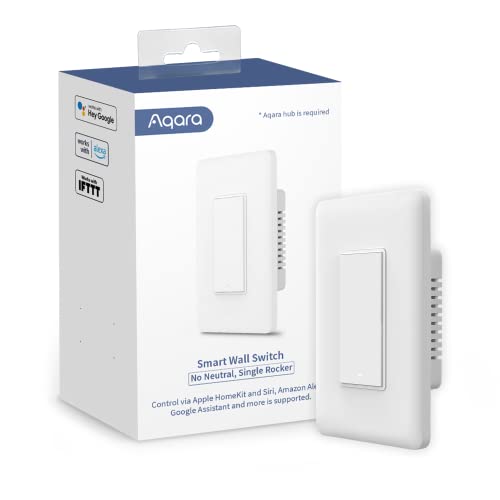
- App, schedule, timer, and scene control
- Works with major voice platforms
- Requires a separate Aqara Hub
Best For: Aqara-based smart homes needing one-way control
Best Wi-Fi Smart Value

- No neutral wire or standalone hub required
- App control and scheduling over Wi-Fi
- Works with Alexa and Google Home
Best For: Single-pole Wi-Fi smart lighting with a ground wire
Best with Extra Features
ECOELER No-Neutral Motion Sensor Switch

- No-neutral design for compatible existing wiring
- Selectable occupancy and vacancy modes
- Adjustable sensing and delay settings
Best For: Hands-free lighting in bathrooms, closets, garages, and hallways
Best Smart-Control Option
RF433 Wi-Fi No-Neutral Light Switch

- Works without a neutral wire
- Supports app, voice, touch, and RF433 control
- Modern tempered-glass touch panel
Best For: Smart-home retrofits using Alexa, Google Home, or Smart Life
Best Simple Touch Upgrade
Single-Pole No-Neutral Touch Switch

- Two-wire design needs no neutral wire
- Quiet capacitive touch operation
- Soft LED indicator and ETL listing
Best For: Single-pole lighting circuits in older North American homes
Alexa No-Neutral Alternative – Amazon Basics Smart Light Switch
The Amazon Basics Smart Light Switch is an Alexa-focused option for homeowners comparing light switches without neutral wire. It provides voice control and scheduling over 2.4 GHz Wi-Fi, but the supplied specifications do not confirm no-neutral compatibility, so verify the wiring requirements before buying.
Best For: Alexa users who want voice control and scheduled lighting from a single-pole switch.
Pros:
- Works with Alexa for voice-activated lighting control.
- Supports schedules and Alexa routines, including when you are away.
- Uses 2.4 GHz Wi-Fi and does not require a separate hub.
- Includes guided installation support through a video and user manual.
Cons:
- No-neutral wiring compatibility is not stated in the supplied product information.
- Works exclusively with Alexa.
- Designed for single-pole, on/off control rather than dimming.
This is a straightforward smart upgrade for Alexa households, but it is not the safest match when no-neutral installation is the primary requirement. Confirm compatibility with your existing wiring before purchase.
Wire-Free Sensor Pick – PIR Motion Sensor Light Switch
This PIR motion sensor switch is purpose-built for older installations, requiring no neutral or ground wire. For shoppers comparing light switches without neutral wire, it adds automatic occupancy or vacancy control for indoor single-pole lighting.
Best For: Hallways, garages, basements, offices, and other indoor areas where hands-free lighting is useful.
Pros:
- Requires only hot and load wires, with no neutral or ground wire.
- Offers occupancy, vacancy, and manual on/off modes.
- Adjustable time delay, light threshold, and sensitivity settings.
- Works with resistive, tungsten, LED, CFL, and electronic ballast loads.
Cons:
- For single-pole indoor circuits only; it is not designed for 3-way setups.
- Not intended for dimmable bulbs or fixtures with controllers.
- Lights should use a 3W or higher lamp to help prevent flickering.
Among light switches without neutral wire, this is a practical choice when motion-based automation matters more than app or voice control. Its indoor-only and bulb limitations should be checked against the intended fixture.
Two-Fixture Smart Pick – MOES No-Neutral Wi-Fi Switch
The MOES Wi-Fi switch is a flexible option for shoppers seeking light switches without neutral wire, supporting both wiring methods. In no-neutral installations, the included capacitors are required, while app, remote, timer, and Alexa controls add smart-home convenience.
Best For: Controlling two fixtures from one wall location where a compact, app-enabled switch is desired.
Pros:
- Supports no-neutral and neutral-wire installation methods.
- Includes capacitors required for no-neutral wiring.
- Controls two fixtures from one gang space with a shallow design.
- Offers app, remote, timer, and Alexa control without a hub on 2.4 GHz Wi-Fi.
Cons:
- A capacitor is mandatory for no-neutral installation.
- Does not support dimming or smart bulbs.
- Only supports 2.4 GHz networks.
This model stands out when one switch location needs control of two lights and smart features. Confirm the box space, wiring arrangement, and capacitor installation requirements before starting.
No-Neutral Dimming Choice – Amazon Basics Rocker Dimmer
The Amazon Basics Rocker Dimmer is a strong fit for shoppers comparing light switches without neutral wire who still want adjustable brightness. It supports single-pole or 3-way installations and works with dimmable LED, CFL, and incandescent bulbs.
Best For: Rooms needing no-neutral dimming from one location or two 3-way locations.
Pros:
- Requires no neutral wire for installation.
- Supports both single-pole and 3-way circuits.
- Works with dimmable LED, CFL, and incandescent bulbs.
- Includes a switch locator light that can be disabled.
Cons:
- Not compatible with non-dimmable bulbs or smart bulbs.
- Load ratings differ: 2.5A for LED/CFL and 5A for incandescent.
- It is a manual rocker and slide dimmer rather than a smart switch.
For straightforward brightness control in older homes, this is one of the more versatile light switches without neutral wire. Check bulb dimmability and the appropriate load rating before installation.
Best Motion-Sensing Pick – TOPGREENER No-Neutral Motion Switch
If you need light switches without neutral wire and want automatic lighting, this TOPGREENER two-pack combines no-neutral wiring with occupancy and vacancy sensing. It is designed for single-pole installations and includes wall plates.
Best For: Hallways, bathrooms, utility rooms, and other indoor areas where automatic on/off control is useful.
Pros:
- Works without a neutral or ground wire.
- Motion detection can automatically turn compatible lights, fans, and motors on or off.
- Offers occupancy and vacancy modes with adjustable 15-second, 10-minute, 20-minute, and 30-minute delays.
- Two-pack includes wall plates and supports up to 1200 square feet with a 180-degree field of view.
Cons:
- Designed for single-pole wiring, not three-way installations.
- Load compatibility is limited to the listed incandescent, ballast, and LED wattage ranges.
- Motion-sensor automation may not suit rooms where manual control is preferred.
Choose this model when motion activation matters as much as no-neutral installation. Its selectable occupancy and vacancy settings add flexibility, while the single-pole limitation should be checked before purchase.
Best Hub-Based Smart Option – Aqara No-Neutral Smart Switch
Among light switches without neutral wire, the Aqara single-rocker switch stands out for app-based automation and smart-home integration. It requires a separately sold Aqara Hub and is intended for indoor, one-way installations.
Best For: Aqara users who want schedules, remote control, scenes, and voice operation for existing lights.
Pros:
- Controls existing lights remotely through the Aqara Home app.
- Supports schedules, timers, and scenes.
- Works with Apple HomeKit, Google Assistant, Alexa, and SmartThings.
- Includes temperature protection that can automatically turn off power when a high-temperature limit is detected.
Cons:
- Aqara Hub is required and sold separately.
- Requires a compatible Wi-Fi setup for the hub and operates over Zigbee.
- Limited to one-way circuit use and specified load capacities.
This is a good fit for buyers already building around Aqara or a supported voice platform. Factor in the additional hub purchase and verify the load rating before replacing an existing switch.
Best Wi-Fi Smart Value – GE CYNC No-Neutral Switch
This GE CYNC model is one of the more convenient light switches without neutral wire for homes that want app and voice control over standard bulbs. It connects directly to 2.4 GHz Wi-Fi, so no standalone bridge or hub is required.
Best For: Homeowners seeking remote control and scheduling through Wi-Fi, Amazon Alexa, or Google Home.
Pros:
- Does not require a neutral wire or a standalone hub.
- Provides remote control and scheduling through the Cync App.
- Works with Amazon Alexa and Google Home for voice control.
- Button-style design upgrades traditional bulbs to smart control without replacing the bulbs.
Cons:
- Requires a ground wire and 2.4 GHz Wi-Fi.
- Not compatible with traditional non-smart switches or three-way installations.
- Bulb compatibility should be checked, particularly in homes built before 1980.
The CYNC is a practical choice when direct Wi-Fi access is more appealing than a hub-based system. Confirm that your box has a ground wire, your network supports 2.4 GHz, and the installation is single-pole before buying.
Best with Extra Features – ECOELER No-Neutral Motion Sensor Switch
For hands-free lighting in a bathroom, closet, garage, or hallway, this ECOELER model is a practical option among light switches without neutral wire. It replaces a compatible existing switch, requires a ground wire, and offers adjustable motion settings for more control.
Best For: Rooms where automatic occupancy or vacancy-based lighting is more convenient than manual switching.
Pros:
- Works without a neutral wire and supports occupancy or vacancy modes.
- Adjustable time delay, sensitivity, and light-level sensing.
- Supports up to 300W LED/CFL or 600W incandescent loads and is UL and FCC listed.
- Includes a wall plate and carries a one-year warranty.
Cons:
- Not suitable for three-way circuits.
- Requires a proper ground wire to function.
- Motion activation may not suit spaces where manual control is preferred.
Choose this switch when automatic operation is the priority. Its no-neutral design and customizable sensor settings make it especially useful for frequently forgotten lights, provided the wiring and load ratings match your installation.
Best Smart-Control Option – RF433 Wi-Fi No-Neutral Light Switch
This Wi-Fi model is a versatile choice among light switches without neutral wire for shoppers who want app, voice, touch, and RF433 control. Its tempered-glass panel provides a modern appearance, while Smart Life, Tuya, Alexa, and Google Home compatibility supports connected-home use.
Best For: Retrofitting a compatible single-gang location with multiple smart-control options.
Pros:
- Designed to work without a neutral wire.
- Supports Smart Life or Tuya app control, Alexa, Google Home, touch control, and RF433 remote control.
- Offers remote operation and a sleek white tempered-glass face.
- Provides separate touch control for different light circuits according to the product notes.
Cons:
- The listing contains mixed one-gang and two-gang descriptions, so verify the configuration before purchase.
- RF433 remote control is an available control method, but the supplied notes do not confirm that a remote is included.
- Its IP20 rating indicates indoor use rather than protection from water exposure.
This is the strongest fit for buyers who value remote and voice control in an older wiring setup. Confirm the gang configuration and installation compatibility before ordering, particularly if replacing a multi-way circuit.
Best Simple Touch Upgrade – Single-Pole No-Neutral Touch Switch
For a straightforward wall-control upgrade, this single-pole touch switch is a useful option among light switches without neutral wire. Its two-wire design is intended for older North American homes, and the capacitive touch surface adds a modern feel without requiring app connectivity.
Best For: Single-pole lighting circuits in older homes that need a no-neutral, touch-operated replacement.
Pros:
- Requires no neutral wire and uses existing compatible electrical infrastructure.
- Capacitive touch control offers a quiet, smartphone-like operating feel.
- Supports up to 150W LED/CFL or 480W tungsten loads.
- Includes a soft LED night indicator and is ETL listed.
Cons:
- Designed for single-pole circuits only and not three-way installations.
- It is a manual touch switch rather than a Wi-Fi or voice-controlled model.
- Bulb compatibility and total load should be checked against the stated wattage limits.
This switch suits buyers who want a clean, quiet touch interface without adding a neutral wire or smart-home features. Its single-pole limitation makes circuit identification important before installation.
How We Picked the Best Light Switches Without Neutral Wire
We focused on switches explicitly designed for no-neutral installations and compared their control methods, wiring requirements, load compatibility, automation features, and installation limitations. The selection includes smart switches, motion sensors, dimmers, touch controls, and straightforward wall-switch alternatives.
We also considered ecosystem compatibility. Some models work with Alexa or Google Home, while others require a proprietary hub or use a dedicated app. Because no-neutral switches may require a capacitor, bypass, or minimum load, those requirements are important parts of the buying decision.
Quick Comparison
| Type | Best For | Important Check |
|---|---|---|
| Smart Wi-Fi switch | App and voice control | 2.4 GHz Wi-Fi, hub, or capacitor requirements |
| Motion sensor | Hands-free lighting | Detection range and single-pole wiring |
| Dimmer | Adjustable brightness | Dimmable bulbs and wattage limits |
| Touch switch | Modern manual control | Load rating and indicator-light behavior |
| Hub-based switch | Reliable smart-home automation | Required hub and ecosystem compatibility |
Key Buying Factors for Light Switches Without Neutral Wire
Wiring and Installation
Confirm that the switch supports your circuit type, such as single-pole or 3-way wiring. No-neutral products commonly use a capacitor or bypass installed at the light fixture, especially with low-wattage LED bulbs. Turn off power at the breaker and consult a qualified electrician if the wiring is uncertain.
Bulb and Load Compatibility
Check whether the switch supports LED, CFL, incandescent, or mixed loads. Dimmers require dimmable bulbs, and motion sensors may have minimum or maximum wattage requirements. A switch that works with incandescent lighting may not perform properly with a very low-wattage LED fixture.
Smart-Home Features
Look for the platform you already use. Alexa and Google compatibility can simplify voice control, while a hub-based model may offer more dependable automation and local control. Verify 2.4 GHz Wi-Fi support when required; many switches do not connect to 5 GHz networks during setup.
Controls and Reliability
Decide whether you prefer physical buttons, a rocker, capacitive touch, or automatic motion detection. Also consider power-loss recovery, scheduling, status indicators, timer controls, and whether the switch remains usable when the internet is unavailable.
Who Should Buy Which Light Switches Without Neutral Wire?
Choose a Wi-Fi smart switch if remote access, schedules, and voice commands matter most. A hub-based option is better for shoppers already invested in a compatible smart-home ecosystem and seeking centralized automation.
Motion-sensing switches suit hallways, bathrooms, closets, and utility spaces where automatic activation is convenient. Pick a dimmer for living rooms or bedrooms with compatible dimmable bulbs, and choose a touch or standard-style switch when simple manual control and a clean appearance are the priority.
Before ordering, compare the product’s wiring diagram with your existing box, confirm the light type and wattage, and check whether a capacitor, bypass, ground connection, or hub is required.