The right generator extension cord helps you place a portable generator safely while delivering dependable power to appliances, transfer equipment, RVs, or temporary job-site loads.
Our 2026 roundup compares 10 options across common 30-amp and 50-amp configurations, focusing on connector compatibility, wire gauge, length, voltage, durability, and listed safety ratings.
Best 10 Generator Extension Cords Picks for 2026
Best Multi-Outlet Pick
Champion 25-Foot 30-Amp Fan-Style Cord
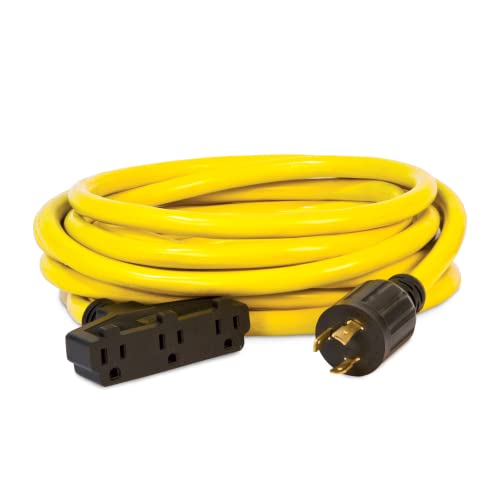
- Converts one L5-30P outlet to three 5-15R outlets
- 10-gauge, 125-volt cord with weather-resistant insulation
- Flexible in extreme temperatures with dust covers included
Best For: Connecting several standard household devices to a compatible 30-amp generator
Best Dual-Voltage Option
Southwire 20-Foot L14-30 Generator Cord
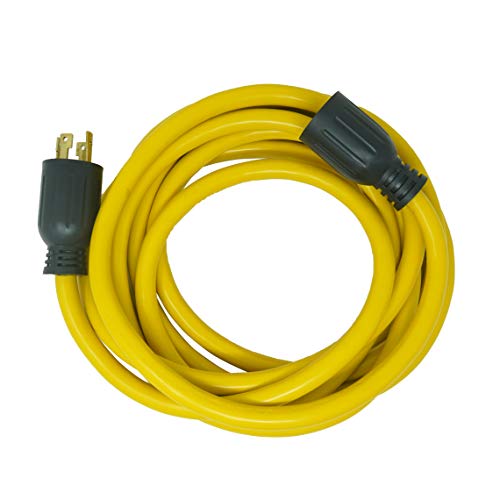
- 20-foot, 10-gauge cable for 30-amp applications
- Twist-lock L14-30 plug and receptacle
- Weather-resistant design for generators and RV setups
Best For: Single-connection outdoor generator, RV, camper, and campground use
Best 50-Amp RV Pick
Deeklify 25-Foot NEMA 14-50 Generator Cord

- 250-volt, 50-amp capacity for compatible equipment
- NEMA 14-50P to SS2-50R or CS6375 twist-lock configuration
- Weatherproof PVC construction with a handle and cable tie
Best For: High-capacity RV, camper, and generator connections
Best Long-Reach 30-Amp Cord

- 50-foot reach for flexible generator placement
- 10-gauge, four-conductor 125/250-volt construction
- Weatherproof STW jacket and twist-lock L14-30 ends
Best For: Long-distance connections to compatible generators or transfer switches
Best Compact 30A Pick
Vockjour 25FT L14-30 Generator Cord

- 10AWG copper supports up to 7,500W
- Twist-lock L14-30 connection
- IP65 weather-resistant sheath
Best For: Portable emergency, outdoor, and RV power setups
Best Long-Reach Value
PlugSaf 40FT 30A Generator Cord
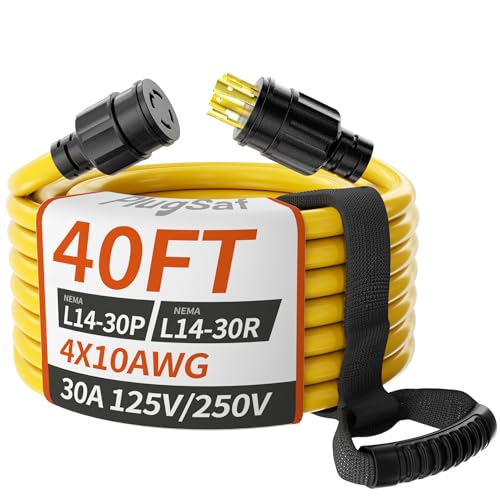
- 40-foot reach for flexible placement
- 10AWG STW cable rated up to 7,500W
- IP65 waterproof twist-lock design
Best For: Home, RV, and transfer-switch connections
Best Maximum Reach
Vockjour 50FT L14-30 Generator Cord

- 50-foot length for extended placement
- 10AWG copper supports up to 7,500W
- IP65 weather-resistant construction
Best For: Large emergency, outdoor, and RV setups needing extra distance
Weatherproof Choice
PlugSaf 25FT 30 Amp Generator Cord

- 25-foot 10-AWG STW cable
- L14-30 twist-lock connectors
- IP65 weather-resistant construction
Best For: Outdoor home backup and RV connections
Extra-Reach Pick
POWGRN 35FT 30 Amp Generator Cord

- 35-foot outdoor extension cord
- 10-AWG, 30-amp, up to 7,500 watts
- ETL listed with cord organizer
Best For: Longer generator-to-transfer-switch runs
Compact Backup Pick
ISLEWIRE 10FT 30 Amp Generator Cord

- Compact 10-foot SJTW cable
- Pure copper 10-AWG conductors
- ETL listed with twist-lock ends
Best For: Short generator-to-transfer-switch connections
Best Multi-Outlet Pick – Champion 25-Foot 30-Amp Fan-Style Cord
For shoppers comparing generator extension cords, this Champion model stands out when one locking generator outlet needs to power several standard household devices. Its 25-foot, 10-gauge cord converts an L5-30P connection into three 5-15R outlets.
Best For: Extending power from a compatible 30-amp generator while keeping three household outlets available up to 25 feet away.
Pros:
- Provides three 15-amp household outlets from one 30-amp locking outlet.
- 10-gauge insulation is rated for 125-volt use and remains flexible in hot or cold temperatures.
- Weather-resistant, abrasion-resistant insulation and included dust covers help protect the connections.
- Includes a one-year limited warranty and free lifetime technical support.
Cons:
- Designed for 125-volt applications rather than dual-voltage generator connections.
- Its fan-style three-outlet design may be less suitable when a single locking receptacle is preferred.
This is a practical choice for basic household backup or outdoor setups that need multiple standard receptacles. Confirm that your generator has a compatible L5-30 locking outlet and that your connected loads fit the cord’s 30-amp, 125-volt rating.
Best Dual-Voltage Option – Southwire 20-Foot L14-30 Generator Cord
Among generator extension cords, this Southwire option is a straightforward heavy-duty choice for compatible generators, RVs, campers, and motorhomes. It uses 10-gauge construction, 30-amp twist-lock ends, and a 20-foot reach.
Best For: Users who need a single 20-foot connection with L14-30 locking plug and receptacle compatibility for outdoor generator or RV setups.
Pros:
- Twist-lock L14-30 connections help provide a secure generator connection.
- 10-gauge cable supports 30-amp power and is rated for 125/250-volt use.
- Weather-resistant construction is suited to outdoor use.
- Useful for generators, RVs, campers, motorhomes, and campgrounds.
Cons:
- Only 20 feet long, offering less reach than the 25- and 50-foot options in this roundup.
- Provides one outlet rather than multiple household receptacles.
- The listed warranty is limited to 180 days.
Choose this cord when a compact, single-outlet L14-30 connection is more important than extra length or multiple receptacles. Verify your equipment’s plug and voltage requirements before connecting it.
Best 50-Amp RV Pick – Deeklify 25-Foot NEMA 14-50 Generator Cord
This Deeklify cable is one of the generator extension cords to consider for higher-capacity RV and camper connections. It pairs a NEMA 14-50P plug with an SS2-50R or CS6375 twist-lock receptacle and is rated for 250 volts and 50 amps.
Best For: RVs, campers, and compatible generators requiring a 25-foot, 50-amp connection with a twist-lock receptacle.
Pros:
- Supports 250-volt, 50-amp power for compatible equipment.
- Weatherproof design is rated for temperatures from -40°F to 212°F.
- Twist-lock connection helps seal the interface against wind and rain.
- Thick PVC insulation, an ergonomic handle, and included cable tie support outdoor handling and storage.
Cons:
- Its 50-amp NEMA 14-50P/SS2-50R configuration is not interchangeable with common 30-amp cords.
- Designed for higher-capacity equipment, so compatibility must be checked carefully before use.
This cord makes the most sense for an appropriately equipped RV or generator rather than general household extension use. Confirm both connector types and the electrical rating of your equipment before ordering.
Best Long-Reach 30-Amp Cord – PlugSaf 50-Foot L14-30 Cable
For buyers who need extra distance, this PlugSaf cable offers a 50-foot reach in a 10-gauge, four-conductor design. It uses NEMA L14-30 twist-lock ends and is intended for portable generators, transfer switches, homes, and outdoor RV use.
Best For: Extending a compatible L14-30 generator connection up to 50 feet, including setups where distance from the generator is important.
Pros:
- 50-foot length provides substantially more placement flexibility than shorter cords.
- 10-gauge, four-conductor construction supports 30-amp, 125/250-volt applications.
- Twist-lock plug and receptacle help prevent accidental disconnection.
- Weatherproof STW jacket is described as resistant to heat, flame, corrosion, and wear.
Cons:
- The extended length can be more cable than needed for compact setups.
- It has one L14-30 receptacle rather than multiple household outlets.
- Requires compatible L14-30 connections on the generator and equipment.
This is the practical pick when generator placement and cable reach matter most. Its included adjustable organizer helps with coiling and storage, while the L14-30 configuration keeps the use case focused on compatible generator or transfer-switch equipment.
Best Compact 30A Pick – Vockjour 25FT L14-30 Generator Cord
For shoppers comparing generator extension cords, this 25-foot Vockjour model offers a practical balance of reach and portability. Its 10AWG pure copper conductors support 30A, 125/250V, and up to 7,500W, while the L14-30 twist-lock connection helps keep the cord securely attached.
Best For: Home emergency use, outdoor work, and RV camping where a manageable 25-foot reach is sufficient.
Pros:
- 10AWG copper construction supports 30A and up to 7,500W.
- Twist-lock plug and socket help resist accidental pullout.
- IP65-rated, flame-retardant, heat-resistant, waterproof PVC sheath.
- Includes a cable organizer for easier carrying and storage.
Cons:
- Its 25-foot length may not reach as far as longer alternatives.
- At 7.11 pounds, it is not an especially lightweight cord.
This is a sensible choice when you want durable outdoor protection without stepping up to a 40- or 50-foot cable. Confirm that your generator and equipment use compatible L14-30 connections before buying.
Best Long-Reach Value – PlugSaf 40FT 30A Generator Cord
This PlugSaf 40-foot option is one of the more flexible generator extension cords for situations where the generator needs to sit farther from a home, RV, or outdoor work area. The 10AWG STW cable is rated for 30A, 125/250V, and up to 7,500W, with L14-30 twist-lock ends.
Best For: Connecting a portable generator to a manual transfer switch, house, or RV when extra distance is useful.
Pros:
- 40-foot length provides useful placement flexibility.
- 10AWG, 30A construction is rated up to 7,500W.
- IP65 waterproof, heat-resistant, flame-retardant, and corrosion-resistant design.
- Adjustable organizer supports neater coiling and storage.
Cons:
- Its 40-foot length can be more cable than compact setups require.
- The listed wattage includes both 3,750W and 7,500W figures, so verify the intended operating configuration.
The PlugSaf stands out for reach and outdoor durability, making it a practical middle ground between shorter and much longer cords. Its flexible jacket and organizer also help manage the extra length.
Best Maximum Reach – Vockjour 50FT L14-30 Generator Cord
When distance is the priority, this 50-foot Vockjour is a useful generator extension cord for moving equipment farther from generator exhaust. It combines 10AWG pure copper conductors with L14-30 twist-lock ends and a weather-resistant PVC jacket rated for 30A, 125/250V, and up to 7,500W.
Best For: Larger home emergency setups, outdoor operations, and RV applications that benefit from maximum reach.
Pros:
- 50-foot length offers the greatest placement flexibility in this group.
- 10AWG copper supports 30A and up to 7,500W.
- Twist-lock connection helps prevent separation from external pulling.
- IP65 waterproof, flame-retardant, and heat-resistant sheath.
Cons:
- At 13.88 pounds, it is the heaviest option listed.
- The extra length may be cumbersome in compact spaces and requires careful coiling.
This cord is best suited to buyers who specifically need 50 feet of separation. Its included organizer helps, but the longer cable and higher weight make it less convenient than a shorter option for routine transport.
Weatherproof Choice – PlugSaf 25FT 30 Amp Generator Cord
If you need dependable generator extension cords for a transfer switch, RV, or outdoor setup, the PlugSaf 25-foot cord offers a robust 30-amp connection. Its 10-AWG, four-conductor construction supports 125/250V operation and up to 7,500 watts, while the twist-lock connection helps keep the cable secure.
Best For: Home backup power and outdoor generator connections where weather resistance and extra reach are priorities.
Pros:
- 25-foot length with NEMA L14-30P to L14-30R twist-lock connectors.
- 10-AWG, 30-amp STW construction supports up to 7,500 watts.
- IP65 waterproof, heat-resistant, flame-retardant, and corrosion-resistant design.
- Includes an adjustable cord organizer for neater storage.
Cons:
- A 25-foot cable may be more length than needed for compact setups.
- It has one outlet, so it does not provide multiple connection points.
The PlugSaf is a practical pick when you want long outdoor reach, secure twist-locking, and a cable built for changing weather. Its included organizer is a useful extra for transport and storage.
Extra-Reach Pick – POWGRN 35FT 30 Amp Generator Cord
For generator extension cords that need to cover more distance, the POWGRN 35-foot model provides added reach between a portable generator and a transfer switch, RV, or camping equipment. The 30-amp, 10-AWG STW cable is rated for 125/250V service and up to 7,500 watts.
Best For: Larger outdoor layouts that benefit from a 35-foot connection and organized cable storage.
Pros:
- 35-foot length helps span greater distances from generator to equipment.
- NEMA L14-30P to L14-30R twist-lock design helps prevent accidental disconnects.
- IP65 waterproof construction resists sunlight, rain, cold, heat, flame, corrosion, and abrasion.
- ETL listed and supplied with an adjustable cord organizer.
Cons:
- The longer cable can require more storage space than a shorter cord.
- Its single-outlet design does not expand the number of available connections.
The POWGRN stands out for reach and outdoor durability. Choose it when a standard 25-foot cord may not reach comfortably, but keep the added cable length in mind when routing and storing it.
Compact Backup Pick – ISLEWIRE 10FT 30 Amp Generator Cord
When a short run is all you need, the ISLEWIRE 10-foot cord keeps a generator connection compact without giving up heavy-duty capacity. This 10-AWG, four-prong SJTW cable uses NEMA L14-30P/L14-30R twist-lock connectors and supports 125/250V service up to 7,500 watts.
Best For: Close-range home backup or RV connections where minimal cable length and easy routing matter.
Pros:
- Compact 10-foot length is easier to route and store than longer alternatives.
- 100% pure copper conductors are designed for efficient performance and reduced overheating risk during extended use.
- Twist-lock connectors and strain relief help support a stable connection.
- ETL listed and backed by a three-year replacement and return guarantee plus lifetime technical support.
Cons:
- Ten feet may not reach equipment positioned farther from the generator.
- It provides one connection rather than multiple outlets.
The ISLEWIRE is a sensible choice for compact installations where excess cable would be inconvenient. Its pure copper conductors, weather-oriented jacket, and twist-lock ends add useful durability for backup-power use.
How We Picked the Best Generator Extension Cords
We evaluated these Generator Extension Cords by matching their NEMA plug and receptacle configurations to common portable-generator outlets, then comparing amp capacity, voltage support, conductor gauge, jacket design, length, and stated safety listings. We also considered practical differences between locking and straight-blade connectors, because a cord that fits securely is less likely to disconnect during operation.
Specifications should always be confirmed against your generator, inlet box, transfer switch, RV connection, or appliance before purchase. A cord’s maximum rating does not make it suitable for every load or installation.
Quick Comparison
| Configuration | Typical use | What to check |
|---|---|---|
| 30A L5-30P to multiple 5-15R | Running several standard household devices from a compatible 120V generator outlet | Generator outlet type, total combined wattage, and outlet protection |
| 30A L14-30P to L14-30R | Connecting a generator to a transfer switch, inlet, or matching 30A connection | 125/250V compatibility, four-prong wiring, and locking fit |
| 50A 14-50P to SS2-50R | Higher-capacity generator or RV-style 50A connections | Exact receptacle standard, available generator output, and equipment rating |
| 10-gauge 30A cords | Longer, heavy-duty connections and demanding 120/240V loads | Length-related voltage drop, plug orientation, and listed rating |
Key Buying Factors for Generator Extension Cords
Connector and Wiring Configuration
Match every detail: plug style, receptacle style, number of prongs, voltage, and whether the connection locks in place. An L14-30 cord is not interchangeable with an L5-30 cord, even though both are associated with 30 amps. Never force a connector or use an adapter to overcome an incompatible wiring configuration.
Amperage, Voltage, and Wire Gauge
Choose a cord rated for at least the intended continuous load. Many 30-amp models use 10-gauge conductors and support 125/250V circuits, while fan-style cords with multiple household receptacles may be designed for 120V use only. Generator wattage, circuit configuration, and connected-load limits still control how much power is safe to draw.
Length and Outdoor Construction
Longer cords provide more placement flexibility but can increase voltage drop, especially under heavy loads. Use the shortest practical length and look for a rugged outdoor jacket such as STW or SJTW when the cord will be used outside. Keep connections dry, avoid sharp edges and standing water, and fully uncoil the cable during high-load operation.
Safety Listings and Operating Conditions
ETL or UL recognition can provide useful evidence that a product was evaluated to applicable safety requirements, but it does not replace correct installation. Inspect the jacket, blades, and strain relief before each use, and follow the generator manufacturer’s grounding, carbon-monoxide, and connection instructions.
Who Should Buy Which Generator Extension Cords?
Choose the Champion fan-style design if you need to power multiple standard 120V devices from a compatible L5-30 outlet. Select a Southwire or another L14-30P/L14-30R option for a matching 30-amp generator inlet, transfer switch, or locking connection. The Vockjour, PlugSaf, POWGRN, and 10-foot L14-30 models mainly differ in length and stated construction, so prioritize the shortest model that reaches safely; use longer versions only when placement requires them.
For higher-capacity equipment or an RV-style connection, consider the 50-amp 14-50/SS2-50 configuration only when both the generator and destination receptacle are designed for it. If you are uncertain about neutral bonding, transfer-switch wiring, or 120/240V loads, consult a qualified electrician before connecting equipment.