Unstable voltage can cause unexpected shutdowns, shorten component life, and put valuable computer equipment at risk. The right stabilizer helps maintain safer power when your home or office experiences under-voltage, over-voltage, surges, or inconsistent electrical service.
This roundup compares 10 voltage protection options, including plug-in protectors, adjustable voltage relays, whole-house devices, and high-capacity stabilizers. Match the device to your computer’s voltage, load, connection type, and installation requirements before buying.
Best 10 Voltage Stabilizers for Computers Picks for 2026
Best Multi-Device Coverage
3-Pack Computer Voltage Protector
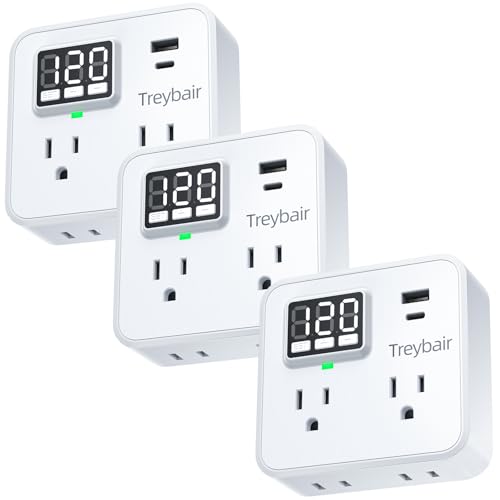
- 80V–140V adjustable voltage protection
- Six outlets with USB and USB-C ports
- LED monitoring and 1,800-joule surge rating
Best For: Protecting computers and other appliances in multiple rooms
Best Adjustable System Control
80A Whole-House Voltage Protector

- Adjustable under- and over-voltage values
- Configurable recovery and startup delays
- Voltage display with fault inquiry
Best For: Larger installations needing configurable protection
Best Compact Two-Pack
Computer Surge and Voltage Protector

- Two plug-in protectors with six outlets each
- USB, USB-C, and LED voltage display
- 80V–140V protection with 1,800 joules
Best For: Two computer work areas needing matching protection
Best Three-Phase Monitoring

- Monitors three-phase voltage conditions
- LCD screen with adjustable delay functions
- Detects phase loss and imbalance
Best For: Commercial or industrial three-phase installations
Whole-Home Regulation
15,000VA Automatic Voltage Stabilizer

- 220V regulated output within ±5%
- 120V–270V input range
- LCD display and continuous operation
Best For: Whole-home protection for computers and household appliances
Plug-In Appliance Defense
Dual Surge Protector Stabilizers

- Two compact plug-in units
- Real-time LED voltage display
- Adjustable thresholds and reboot timing
Best For: Computers and electronics needing convenient plug-in protection
Panel-Mounted Control
Adjustable DIN Rail Voltage Protector

- Adjustable voltage and current limits
- Real-time voltage/current display
- Automatic reset and DIN-rail mounting
Best For: Custom electrical-panel protection for office computer circuits
Best Multi-Room Coverage
Treybair 3-Pack Voltage Stabilizers

- Three individually placed stabilizer outlets
- Real-time LED voltage monitoring
- 1800-joule surge protection with adjustable settings
Best For: Multi-room homes, offices, and shared electronics setups
Best Two-Outlet Value
Treybair 2-Pack Voltage Stabilizers

- Two compact wall-mounted units
- LED voltage display for live monitoring
- Custom thresholds and restart timing
Best For: Two-room or small-office protection
Best Single-Outlet Pick
Treybair Standard Voltage Stabilizer

- Compact design for one connected device
- Real-time LED voltage display
- 15-amp capacity with adjustable protection settings
Best For: Single computers, TVs, or appliances
Best Multi-Device Coverage – 3-Pack Computer Voltage Protector
For shoppers comparing voltage stabilizers for computers, this three-pack combines adjustable 80V–140V protection with surge defense, voltage monitoring, and six outlets per unit. It is a practical option for protecting computers alongside TVs, refrigerators, and other household electronics in areas with unstable power.
Best For: Homes or offices that need multiple plug-in protectors for computers and other appliances.
Pros:
- Provides over- and under-voltage protection, surge defense, and automatic reboot settings.
- Six outlets plus USB and USB-C charging ports support several devices.
- LED voltage monitoring and UL94-V1 fireproof housing add useful visibility and safety.
Cons:
- The display may be bright, and brightness is not adjustable.
- Threshold and power-off settings are adjustable only within limits.
- The 80V–140V range may require careful setup to restore power automatically.
With three units, 1,800-joule surge protection, and a two-year manufacturer warranty, this is a flexible choice when computer protection is needed in more than one location.
Best Adjustable System Control – 80A Whole-House Voltage Protector
This adjustable voltage protector is aimed at shoppers who want configurable voltage protection rather than a simple computer power strip. It supports under- and over-voltage settings, recovery delays, voltage display, and an 80A rating, making it a system-level option to evaluate for computer circuits or broader electrical protection.
Best For: Users who need adjustable voltage thresholds and delay settings for a larger electrical installation.
Pros:
- Supports over-voltage, under-voltage, and voltage measurement.
- Recovery and power-on delay times can be adjusted.
- Includes reset-mode selection, fault inquiry, and factory-reset functions.
Cons:
- The supplied information does not describe outlets, USB ports, or a plug-in format.
- Installation details are not provided.
- Its 80A rating may be more than needed for a single computer.
This model is best considered when you need configurable protection logic and high-current capacity. Because installation information is limited, confirm compatibility and installation requirements before using it with computer equipment.
Best Compact Two-Pack – Computer Surge and Voltage Protector
This two-pack offers a convenient way to add voltage stabilizers for computers in separate rooms or work areas. Each plug-in unit combines 80V–140V voltage protection, surge defense, six outlets, USB and USB-C ports, and an LED display for monitoring power conditions.
Best For: Computer users who want two matching wall-mounted protectors with charging ports and voltage monitoring.
Pros:
- Protects against over- and under-voltage, spikes, and outages.
- Six wide-spaced outlets provide room for computer peripherals and other devices.
- Includes USB/USB-C ports, an LED display, and UL94-V1 fireproof housing.
Cons:
- The display may be too bright for some locations.
- Voltage thresholds and reboot timing have limited adjustment ranges.
- The supplied notes recommend careful 80V–140V setup to avoid automatic-restoration issues.
As a two-pack with 1,800-joule surge protection and a two-year warranty, this is a strong fit for basic computer setups that also need convenient device charging.
Best Three-Phase Monitoring – JVR800-2 Voltage Relay
For specialized electrical environments, this three-phase relay provides a different approach to voltage stabilizers for computers. It monitors over- and undervoltage, phase loss, phase sequence, and unbalanced three-phase voltage, with an LCD screen and adjustable delay functions.
Best For: Three-phase systems where computer equipment is part of a larger commercial or industrial electrical setup.
Pros:
- Monitors overvoltage, undervoltage, phase loss, phase sequence, and phase imbalance.
- LCD display makes voltage data easier to read.
- Combines a three-phase protector, timer, and counter in one relay.
Cons:
- It is designed for three-phase systems, not ordinary household computer outlets.
- The supplied information does not describe plug-in outlets or direct computer connectivity.
- Installation requirements and wiring details are not provided.
This relay may suit a qualified installer managing three-phase power, but it is likely excessive for a typical home computer. Verify system compatibility and installation requirements before purchase.
Whole-Home Regulation – 15,000VA Automatic Voltage Stabilizer
For shoppers comparing voltage stabilizers for computers, this wall-mounted single-phase regulator is designed to provide a steadier 220V supply in homes with input fluctuations from 120V to 270V. Its LCD display, automatic switching, and multiple protection chips make it a broad household-power option rather than a computer-only device.
Best For: Home users who want one high-capacity stabilizer for computers and other appliances.
Pros:
- Supports a wide 120V–270V input range and delivers 220V output within ±5%.
- Includes an LCD colour display, automatic operation, and intelligent mute switching.
- Designed for continuous operation with heat-resistant construction and added protection chips.
Cons:
- The notes do not specify computer-focused outlets or connectivity features.
- Installation uses clamp-cable wiring, so it may require more setup than a plug-in unit.
This is the most suitable choice here for whole-home voltage regulation, especially where a computer shares power with larger appliances. Confirm the electrical installation requirements and compatibility with your local supply before purchase.
Plug-In Appliance Defense – Dual Surge Protector Stabilizers
These plug-in voltage stabilizers for computers combine voltage correction with surge protection in a compact two-pack. They display real-time voltage, support adjustable thresholds, and can be useful in offices, living areas, dorms, RVs, and other spaces where simple installation matters.
Best For: Users seeking compact plug-in protection for computers and other household electronics.
Pros:
- Provides surge protection and active over- and under-voltage correction.
- Built-in LED display shows real-time voltage readings.
- Offers adjustable voltage thresholds and reboot timing, with a 1800-joule surge rating.
- Two units are included, with a 15A rating and Type A plugs.
Cons:
- The recommended operating range is 80V–140V, which may not suit every electrical system.
- Its appliance-adaptive delay modes are primarily described for refrigerators and other appliances.
- It has three outlets/ports, which may limit larger computer setups.
This two-pack is a convenient option when you want visible voltage monitoring and adjustable protection without installing a panel-mounted device. Check your computer’s plug type, voltage requirements, and total load before connecting it.
Panel-Mounted Control – Adjustable DIN Rail Voltage Protector
For a more configurable approach to voltage stabilizers for computers, this DIN-rail protector monitors voltage and current while allowing separate overvoltage, undervoltage, and overcurrent settings. It is intended for electrical-panel installation, making it better suited to planned household, office, RV, or equipment-system protection than casual plug-in use.
Best For: Users who need adjustable electrical-panel protection for office equipment and computer circuits.
Pros:
- Adjusts undervoltage protection from 80V–210V and overvoltage protection from 130V–300V.
- Supports adjustable overcurrent protection from 1A–63A.
- Displays real-time voltage and current readings.
- Provides automatic reset after electrical conditions return to normal.
Cons:
- DIN-rail mounting requires compatible electrical-panel space and installation knowledge.
- It is a protective circuit breaker, not a conventional 220V output regulator.
- Only one unit is included.
This model is a strong fit when precise trip settings and automatic recovery matter more than plug-and-play convenience. Because it is panel-mounted and rated up to 63A, have a qualified installer confirm the wiring and settings for your computer circuit.
Best Multi-Room Coverage – Treybair 3-Pack Voltage Stabilizers
For shoppers comparing voltage stabilizers for computers and other household electronics, this three-pack offers flexible placement around the home. Each unit provides surge protection, real-time voltage monitoring, adjustable thresholds, and a delay mode intended for compressor appliances.
Best For: Homes, offices, RVs, dorms, or rental units that need protection at multiple outlets.
Pros:
- Three compact, wall-mounted units help cover multiple locations.
- LED display provides real-time voltage readings.
- Offers 1800-joule surge protection and adjustable voltage settings.
- Includes a delay of more than 180 seconds for refrigerators and 30–60 seconds for non-compressor devices.
Cons:
- Each unit has only one outlet.
- The design is oriented toward appliances, so it may be more than needed for a single computer setup.
This is the most practical option when you want several independently monitored outlets rather than one stabilizer. Keep the adjustable range within the recommended 80V–140V setting to support automatic power restoration.
Best Two-Outlet Value – Treybair 2-Pack Voltage Stabilizers
This two-pack is a balanced choice for shoppers seeking voltage stabilizers for computers, TVs, or appliances in two locations. The units monitor voltage in real time, provide surge protection, and allow custom thresholds and restart timing.
Best For: Users who need two compact stabilizers for an office, entertainment area, kitchen, or laundry space.
Pros:
- Two units provide coverage at separate outlets.
- Built-in display shows current voltage conditions.
- Supports 15-amp loads and 1800-joule surge protection.
- Adjustable settings include appliance-specific restart delays.
Cons:
- Each stabilizer is designed around a single connected appliance.
- Its appliance-focused delay functions may not be necessary for every computer setup.
The two-pack makes sense when one unit is insufficient but a three-pack would leave you with unused capacity. Its compact form and North American plug configuration suit typical home and office installations.
Best Single-Outlet Pick – Treybair Standard Voltage Stabilizer
If you need one dedicated device, this standard Treybair model is a straightforward option among voltage stabilizers for computers and other electronics. It combines voltage monitoring, surge protection, and adjustable settings in a compact wall-mounted form.
Best For: A single computer, TV, refrigerator, or other compatible appliance in a home or office.
Pros:
- Compact single-unit design is easy to place near the protected device.
- LED screen displays voltage in real time.
- Provides 15-amp capacity and 1800-watt surge protection.
- Offers adjustable voltage thresholds and reboot timing.
Cons:
- Only one outlet is provided.
- It is not suitable for protecting several devices simultaneously.
This is the simplest choice when you want one stabilizer without buying a multipack. For equipment with a compressor, use the longer restart delay; for non-compressor electronics, the shorter 30–60-second delay is specified.
How We Picked These Voltage Stabilizers for Computers
We selected products covering the main protection categories used with desktop computers and home-office setups: plug-in surge protectors, adjustable under- and over-voltage protectors, automatic voltage regulators, and higher-capacity whole-house or appliance models. We considered stated voltage ranges, rated capacity, reset behavior, installation method, protection features, display or monitoring functions, and compatibility with common 110V or 220V systems.
Because product listings can vary by seller and region, verify the technical label, wiring requirements, certifications, and warranty before installation. A voltage stabilizer is not a substitute for correct grounding, appropriate circuit protection, or professional electrical work.
Quick Comparison
| Type | Best For | What to Check |
|---|---|---|
| Plug-in surge protector | One computer, monitor, or small setup | Outlet type, joule rating, USB output, voltage range |
| Adjustable voltage protector | Systems needing custom cutoff points | Current rating, wiring, reset delay, display |
| Automatic voltage regulator | Persistent low or fluctuating voltage | VA capacity, input range, output regulation |
| Whole-house or high-capacity protector | Multiple circuits or large appliances | Electrical-panel compatibility and installation |
Key Buying Factors for Voltage Stabilizers for Computers
Voltage and Electrical Compatibility
Confirm whether your computer operates on 110–120V or 220–240V, then choose a device designed for that system. Never rely only on a product title; check the specifications and plug or terminal configuration.
Capacity and Connected Load
Add the wattage of the desktop, monitor, speakers, router, and other equipment you plan to connect. Choose a stabilizer with comfortable headroom rather than operating at its maximum rating. VA ratings are not always equal to usable watts, so check both when available.
Protection and Recovery Features
Useful features include under-voltage and over-voltage cutoffs, surge suppression, overcurrent protection, thermal protection, automatic reset, and a restart delay. A delay can prevent equipment from receiving unstable power immediately after an outage or fluctuation.
Installation and Safety
Plug-in units are generally the simplest choice for a computer desk. Adjustable relay and whole-house models may require fixed wiring and should be installed by a qualified electrician. Look for clear ratings, suitable enclosure materials, grounding requirements, and recognized safety certifications where applicable.
Who Should Buy Which Voltage Stabilizers for Computers?
- For a basic desktop setup: Choose a properly rated plug-in surge protector with voltage protection and enough outlets for the computer, monitor, and accessories.
- For frequently fluctuating utility power: Consider an automatic voltage regulator with adequate VA capacity and a suitable input range.
- For custom home or workshop wiring: An adjustable voltage protector may suit your needs, but confirm current limits and use professional installation when hardwired.
- For multiple rooms or high-load equipment: Look at a whole-house or high-capacity model only after confirming panel compatibility and electrical requirements.
- For sensitive data and uninterrupted work: Pair voltage protection with a UPS. A stabilizer can condition or disconnect unsafe power, but it cannot keep a computer running during an outage.